
Palestine Conflict Sees Restricted Areas Expand to 64.9 Percent of Gaza Since Ceasefire
Since a ceasefire took effect in Gaza on October 10, 2025, Israeli military operations have continued, more than 1,200 Palestinians have been killed, restricted areas have expanded to 64.9 percent of the territory, and the second phase of the agreement remains stalled as international attention shifted to the US-Israeli war with Iran. In the Palestine conflict, these developments have left the territory in an ambiguous state between reduced fighting and entrenched changes on the ground.
Ceasefire Transition and Continued Operations
The ceasefire that took effect in Gaza in October 2025 brought a sharp decline in the intensity of fighting, but it did not end the conflict. [1] The ceasefire that began on October 10, 2025, was less an end to the war than a transition into a lower-intensity and more ambiguous phase. [1] Casualties fell sharply compared with the height of the war, but military operations did not cease, Israel did not fully withdraw, and the next political phase of the agreement was never meaningfully implemented. [1] More than 1,200 Palestinians have been killed and more than 4,100 injured since the ceasefire began, according to the latest figures reported by the United Nations from Gaza’s Health Ministry. [1] These numbers do not mean that the war has returned to its pre-ceasefire intensity; rather, they demonstrate that the ceasefire has reduced the level of violence without bringing it to an end. [1] Israel has been launching near-daily attacks on Gaza, killing at least 1,265 people in the enclave since a “ceasefire” came into effect last year. [4] The second phase of the agreement—intended to pave the way for security and political arrangements, Israeli withdrawal, civilian administration, and reconstruction—remains stalled amid disagreements over Hamas’s disarmament and the conditions for Israeli withdrawal. [1]
Impact of the US-Israeli War with Iran
When the US-Israeli war with Iran erupted in February 2026, international media attention shifted decisively toward the Iranian front, while Israeli military operations continued and lines of control inside Gaza kept moving. [1] On February 28, 2026, the US-Israeli war with Iran pushed Gaza into a different position: the fighting in Gaza did not stop, but the world began looking elsewhere. [1] Al Jazeera documented this paradox in April, noting that international coverage of Gaza had declined as global attention shifted toward the war between the United States, Israel, and Iran, despite the continuation of Israeli military operations. [1] It also reported that Israel carried out attacks in Gaza on 36 of the 40 days following the outbreak of the war with Iran. [1] The event that transformed the media agenda did not produce a comparable transformation on the ground. [1] The war with Iran did not replace the war in Gaza; it replaced Gaza as the center of international attention. [1] That shift was not itself an Israeli decision, nor is there evidence that the war with Iran was launched for this purpose. [1] But the decline in intensive media scrutiny effectively gave Israel greater room to operate in Gaza at a moment when each new development was receiving less international attention. [1]
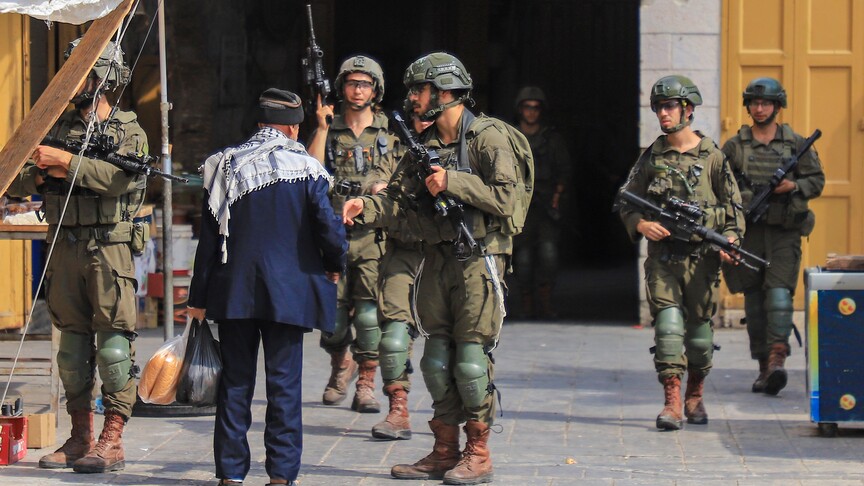
Eight Palestinians injured during Israeli military operations in the West Bank. — Source: anadolu
Territorial Changes and Restricted Areas
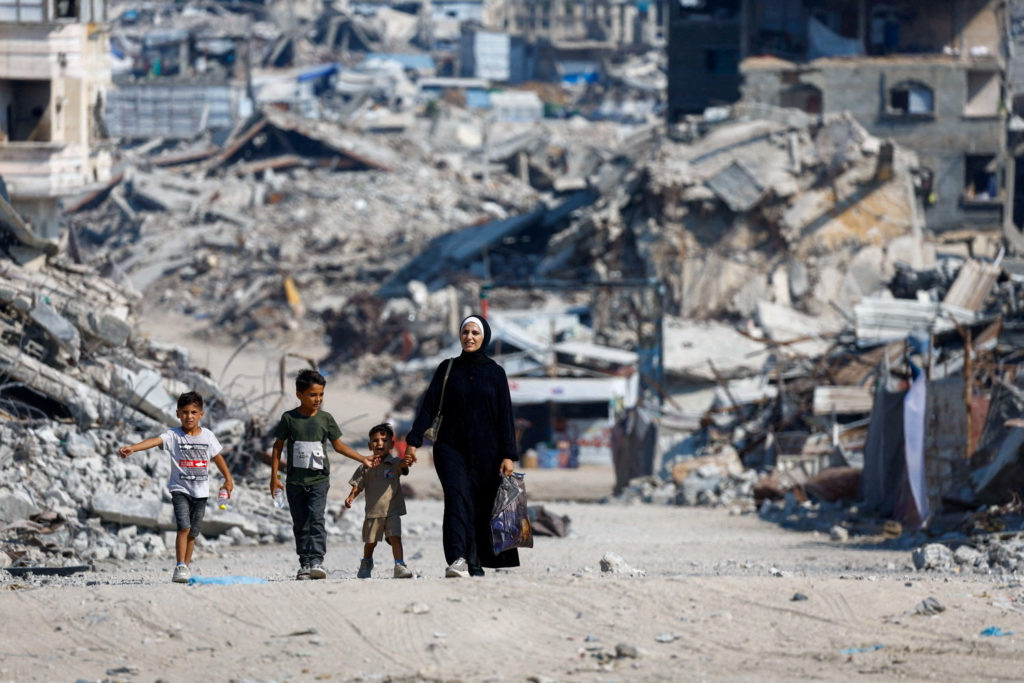
Since the beginning of the ceasefire, Israel has retained military positions inside Gaza, while the so-called “Yellow Line” has gradually shifted. [1] In June, OCHA reported that areas subject to heightened Israeli restrictions had reached approximately 64.9% of the Gaza Strip, amid further movements of the line and indications of an Israeli push to extend the area to roughly 70%. [1] The restricted areas included agricultural land, populated areas, water and sanitation facilities, and humanitarian infrastructure. [1] The figure of 64.9% does not mean that Israeli forces maintain a permanent military presence in every square meter of that territory. [1] But it reveals a direction that cannot be ignored: the space accessible to Palestinians is shrinking, while the scope of Israeli restrictions and control is expanding. [1] The more consequential change was not in the news cycle but on the map. [1]
US Position on Demilitarization and Reconstruction
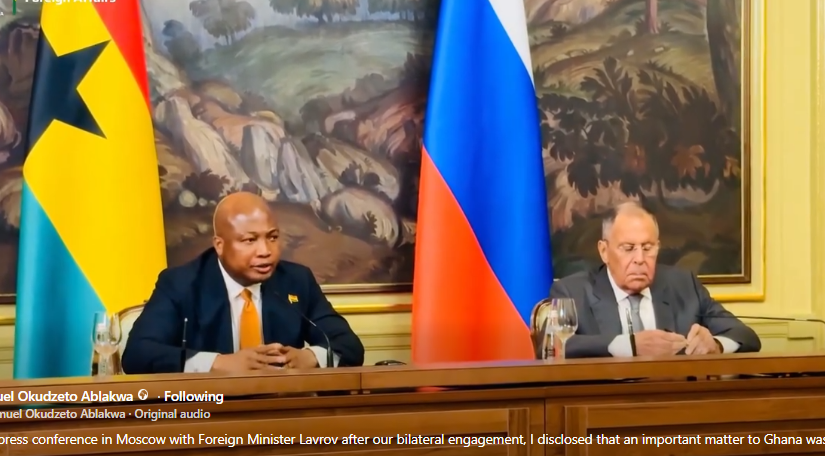
United States envoy Jared Kushner has stressed that the administration of President Donald Trump will not allow reconstruction in the devastated Gaza Strip until Hamas gives up its weapons. [4] Kushner, Trump’s son-in-law, held talks with Israeli Prime Minister Benjamin Netanyahu on Monday, but the meeting did not produce a breakthrough to implement a roadmap for Gaza that Hamas already agreed to. [4] “We have a plan to rebuild Gaza, but we will not allow Gaza to be rebuilt until the demilitarisation occurs,” Kushner told Fox News in an interview. [4] “Nobody wants to put more money into a place that’s gone on for so long if it’s just going to be taken over by terrorists or blown up again.” [4] Hamas had agreed to disarm as part of a US-backed process that would include Israeli withdrawal and an end to the deadly attacks on the Palestinian territory. [4] But Israel rejected the proposal earlier this month, saying that it would not make any concessions until Gaza is fully demilitarised. [4] In the interview with Fox News, Kushner appeared to adopt the Israeli viewpoint in emphasising the full demilitarisation of Hamas before Israeli withdrawal. [4] “We’re also not going to restrict Israel’s right to defend itself if there are any imminent threats,” Kushner said. [4] Earlier on Monday, Trump called for an end to the Israeli strikes. “Israelis should not be striking in Gaza. Hamas agreed to lay down their weapons,” the US president said. [4] Kushner held a rare meeting with Hamas officials on Sunday as the US pushes for an end to the conflict. [4] The US envoy said the talks were “very cordial” but that Washington would judge Hamas based on the group’s actions. [4]
{IMAGE_3}
West Bank Violence and Sieges
8 Palestinians injured in West Bank amid uptick in violence by Israeli army, occupiers. [2] 6 Palestinians injured in occupiers’ attack in Nablus, while 2 others were wounded during Israeli military raid in Ramallah. [2] 6 Palestinians injured in West Bank amid uptick in violence by Israeli occupiers. [3] The UN recently warned that violence by Israeli occupiers in the West Bank had reached unprecedented levels. [3] For 10th day, Israeli occupiers maintain tight siege on Palestinian families in Qusra. [5] Palestinian injured by Israeli army fire north of occupied East Jerusalem, according to Red Crescent. [5]
Broader Implications for a Political Settlement
If its purpose was to reduce hostilities as a prelude to Israeli withdrawal, political arrangements, and reconstruction, then the continued reconfiguration of territory during the ceasefire produces a very different outcome: the intensity of the war may decline while some of its territorial consequences become increasingly entrenched. [1] That is the danger created by time. [1] A formal annexation or the drawing of new borders is not necessary for a new reality to become harder to reverse. [1] It is enough for troops to remain, restricted zones to expand, displacement and demolition to continue, and the second phase of the agreement to remain stalled. [1] What begins as a temporary security arrangement can, over time, become a permanent political reality. [1] Gaza is therefore caught between two states: it is no longer experiencing the full-scale war of previous years, but neither has it reached the peace the ceasefire was supposed to produce. [1] The international question should be less about the number of daily strikes and more about what is happening to the map. [1] Is Israeli control contracting or expanding? Are Palestinians returning to their homes, or is their freedom of movement shrinking? And is the ceasefire leading toward a political settlement—or simply giving the military reality enough time to become entrenched? [1] The world’s shift toward Iran did not itself create the changes taking place in Gaza, but it helped create an environment of reduced scrutiny and pressure in which those changes could continue. [1] That may be the most consequential political effect of Gaza’s decline in the news cycle. [1] The war may eventually end, but the map that changed while the world was looking elsewhere may remain for years to come. [1]
What to watch next: The second phase of the agreement remains stalled amid disagreements over Hamas’s disarmament and the conditions for Israeli withdrawal, with indications of further expansion of restricted areas toward 70 percent.