
Oil Price Forecast: The Unseen Economic Architects - How IMF and World Bank Are Navigating Middle East Geopolitics Amid Hormuz Tensions
By Priya Sharma, Global Markets Editor, The World Now
Unique Angle: This article uniquely examines the pivotal, often overlooked role of global financial institutions like the IMF and World Bank in mediating and influencing Middle East geopolitical tensions, particularly through economic diplomacy and stability measures, diverging from previous coverage on military, environmental, or technological aspects. Insights into oil price forecast amid these dynamics highlight potential market volatilities.
Introduction: The Financial Frontline in Middle East Geopolitics and Oil Price Forecast
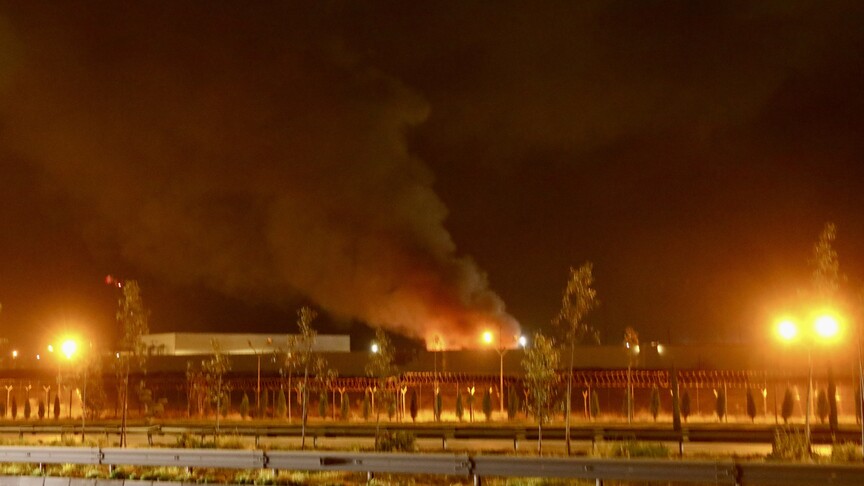
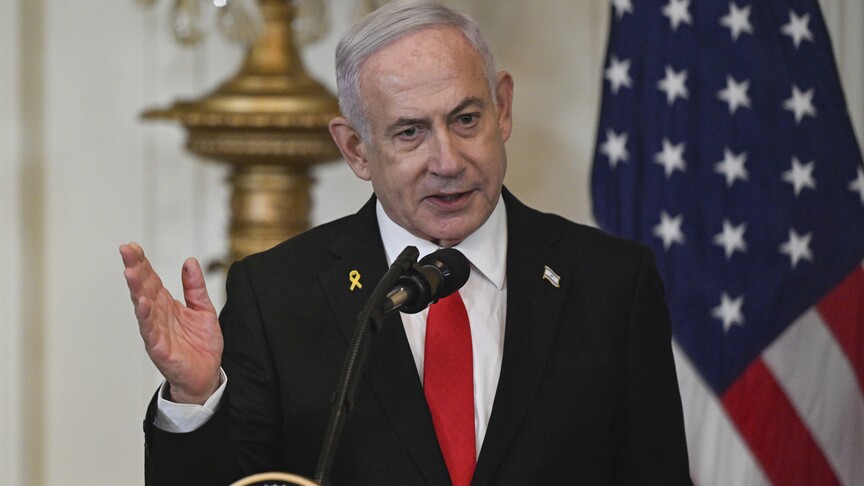
As the world watches the Strait of Hormuz—the vital artery through which one-fifth of global oil supplies flow—transform into a flashpoint of confrontation, the spotlight has unexpectedly shifted to unlikely mediators: the International Monetary Fund (IMF) and World Bank. On April 13, 2026, amid reports of a U.S.-led blockade and Iran's threats to retaliate against Gulf ports, the IMF and World Bank's spring meetings kicked off in Washington, D.C., injecting an economic dimension into what has been framed primarily as a military standoff. Netanyahu's public support for the blockade, coupled with Vice President Vance's insistence on "no nuclear enrichment for Iran," has escalated rhetoric, yet behind closed doors, these multilateral institutions are positioning themselves as the financial frontline in de-escalation efforts. This oil price forecast context underscores how disruptions could drive significant surges in global energy costs.
This unique angle reveals how global financial bodies are not mere bystanders but active architects of geopolitical stability. Unlike the deluge of coverage on U.S. naval deployments, Israeli airstrikes, or Iran's missile threats, the IMF and World Bank's role underscores a paradigm shift: economic leverage as the new diplomacy. Their spring meetings, attended by finance ministers from over 190 countries, are convening against a backdrop of Hormuz minesweeping operations by the U.S. Navy and UK-France talks on a defensive naval mission. Discussions here could tie financial aid, loan conditions, and sanctions to ceasefire compliance, pressuring nations like Iran and Israel more effectively than warships alone. For deeper oil price forecast analysis related to Hormuz tensions, see related coverage on regional pivots.
The stage is set by deep historical interconnections. The Middle East's oil-dependent economies are intertwined with global markets; a prolonged Hormuz disruption could spike shipping insurance premiums by 300% and add $10-20 per barrel to oil prices, per industry estimates. Yet, the IMF's surveillance reports and World Bank's stability funds offer tools for "economic ceasefires." This analysis draws on recent events, including the April 8 Iran-Saudi ministerial discussions and U.S. warnings on truce monitoring, to frame current tensions as an escalation of patterns where diplomatic failures amplify economic threats. As markets reel—S&P 500 futures dipping 0.5% pre-market on April 13—these institutions' pronouncements could dictate whether risk-off sentiment spirals or stabilizes. Track broader implications via our Global Risk Index.
Current Tensions and the Role of Global Financial Bodies in Oil Price Forecast
The Hormuz crisis crystallized on April 13, 2026, when Iran vowed retaliation against Gulf ports in response to the U.S. blockade, aimed at enforcing a fragile truce post-Israel-Iran hostilities. Netanyahu's endorsement, as reported by the Jerusalem Post, aligns Israel with Trump's strategy, while Vance's red line on nuclear enrichment signals zero tolerance. Concurrently, China's call for restraint and backing of talks, alongside UK Prime Minister Starmer's refusal to support the blockade, highlights fracturing alliances. The U.S. Navy faces "tough tasks" in minesweeping, per CNN, as Turkey warns of potential Israeli action against Syria.
Enter the IMF and World Bank: their spring meetings, launching amid these tensions, provide a platform for economic diplomacy. IMF Managing Director Kristalina Georgieva has historically used such forums to issue "stability warnings," linking fiscal aid to geopolitical de-escalation. Recent developments suggest this playbook in action. For instance, the World Bank could condition reconstruction loans for war-torn Lebanon or Syria on Hormuz access guarantees, pressuring Iran indirectly. Sanctions discussions might evolve, with IMF Article IV consultations recommending targeted measures that freeze Iranian assets unless blockades lift.
Original analysis reveals economic leverage superseding military actions. Military escalation risks asymmetric warfare—drones, mines, swarms—that could close Hormuz for weeks, disrupting 21 million barrels daily. In contrast, financial tools offer precision: the IMF's $1 trillion lending capacity includes flexible credit lines tied to reforms, potentially withholding $5-10 billion in aid to Gulf states if tensions persist. International responses, like UK-France co-hosting naval talks this week, intersect with these meetings; outcomes could inform World Bank-backed maritime security funds. Cross-market implications are stark: Brent crude surged 3% to $85/barrel on April 13, dragging equities lower while boosting safe-havens. If IMF communiqués signal unified sanctions, expect oil volatility to amplify, with LNG rerouting costs hitting Europe hardest amid its post-Ukraine energy crunch. Explore interconnected oil price forecast dynamics influenced by U.S. politics.
This financial influence is underreported. While Anadolu Agency notes the meetings' timing, few connect it to de-escalation. Yet, precedents abound: during the 2019 Abqaiq attacks, IMF warnings helped stabilize Saudi fiscal policy, averting broader contagion. Today, with U.S. deployments to the Middle East and UN demands for war crimes accountability, these bodies could broker "aid-for-access" deals, where Hormuz reopening unlocks IMF Special Drawing Rights allocations.
Historical Context: From Diplomatic Talks to Economic Warnings
The current Hormuz blockade is no isolated flare-up but the culmination of a compressed escalation timeline in early April 2026, building on long-standing economic interdependencies. On April 8, Iran-Saudi ministers discussed regional stability, a rare thaw echoing 2023's China-brokered détente. Yet, U.S. warnings on Iran truce monitoring that day signaled fragility, compounded by headlines of Middle East war threatening global growth and "Mideast Truce Market Caution." Markets reacted: oil futures rose 2%, equities dipped, foreshadowing today's blockade.
By April 9, U.S.-Iran truce talks intertwined with the Israel war context, per timeline data, as ceasefire prospects dimmed. This progression—from diplomatic optimism to economic peril—mirrors patterns since the 1979 oil crisis, when Hormuz threats quadrupled prices. Fast-forward to 2026's recent events: April 11 saw U.S. force deployments and UN accountability demands for war violations; April 12 brought U.S. reports of China's Mideast role and U.S.-Iran talks on Lebanon-Hormuz; April 13 amplified with Turkey's Syria warnings.
Economic interdependencies amplify impacts. The Gulf Cooperation Council (GCC) nations hold $3 trillion in sovereign wealth, funding global assets; Iran's oil exports, though sanctioned, underpin Asian demand. Historical IMF interventions, like post-2011 Arab Spring loans, stabilized Jordan and Egypt amid spillovers. The April 8 "global economy threat" reports prefigured Hormuz risks: a blockade could shave 0.5-1% off global GDP, per World Bank models, hitting EMs hardest via higher energy costs. This timeline frames today's crisis as escalation from failed diplomacy, where economic warnings transitioned to blockades, underscoring financial institutions' prescience—and now, their mediation potential. For related oil price forecast in European contexts, review EU energy linkages.
Original Analysis: Economic Diplomacy as a Geopolitical Tool
Delving deeper, IMF and World Bank policies could reshape alliances in ways military strategies cannot. China's restraint calls, influencing loan conditions, exemplify this: Beijing's $50 billion Belt and Road exposure in Iran makes it a stakeholder in stability. IMF surveillance might link China's G20 commitments to Hormuz de-escalation, enforcing "economic ceasefires" via funding incentives—e.g., accelerated World Bank climate funds for Saudi green hydrogen if Iran complies.
Fresh insights highlight "financial firewalls": targeted sanctions freezing $100 billion in Iranian overseas assets, per estimates, paired with World Bank escrow for truce compliance. This contrasts traditional warfare's costs—U.S. Navy operations exceed $1 billion monthly. Critiquing effectiveness, economic diplomacy excels in asymmetric conflicts: Iran's resilience to bombs but vulnerability to SWIFT exclusions (as in 2012, slashing exports 50%). Underreported UK-France naval talks this week could integrate IMF-backed insurance pools, reducing shipping costs 20-30%.
Cross-market analysis reveals leverage points. Reshaped alliances might see BRICS (Brazil, Russia, India, China, South Africa) counter Western sanctions with parallel financing, fragmenting global liquidity. Yet, IMF's neutrality—rooted in Bretton Woods—positions it superior to bilateral aid. Drawbacks exist: politicization risks credibility, as in Venezuela critiques. Still, amid Israel-Syria threats and U.S.-China Mideast roles, this approach offers calibrated pressure, potentially averting oil at $120/barrel.
Predictive Elements: Oil Price Forecast and Forecasting the Economic Ripple Effects
If blockades persist, intensified IMF/World Bank sanctions could isolate Iran economically, slashing GDP 5-10% via export halts, fostering new coalitions—e.g., Saudi-Israel pacts with Western finance. Global trade disruptions loom: 6-12 month spirals risk 2% GDP drag, per IMF models, with shipping costs doubling and inflation spiking 1-2% in importers like India.
Anticipate reforms: tensions may birth a Middle East stability fund, akin to the IMF's 2021 $650 billion SDR boost, dedicated to energy security. Secondary effects include volatility—equities -2-5%, oil +10-20%—if diplomacy fails by late April. Success hinges on spring meetings' outcomes; watch April 18 G20 finance talks for signals. Bull case: "Trump truce" implementation eases flows; bear: wider conflict triggers recession.
Looking Ahead: What This Means for Global Markets and Oil Price Forecast
Looking ahead, the IMF and World Bank's maneuvers could define not just regional stability but global oil price forecast trajectories, influencing everything from European energy security to emerging market debt. Investors should monitor spring meeting communiqués for sanction signals, as they may trigger immediate market shifts. This economic diplomacy paradigm signals a future where financial institutions increasingly frontline geopolitical resolutions, potentially stabilizing oil price forecasts and averting broader recessions. Stay updated with Catalyst AI — Market Predictions for real-time insights.
Catalyst AI Market Prediction
The World Now Catalyst AI, our proprietary engine analyzing causal mechanisms and historical precedents, forecasts the following amid Hormuz tensions and US-Iran talks risks (medium-high confidence unless noted):
- OIL: + (high confidence) – Failed talks threaten Hormuz supply, spiking prices 4-5% akin to 2020 Soleimani strike. Key risk: truce resumption.
- SPX: - (medium confidence) – Risk-off algorithmic selling, -0.8% intraday like Jan 2020. Key risk: de-escalation rhetoric.
- USD (DXY): + (medium confidence) – Safe-haven demand, +0.5-1% as in Soleimani event. Key risk: crypto rebound.
- GOLD: + (medium confidence) – Haven surge, +3% precedent. Key risk: ceasefire unwind.
- BTC/ETH/SOL: - (medium confidence) – Geo risk-off deleveraging, -8-10% like Ukraine 2022. Key risks: regulatory positives.
- CHF: + (low confidence) – Marginal haven, +0.4% vs EUR.
- EUR: - (low-medium confidence) – USD strength weakens pair.
- TSM: - (medium confidence) – Taiwan echoes amid China tensions.
Predictions powered by The World Now Catalyst Engine. Track real-time AI predictions for 28+ assets.