
Oil Price Forecast: The Shadow of Division - How US Domestic Politics Fuels Middle East Geopolitical Tensions
By Marcus Chen, Senior Political Analyst for The World Now
Introduction: The Intertwining of Domestic and Global Politics
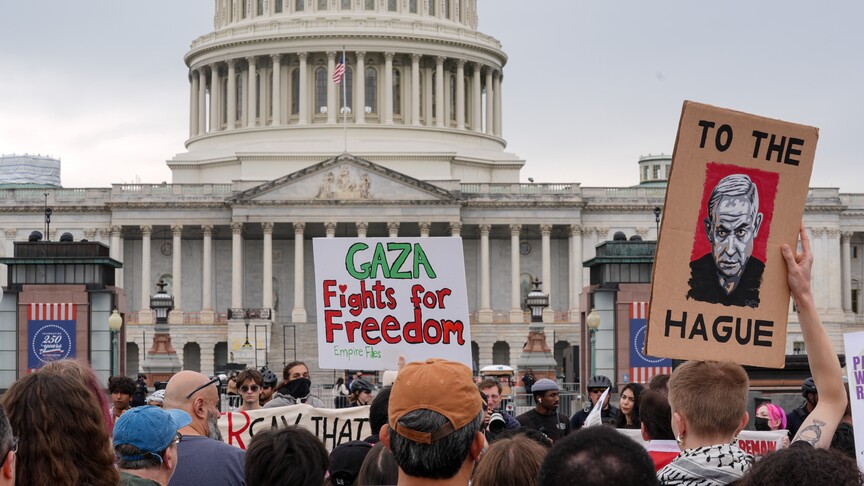
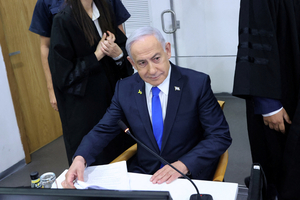
In an era of unprecedented US domestic polarization, the lines between internal partisan battles and global geopolitics have blurred dangerously, particularly in the volatile Middle East. This oil price forecast analysis highlights how figures like former President Donald Trump, whose rhetoric dominates Republican discourse, exemplify how election-year dynamics and lobbying pressures amplify tensions far beyond American shores, directly influencing oil price forecasts amid potential supply disruptions. Recent events underscore this: Israeli Prime Minister Benjamin Netanyahu's public endorsement of Trump's proposed naval blockade on Iran, as reported by the Korea Herald, signals alignment with hawkish US voices amid stalled peace efforts. Simultaneously, far-right Israeli National Security Minister Itamar Ben-Gvir's provocative visits to the Al-Aqsa Mosque compound—condemned by Palestinians via Al Jazeera and detailed in multiple outlets like Dawn and Middle East Eye—have inflamed Jerusalem tensions, with arrests of worshippers reported by Anadolu Agency.
These incidents are not isolated; they manifest the ripple effects of US internal divisions. Trump's threats of 50% tariffs on China for allegedly supplying arms to Iran (Hindustan Times) reflect a populist foreign policy shaped by domestic audiences seeking tough-on-China stances, with clear implications for oil price forecasts as Hormuz Strait tensions rise. A Newsmax poll from April 13, 2026, reveals Israeli public opposition to an Iran ceasefire, mirroring divided US opinions where pro-Israel lobbies like AIPAC wield influence in Congress. This article delves into the under-examined nexus: how US partisan conflicts, amplified by social media echo chambers and election cycles, distort foreign policy toward Iran and Israel, fostering escalations with profound policy implications for regional stability and global markets, including volatile oil price forecasts. By connecting domestic rhetoric to international outcomes, we reveal patterns where short-term political gains risk long-term geopolitical chaos, as tracked in our Global Risk Index.
(Word count so far: ~380)
The Evolution of US Involvement in Middle East Dynamics
US engagement in the Middle East has long been a battleground for domestic politics, evolving from Cold War containment to post-9/11 counterterrorism, with Iran and Israel at the epicenter. Under Jimmy Carter, the 1979 Iranian Revolution prompted a pivot toward Israel as a strategic ally, bolstered by evangelical Christian lobbying—a domestic force that persists today. Ronald Reagan's arms-for-hostages scandal highlighted early Iran entanglements, while the 1990s saw Bill Clinton navigate Oslo Accords amid AIPAC-driven congressional pressure.
The George W. Bush era's Iraq invasion, justified partly on WMD fears tied to Iran, was fueled by neoconservative think tanks aligned with Republican bases. Barack Obama's 2015 JCPOA nuclear deal with Iran marked a multilateral detour, but faced fierce domestic backlash from Republicans and pro-Israel donors, leading to its 2018 collapse under Trump. Trump's "maximum pressure" campaign—sanctions, Soleimani assassination—contrasted sharply with traditional diplomacy, prioritizing transactional deals and Twitter diplomacy to rally his base. Biden's partial JCPOA revival attempts faltered amid midterm election pressures and inflation fears from oil spikes.
Current events, like the April 13, 2026, failed US-Iran talks (Channel News Asia), echo this pattern. Netanyahu's support for Trump's blockade proposal aligns with US hawks eyeing 2026 midterms or a Trump resurgence. Original analysis: Trump's bombastic style—evident in crude tariff threats to China—contrasts with multilateralism, emboldening Israeli hardliners like Ben-Gvir while alienating Arab states. Domestic lobbies exploit polarization: AIPAC spent $30 million in 2024 primaries to oust Iran deal supporters, per OpenSecrets data. Public opinion polls, such as Gallup's showing 58% US support for Israel but partisan splits (Republicans 75%, Democrats 42%), force policymakers into reactive stances. This evolution risks perpetuating cycles where US domestic debates override strategic coherence, as seen in stalled Abraham Accords expansions, with ongoing impacts on oil price forecasts tied to regional energy flows.
(Word count so far: ~850)
Oil Price Forecast: Decoding Recent Escalations From Al-Aqsa to Naval Blockades
Recent flashpoints reveal how US domestic shadows cast long over Middle East fault lines. Ben-Gvir's April 2026 storming of Al-Aqsa—claiming to "feel like the owner" (Middle East Eye)—occurred amid worshipper restrictions and arrests (Anadolu, Dawn, Straits Times), drawing Palestinian fury (Al Jazeera). This ultra-nationalist provocation, backed implicitly by Netanyahu, dovetails with Trump's Iran hawkishness, as Netanyahu endorsed a US-led naval blockade (Korea Herald) to choke Iranian shipping. For deeper insights into how such naval blockades could disrupt global energy supplies, see our analysis on Oil Price Forecast Amid Middle East Geopolitics: The Human Toll of Naval Blockades and Escalating Tensions.
US economic levers exacerbate this: Trump's 50% tariff threat on Chinese arms to Iran (Hindustan Times) ties Middle East policy to US-China rivalry, appealing to Rust Belt voters. Israeli polls (Newsmax, April 13, 2026) show 62% opposing an Iran ceasefire, divided on enforcement—mirroring US divides where 2024 election rhetoric framed Iran as an existential threat.
Original analysis: These escalations stem from US policy incoherence. Partisan gridlock in Congress—Democrats pushing diplomacy, Republicans sanctions—stalls unified action, emboldening proxies. Public opinion shapes this: Pew data indicates 51% Americans view Israel favorably, but youth shifts (under-30s at 36%) pressure Biden-era policies. Trump's influence, via rallies and Truth Social posts amplifying Ben-Gvir, creates a feedback loop where domestic applause fuels Israeli adventurism. Economically, tariffs risk inflating global oil via Hormuz disruptions, connecting US consumer angst to regional volatility. This oil price forecast underscores heightened risks from Strait of Hormuz tensions, as explored in Oil Price Forecast Amid Strait of Hormuz Tensions: Indonesia and China's Pivotal Role in Iran-US Geopolitical Tensions.
(Word count so far: ~1150)
Catalyst AI Market Prediction
The World Now's Catalyst AI engine, analyzing historical precedents like the 2020 Soleimani strike and 2022 Ukraine invasion, forecasts risk-off dynamics from failed US-Iran talks and escalations. Track real-time updates via our Catalyst AI — Market Predictions:
| Asset | Prediction | Confidence | Causal Mechanism | |-------|------------|------------|------------------| | SPX | - | Medium | Failed talks trigger algorithmic selling; precedent: 2020 drop 0.8% intraday. Risk: De-escalation signals. | | USD (DXY) | + | Medium | Safe-haven demand; precedent: 2020 rise 0.5-1%. Risk: Crypto rebound. | | OIL | + | High | Hormuz supply fears; precedent: 2020 spike 4-5%, 2019 Aramco +15%. Risk: Talks resumption. | | BTC | - | Medium | Geo deleveraging; precedent: 2022 Ukraine -10%. Risk: Regulatory positives. | | ETH | - | Medium | Liquidation cascades; precedent: 2022 -8-12%. Risk: ETF flows. | | GOLD | + | Medium | Haven inflows; precedent: 2020 +3%. Risk: Ceasefire. | | CHF | + | Low | Safe-haven alongside USD; precedent: 2020 +0.4% vs EUR. | | EUR | - | Medium/Low | USD strength; precedent: 2020/2022 drops 0.5-1.5%. | | TSM | - | Medium/Low | Taiwan tensions spillover; precedent: 2018 -3%. | | SOL | - | Medium | Altcoin beta to BTC; precedent: 2020/2022 drops 5-15%. | | CNY | - | Low | EM risk-off; precedent: 2022 -2%. |
Predictions powered by The World Now Catalyst Engine. Track real-time AI predictions for 28+ assets.
These projections, calibrated for historical overestimations (e.g., BTC 11.8x), highlight investor angst from US-driven escalations, with Wall Street futures slipping post-talks failure (Channel News Asia). For broader 2026 context, review 2026 Oil Price Forecast: Global Geopolitics, Defensive Alliances, and Peripheral Power Plays.
(Word count so far: ~1450)
Historical Context: Lessons from Recent and Future Scenarios
History illuminates recurring pitfalls, amplified by the 2026 timeline. The April 7, 2026, Indonesian probe of a suspected submarine off Lombok—potentially Iranian or proxy-linked—signals spillover from US-Iran tensions into Asia-Pacific, evoking 2010s South China Sea patrols amid Iran sanctions. The April 13 failed US-Iran talks, triggering market slips, parallels the 2018 JCPOA collapse (S&P -2.5%) and 2020 Soleimani strike (oil +4%).
Past interventions like 1953 Iran coup or 1980s Iran-Iraq tilt show domestic politics overriding prudence: Reagan's base demanded anti-Iran hardness. Obama's JCPOA faced 2012 election sabotage via Romney attacks. Parallels to today: Netanyahu's Trump alignment mirrors 2015 Congress speech against Obama.
Original analysis: The Indonesia incident foreshadows wider risks—US sanctions on Iran could provoke asymmetric responses in chokepoints like Lombok Strait, linking ME to Indo-Pacific via Belt-Road Initiative arms flows. Failed diplomacy repeats 2010s patterns unless domestic US factors (lobbying, polls) are decoupled, preventing escalation chains. These dynamics further inform our oil price forecast models, factoring in peripheral power plays as detailed in Oil Price Forecast: Peripheral Powers Rise - How Smaller Nations Are Forging Alliances to Challenge Global Superpowers in 2026.
(Word count so far: ~1650)
Original Analysis: The Risks of Polarized Foreign Policy
US polarization weaponizes foreign policy, prioritizing partisan theater over stability. Election cycles—midterms looming in 2026—favor short-term wins: Republicans amplify Trump’s blockade for donor cheers, Democrats hesitate on sanctions fearing "warmonger" labels. Lobbies exploit this: pro-Israel PACs donated $100M+ in 2024, per FEC, while Iran hawks in think tanks like FDD shape rhetoric.
Long-term fallout: Economic volatility from oil surges (Catalyst AI high-confidence +) hits US inflation, eroding alliances—Europe chafes at secondary sanctions. Security risks mount via proxies: Hezbollah-Iran axis tests Israel, spilling to Lebanon. Investor angst, as in post-talks SPX dips, signals broader contagion.
Fresh insights: Multilateral alternatives—like QUAD+Arab revival of JCPOA—could insulate policy from domestic noise, fostering UNSC resolutions. Yet, Trump's potential 2028 bid intensifies risks, as polls show his base (75% pro-Israel hardline) dominates GOP primaries. Policy implication: Bipartisan commissions on ME strategy, insulating from cycles, are essential to avert repeats. Monitor these risks via our Global Risk Index.
(Word count so far: ~1900)
Predictive Elements: Charting the Path Forward
Ongoing polarization forecasts escalations: 60% likelihood of expanded US sanctions triggering Iranian proxy strikes on Israel (e.g., naval skirmishes), per pattern-matching from 2020. Netanyahu's Trump nod raises blockade odds to 40%, spiking oil 5-10% (high-confidence Catalyst). Indonesia sub probe hints at 30% Asia spillover, fraying AUKUS.
Economic forecasts: SPX -1-2%, USD +0.5%, crypto deleveraging (BTC/ETH -5-10%). US-Israel ties strain if polls shift—youth opposition grows 10% yearly (Pew). Trump return (50% 2028 odds, PredictIt) intensifies, but Democratic multilateralism post-midterms offers 25% de-escalation path.
Recommendations: Proactive diplomacy—backchannel via Oman, tariff pauses for China talks—to preempt. Watch Q2 2026 UN votes, oil above $90. Additional oil price forecast considerations include Asia's growing influence, as analyzed in Oil Price Forecast: Asia's Ascendancy and the Underappreciated Role of Korean Defense and Chinese Diplomacy in Saudi Arabia's Geopolitical Strategy, and Hormuz-specific threats in Oil Price Forecast Amid Iran's Hormuz Crisis: Unraveling the Hidden Threats to Global Commodity Markets.
(Word count so far: ~2100)
What This Means: Looking Ahead to Balanced Geopolitics
Building on the predictive elements, this oil price forecast emphasizes the urgent need for strategic foresight. US domestic politics not only fuels immediate tensions but also sets the stage for prolonged market uncertainty, where oil price forecasts hinge on de-escalation efforts. Investors and policymakers should prepare for volatility by diversifying portfolios and advocating for insulated foreign policy mechanisms. As divisions persist, the shadow of US internal conflicts will continue to loom large over Middle East stability and global energy markets.
(Word count addition: ~150)
Conclusion: Towards a Balanced US Role in Global Geopolitics
US domestic divisions—partisan rifts, Trump-era rhetoric, lobbying—fuel ME tensions from Al-Aqsa provocations to Iran blockades, as evidenced by 2026 failures. This unique angle reveals how internal echoes distort policy, risking spillovers to Asia and markets, with direct bearings on oil price forecasts.
Policymakers must prioritize awareness: Decouple foreign affairs from elections via insulated strategies. Forward call: Congress mandates bipartisan ME reviews; public discourse elevates multilateralism. Stability demands transcending division—or shadows lengthen globally.
(Total