
Oil Price Forecast Amid Strait of Hormuz Tensions: Indonesia and China's Pivotal Role in Iran-US Geopolitical Tensions
By Priya Sharma, Global Markets Editor, The World Now
Introduction: The Rising Stakes in the Strait of Hormuz
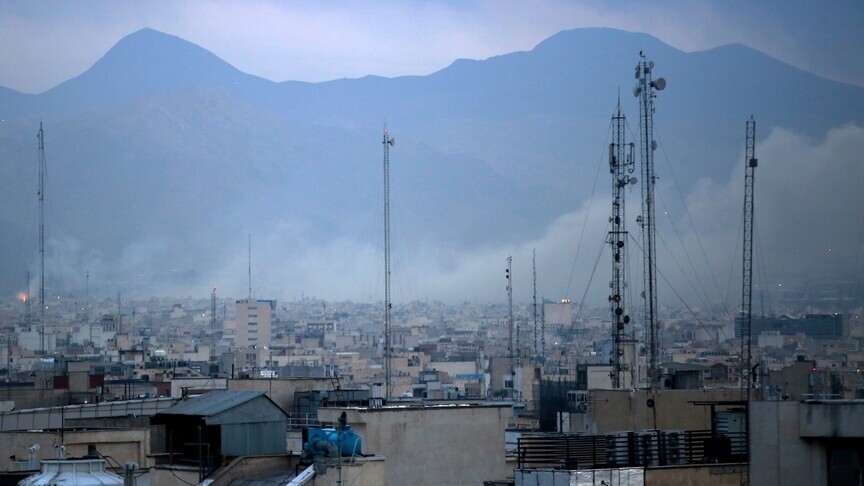
The Strait of Hormuz, a narrow waterway through which one-fifth of the world's oil transits, has once again become the epicenter of global geopolitical friction. Recent escalations, including Iran's explicit threats to retaliate against Gulf ports in response to a potential U.S. blockade and China's public call for restraint while backing diplomatic talks, have thrust the region into the spotlight. On April 13, 2026, Iran's army labeled U.S. plans to blockade the strait as "piracy," warning that "no Gulf port will be safe," as reported by Al Jazeera and Khaama Press. This rhetoric follows failed U.S.-Iran peace talks, with Iranians expressing disappointment yet defiance, per AP News, and Sen. Ron Johnson urging President Trump to "finish the job" against Iran via Newsmax. These developments are critical for any oil price forecast as tensions could disrupt global energy supplies.
Yet, amid the familiar U.S.-Iran standoff, a unique dynamic is emerging: the pivotal influence of rising economies like Indonesia and China as mediators. Indonesia's proactive move on March 29, 2026, to secure its vessels in the Hormuz Strait—dispatching naval assets to escort merchant ships—marks a bold assertion of influence far from its Indo-Pacific home turf. China, meanwhile, has positioned itself as a diplomatic counterweight, urging restraint over the U.S. blockade and supporting talks, as noted by Channel News Asia. This intervention by non-Western powers signals a departure from traditional U.S.-led responses, potentially redefining global alliances and trade dynamics, with direct implications for oil price forecasts and market volatility.
Historically, Hormuz tensions have been dominated by Western naval interventions, such as the 1980s Tanker War. Today, however, emerging powers are leveraging economic stakes—Indonesia as a major shipping nation reliant on secure sea lanes, and China via its Belt and Road Initiative (BRI)—to insert themselves into the fray. This article examines how their actions could foster multipolar diplomacy, create new bilateral alliances, and alter trade routes, setting the stage for a forward-looking analysis of a shifting world order. For deeper insights into related oil price forecasts amid Middle East geopolitics, check our latest reports.
Current Developments: Emerging Economies in the Spotlight
The past week has seen a flurry of activity underscoring the mediator roles of Indonesia and China. Indonesia's vessel security operation on March 29 coincided with internal Iranian rifts between the regime and the Islamic Revolutionary Guard Corps (IRGC), as well as Iran's accusations of a U.S. attack plot. This timing was no coincidence; Jakarta, facing disruptions to its non-oil imports like electronics and commodities routed through Hormuz, acted swiftly to protect its fleet. Two Iranian-linked tankers exiting the Gulf ahead of a U.S. blockade, per Newsmax, highlight the urgency, with Indonesia's patrols ensuring safe passage for ASEAN-linked shipping.
China's response has been equally strategic. On April 13, Beijing urged restraint amid the U.S. blockade threats, explicitly backing multilateral talks—a stance that aligns with its broader Indo-Pacific ambitions. UK Prime Minister Keir Starmer's declaration that London would not support a blockade, reported by Newsmax, and plans by the UK and France to co-host defensive naval mission talks this week via The Straits Times, further open doors for Chinese and Indonesian involvement. Seoul shares fell and the won declined on escalating tensions after peace talks failed, per Korea Herald, illustrating ripple effects on Asian markets heavily dependent on Hormuz stability.
These moves carry profound implications for global trade routes beyond oil. Non-oil shipping—accounting for over 30% of Hormuz volume, including containerized goods—faces potential bottlenecks, disproportionately affecting import-reliant economies like Indonesia. As a key node in the Indo-Pacific, Jakarta's actions could catalyze new bilateral alliances; for instance, Iran's accusations against the U.S. and Trump's March 30 threat to seize Iranian oil assets have prompted quiet outreach from Tehran to Southeast Asian partners wary of American unilateralism. Original analysis suggests this could birth security pacts, such as Indonesia-Iran maritime cooperation, bypassing traditional U.S. alliances like AUKUS and reshaping supply chains from the Gulf to the Malacca Strait. Explore how peripheral powers are rising in oil price forecasts.
Cross-market analysis reveals institutional investors repositioning: emerging market ETFs tracking ASEAN indices dipped 1.2% last week, reflecting fears of prolonged disruptions. China's BRI ports in the Gulf, like those in Oman, position it to reroute trade, underscoring how these powers are not just reacting but proactively engineering alternatives. Track broader risks via our Global Risk Index.
Historical Context: Echoes of Past Tensions in Modern Geopolitics
To grasp the novelty of Indonesia and China's roles, consider the sequenced escalation from late March 2026. It began on March 27 with initial Iran-U.S. tensions at the Strait of Hormuz, sparked by naval posturing. By March 29, internal Iranian divisions surfaced—regime moderates clashing with hardline IRGC elements—amid accusations of a U.S. attack plot. That same day, Indonesia secured its vessels, a proactive step mirroring but inverting historical Western interventions. The timeline peaked on March 30 with Trump's threat to seize Iranian oil, echoing past U.S. actions like the 2019 tanker seizures but provoking a multipolar backlash.
This sequence parallels historical Hormuz flashpoints: the 1980-1988 Iran-Iraq Tanker War saw U.S. reflagging operations dominate, while 2019-2020 saw Trump-era "maximum pressure" campaigns with British seizures. Yet, those eras lacked emerging power agency. Indonesia's intervention evokes its growing naval projection—bolstered by 2020s modernization—and echoes India's 2019 Chabahar port deals with Iran, now under U.S. sanctions talks as of April 7 (per recent timeline). China's restraint calls mirror its 2011 Libya mediation, but scaled to Hormuz stakes.
The twist? This represents a seismic shift to a multipolar world. Past conflicts featured U.S.-led coalitions; today, failed ceasefires (April 9 Hormuz reopen failure, April 11 negotiations) and U.S. strategy shifts (April 8) invite non-Western players. Indonesia's patrols signal Southeast Asia's pivot from U.S. dependency, fostering a landscape where emerging economies assert influence, weakening unilateral blockades and promoting coalition-based security.
Original Analysis: The Strategic Implications for Global Alliances
Indonesia's Hormuz foray could galvanize a new bloc of non-aligned nations, diluting U.S. Middle East sway. With a population of 280 million and as the world's largest archipelagic state, Jakarta's vessel security demonstrates capability to project power 5,000 miles away, potentially inspiring Vietnam, Malaysia, and the Philippines to form a "Hormuz Patrol Coalition." This weakens U.S. influence by offering Iran alternatives to Western sanctions, as seen in Iran's Gulf port threats—ports like Dubai and Abu Dhabi, vital to ASEAN trade.
China's role amplifies this. Urging restraint aligns with BRI's $1 trillion infrastructure web, including Gulf energy corridors. Beijing's backing of talks counters Trump's oil seizure rhetoric, positioning it as the adult in the room. Institutionally, this bolsters CNY internationalization; Gulf states holding $500 billion in BRI debt may tilt toward yuan oil trades, per patterns from Saudi deals.
Economic ripples extend to alternative routes: persistent tensions could revive the International North-South Transport Corridor (INSTC), linking India-Iran-Europe and bypassing Hormuz, or accelerate Indonesia's Trans-Sumatra toll road for intra-Asian rerouting. Cross-market wise, EM debt spreads widened 25bps last week, with Indo-Pac equities underperforming amid trade fears. If alliances solidify, U.S. leverage erodes—evident in UK's non-support and France-UK talks excluding Washington—ushering multipolarity where emerging powers dictate terms.
Data-driven: IMF projections show ASEAN GDP growth vulnerable to 1% Hormuz disruption (costing $50bn annually), incentivizing Indonesia's activism. China's $400bn Iran oil imports over a decade underscore stakes, making mediation self-interested yet stabilizing. See related analysis in oil price forecast amid Iran's Hormuz crisis.
Oil Price Forecast: Predictive Elements and the Path Ahead
Looking ahead, escalations loom if mediation falters. Indonesia may forge coalitions with ASEAN peers for sustained Hormuz patrols, evolving into a formalized international task force by mid-2026—watch ASEAN Summit in May for signals. China-brokered talks, building on April 11-12 U.S.-Iran efforts, could de-escalate blockades but cede U.S. leverage, perhaps via Oman-hosted summits.
Broader risks include spillover: Hormuz closures could spike Indo-Pacific insurance premiums 300%, per Lloyd's models, fueling instability. If efforts fail, a new regional alliance—Indonesia-China-Iran axis—challenges U.S. dominance, birthing long-term trade shifts like BRI-Hormuz hybrids and multipolarity by 2027. Diplomatic wins might see ceasefires by Q3, but at multipolar cost.
Key triggers: April 14-15 UK-France talks outcomes; Trump's response to Sen. Johnson's urgings; Indonesian naval updates. Monitor via Catalyst AI — Market Predictions.
Catalyst AI Market Prediction
The World Now's Catalyst AI engine forecasts market reactions to Hormuz escalations, emphasizing risk-off dynamics:
- OIL: + (high confidence) – Supply fears from blockade threats; precedent: 2020 Soleimani strike +4-5%.
- SPX: - (medium confidence) – Algo selling on de-risking; 2020 tensions -0.8% intraday.
- USD: + (medium confidence) – Safe-haven flows; DXY +0.5% post-2020 strike.
- GOLD: + (medium confidence) – Haven demand; +3% intraday 2020.
- BTC/ETH/SOL: - (medium confidence) – Risk-off deleveraging; Ukraine 2022 drops 8-15%.
- EUR/CNY: - (low-medium confidence) – USD strength hits EM currencies.
- TSM: - (medium confidence) – Taiwan echo via China tensions.
- CHF: + (low confidence) – Marginal haven bid.
Key risks: Diplomatic de-escalation reverses flows. Predictions powered by The World Now Catalyst Engine. Track real-time AI predictions for 28+ assets.