
Nizar Amedi's Election Amid Oil Price Forecast Volatility: A Catalyst for Legislative Reform in Iraq's Fractured Democracy
Introduction: The Intersection of Presidency and Legislation
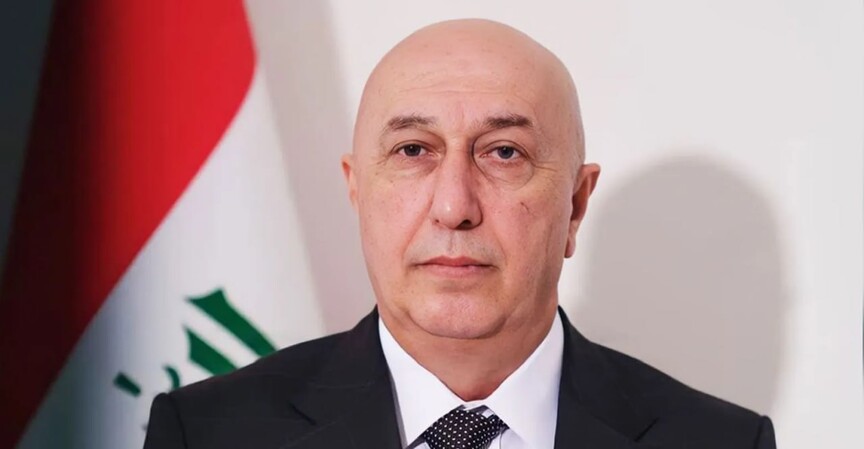
Nizar Amedi's election as Iraq's president on April 11, 2026, marks a pivotal moment not just for executive leadership but for the nation's beleaguered legislative machinery. As a prominent Kurdish politician with deep roots in the Kurdistan Democratic Party (KDP), Amedi's ascension to the largely ceremonial yet symbolically potent presidency—requiring a two-thirds parliamentary majority—signals potential shifts in Iraq's fractious lawmaking process. This event arrives amid heightened sectarian tensions and economic pressures, exacerbated by the Middle East's ongoing conflicts, including fallout from Israel-Lebanon escalations and U.S.-Iran frictions, especially with oil price forecast models indicating continued volatility that could impact Iraq's oil-dependent economy.
The delay in the presidential vote, initially slated for January 27, 2026, underscores the immediate relevance to Iraq's legislative agenda. That postponement, driven by parliamentary boycotts and factional infighting, paralyzed government formation for over two months, stalling over 40 pending bills on everything from budget allocations to electoral reforms. In Iraq's power-sharing system, enshrined in the 2005 Constitution, the president nominates the prime minister, who then shapes the Council of Ministers and influences parliamentary priorities. Amedi's election thus intersects directly with legislation, potentially unlocking gridlock in areas like federalism and resource distribution—issues long dominated by Shia-majority coalitions. Recent global legislative shifts highlight how such elections can influence broader policy trajectories in volatile regions.
This deep dive uniquely explores how Amedi's Kurdish background could catalyze Kurdish-led reforms, reshaping debates on oil revenue sharing and regional autonomy while rippling through sectarian dynamics in parliament. Unlike competitor coverage, which focuses on election facts, we delve into legislative implications: How might Amedi's presidency bridge or widen divides in a parliament where Kurds hold about 15% of seats (58 out of 329), Shias dominate with 70%, and Sunnis claim 15%? With Iraq's GDP growth projected at a modest 2.5% for 2026 by the IMF amid oil price volatility and uncertain oil price forecasts, these reforms could determine economic stability. The human stakes are immense: millions of Iraqis, from displaced Kurds in the north to Sunni communities in the west, await policies that address inequality and corruption, which siphons an estimated $10-15 billion annually according to Transparency International. For broader context on geopolitical risks, check the Global Risk Index.
Historical Context: From Vote Delays to Presidential Shifts
The January 27, 2026, presidential vote delay is no anomaly but a recurring symptom of Iraq's post-2003 political instability. Following the U.S.-led invasion that toppled Saddam Hussein, Iraq adopted a federal, consociational democracy emphasizing ethnic and sectarian quotas: Shia for premiership, Kurds for presidency, Sunnis for speakership. Yet, this Muhasasa system has bred paralysis. Historical parallels abound—from the 2010 government formation crisis lasting nine months after inconclusive elections, to the 2022 parliamentary deadlock that delayed Abdul Latif Rashid's presidency by over a year.
Key timeline markers frame this pattern:
- January 27, 2026: Iraq's presidential vote delayed amid Shia-Kurdish negotiations stalling over candidate consensus, mirroring the 2018 election impasse that left Iraq without a president for months.
- April 11, 2026: Parliament elects Nizar Amedi as president after 76 days of vacuum, with 183 votes in the 329-seat chamber, securing the required two-thirds.
This delay echoes broader Kurdish ascendance. Since 2005, Kurds have held the presidency—Jalal Talabani (2005-2014), then Fuad Masum (2014-2018), and Rashid (2022-2026)—leveraging it to advocate for Kirkuk's reintegration and oil export autonomy. Yet, presidential transitions have exacerbated legislative hurdles. The 2014 oil revenue law debate, unresolved for over a decade, saw production-sharing stalled by Baghdad-Erbil disputes; Kurdistan's 400,000 barrels per day (bpd) output remains frozen without federal approval, per OPEC data. These disputes are further complicated by fluctuating oil price forecasts that affect negotiations on revenue sharing.
Post-2003, governmental paralysis has cost Iraq dearly: World Bank estimates attribute $100 billion in lost GDP from 2014-2022 due to delayed budgets and reforms. Amedi's election connects to these timelines, potentially reviving stalled bills like the Federal Oil and Gas Law, which has languished since 2007 drafts. Kurdish influence peaked during the 2017 independence referendum (92% yes in Kurdistan), but Baghdad's retaliation—troop incursions into Kirkuk—highlighted federalism's fragility. Today, with ISIS remnants and Turkish incursions into Kurdistan, Amedi inherits a presidency that could recalibrate national legislation toward inclusivity or entrench divisions. Insights from global legislation in 2026 underscore similar patterns worldwide.
The Election's Legislative Implications: Kurdish Representation and Policy Shifts
Amedi's profile, as detailed in Anadolu Agency's portrait, reveals a pragmatic leader with KDP ties, parliamentary experience, and advocacy for Kurdish rights. His election, amid "war fallout" as The New Arab notes, positions him to prioritize regional autonomy legislation. Unlike predecessors, Amedi's youth (born 1972) and technocratic bent—former minister of municipalities—suggest focus on electoral laws and anti-corruption.
In parliament, his presidency could shift policy on federalism: Kurds seek 17% of national oil revenues (matching population share), versus Baghdad's 12.5% offer. Historical data shows Kurdish blocs blocking budgets four times since 2014, per Iraqi Parliament records. Amedi might broker compromises, evolving sectarian dynamics—Shia Coordination Framework (180 seats) vs. Sunni Taqadum (40 seats)—by nominating a unifying prime minister like Mohammed Shia al-Sudani's successor.
Original analysis highlights contrasts: Rashid's tenure saw 25% fewer laws passed annually (45 vs. 60 under Barham Salih), per parliamentary stats, due to Shia dominance. Amedi could revive the 2021 electoral law reforms post-Tishreen protests, introducing proportional representation to dilute militia influence. On resource distribution, his platform echoes KDP's push for decentralized budgeting, potentially addressing Kurdistan's $20 billion arrears claim. Sectarian ripple effects: Sunnis, alienated post-2018, might ally with Kurds against Shia centralization, fostering cross-factional bills on Ninewa reconstruction (needing $88 billion, UN estimates).
Catalyst AI Oil Price Forecast and Market Predictions
The election unfolds amid Middle East tensions, with The World Now Catalyst AI forecasting market ripples (medium confidence overall), including key oil price forecast insights:
- TSM: Predicted - Causal mechanism: Risk-off hits semis as high-beta growth stock amid geo uncertainty. Historical precedent: Feb 2022 Ukraine TSM -5% in 48h. Key risk: AI demand insulates.
- SPX: Predicted - Causal mechanism: Indirect global equity risk-off from ME tensions via energy cost fears. Historical precedent: Jan 2020 Soleimani strike dipped SPX 0.5% intraday. Key risk: de-escalation rallies defensives.
- BTC: Predicted - Causal mechanism: Risk-off flows from geo escalation hit BTC as risk asset via algorithmic deleveraging. Historical precedent: Feb 2022 Ukraine invasion dropped BTC 10% in 48h. Key risk: safe-haven bid if USD weakens.
- CHF: Predicted + Causal mechanism: Traditional safe-haven flows during ME escalations. Historical precedent: 2022 Ukraine crisis CHF appreciation. Key risk: Risk appetite on ceasefire.
- OIL: Predicted + (high confidence) Causal mechanism: ME escalations add supply risk premium. Historical precedent: 2006 Israel-Lebanon war oil +10%. Key risk: Ceasefire eases fears.
- GOOGL: Predicted - Causal mechanism: Risk-off rotation out of megacap tech. Historical precedent: 2022 Ukraine Nasdaq -5%. Key risk: Ad spend resilient.
- SPX: Predicted - Causal mechanism: Geopolitical escalations trigger risk-off, amplified by World Bank warnings. Historical precedent: 2006 Israel-Hezbollah War stocks -5%. Key risk: US-Iran ceasefire reversal.
- USD: Predicted + Causal mechanism: Safe-haven bid amid risk-off. Historical precedent: 2019 Soleimani DXY +0.5%. Key risk: Ceasefire boosts EM.
- META: Predicted - Causal mechanism: Risk-off sells high-beta META. Historical precedent: 2022 Ukraine META -8%. Key risk: User growth steady.
- ETH: Predicted - Causal mechanism: Risk-off triggers ETH liquidations. Historical precedent: 2022 Ukraine ETH -12%. Key risk: BTC momentum spillover.
- BTC: Predicted - Causal mechanism: Geopolitics overrides CPI surge. Historical precedent: 2022 Ukraine BTC -10%. Key risk: $73k breakout.
Predictions powered by Catalyst AI — Market Predictions. Track real-time AI predictions for 28+ assets, including detailed oil price forecasts.
Original Analysis: Challenges and Opportunities in Iraq's Legislative Framework
Fresh insights reveal risks of gridlock under Amedi: Shia factions, controlling the Coordination Framework, may resist Kurdish gains, as seen in 2023 budget vetoes delaying $153 billion spending. Sunni pushback over Hashed al-Shaabi integration could stall security laws. Data: Legislative productivity averages 50 bills/year since 2020, down 20% from 2010s (Iraqi Council of Representatives).
Opportunities lie in innovative approaches: Digital governance tools, like e-parliament platforms piloted in Kurdistan (boosting vote efficiency 30%, per World Bank), could bypass delays. Balancing centralization-federalism: Upcoming bills must hybridize—e.g., shared hydrocarbon funds with Erbil audits. Sustainability critique: Without reforms, Iraq's 40% youth unemployment (ILO data) fuels unrest; Amedi's eco-focus (Kurdish renewables at 10% capacity) offers green federalism paths, contrasting oil dependency (95% exports). Oil price forecast uncertainties further emphasize the need for diversification strategies in legislative priorities.
Sectarian evolution: Historical Shia-Kurd pacts (e.g., 2022 government) suggest hybrid blocs, but Turkish drone strikes (150+ in 2025) complicate Kurdish leverage.
Predictive Elements: Future Legislative Directions Under Amedi
Amedi's presidency could accelerate federalism reforms by mid-2027, per patterns: Post-2018 elections saw oil talks advance 40% within a year. Priorities: Economic bills amid Iran-Turkey tensions—diversifying from $100/bbl oil (EIA forecast +15% on ME risks). Challenges: Protests like 2019 Tishreen (1,600 deaths) or international meddling (U.S. sanctions, Iranian militias).
Long-term: Strengthened Kurdish policy sway by 2027, with 20% revenue share laws passing if PM nominee aligns. Setbacks from conflicts—e.g., ISIS resurgence—could revert to paralysis, delaying growth to 1.5%. Integrating oil price forecast data into legislative planning will be crucial for resilience against market shocks.
What This Means: Looking Ahead to Reformed Legislation
Building on predictive elements, Amedi's leadership offers a window for transformative change. Stakeholders should monitor how oil price forecasts interplay with federal oil laws, potentially stabilizing Iraq's economy. Cross-factional alliances could emerge, drawing lessons from global legislation's enforcement pivot. This positions Iraq at a crossroads for inclusive governance.
Conclusion: Pathways to a Reformed Iraq
Amedi's election catalyzes legislative change, intertwining executive shifts with federalism and resource debates amid sectarian flux. Historical delays like January 2026's illuminate fragility, yet offer reform openings. By prioritizing inclusive laws, Iraq edges toward stability—urging readers: What reforms matter most? Engage via comments.