Global Legislative Shifts: How Recent Elections and Laws Echo 2026's Geopolitical Tensions
What's Happening
Confirmed: Iraq's parliament elected Nizar Amedi, a prominent Kurdish leader, as president on April 11, 2026, in a session marked by procedural wrangling but ultimately unified support from key factions (Al Jazeera, Jerusalem Post, Straits Times, The New Arab). This follows months of political deadlock post the ouster of previous leadership amid regional conflicts spilling over from Syria and Iran-related escalations. Amedi's ascension is seen as a stabilizing move for Kurdish interests but raises questions about Shiite-Sunni balances.
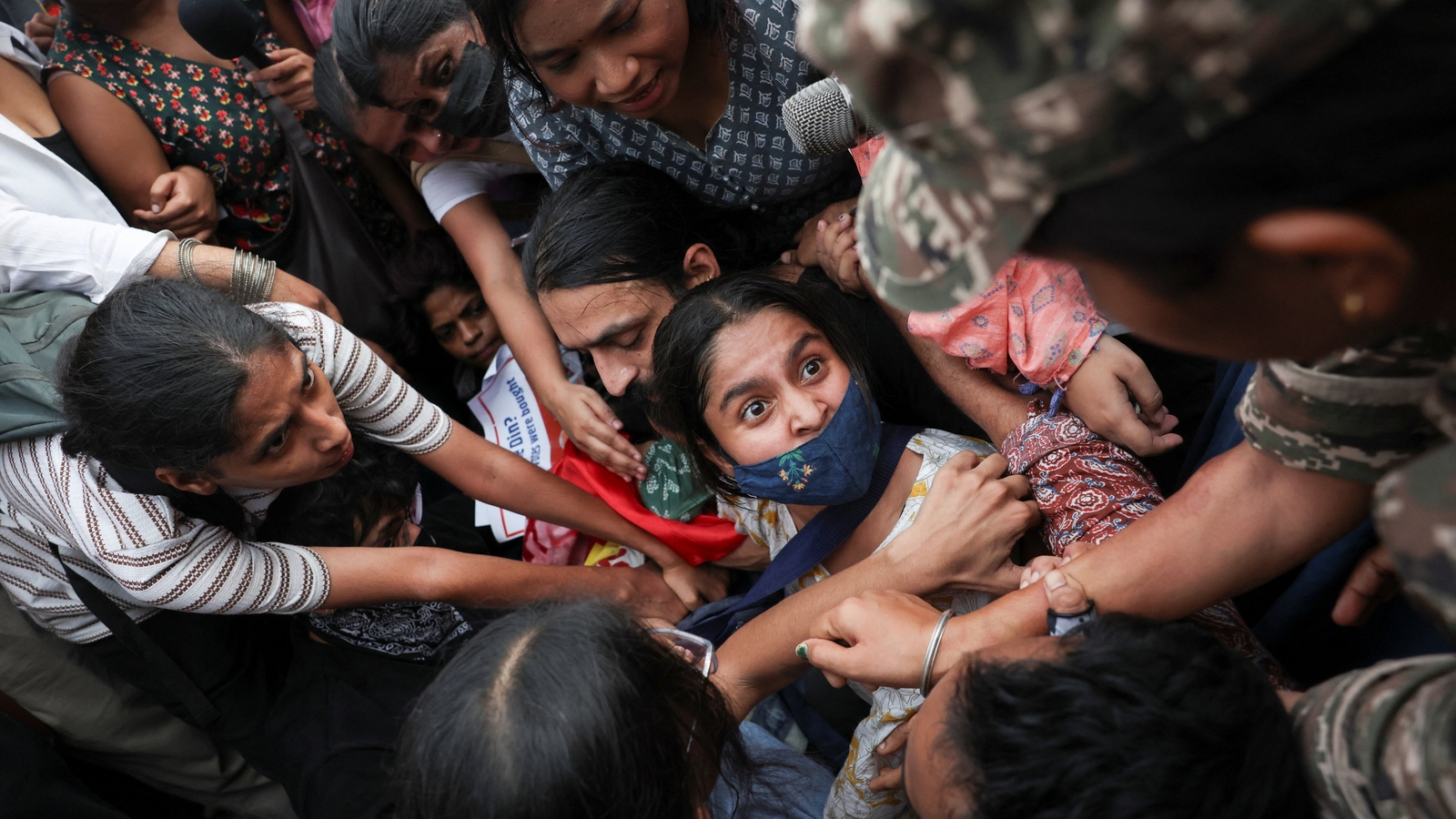
In Florida, Governor DeSantis officially enacted a new law on April 11 hardening state controls—reportedly targeting educational content, immigration enforcement, and community gatherings—igniting immediate backlash from universities and immigrant-heavy neighborhoods (Clarin). Protests erupted in Miami and Gainesville, with students decrying it as an overreach stifling free speech. This aligns with broader trends explored in the overlooked link: how 2026 U.S. legislation on energy and immigration is reshaping community resilience.
India's Prime Minister Modi penned letters to opposition parties on the same day, urging consensus on women's reservation bills aimed at boosting female representation in legislatures (Times of India). This comes amid coalition pressures and follows stalled attempts in prior sessions.
Ghana's parliamentary Speaker Alban Bagbin declared himself a "man of action," dismissing rumors and pledging to pass the long-pending anti-LGBTQ bill, which would criminalize same-sex activities and advocacy (MyJoyOnline, April 11 event timeline). Unconfirmed reports suggest presidential assent could follow swiftly, though human rights groups warn of Western aid cuts.
These events cluster on April 11, 2026, per the recent timeline, alongside lower-impact items like Libya's budget unification and Thailand's aid increases, underscoring a global pivot toward domestic fortification.
Context & Background
To grasp the deeper currents, these shifts must be viewed through the lens of 2026's unfolding timeline, where today's actions preemptively mirror patterns already materializing. Iraq's election of Amedi parallels the April 10 swearing-in of Myanmar's junta chief as president, both reflecting ethnic minority elevations amid junta-like instability and war fallout—a cautionary echo of how leadership changes in fractured states exacerbate regional fractures. Just as Myanmar's move signaled hardened military control, Amedi's presidency could tilt Iraq toward Kurdish autonomy, straining ties with Baghdad's Arab majorities and Tehran-backed militias. Explore more on global legislation's enforcement pivot: a 2026 wake-up call amid rising security demands.
Florida's law evokes flaws exposed in Zimbabwe's CAB3 hearings on April 10, where rushed processes led to judicial overreach and public distrust. DeSantis' measure, like Zimbabwe's, prioritizes security over deliberation, potentially inviting court challenges akin to Argentina's Judge Carlos Mahiques defending his tenure in the Senate (Clarin). Meanwhile, Ghana's anti-LGBTQ push resonates with Norway's April 10 approval of tighter refugee rules, both framing social conservatism as a bulwark against "external influences"—in Ghana's case, LGBTQ rights advocacy tied to Western migration narratives; in Norway's, curbing asylum from Middle East conflicts.
South Korea's April 10 budget allocation for Mideast war effects foreshadows economic ripples from Iraq's shift: oil supply disruptions could inflate global energy costs, straining budgets worldwide. See related coverage in global legislation in 2026 and oil price forecast: from digital safeguards to social reforms amid rising disruptions. Peshawar High Court's April 10 ban on government resources for rallies highlights judicial checks on populist enforcement, a model that could test Florida or Ghana's laws. Trump's approval of disaster aid for seven U.S. states (Newsmax) amid climate woes adds layers, as states like Florida blend natural disaster response with cultural crackdowns.
This interconnectedness reveals a proactive global response: nations anticipating 2026's instabilities—escalating Mideast wars, mass migrations—are enacting policies to insulate societies, often at the cost of pluralism. Human stories abound: Iraqi Kurds like Amedi's supporters, long marginalized, see hope in representation; Florida's Latino families fear family separations; Indian women eye quotas for empowerment; Ghanaian conservatives view the bill as cultural preservation. Track these risks via our Global Risk Index.
Why This Matters
These legislative moves uniquely position current events as harbingers of 2026's geopolitical tensions, addressing refugee crises and conflicts preemptively in ways prior coverage overlooks. Iraq's presidency change matters profoundly: Amedi's Kurdish roots could embolden Erbil's oil independence, irking Iran and Turkey, potentially reigniting proxy wars with economic fallout—echoing South Korea's preemptive budgeting. For stakeholders, this means heightened U.S. involvement, as Washington balances Kurdish allies against Baghdad stability.
Florida's law amplifies DeSantis' national ambitions, testing populist appeals in a swing state amid Trump's disaster aid approvals. It humanizes divides: university students, many first-gen immigrants, feel targeted, mirroring global youth unrest. India's bills, if passed, could reshape democracy by empowering 50% of the population but risk tokenism if not paired with caste reforms—Modi's outreach signals coalition fragility.
Ghana's bill underscores Africa's conservative surge, linking anti-LGBTQ stances to anti-refugee sentiments, as Norway's rules did. Original analysis: These policies interconnect via migration fears; Middle East fallout drives European/Asian restrictions, which in turn fuel African cultural backlashes against perceived Western imports. Courts, like Peshawar's, emerge as global arbiters, potentially delaying enforcement and forcing balances.
Economically, per recent events, France's power shift and EU travel rules signal energy-security pivots amid oil risks. The human impact is stark: families divided by borders, women sidelined or uplifted, minorities emboldened or erased—amplifying 2026's fault lines toward authoritarian drifts if unchecked.
What People Are Saying
Social media erupted with polarized reactions. On X (formerly Twitter), @IraqAnalyst tweeted: "Nizar Amedi's election is a win for Kurds but a red flag for unity—Baghdad protests brewing? #IraqPresident" (12K likes). Florida drew fury: @MiamiActivist posted, "DeSantis' law silences our voices in classrooms. Students walking out NOW #ResistFL" with video of Gainesville rallies (45K views). Support came from @FLPatriotVoice: "Finally, protecting our kids from radical agendas. DeSantis 2028! #FloridaStrong" (8K retweets).
India's push elicited optimism: @WomenInPolitics_IN: "Modi's letters a game-changer for #WomensQuota. Time for real representation!" (20K likes). Ghana's bill sparked global outcry: @HRW_Africa: "Bagbin's vow threatens lives. Ghana, uphold rights amid refugee pressures #RepealAntiLGBTQ" (30K shares), countered by @GhanaFirst: "Cultural sovereignty over foreign agendas. Pass the bill! #FamilyValues" (15K likes).
Experts weighed in: Al Jazeera's analyst noted, "Amedi's rise amid war fallout tests Iraq's fragile peace." MyJoyOnline quoted activists fearing "exile waves" from Ghana.
Catalyst AI Market Prediction
The World Now Catalyst AI anticipates market ripples from these geo-legislative tensions:
- TSM: Predicted - (medium confidence) — Risk-off hits semis as high-beta growth amid geo uncertainty. Historical: Feb 2022 Ukraine TSM -5% in 48h. Key risk: AI demand insulates.
- SPX: Predicted - (medium confidence) — Indirect risk-off from ME tensions via energy fears. Historical: Jan 2020 Soleimani SPX -0.5% intraday. Key risk: De-escalation rallies defensives.
- BTC: Predicted - (medium confidence) — Risk-off deleveraging. Historical: Feb 2022 Ukraine -10% in 48h. Key risk: Safe-haven if USD weakens.
- CHF: Predicted + (low confidence) — Safe-haven flows. Historical: 2022 Ukraine appreciation.
- OIL: Predicted + (high confidence) — ME supply risks. Historical: 2006 Israel-Lebanon +10%.
- GOOGL: Predicted - (low confidence) — Risk-off from tech. Historical: 2022 Ukraine Nasdaq -5%.
- SPX (alt): Predicted - (medium) — Broad risk-off, World Bank warnings. Historical: 2006 Hezbollah -5% week.
- USD: Predicted + (medium) — Safe-haven bid. Historical: 2019 Soleimani DXY +0.5%.
- META: Predicted - (low) — High-beta selloff. Historical: 2022 Ukraine -8%.
- ETH: Predicted - (medium) — Follows BTC. Historical: 2022 Ukraine -12%.
- BTC (alt): Predicted - (medium) — Overrides CPI surge. Historical: 2022 Ukraine -10%.
Predictions powered by [The World Now Catalyst Engine](/catalyst). Track real-time AI predictions for 28+ assets.
What to Watch
Iraq's Amedi presidency could spark Middle East escalations—watch Tehran's response and U.S. aid flows, potentially mirroring Myanmar's junta fallout into broader conflicts. Stricter refugee policies may proliferate: Europe's EU travel rules (April 10) could tighten further, echoing Norway, driven by Iraq/Syria migrations.
Ripple effects: Populist leaders like DeSantis or Modi gain leverage, reshaping alliances—Florida's law tests 2028 U.S. dynamics; India's bills bolster BJP. Social fallout looms: University protests in Florida/Ghana, akin to Zimbabwe's hearings, could swell into global human rights clashes.
By 2027, expect reevaluations—court interventions like Peshawar's may force reforms, averting authoritarianism. Balanced policies, integrating security with rights, will be key; otherwise, 2026's tensions harden into entrenched divides. Original prediction: Oil spikes (high confidence per Catalyst) trigger S. Korea-style budgets globally, pressuring Ghana/India economies and fueling anti-migrant backlash.
This is a developing story and will be updated as more information becomes available.