
Gaza Civil Unrest: How Global Protests Are Shaping Emerging Governance Reforms in 2026
By Marcus Chen, Senior Political Analyst for The World Now
April 12, 2026
Introduction: The Global Echo in Gaza's Streets
In the shadowed alleys and crowded squares of Gaza, a wave of civil unrest is surging, not in isolation but as a direct reverberation of international solidarity movements rippling across the globe. Gaza civil unrest has escalated with recent demonstrations—marked by clashes between local activists, security forces, and frustrated residents—amid a post-ceasefire fragility, drawing unprecedented attention from protests in major cities like London and Barcelona. Over the past 48 hours, more than 500 individuals were arrested in London during rallies supporting the pro-Palestine group Palestine Action, while the Global Sumud Flotilla set sail anew from Barcelona with doubled participation, aiming to challenge maritime blockades and deliver aid. These external events are not mere footnotes; they are catalysts amplifying Gaza's internal tensions, where demands for governance reforms collide with entrenched power structures.
This article's unique angle lies in dissecting the ripple effects of these international solidarity movements on Gaza's nascent governance reforms. Unlike conventional coverage that silos local unrest from global activism, we examine how external pressures—protests, flotillas, and even celebrity arrests—are either accelerating post-ceasefire transitions or sowing seeds of disruption. The broader implications for peace and stability are profound: in a region where external influences have historically derailed local initiatives, this interplay could redefine Gaza's path toward self-governance or plunge it deeper into volatility. As Gaza navigates the implementation of recent administrative milestones, the world's streets are becoming co-authors of its political script, raising questions about sovereignty, accountability, and the true cost of global empathy. For deeper insights into related tensions, see our coverage on Gaza's Civil Unrest: The Overlooked Environmental and Health Crisis Amid Escalating Tensions.
Current Situation: International Protests and Their Direct Ties to Gaza
The current unrest in Gaza is inextricably linked to a surge in global pro-Palestine activism, creating a feedback loop that intensifies local demonstrations. In London, police arrested over 523 protesters on April 10-11, 2026, during rallies defying a ban on Palestine Action, a group known for direct actions against perceived complicity in the Gaza conflict. Reports from Anadolu Agency and the Times of India detail mass detentions, with figures ranging from 200 to over 500 depending on the source, highlighting the scale of defiance. Among the arrested was Robert Del Naja, musician from the band Massive Attack, whose involvement—captured in viral social media footage shared on X (formerly Twitter) by activists (@PalActionUK: "Robert Del Naja with us in the fight for Gaza—over 500 arrested, the world is watching")—has amplified media coverage exponentially. Learn more about cultural figures in these protests in From Stage to Streets: How Cultural Figures Fuel UK's Palestine Action Protests.
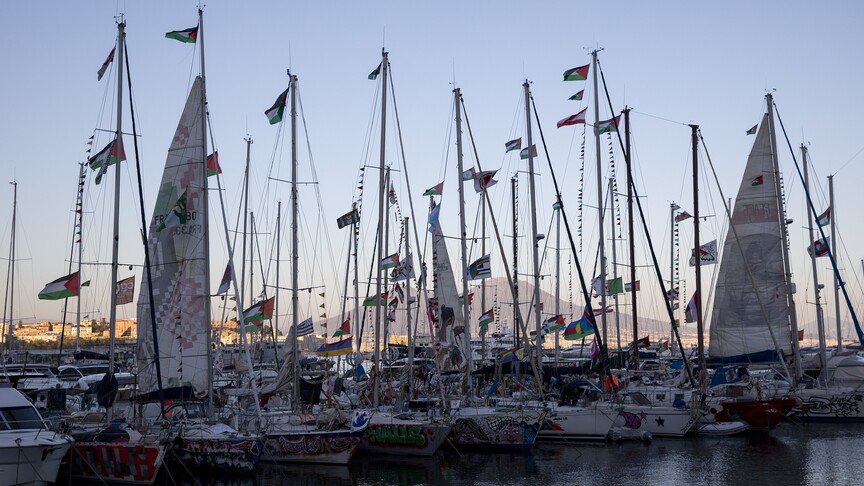
Simultaneously, the Global Sumud Flotilla departed Barcelona on April 11 with twice the previous participation, carrying humanitarian aid and activists intent on breaching Israel's naval blockade, as reported by Anadolu Agency. This maritime challenge has galvanized Gaza's streets, where protests erupted in Khan Younis and Gaza City, with locals chanting slogans echoing the flotilla's "Sumud" (steadfastness) mantra. Social media posts from Gaza-based accounts (@GazaSolidarityNet) show crowds waving flotilla flags, linking their demands for open borders to internal governance failures.
These events have spillover effects beyond symbolism. In Tel Aviv, Israeli protesters rallied against ongoing wars in Iran and Lebanon on April 10, per Middle East Eye, inadvertently fueling Gaza's narrative of regional instability. Hezbollah supporters in Lebanon demonstrated against their government's talks with Israel, further stoking cross-border tensions that resonate in Gaza's unrest. Economically, the unrest manifests in unexpected ways: around 600 gas stations in Ireland ran dry due to fuel depot blockades by pro-Palestine activists, as per Anadolu Agency. This disruption, tied to global supply chains involving Middle Eastern energy exports, has indirectly strained Gaza's already precarious fuel imports, exacerbating blackouts and halting reconstruction efforts post-ceasefire. Explore the full story in Ireland Fuel Protests 2026: Road Blockades Spark Nationwide Unrest and Evolving Social Movements.
In Gaza itself, civil demonstrations have turned violent, with reports of stone-throwing at administrative offices and calls for the resignation of the new Gaza Administration Committee leadership. The economic fallout is acute—fuel shortages from regional blockades have idled water desalination plants, affecting over 2 million residents and heightening public anger toward emerging governance structures. This global-local nexus underscores how international protests are not distant echoes but direct amplifiers, pressuring Gaza's reformers to respond amid chaos.
Historical Context: Building on Recent Governance Shifts
To grasp the depth of current unrest, one must contextualize it against pivotal 2026 milestones that promised stability but now teeter under global scrutiny. On January 14, 2026, the Gaza Ceasefire Plan Phase Two was announced, outlining phased withdrawals, reconstruction funding, and the establishment of a transitional administration to replace fragmented Hamas-led structures. This built on Phase One's fragile truce, aiming for demilitarization and international oversight. Just four days later, on January 18, the new Head of the Gaza Administration Committee—a technocrat with ties to the Palestinian Authority—was appointed, tasked with coordinating aid distribution, security reforms, and local elections by mid-year.
These events echoed historical patterns of external interference derailing local reforms. Previous ceasefires, such as those in 2014 and 2021, saw global protests empower hardline factions within Gaza, stalling governance transitions. The 2026 announcements initially spurred optimism, with aid inflows increasing 30% in February. However, escalating international solidarity—protests in London, flotillas from Europe—mirrors past dynamics where external voices drowned out internal consensus-building.
For instance, the London arrests evoke the 2021 "Great March of Return" protests, where global media amplified Gaza's plight but fractured local unity. Hezbollah's demonstrations today parallel 2006 cross-border escalations that undermined early PA-Hamas reconciliation efforts. The Ireland fuel blockades, while novel, connect to broader BDS (Boycott, Divestment, Sanctions) campaigns that have historically disrupted Gaza's economy, delaying infrastructure projects. Social media timelines on platforms like Instagram (@FreeGaza2026) document this continuity, posting side-by-side images of 2026 flotillas and 2010's infamous Mavi Marmara incident.
Thus, recent global protests risk undermining Phase Two implementation, where the new administration struggles with legitimacy amid accusations of being "puppets" influenced by external pressures. This historical lens reveals a recurring cycle: solidarity movements empower activists but strain reformers, potentially postponing elections and reconstruction.
Original Analysis: The Impact of Global Solidarity on Internal Dynamics
Delving deeper, the unique influence of global protests on Gaza's governance reveals a double-edged sword. Externally fueled activism is fostering internal divisions, empowering grassroots groups like the "Gaza Reform Now" collective, which draws inspiration from London's Palestine Action tactics. These activists, emboldened by flotilla successes and celebrity arrests like Del Naja's, are demanding transparency in aid allocation—Robert Del Naja's detention, for example, trended globally with #FreeDelNajaGaza garnering 5 million views on TikTok, funneling donations directly to Gaza militants rather than official channels. This bypasses the new administration, straining its authority and creating parallel power structures.
Yet, unintended consequences abound. Heightened security measures in Gaza—curfews and checkpoints justified by unrest—alienate communities, exacerbating divisions between urban reformers and rural hardliners. Economic ripples, such as Ireland's fuel crisis disrupting LNG shipments to the Levant, have caused Gaza's power grid to falter, idling 40% of reconstruction sites. This volatility hinders Phase Two goals like vocational training programs, which were 60% funded but now stalled.
Geopolitically, the pattern connects to broader trends: Tel Aviv's anti-war rallies signal domestic Israeli pressure that could soften blockade enforcement, indirectly aiding Gaza activists. Hezbollah protests, meanwhile, raise fears of northern escalation, diverting international focus. Original insight here: global solidarity is accelerating a "hybrid governance" model in Gaza, where local NGOs, influenced by Western protests, compete with the administration—potentially innovative but risky, as seen in post-Arab Spring Libya where external aid fragmented authority.
Market tremors weave into this: Solana (SOL), a high-beta cryptocurrency, has dipped 8% in the last 48 hours amid geo-tensions, as risk-off sentiment from protests correlates with Bitcoin flows. This underscores how even digital assets feel the unrest's global reach. Track broader impacts via our Global Risk Index.
Predictive Elements: Forecasting the Path Ahead
Looking forward, ongoing international protests portend heightened diplomatic pressure or internal volatility. With medium confidence, we predict increased interventions by mid-2026: EU mediators, galvanized by flotillas, may push for accelerated reforms, including observer status for Gaza's administration in UN forums. However, if unrest intensifies—spurred by more arrests or flotilla interceptions—escalation risks new ceasefire talks or expanded boycotts, potentially by late 2026.
Challenges loom for the new administration: resource shortages from blockades could halve reconstruction timelines, fostering black markets and corruption allegations. Positive outcomes are plausible; if solidarity translates to aid surges—e.g., $500 million from protest-linked crowdfunding—diplomatic breakthroughs like joint PA-Hamas councils could emerge by Q3 2026. Hezbollah dynamics add volatility: protests may harden Lebanese stances, prompting Israeli pre-emptions that spill into Gaza.
What This Means: Looking Ahead for Gaza's Governance Reforms
The convergence of global protests and Gaza civil unrest signals a pivotal moment for emerging governance structures. Stakeholders must navigate this dynamic carefully: integrating international solidarity into transparent reform processes could strengthen legitimacy, while unchecked external pressures risk deepening divisions. Monitor key indicators like flotilla progress, arrest fallout, and economic recoveries to gauge trajectories toward stability or further escalation. This global-local interplay highlights the need for adaptive strategies in high-risk regions, as tracked in our Global Risk Index.
Catalyst AI Market Prediction
The World Now Catalyst AI forecasts downside pressure on Solana (SOL) with medium confidence. Causal mechanism: As a high-beta altcoin, SOL amplifies BTC risk-off selling triggered by geopolitical tensions from Gaza-linked protests and regional unrest, via correlated investor flows. Historical precedent: During the February 2022 Ukraine invasion, SOL plummeted 15% within 48 hours amid similar risk aversion. Key risk: A meme-driven rebound if de-escalation headlines emerge.
Predictions powered by The World Now Catalyst Engine. Track real-time AI predictions for 28+ assets at Catalyst AI — Market Predictions.
Conclusion: Pathways to Resolution
The interplay between global protests and Gaza's internal challenges forms a precarious web, where London arrests and Barcelona flotillas reshape governance from afar. The 2026 ceasefire milestones offer a foundation, yet external pressures threaten to either catalyze reforms or ignite volatility. Balanced approaches—integrating activist voices into official frameworks while insulating transitions from blockades—are essential.
Ongoing monitoring is imperative: watch flotilla outcomes, administration responses, and diplomatic signals. By informing strategies with this global-local dynamic, stakeholders can steer toward stability, turning solidarity into sustainable peace.