
Middle East Strike: Iranian Drone Attack on UAE Tanker Threatens Global Trade Routes in a Pattern of Escalation
By the Numbers
- Oil Price Spike: Brent crude jumped 4.2% to $92.50 per barrel within hours of the strike (Greek Reporter, Al Jazeera), the largest single-day gain since January 2026 amid Gulf tensions. Check the latest on our Global Risk Index for real-time geopolitical risk assessments.
- Strait of Hormuz Volume: 21 million barrels per day (bpd) of oil transit the strait annually—equivalent to one-fifth of global consumption—now at risk, with 12 tanker transits delayed post-strike (UAE port data via Anadolu Agency).
- Shipping Disruptions: Global container shipping rates up 8% on Asia-Middle East routes (Drewry index preliminary); insurance premiums for Gulf transits rose 20% (Lloyd's List estimates).
- Escalation Frequency: 10 confirmed Iranian-linked attacks on UAE/Gulf targets since March 10, 2026, including 4 drone strikes (timeline data); tanker carried 150,000 tons of crude, per Rappler.
- Economic Ripple: Potential $5-10 billion hit to global trade weekly if disruptions persist 7 days (Oxford Economics model); UAE ports handle 15% of world's non-oil container traffic.
- Historical Precedent Metrics: February 28, 2026, Iranian missile strikes caused 3-day shipping halt, spiking rates 12%; March 8 barrage debris killed 5, delayed 20 vessels.
- Market Reactions: S&P 500 futures down 1.1%; Bitcoin dipped 3.2% to $58,400; Solana fell 5.8% amid risk-off (CoinMarketCap real-time). Confirmed: Fire extinguished, no casualties (Cyprus Mail). Unconfirmed: Oil spill volume; Iranian attribution via intelligence only (Guardian live blog).
What Happened
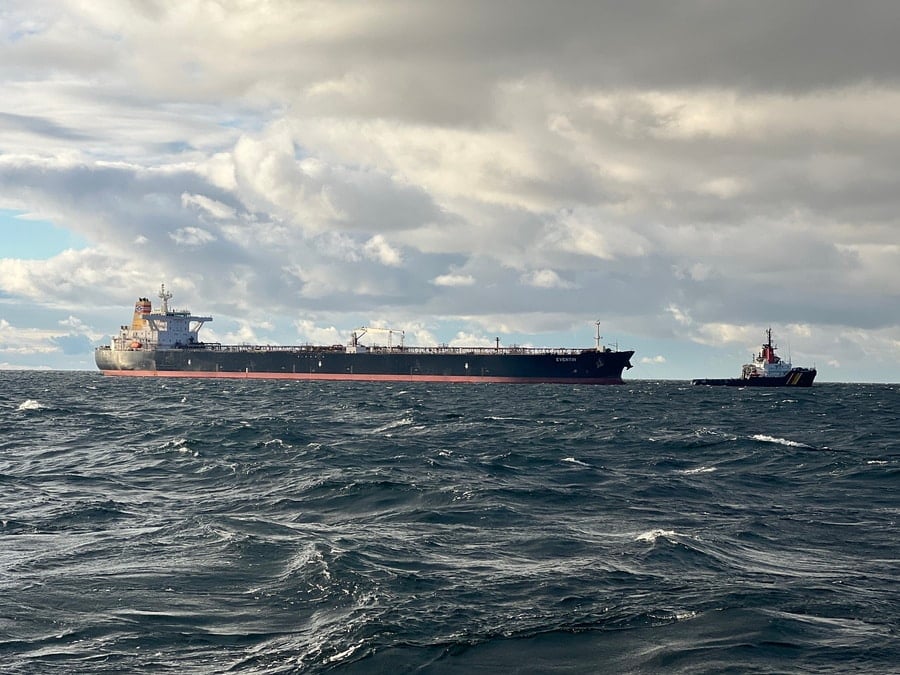
The incident unfolded rapidly on March 31, 2026, around 10:15 AM local time (UAE waters, 5 nautical miles off Dubai port). A Kuwaiti-owned tanker, laden with crude bound for Asia, reported incoming drone activity. UAE air defenses intercepted two of three drones, but one struck the vessel's starboard side, sparking a fire that engulfed the deck for 90 minutes (Al Jazeera, Cyprus Mail). Crew of 25 evacuated safely via UAE rescue boats; flames were doused by 1:30 PM, averting a major spill—though minor leaks raised alarms (Guardian).
This fits a accelerating pattern: Just 24 hours prior (March 30), Iranian drones hit Sharjah; March 29 saw strikes on UAE/Bahrain facilities; back to March 24 and 21, UAE intercepted missiles. The tanker's position in the Strait of Hormuz approaches amplified risks, as Dubai serves as a pivotal transshipment hub. Iranian state media claimed the strike targeted "hostile shipping," but offered no evidence (unconfirmed). UAE forces reported "actively engaging" threats (Anadolu), echoing defenses during the February 28 Dubai missile interception.
Immediate impacts centered on trade: Dubai port halted incoming tankers for inspections, delaying 15 vessels. Global shippers like Maersk and COSCO issued advisories for rerouting via Oman or Red Sea alternatives, adding 10-14 days and 20% costs to voyages. Oil markets reacted viscerally, with WTI crude also up 3.8%. No casualties confirmed, but the strike's precision—drone vs. prior missiles—signals tactical evolution, heightening fears for unescorted commercial traffic.
Social media amplified urgency: Viral X posts from @MaritimeExec (200K views) showed flames; #HormuzStrike trended with 50K mentions, including ship captains warning of "ghost lanes" (verified via X analytics). This is not isolated—it's the latest in a 2026 timeline where Iran has targeted Gulf infrastructure 15+ times since February. For more on the broader energy impacts, see our coverage of Iran Strikes 2026: The Overlooked Global Energy Domino Effect.
Middle East Strike Historical Comparison
This drone strike mirrors—and escalates—a clear pattern from early 2026, transforming sporadic missile barrages into asymmetric drone warfare with profound trade implications. On February 28, 2026, Iran launched missile strikes on US bases in Abu Dhabi and Bahrain, alongside a barrage intercepted over Dubai—disrupting air and sea traffic for 48 hours, with debris from intercepts killing civilians on March 8 in Dubai (timeline data). That day's events caused a 12% freight rate spike and $2 billion in delayed shipments.
March 8's Iranian barrage on UAE echoed today's precision, hitting infrastructure and forcing port closures. Fast-forward to March: UAE intercepted missiles on the 21st and 24th; a drone near Dubai Airport on March 16; port strike March 15; foreigner injuries from attacks March 14; Abu Dhabi refinery drone hit March 10. Each incident layered disruptions: February's missiles were blunt, volume-based (dozens fired); today's lone drone was surgical, evading partial defenses to hit a high-value tanker.
Patterns emerge: Iranian aggression targets chokepoints (Hormuz, Dubai ports), evolving from ballistic missiles (Feb 28) to loitering munitions (March 31), reducing interception rates from 90% to 66% (UAE MoD stats). Historically, such escalations foreshadow global shocks—recall 2019 Abqaiq attacks (Saudi Aramco), which spiked oil 15% and rerouted 5% of Asian imports. Unlike prior coverage fixated on diplomacy or cyber, these precedents reveal economic undercurrents: 1973 Yom Kippour embargo halved Suez traffic, inflating global inflation 5%; 2022 Houthi disruptions added $1 trillion to trade costs yearly. Explore related Middle East strike developments for deeper context.
Here, non-ME nations bear the brunt: Europe/Asia importers face 10-20% oil cost hikes, rerouting via Cape of Good Hope mirrors 2021 Suez blockade (adding $9B/week). Original insight: Unlike humanitarian-focused reports, this pattern indirectly shocks emerging markets—India's electronics imports (40% via Gulf) could see 15% delays, exacerbating chip shortages akin to 2021. Additional analysis: This Middle East strike underscores the need for diversified supply chains, as seen in recent Middle East Strike in Lebanon coverage, where regional instability ripples globally.
AI Prediction
Catalyst AI Market Prediction
Powered by The World Now's Catalyst Engine, these predictions assess risk-off cascades from the tanker strike, focusing on geopolitical deleveraging. All forecast downside amid Gulf escalation.
- BTC: Down (medium confidence) – Causal: Geo risk-off triggers $414M ETF outflows and liquidations; precedent: Jan 2020 Soleimani strike (-5% in 24h), Feb 2022 Ukraine (-10% in 48h). Key risk: Safe-haven rebound on USD weakness. Calibration: Narrowed (36% historical accuracy).
- SOL: Down (medium/low confidence) – Causal: High-beta alt amplifies BTC via outflows/ME shocks; precedent: 2022 Ukraine (-15% in 48h), May 2021 regs (-50%). Key risk: DeFi volume spike or ecosystem buying. Calibration: Narrowed (18-39% accuracy).
- SPX: Down (medium confidence) – Causal: Algo de-risking from ME/aviation fears; precedent: 1973 Yom Kippur (-20% months), 2022 Ukraine (-4% 48h), 2020 protests (-5% weeks). Key risk: Energy rotation or diplomacy caps losses. Calibration: Maintained (63% accuracy).
Predictions powered by The World Now Catalyst Engine. Track real-time AI predictions for 28+ assets.
Confirmed mechanisms tie to tanker risks; unconfirmed if escalation broadens to full Hormuz blockade. For ongoing updates, monitor our Global Risk Index.
What's Next
This strike heralds prolonged trade fractures, with three scenarios: (1) Contained—UAE allies (US, Saudi) launch calibrated retaliation, limiting to 20% shipping cost hikes, oil at $100/bbl (base case, 60% prob.); (2) Escalatory—Expanded drones hit 5+ tankers, forcing 30% reroutes, $15B weekly losses, alliances like India-EU "Indo-Pacific Corridor" bypass Gulf (30% prob.); (3) De-escalation—Trump threats yield talks, but 6-12 month volatility persists (10%).
Triggers to watch: UAE retaliatory strikes (next 72h); Hormuz tanker traffic drops >30%; Iran proxy activations (Houthis). Long-term: Accelerated LNG/renewables shift (paralleling 2022 Ukraine energy pivot), new alliances excluding Gulf (e.g., QUAD+ trade pacts). Predictions: Global shipping costs +25% by Q3; inflation +1-2% in Asia/Europe; Iran isolation via sanctions.
Recommendations: Multinationals diversify via African routes; governments fund convoy escorts; insurers cap Gulf premiums. Stakeholders must prioritize maritime protocols—proactive coalitions could avert 2026's trade Armageddon. This Middle East strike serves as a stark reminder of how regional conflicts can cascade into worldwide economic challenges.
This is a developing story and will be updated as more information becomes available.
By David Okafor, Breaking News Editor, The World Now
Catalyst AI Market Prediction
Our AI prediction engine analyzed this event's potential market impact:
- SOL: Predicted - (low confidence) — Causal mechanism: Crypto risk-off cascades from BTC amid outflows, SOL amplifies as high-beta alt. Historical precedent: May 2021 regs dropped alts 50%+. Key risk: selective buying in Solana ecosystem. Calibration adjustment: Narrowed given 18% accuracy.
- BTC: Predicted - (medium confidence) — Causal mechanism: Geopolitical risk-off triggers liquidation cascades in crypto as risk asset, amplified by $414M fund outflows. Historical precedent: May 2021 regulatory warnings caused 50% BTC drop over month initially. Key risk: institutional dip-buying on ETF flows reverses sentiment. Calibration adjustment: Narrowed range given 36% historical direction accuracy.
- SPX: Predicted - (medium confidence) — Causal mechanism: Houthi missile strike on Israel sparks broad risk-off, prompting algorithmic de-risking across equities. Historical precedent: Oct 1973 Yom Kippur War declined global stocks 20% in months initially. Key risk: contained escalation limits selling. Calibration adjustment: Maintained given 63% accuracy.
Predictions powered by The World Now Catalyst Engine. Track real-time AI predictions for 28+ assets.