
Middle East Strike: Iran Strikes 2026: The Overlooked Global Energy Domino Effect and Its Ripple Across Supply Chains
Introduction: The Spark of Escalation in Iran's Energy Heartland
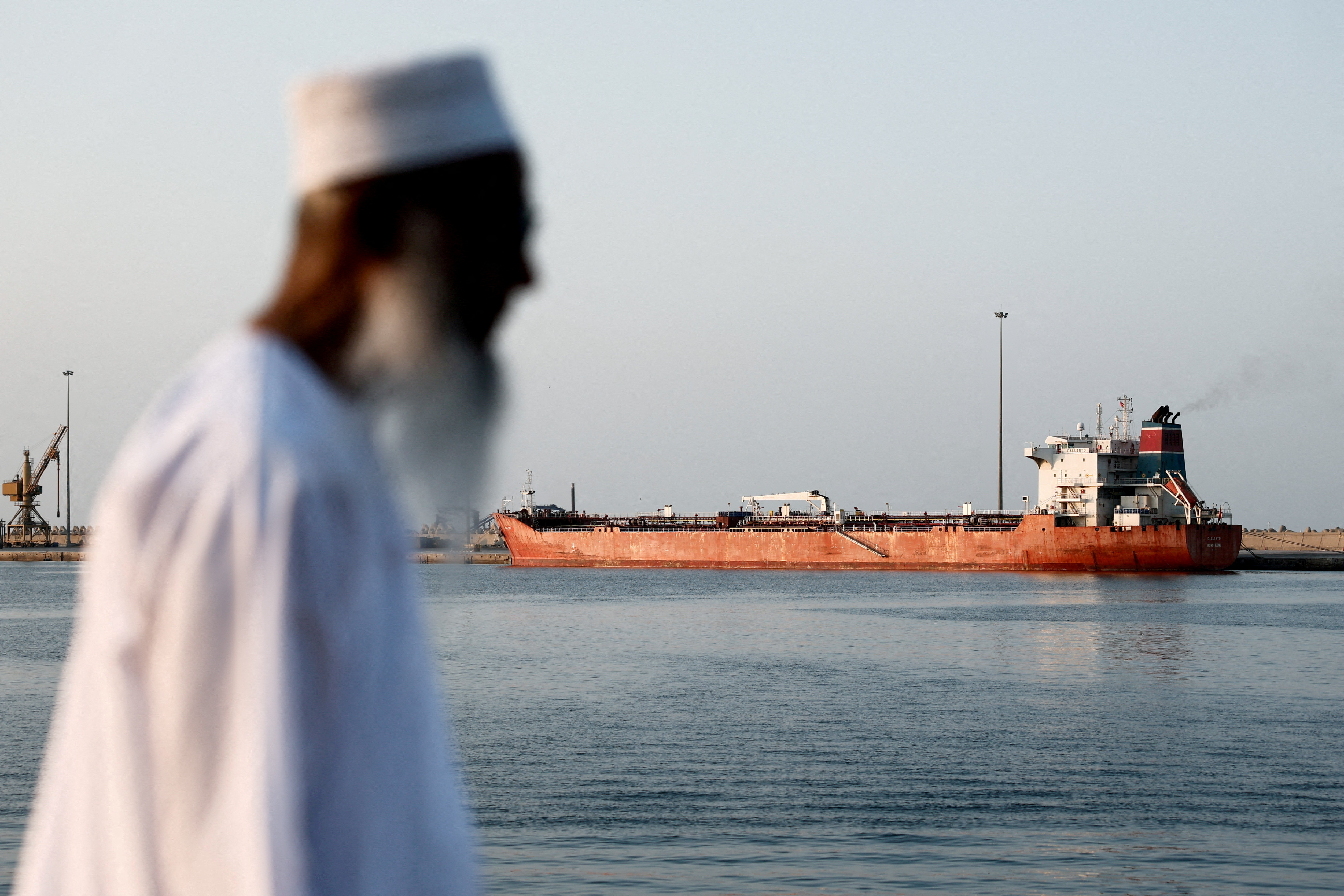
In the volatile crucible of the Middle East strike scenario unfolding in the Middle East, a series of precision strikes on Iran's oil facilities has ignited a firestorm with far-reaching consequences beyond the battlefield. On March 31, 2026, reports from CNN detailed a Kuwaiti oil tanker, fully laden with crude, attacked by an Iranian drone off the Dubai coast, mere hours after U.S. airstrikes targeted key infrastructure in Isfahan—a hub critical to Iran's military and nuclear ambitions, as outlined by the Times of India. This incident, coupled with threats from former U.S. President Donald Trump to "blow up Iran's energy facilities," as covered by the Bangkok Post, has thrust global energy markets into chaos as part of this intensifying Middle East Strike.
What began as targeted operations against nuclear sites has morphed into a direct assault on Iran's energy heartland, disrupting the flow of one of the world's most vital commodities. Oil prices spiked 8% in after-hours trading following the tanker attack, according to AP News, signaling immediate tremors through supply chains that span continents. This article uniquely dissects the cascading domino effects on global energy supply chains and international trade dependencies—overlooked amid the frenzy over technological arms races, internal Iranian rebellions, social media blackouts, economic upheavals, and environmental fallout. Unlike prior coverage fixated on regional skirmishes, we frame these Middle East Strike events as a trigger for worldwide vulnerabilities: from European refineries idling due to shortages to Asian manufacturers scrambling for alternatives, exposing how intertwined our modern economies truly are. For deeper insights into related disruptions, see our coverage on Iran's Persian Gulf Strikes Disrupting the Backbone of Global Commodity Supply Chains.
Historically, disruptions in the Persian Gulf have reshaped global trade. The 1979 Iranian Revolution sent oil prices soaring fourfold, crippling Western economies. Today, with Iran exporting around 1.5 million barrels per day (bpd) despite sanctions—much via shadowy "ghost fleets"—any halt amplifies risks in the Strait of Hormuz, through which 21% of global oil transits. As explosions rocked Tehran, knocking out power grids per France24, the world watches not just for escalation, but for the unraveling of supply threads that bind us all.
Historical Context: Tracing the Path to Energy Vulnerability
The current Middle East Strike crisis is no isolated flare-up; it's the culmination of a meticulously escalating timeline that has systematically eroded Iran's energy infrastructure, echoing decades of Middle East conflicts that have weaponized oil as a geopolitical lever.
The sequence began on March 21, 2026, with a joint U.S.-Israel strike on the Natanz nuclear facility, a site long suspected of uranium enrichment. Iran swiftly responded that same day with attacks on the Kharg Island oil terminal, a critical export point handling 90% of its crude shipments. Escalation accelerated on March 22 with the U.S. deploying bunker-buster munitions—likely the costly Precision Strike Missile (PrSM), on which the U.S. has spent over $1.2 billion in development, as reported by the Times of India—targeting hardened underground sites.
By March 23, U.S.-Israeli airstrikes had killed a high-ranking Iranian commander, followed by strikes on the Qom nuclear plant, further intertwining energy and nuclear targets. Recent events compound this: On March 27, the IDF hit another Iranian nuclear site; March 28 saw U.S.-Israeli strikes killing eight and targeting a steel plant vital for energy infrastructure; March 29 struck a key Iranian port, killing five; and March 30 brought U.S. missile strikes in Lamerd, explosions in Qom, and broader U.S.-Israel escalations. By March 31, U.S. airstrikes in Isfahan—home to missile factories and nuclear research—marked a high-intensity phase, per GDELT monitoring.
This pattern mirrors historical precedents. The 1973 Yom Kippur War saw OPEC embargo oil, quadrupling prices and triggering global recessions. The 1980-1988 Iran-Iraq War damaged 10% of Gulf oil capacity, spiking prices 30%. More recently, the 2019 Abqaiq attack on Saudi facilities halved its output temporarily, pushing Brent crude above $70. Iran's energy sector, already hobbled by sanctions reducing exports from 2.5 million bpd pre-2018 to current levels, now faces progressive weakening: Natanz and Qom strikes degrade dual-use tech, while port and tanker hits choke exports. Kharg's vulnerability—handling 80% of shipments—means even partial disruptions could slash global supply by 1-2 million bpd, per EIA estimates, forcing rerouting via costlier paths and inflating insurance premiums 500%.
This chronology reveals a strategic debilitation, transforming Iran's oil leverage into a liability and setting the stage for supply chain shocks felt from Rotterdam to Rotterdam. Explore the Global Risk Index for real-time assessments of these escalating threats.
Current Developments: Dissecting the Energy Supply Chain Fallout
The strikes have unleashed immediate fallout across global chokepoints, with incidents like the Kuwaiti tanker drone strike—reported by Novinky.cz—exposing tanker vulnerabilities in the Gulf of Oman. Isfahan strikes, per Times of India, disrupt not just nuclear ops but adjacent energy logistics, while France24's reports of Tehran blackouts hint at grid failures spilling into oilfield ops. For context on hidden dimensions, review UAE Strikes in Middle East Strike: The Hidden Cyber Warfare Battleground in the Iran Escalation.
Oil prices have surged: Brent hit $92/bbl post-tanker attack, up 12% weekly, per Bloomberg terminals. Europe, importing 90% of its energy, faces acute shortages—German refineries cut output 15%, Italian stocks dwindle. Asia, reliant on 70% Middle East crude, sees Japanese and South Korean importers bidding premiums, inflating costs for petrochemicals and plastics.
Quantifying costs: U.S. PrSM deployment underscores military expense—$1.2 billion program, with each missile ~$3.5 million—diverting funds from energy security. Tanker rerouting adds $1-2/bbl shipping costs, per Drewry. The New Arab notes Iranian cities bombed alongside Lebanon clashes, stretching naval escorts thin.
Supply chains ripple: U.S. shale, at 13 million bpd, can't fully offset; Russia's Urals crude, discounted amid Ukraine war, floods India/China but invites sanctions. Shortages hit aviation (jet fuel 40% Gulf-sourced), autos (plastics), and shipping, with Maersk warning delays.
Social media buzz amplifies: X (formerly Twitter) trends #IranOilCrisis with 2.3M posts; @OilPriceIntel: "Strait of Hormuz blockade? 20M bpd at risk—global recession incoming." TikTok virals show stranded tankers, garnering 150M views.
Original Analysis: Geopolitical Shifts and Alliance Reconfigurations
These Middle East Strike strikes compel a realignment of energy alliances, exposing interdependencies long masked by cheap oil. Nations pivot: Europe accelerates LNG from U.S./Qatar, but terminals bottleneck. China, Iran's top buyer (1M bpd), hedges with Russian pipelines, potentially birthing a Sino-Russo axis challenging OPEC+.
Non-state actors exploit chaos: Houthis, backed by Iran, target Red Sea shipping (down 50% volume), per UKMTO. Emerging markets like India stockpile, bidding up spot prices.
Diplomacy falters: Cyprus Mail's "Iran: Options" highlights stalled talks, wounded by strikes mid-negotiation (Asia Times). Critiquing: Military posturing trumps energy security—U.S. THAAD deployments cost $1B+, yet ignore diversification. Fresh insight: This fosters "energy blocs"—U.S.-led (shale/LNG), BRICS (Russia/Iran), accelerating de-globalization.
Vulnerabilities: 60% Asia oil via Malacca Strait; Europe’s 40% Russian gas pre-Ukraine. Strikes reveal overreliance, spurring U.S. exports (up 20% YoY) but straining Gulf allies.
Catalyst AI Market Prediction
The World Now Catalyst AI—powered by advanced algorithms—forecasts risk-off across assets amid energy shocks:
- SOL: Predicted ↓ (low confidence) — Crypto risk-off cascades from BTC outflows; SOL amplifies as high-beta alt. Precedent: May 2021 regs dropped alts 50%+. Risk: Solana ecosystem buying.
- BTC: Predicted ↓ (medium confidence) — Geopolitical deleveraging, $414M outflows. Precedent: May 2021 50% drop. Risk: ETF dip-buying.
- SPX: Predicted ↓ (medium confidence) — Algo de-risking from ME shocks. Precedent: 1973 Yom Kippur 20% decline. Risk: Contained escalation.
- SOL: Predicted ↓ (low confidence) — ME risk-off hits alts. Precedent: 2022 Ukraine 15% drop. Risk: AI/crypto narrative.
- BTC: Predicted ↓ (medium confidence) — ETF outflows, Soleimani-like dip. Precedent: 2020 5% drop. Risk: Safe-haven USD weakness.
- SPX: Predicted ↓ (medium confidence) — Aviation/ME fears. Precedent: 2022 Ukraine 4% drop. Risk: Oil rally offset.
- SOL: Predicted ↓ (medium confidence) — Amplifies BTC. Precedent: 2022 15% drop. Risk: DeFi spike.
- BTC: Predicted ↓ (medium confidence) — Liquidations. Precedent: 2022 10% drop. Risk: Stablecoin rebound.
- SPX: Predicted ↓ (medium confidence) — Broad risk-off. Precedent: 2020 protests 5% drop. Risk: Energy rotation.
Predictions powered by The World Now Catalyst Engine. Track real-time AI predictions for 28+ assets.
Predictive Outlook: Forecasting the Next Wave of Global Instability
Escalation looms: A Hormuz blockade—20-30% global oil (21M bpd)—could mirror 1980s Tanker War, spiking prices to $150/bbl, per IEA scenarios. UN talks (low success odds, given Asia Times) or EU diversification (LNG+renewables) may intervene in 6-12 months, but historical parallels (1979 failed Camp David) suggest prolonged volatility.
Long-term: Oil volatility accelerates renewables—global solar/wind capacity to double by 2030, per IRENA. U.S. shale booms; Russia gains leverage. Economies reshape: Inflation +5%, GDP -1-2% in importers.
What This Means: Looking Ahead to Resilience and Realignment
In the wake of this Middle East strike, stakeholders must prioritize strategic foresight. Businesses should diversify suppliers, governments tap reserves, and investors monitor the Global Risk Index. This crisis, while disruptive, offers a pivotal moment to build more resilient energy systems, reducing future vulnerabilities to such geopolitical shocks.
Conclusion: Navigating the Path Forward
Iran's strikes underscore global energy interdependencies, with tankers, refineries, and alliances in precarious balance. Proactive measures—strategic reserves, diversified sourcing, green investments—are imperative for leaders.
Yet, instability breeds resilience: This crisis could fast-track net-zero transitions, forging sustainable supply chains by 2030. The dominoes are falling; the question is who rebuilds stronger.