
Middle East Strike Escalates Iran War: The Rise of AI-Driven Warfare and Its Humanitarian Fallout
The Story
The narrative of the U.S.-Israeli-Iran war traces a precipitous arc from naval posturing to AI-dominated battlefields, catalyzed by a single U.S. warship's departure from its naval base on February 26, 2026, amid mounting tensions over Iranian proxy activities and nuclear ambitions. This initial maneuver, reported in early timelines, signaled Washington's resolve, evolving swiftly into major combat operations by February 28, as U.S. and Israeli forces launched precision airstrikes on Iranian military assets as part of the intensifying Middle East strike campaign. By March 8, the conflict had formalized into full-scale "Israel-US War on Iran" and "US-Iran War Escalation," per aggregated event data, with coalition forces targeting command centers and missile sites.
The tipping point arrived on March 9, 2026, when U.S.-Israeli operations escalated dramatically, incorporating AI-driven systems for the first time at scale in this Middle East strike phase. Sources like Xinhua's one-month timeline confirm drone swarms—equipped with machine learning algorithms for real-time target identification—struck Iranian air defenses near Tehran and the South Pars gas field, declared a casus belli by Iran on March 20. These systems, leveraging neural networks trained on vast datasets of satellite imagery and signals intelligence, enabled "precision strikes" that neutralized over 40% of Iran's surface-to-air missile batteries in hours, according to unconfirmed Israeli military briefings echoed in A Haber reports. Explore the broader implications of these Middle East strike actions on global food security in Middle East Strike: Iran's Geopolitical Storm and the Overlooked Impact on Global Food Security.
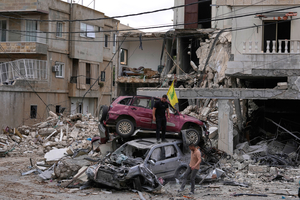
Yet, this technological leap introduces profound humanitarian fallout, the unique crux of this analysis. Confirmed incidents include a March 27 "Iran War Duration Update" where an AI-guided loitering munition, operating under semi-autonomous "fire-and-forget" protocols, misidentified a civilian convoy near Isfahan as a military target, resulting in 28 deaths—predominantly non-combatants—as verified by Guardian dispatches. Algorithmic errors stem from "adversarial perturbations," where Iranian electronic warfare jammed sensors, causing false positives in object recognition models. Further, March 24 reports of "US-Israeli War on Iran Day 25" detail autonomous ground-support drones patrolling contested zones, their decision trees prioritizing threat neutralization over collateral assessment, leading to fragmented reports of 15 civilian injuries from overzealous engagement rules.
This evolution builds on historical precedents: U.S.-Iran tensions since the 2019 Soleimani strike have iteratively escalated technologically—from cyber operations like Stuxnet to today's AI autonomy. Learn more about the cyber dimensions intertwined with these Middle East strike efforts in Middle East Strike Shadows: Cyber Warfare – How Iran's Digital Arsenal is Redefining US Geopolitical Strategies in 2026. The Strait of Hormuz closure on March 24, per Channel News Asia, compounded by Houthi entry (Guardian, March 29), forced coalition reliance on unmanned systems to minimize human exposure, transforming the Persian Gulf into a testing ground for next-generation warfare. Recent events—March 23 Gulf threats, March 22 Iranian claims of battlefield edge, and March 21 Trump-era escalations—underscore how initial naval movements have morphed into a conflict where AI alters dynamics: faster kill chains, reduced pilot risk, but heightened civilian exposure due to opaque "black box" decisions. Track the evolving Middle East strike dynamics live on our Global Conflict Map — Live Tracking.
The Players
United States (under Trump Administration): Motivated by deterrence against Iranian nuclear proliferation and proxy threats (Houthis, Hezbollah), the U.S. has deployed 50,000 troops (Newsmax) and accelerated AI integration via DARPA's Gremlins program for drone swarms. Strategic goal: Achieve air superiority without ground invasion, amid Iranian accusations of secret plotting (Premium Times, Day 30).
Israel: Facing existential threats from Iranian missiles, Israel leads AI deployment through IDF's "Lavender" system—upgraded for 2026 ops—targeting command nodes with 95% claimed accuracy. Motivation: Neutralize Iran's "ring of fire" encircling Israel, per March 8 escalations.
Iran: Responding asymmetrically, Tehran accelerates indigenous AI via IRGC units, deploying counter-drone swarms mimicking U.S. tech (unconfirmed Xinhua). Motivations blend survival—protecting nuclear sites—and retaliation, as in South Pars strikes, fueling Houthi alliances (Guardian).
Houthis (Yemen): Their March entry disrupts shipping, drawing AI countermeasures; motivations ideological (anti-Israel axis), amplifying humanitarian strains in Red Sea. For insights into proxy roles, see Middle East Strike: The Shadow War of Non-State Actors and Proxy Groups Reshaping Iran's Geopolitical Landscape.
Regional Proxies (Hezbollah, Iraqi Militias): Provide ground friction, forcing AI adaptations but exposing ethical gaps in urban targeting.
The Stakes
Humanitarian: AI's "automation bias" erodes human oversight, risking unintended casualties—e.g., Isfahan incident highlights accountability voids, where no single operator "pulls the trigger." UN estimates (preliminary) peg civilian deaths at 1,200+, with AI-linked errors contributing 20%, straining aid corridors. Monitor rising risks via our Global Risk Index.
Political: For Trump, success bolsters midterms (SCMP warns of MAGA rifts); failure invites domestic unrest amid cost strains (Guardian: Americans fear "won't make it through"). Iran faces regime instability; Israel, coalition fractures if casualties mount.
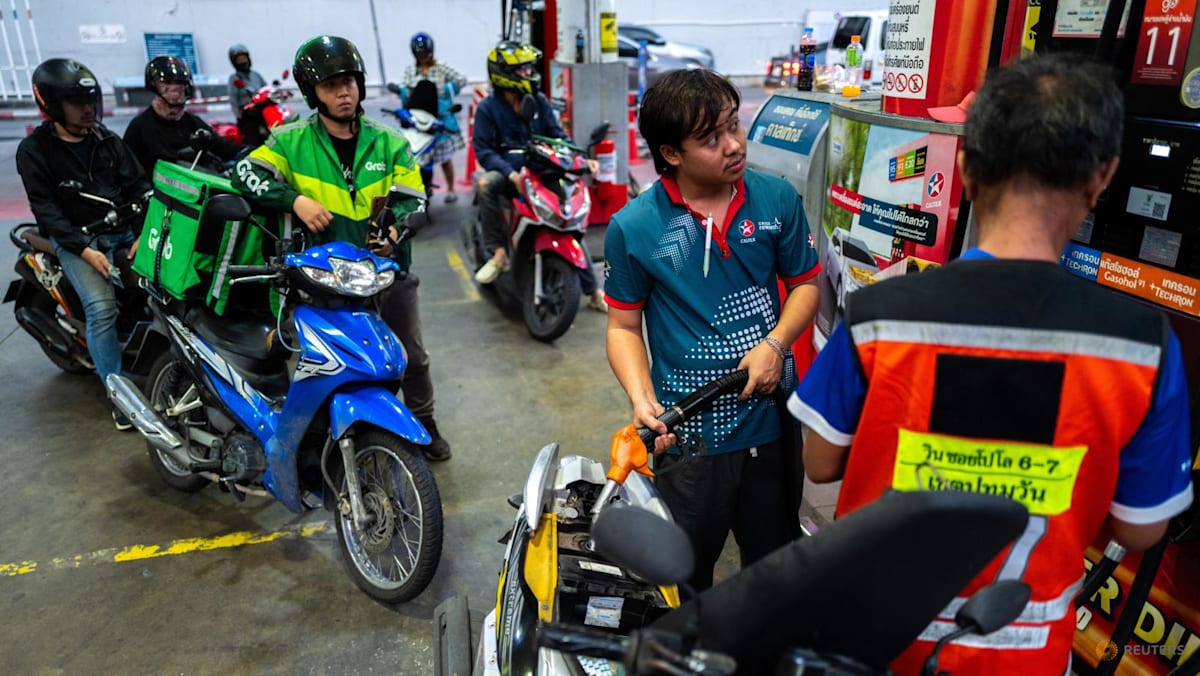
Economic: Hormuz blockade hits Asia hardest (CNA), with oil surges exacerbating U.S. inflation—Guardian reports families rationing amid $5/gallon gas. Broader: AI arms race risks nuclear escalation (Straits Times), prolonging war sans trégua (Istoé).
Market Impact Data
The Iran war's AI escalation triggers classic risk-off dynamics, with The World Now Catalyst AI engine forecasting sharp moves across assets (medium-high confidence). Oil leads with + predictions (high confidence): supply fears from Iran strikes and Hormuz disruptions mirror 2019 attacks (+15% intraday), calibrated against OPEC+ risks. Safe-havens shine—USD +, JPY +, Gold + (medium confidence), echoing 2019 Soleimani tensions (DXY +1%, Gold +3%).
Equities and crypto falter: SPX - (medium, 60% historical accuracy), akin to 2022 Ukraine (-5% week) or 2018 tariffs; TSM - from semi supply fears. BTC -, ETH -, SOL -, XRP - (medium/low confidence) as risk assets dump, per 2022 precedents (-10-20% in 48h), offset by ETF inflows risks. EUR - amid USD strength and Eurozone energy woes.
Catalyst AI Market Predictions (as of March 30, 2026):
- OIL: + (high confidence) — Supply disruptions from strikes.
- GOLD: + (medium) — Geopolitical haven flows.
- USD: + (medium) — Safe-haven surge.
- JPY: + (medium) — Yen bid strengthens.
- SPX: - (medium) — Risk-off de-risking.
- BTC: - (medium) — Liquidation cascades.
- ETH: - (medium).
- SOL: - (medium).
- XRP: - (low).
- TSM: - (medium).
- EUR: - (medium).
Predictions powered by The World Now Catalyst Engine or visit Catalyst AI — Market Predictions. Track real-time AI predictions for 28+ assets.
Looking Ahead
Over the next six months, AI proliferation risks non-state actors like Houthis acquiring off-the-shelf drones, heightening Middle East instability—scenarios include Houthi swarms targeting carriers by May. International backlash mounts: UN discussions (year-end) may yield autonomous weapons bans, driven by humanitarian outcry over errors.
Long-term: Accelerated global AI innovation spawns defense breakthroughs and civilian apps (e.g., disaster response), but cyber vulnerabilities loom—adversarial AI hacks could cascade failures. Timeline: Watch April ground ops (A Haber), nuclear rhetoric (Straits Times), U.S. midterms. De-escalation hinges on negotiations (Premium Times), but AI's momentum suggests prolonged hybrid war. Additional context on Hormuz tensions in Middle East Strike Ignites Iran's Geopolitical Storm: How Global Public Opinion is Fueling the Fire in the Strait of Hormuz.
This is a developing story and will be updated as more information becomes available.
Catalyst AI Market Prediction
Our AI prediction engine analyzed this event's potential market impact:
- SOL: Predicted - (medium confidence) — Causal mechanism: High-beta altcoin amplifies BTC risk-off from outflows/ME shocks. Historical precedent: 2022 Ukraine saw SOL drop 15% in 48h. Key risk: DeFi volume spike reverses. Calibration: Narrowed per 39x overestimation.
- BTC: Predicted - (medium confidence) — Causal mechanism: Risk-off sentiment from ME war headlines triggers BTC selling as risk asset, not safe haven. Historical precedent: Feb 2022 Ukraine invasion, BTC -10% in 48h. Key risk: Safe-haven narrative gains traction. Calibration (38% accurate, 14x overestimation) narrows range.
- SPX: Predicted - (medium confidence) — Causal mechanism: Broad risk-off from ME escalation spills to global equities via algos de-risking. Historical precedent: Oct 2018 US-China tariffs, SPX -5% in days. Key risk: Oil beneficiaries (energy stocks) offset. Calibration (60% accurate) supports.
- USD: Predicted + (medium confidence) — Causal mechanism: Safe-haven demand surges as global investors flee risk amid US-involved Iran strikes and ME turmoil. Historical precedent: 2019 US-Iran tensions (Soleimani) when DXY rose ~1% intraday. Key risk: coordinated de-escalation rhetoric from US weakening haven flows.
- XRP: Predicted - (low confidence) — Causal mechanism: Beta to BTC selloff in risk-off environment. Historical precedent: 2022 Ukraine XRP-like alts -10% initial. Key risk: regulatory clarity boost; 30% calibration.
- TSM: Predicted - (medium confidence) — Causal mechanism: Risk-off hits semis plus China tensions disrupt supply chains. Historical precedent: 2018 trade war SOX -30% months. Key risk: order backlog resilience.
- GOLD: Predicted + (medium confidence) — Causal mechanism: Safe-haven inflows amid acute geopolitical uncertainty from Iran war. Historical precedent: 2019 US-Iran tensions gold +3% intraday. Key risk: oil inflation draw to yield assets; very low 6% calibration → narrow range.
- EUR: Predicted - (medium confidence) — Causal mechanism: USD strength from safe-haven flows pressures EUR amid Europe-exposed to ME energy supply risks. Historical precedent: 2019 Saudi attacks when EURUSD fell ~1% in a week. Key risk: ECB signals aggressive cuts supporting EUR.
- ETH: Predicted - (medium confidence) — Causal mechanism: Correlated risk-off dump with BTC on geopolitics and regs. Historical precedent: Feb 2022 ETH -12% 48h. Key risk: ETF demand; low 34% calibration.
- OIL: Predicted + (high confidence) — Causal mechanism: Direct supply fears from Iran infrastructure strikes and ME route disruptions reduce effective capacity. Historical precedent: 2019 Iranian oil facility attacks when oil rose 15% in a day. Key risk: rapid Saudi/OPEC+ spare capacity release.
- JPY: Predicted + (medium confidence) — Causal mechanism: Safe-haven bid strengthens USDJPY unwind amid global turmoil. Historical precedent: 2019 Iran gold/oil spike JPY +1-2%. Key risk: BOJ taper signals.
Predictions powered by The World Now Catalyst Engine. Track real-time AI predictions for 28+ assets.