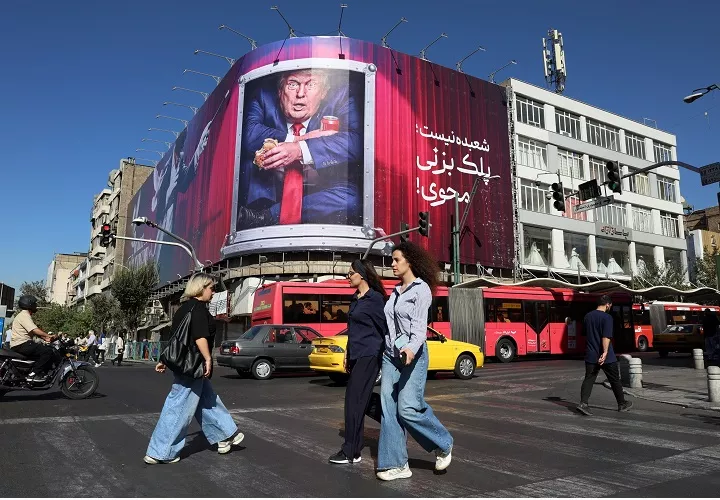

Middle East Strike: Iran's Geopolitical Storm and the Overlooked Impact on Global Food Security
By the Numbers
The data paints a stark picture of escalation and vulnerability:
- 3,500+ U.S. troops deployed: Pentagon reports confirm over 3,500 soldiers surging into the Middle East as of March 29, 2026, with preparations for ground operations lasting "several weeks," per El Imparcial and Guardian sources. This dwarfs initial deployments in similar tensions, signaling sustained commitment.
- 90% of Iran's oil exports: Kharg Island, the focal point of U.S. strike threats since March 15, processes 90% of Iran's crude outflows—about 2.5 million barrels daily—per Times of India. Any blockade or seizure here funnels through the Strait of Hormuz, a 21-mile-wide chokepoint.
- $1.2 trillion in annual trade at risk: The Strait handles 21% of global petroleum liquids (EIA data) and significant non-oil cargo, including 15-20% of Asia-bound grains and fertilizers from Black Sea and U.S. Gulf ports, per RFI analysis. Houthi-style disruptions in the Red Sea already added 40% to shipping costs in 2024; Hormuz closure could double that.
- Global food import reliance: 1.9 billion people in net food-importing developing countries (FAO) depend on seaborne grains; disruptions could inflate wheat prices 20-30% within weeks, mirroring Black Sea blockade spikes in 2022 when prices jumped 42%.
- Recent timeline intensity: 8 high/medium-impact events since March 23, including Iran's Gulf mine threats and U.S. Kharg planning (HIGH confidence), per event logs.
- Human stakes: 820 million undernourished globally (UN 2023); Africa imports 40% of wheat via Indian Ocean routes that could detour via Cape of Good Hope, adding 10-14 days and $1 million per voyage.
These figures aren't abstract—they translate to empty shelves in Nairobi markets or rationed rice in Jakarta, where families already stretch budgets amid inflation. Explore the Global Risk Index for real-time threat assessments tied to this Middle East strike scenario.
What Happened in the Middle East Strike
The crisis crystallized over two weeks, rooted in a March 15, 2026, flashpoint and accelerating into open threats by March 29. Chronologically:
-
March 15: Alliances harden: Iran announced deepened military cooperation with Russia and China, including joint naval drills near Hormuz. Simultaneously, Germany rejected a U.S.-led mission to secure the Strait, fracturing NATO unity and emboldening Tehran. U.S. officials issued explicit strike threats against Kharg Island, Iran's oil export nerve center. See how Middle East Strike: Iran's Shadow Over Global Trade – How Emerging Alliances in Asia Are Redefining Geopolitical Balances analyzes these shifts.
-
March 18: Retaliatory rhetoric peaks: Following an alleged attack on South Pars gas field, Iran vowed strikes on "tourist sites" and U.S. assets. Washington countered with warnings over Iran's nuclear sites, per CNN's UN nuclear chief segment, heightening fears of dual-track escalation—conventional and WMD.
-
March 23: Naval sabotage looms: Iran threatened to mine the Persian Gulf, directly imperiling Hormuz shipping. U.S. weighed "Operation Kharg," lining up brigades for island capture.
-
March 26: Diplomatic feints: Iran offered Hormuz concessions to Spain amid false claims of downing U.S. jets, while tensions simmered at the Strait. Related diplomatic efforts are covered in Diplomatic Crossroads: Pakistan's Unexpected Rise as a Mediator Amid Middle East Strike in Iran-US Tensions.
-
March 27: Direct U.S.-Iran clash: Reports of U.S.-Iran naval standoffs in Hormuz, with Indonesia securing its vessels in response.
-
March 29: Ground war specter: Iran accused the U.S. of plotting assaults while feigning talks (Guardian). Pentagon preps for "weeks of ground ops" leaked, with Tehran vowing to "rain fire" on troops (CNN). Regime rifts emerged, with IRGC clashing internally (HIGH confidence).
Confirmed: Troop surges, threats, and island targeting (multiple outlets). Unconfirmed: Exact mine deployments or nuclear rebuild timelines (CNN video speculative). RFI notes immediate maritime insurance spikes, delaying grain tankers by days already. This isn't isolated saber-rattling; it's a continuum squeezing the Strait's 30% of world's LNG too. For more on public sentiment, read Middle East Strike Ignites Iran's Geopolitical Storm: How Global Public Opinion is Fueling the Fire in the Strait of Hormuz.
Historical Comparison
This mirrors the 1980s Tanker War during Iran-Iraq conflict, when Hormuz attacks sank 411 vessels, cut oil flows 25%, and rerouted shipping—grain prices rose 15% globally amid U.S. reflagging ops. Fast-forward to 2019 Houthi drone strikes: Saudi Aramco halved output, oil spiked 15%, but food felt indirect hits via fertilizer delays (potash from Middle East routes). Closest parallel: 2023-2025 Red Sea crisis, where Houthi attacks (Iran-backed) forced 90% of ships via Cape, adding $1M/voyage, inflating global food prices 10-28% (FAO), worst for Africa (wheat up 50% in Egypt).
Patterns emerge: Iran's asymmetric tactics (mines, swarms) amplify chokepoints' leverage. 2026's alliances—Russia-China drills—echo 1980 Soviet naval shadows, dividing West (Germany's nay). Unlike 2019's quick de-escalation, nuclear shadows and 3,500+ U.S. boots suggest prolonged standoff, like Gulf War buildup. Human toll? Tanker War displaced 100,000s; today's interdependence means Mombasa port delays could starve 20M in East Africa, per WFP models—predictable if unheeded.
AI Prediction
The World Now Catalyst AI forecasts risk-off cascades from Hormuz tensions, drawing on historical ME shocks:
- EUR: Predicted ↓ (medium confidence) — Risk-off flows bolster USD safe haven, pressuring EURUSD amid energy shocks. Precedent: 2019 Houthi attacks dropped EURUSD 1.5% in 48h. Risk: Eurozone response caps gains.
- ETH: Predicted ↓ (medium confidence) — BTC-led selloff hits alts via outflows. Precedent: 2022 Ukraine mirrored BTC's 10% drop. Risk: Staking inflows.
- SOL: Predicted ↓ (medium confidence) — High-beta alt amplifies BTC risk-off. Precedent: 2022 Ukraine -15% in 48h. Risk: DeFi volume reversal (calibrated from 39x overestimation).
- BTC: Predicted ↓ (medium confidence) — Liquidations from ME escalation, ETF outflows. Precedent: 2022 Ukraine -10% in 48h. Risk: Stablecoin dip-buying (13.4x calibration).
- SPX: Predicted ↓ (medium confidence) — Broad de-risking from wars, protests. Precedent: 2020 Floyd protests -5% over 2 weeks. Risk: Energy rotation.
- TSM: Predicted ↓ (low confidence) — Trade fears hit semis. Precedent: 2022 Ukraine -3%. Risk: AI demand buffer.
These tie to food indirectly: SPX/BTC drops signal recession risks, curbing ag investment; historical ME events saw commodity vols spike 2x.
Predictions powered by Catalyst AI — Market Predictions. Track real-time AI predictions for 28+ assets.
What's Next: What This Means for Global Food Security
Watch triggers: Hormuz insurance tripling (already up 50%, RFI), first mine sightings, or Kharg incursion. Scenarios:
- Prolonged blockade (60% odds): 4-6 week delays inflate food prices 15-25%; Africa/Asia shortages by Q4 2026, sparking riots like 2022 Sri Lanka.
- Diplomatic off-ramp (30%): Non-aligned (India, Indonesia) or UN mediation, post-Spain concession model.
- Escalation (10%): Ground ops trigger IRGC fire, full closure—$200/bbl oil, 30% grain hikes.
Long-term: Diversify via Arctic routes or U.S. grain silos, but vulnerable nations need aid stockpiles. Humanizing the math: In Yemen, Red Sea echoes doubled child malnutrition; Hormuz could repeat for 200M. Non-aligned diplomacy or UN food convoys likely by summer to avert crisis. This Middle East strike underscores the urgent need for diversified supply chains to protect global food security amid rising geopolitical risks.
This is a developing story and will be updated as more information becomes available.
Catalyst AI Market Prediction
Our AI prediction engine analyzed this event's potential market impact:
- EUR: Predicted - (medium confidence) — Causal mechanism: Risk-off flows strengthen USD safe haven, pressuring EURUSD amid ME tensions and European exposure to energy shocks. Historical precedent: Similar to 2019 Houthi attacks when EURUSD fell 1.5% in 48h. Key risk: Eurozone policy response caps USD gains.
- ETH: Predicted - (medium confidence) — Causal mechanism: BTC-led risk-off cascades into alts amid outflows and ME tensions. Historical precedent: Feb 2022 Ukraine drop mirrored BTC's 10% in 48h. Key risk: ETH-specific staking inflows counter selloff.
- SOL: Predicted - (medium confidence) — Causal mechanism: High-beta altcoin amplifies BTC risk-off from outflows/ME shocks. Historical precedent: 2022 Ukraine saw SOL drop 15% in 48h. Key risk: DeFi volume spike reverses. Calibration: Narrowed per 39x overestimation.
- BTC: Predicted - (medium confidence) — Causal mechanism: Risk-off liquidation cascades hit crypto amid ME escalation and BTC ETF outflows. Historical precedent: Feb 2022 Ukraine invasion dropped BTC 10% in 48h. Key risk: stablecoin inflows trigger dip-buying rebound. Calibration adjustment: Narrowed range given 13.4x historical overestimation.
- SPX: Predicted - (medium confidence) — Causal mechanism: Broad risk-off selling from ME wars, US protests, aviation shocks triggers de-risking. Historical precedent: 2020 George Floyd protests dropped SPX 5% over two weeks. Key risk: defensive rotation into energy offsets losses.
- TSM: Predicted - (low confidence) — Causal mechanism: Indirect risk-off hits semis amid global trade fears from ME. Historical precedent: 2022 Ukraine semis fell 3% initially. Key risk: AI demand buffers.
Predictions powered by The World Now Catalyst Engine. Track real-time AI predictions for 28+ assets.