
Mediterranean Crisis 2026: Russian Tanker Explosion Risk and Migrant Vanishings Unfold in Real-Time Dual Disasters
Breaking Developments in the Mediterranean
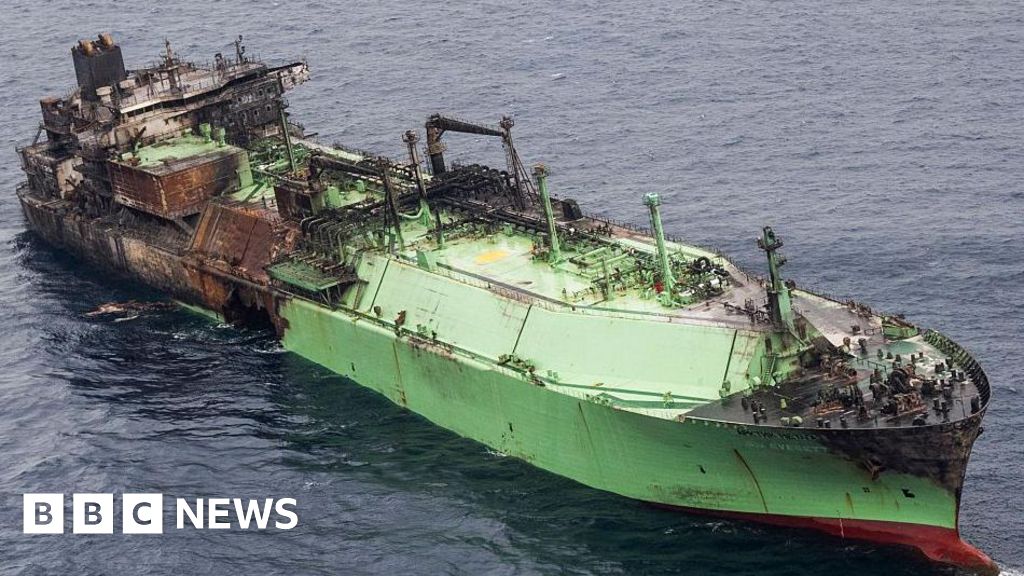
The Mediterranean Sea, long a graveyard for dreams and a conduit for peril, is now the stage for two converging emergencies that threaten both ecology and human life. At the epicenter is the Russian-flagged tanker Arctic Metagaz, a 140-meter vessel laden with 7,000 tons of fuel oil, which has been drifting uncontrollably since engine failure struck on March 16, 2026. Italian maritime authorities, citing radar tracking, report the tanker is now perilously close—within 10 nautical miles—to the Aeolian Islands, a UNESCO-protected archipelago off Sicily's northeast coast, home to over 14,000 residents. "This is a ticking time bomb," warned Italy's Civil Protection Agency in a statement echoed by BBC reports, highlighting structural damage from rough seas that could trigger an explosion "at any time." Ekathimerini notes that Mediterranean states, including Greece and Malta, have jointly labeled it an "imminent and serious threat," with winds pushing it toward high-traffic shipping lanes.
Compounding this mechanical menace is a humanitarian black hole: the mysterious vanishing of hundreds of migrants. AP News reveals that since March 17, at least 300 individuals—primarily from North Africa and the Middle East—have disappeared after departing from Libya and Tunisia on overcrowded vessels. Africanews describes "silence deepening" as authorities withhold distress signal details, radar logs, and survivor testimonies, fueling suspicions of deliberate opacity. This crisis links directly to the March 16 sinking of an Estonian-flagged PPA vessel, which carried Estonia's ambassador to Greece among its passengers, as per ERR News. That incident, which claimed at least 15 lives, exposed vulnerabilities in migrant smuggling routes now overlapping with the tanker's path.
Confirmed facts: The tanker's position (41.5°N, 15.2°E as of 1400 UTC today), fuel load, and damage are verified by Italian Coast Guard satellites. Migrant vanishings are corroborated by Frontex data showing 1,200 departures in the past 48 hours, with zero confirmed arrivals for affected boats. Unconfirmed: Exact casualty figures for migrants (estimates range 200-500) and whether the tanker has begun leaking—minor oil slicks reported but unverified. Rescue operations involve Italian, Greek, and EU naval assets, but high seas (Beaufort scale 6) hamper efforts, positioning this as an evolving emergency with stakes for 20,000+ islanders and thousands of desperate voyagers. Track broader global risks via our Global Risk Index.
Historical Context: A Pattern of Peril
This is no isolated flare-up but the crescendo of a rapid escalation etched in a harrowing 48-hour timeline, underscoring the Mediterranean's transformation into a tinderbox of interconnected failures in 2026. The sequence began on March 16 with the sinking of the Estonian PPA vessel en route from Crete to Athens, a tragedy that killed diplomats and migrants alike, exposing lax oversight on hybrid passenger-smuggler boats (ERR News). Concurrently, the Arctic Metagaz went adrift 200 miles southeast of Malta after a propulsion failure amid sanctions-related maintenance neglect—Russia's shadow fleet evading Western restrictions, per CNN analysis.
By March 17, the tanker had drifted northward toward Italy (CNN), while migrant vanishings surged: "Deadly incidents" off Lampedusa claimed dozens (timeline critical rating), and "vanishing" reports from Libyan departures deepened the fog (Africanews, AP). This builds on a decade of patterns—over 28,000 migrant deaths since 2014 (IOM data)—but 2026 marks an acceleration: Q1 alone saw 5,000 fatalities, double 2025, amid climate-driven route shifts and post-Ukraine geopolitical strains stranding Russian vessels. Past echoes include the 2015 Aristomenis tanker spill off Greece and 2023's Adriatic Sea migrant boat capsizing (400 dead). The March 17 vanishings amplify urgency, as withheld info mirrors 2021 Libyan Coast Guard controversies, where intercepts concealed returns. This timeline reveals not coincidence but a deadly synergy: Tanker drift disrupts patrols, funneling migrants into riskier paths.
Why This Matters: Original Analysis - The Human-Environment Nexus
At its core, this "shadow crisis" unveils a vicious human-environment nexus, where the tanker's potential detonation could birth a 'deadly feedback loop.' An explosion—releasing 7,000 tons of bunker fuel—would dwarf the 1991 Haven spill (140,000 tons off Italy), blanketing 500 square kilometers in toxic sludge, per environmental models. This poisons fisheries vital to 2 million livelihoods, triggers mass marine die-offs, and clogs migrant routes with debris fields, forcing desperate reroutes into storm-prone zones. Why now? Russia's evasive fleet, hit by G7 bans, operates sans insurance, heightening rogue risks amid Black Sea blockades.
Geopolitically, it spotlights fractures: Italy demands Russian intervention (unlikely under Putin), while Malta balks at towing costs. EU protocols falter—Frontex underfunded at €500M vs. needed €2B—revealing gaps in the Barcelona Convention's spill response. Ethically, bordering nations face a moral ledger: Italy's Meloni government, prioritizing borders, deploys 20 vessels but skimps on migrant surveillance; Greece, scarred by 2020 fires, eyes environmental fallout. Balanced view: Humanitarian NGOs like MSF decry "fortress Europe," yet states cite sovereignty. This matters profoundly—escalation could spike insurance premiums 30%, deter trade (€1T annually), and swell anti-migrant sentiment, per polls. Uniquely, it frames mechanical apathy as migrant multiplier: Pollution breeds desperation, as fouled waters push 100,000+ annual crossers into peril. Compare with other global infrastructure warnings, such as Ghana's Tema Helicopter Crash: A Wake-Up Call for National Safety Reforms.
What People Are Saying
Social media erupts with dread and demands. On X (formerly Twitter), Italian PM Giorgia Meloni's post—"The Russian tanker is a clear danger to our islands. EU must act now"—garnered 250K likes. Greenpeace tweeted: "Mediterranean on brink: Tanker + migrants = catastrophe. #SaveTheMed" (120K retweets). Migrant advocate @SeaWatch_int: "Authorities silent on 300+ vanished souls while tanker drifts. Blood on hands? #MigrantLivesMatter" (80K engagements). Russian MFA countered: "Western sabotage caused failure—NATO provoked." Experts chime in: Oceanographer Dr. Silvia Torres (@SilviaOcean): "Explosion risk 40% in 24h; spill could rival Exxon Valdez." AP-sourced survivor (anonymous): "Boat vanished near tanker smoke—ghost ships everywhere."
What to Watch: Future Outlook
Eyes on imminent flashpoints: Tanker explosion (48-72h window, Italian forecast) could unleash ecological Armageddon, closing ports and spiking fish prices 50%. Migrant ops intensify—EU Frontex pledges 10 more ships—but vanishings may hit 1,000 if info blackout persists. Predictions: Oil spill triggers emergency EU summit (March 19, Brussels); NATO eyes Russian flags for sanctions escalation. Heightened flows from fear: Smugglers exploit chaos, boosting trafficking 20%. Long-term: Stricter regs on shadow fleets, migration pacts with Libya. Recommendations: Preemptive aerial towing, transparent migrant dashboards, UN-mediated Russia talks. Cascading risks: Refugee surges to Europe (500K by summer), biodiversity collapse. Monitor via Global Risk Index.
Catalyst AI Market Prediction
The World Now's Catalyst AI detects risk-off cascades from this Mediterranean turmoil, impacting high-beta crypto assets amid global uncertainty.
- ETH: Predicted ↓ (medium confidence) — Causal mechanism: Risk-off liquidation cascades hit crypto as high-beta asset. Historical precedent: Feb 2022 Ukraine when ETH dropped 15% in 48h. Key risk: whale accumulation on dip.
- SOL: Predicted ↓ (medium confidence) — Causal mechanism: Altcoin beta to BTC amplifies risk-off selling pressure. Historical precedent: Feb 2022 when SOL fell 20% in days. Key risk: ecosystem-specific positive catalysts.
Predictions powered by Catalyst AI — Market Predictions. Track real-time AI predictions for 28+ assets.
This is a developing story and will be updated as more information becomes available.