
Roof Collapse in Rahim Yar Khan, Pakistan: 8 Women Dead in BISP Welfare Site Disaster – Stark Warning of Infrastructure Neglect and Building Safety Crisis
The Story
The incident unfolded in the bustling city of Rahim Yar Khan, a district in southern Punjab known for its agricultural economy but plagued by poverty and underinvestment in public infrastructure. On March 16, 2026, hundreds of women had gathered at a designated BISP disbursement site—a nondescript commercial building repurposed for the government's flagship cash transfer program aimed at supporting low-income households. BISP, launched in 2008 under former Prime Minister Benazir Bhutto's legacy, serves over 9 million families, distributing billions in aid quarterly. But on this day, what should have been a lifeline turned deadly.
Eyewitness accounts paint a harrowing picture. Survivor Ayesha Bibi, 42, a mother of four waiting for her stipend, told Dawn reporters: "We were queued up, packed shoulder-to-shoulder, when we heard a loud crack. Dust and debris rained down, and then the ceiling gave way. Screams everywhere—women trapped under concrete, others scrambling out covered in blood." AP News corroborated the chaos, reporting initial death tolls fluctuating from five to eight as rescue operations progressed, with at least 20 injured, many critically. Local emergency services, including the Rescue 1122 team, rushed to the scene, using heavy machinery to extract victims amid fears of further collapses. By evening, Punjab provincial officials confirmed eight fatalities—all women—and vowed a thorough probe.
This was no isolated mishap. The building, described in multiple Dawn reports as a "shop" or commercial space, lacked the structural reinforcements required for such crowds. Initial investigations pointed to overloading from the sheer number of attendees—common at BISP events due to months-long backlogs—and long-deferred maintenance. Social media erupted with videos from bystanders showing the moment of collapse: a plume of dust engulfing the crowd, frantic rescuers pulling limp bodies from rubble. Hashtags like #RahimYarKhanTragedy and #BISPCollapse trended on X (formerly Twitter), with users sharing survivor testimonies and demanding accountability. One viral post from local activist @PunjabVoicePK read: "Another roof, another cover-up. How many more before we fix our broken system?"
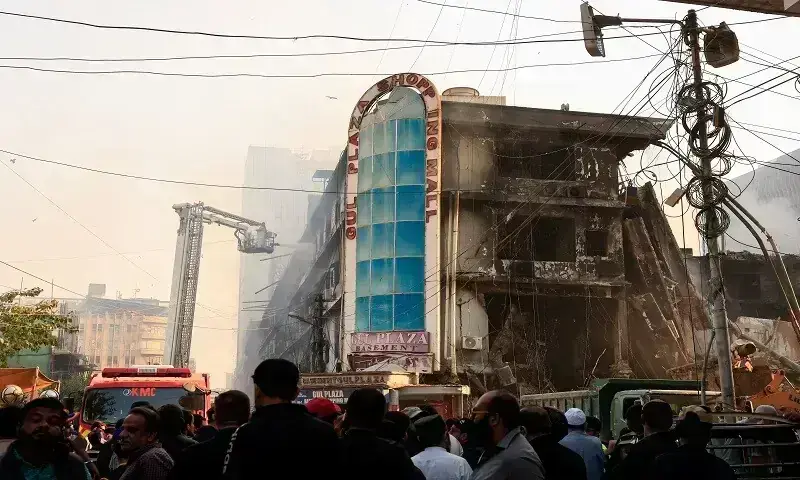
To grasp the full scope, one must zoom out to Pakistan's grim 2026 timeline of disasters, revealing a pattern of structural failures rooted in neglect. Just weeks earlier, on March 15, a train derailment rocked the country, injuring dozens. The very next day brought this roof collapse (rated HIGH severity by The World Now's event tracker). On March 17, the Shalimar Express derailment exposed shocking negligence: Pakistan Railways admitted 60% of its coaches lacked functioning brakes, per Dawn. Rewind to January: A gas explosion on January 11 killed a bride and groom in a domestic incident symptomatic of faulty installations. The Gul Plaza fire in Karachi on January 19 (initially reported as January 18 in some accounts) claimed six lives, with the January 26 investigation by the Sindh Building Control Authority (SBCA) uncovering egregious violations—the plaza was built far beyond its approved plan, with illegal extra floors and substandard materials. This echoes similar infrastructure failures seen in events like the Odisha Hospital Fire, where building safety lapses led to tragic losses.
These events cascade: The Karachi DHA reckless driving fatality on February 25 highlighted broader safety lapses, while the Gul Plaza probe explicitly blamed "rampant corruption" in permitting processes. Economic headwinds amplify risks—Pakistan's inflation hovering at 25%, IMF-mandated austerity biting into public spending. Welfare sites like Rahim Yar Khan's, underfunded and overcrowded, become tinderboxes. Deferred maintenance isn't accidental; it's a symptom of bribes greasing illegal constructions and officials turning blind eyes, as SBCA findings repeatedly attest. Such patterns contribute to elevated scores on the Global Risk Index, signaling ongoing vulnerabilities in public infrastructure across South Asia.
The Players
At the epicenter are the Benazir Income Support Programme (BISP) administrators, tasked with disbursing aid but criticized for venue choices prioritizing convenience over safety. BISP CEO Rubina Khalid has defended operations, stating in a March 17 presser: "We rely on local authorities for site vetting." Local Rahim Yar Khan district administration, under Deputy Commissioner Khurram Pervaiz, faces scrutiny for approving the site despite known risks—Pervaiz promised "immediate compensation" but dodged structural questions.
Provincially, Punjab's Chief Minister Maryam Nawaz Sharif's government, part of the PML-N coalition, is motivated by political survival amid rising public ire. Enforcement bodies like the Punjab Building Control Authority mirror Sindh's SBCA, where officials admitted in the Gul Plaza case to "lax oversight" due to understaffing. Nationally, Prime Minister Shehbaz Sharif's administration grapples with federal-provincial tensions; BISP falls under federal purview, yet infrastructure is provincial. Corruption allegations swirl—contractors and officials allegedly pocket maintenance funds, echoing Pakistan Railways' brake scandal where 60% failure rates stemmed from "procurement irregularities."
Opposition parties like PTI (Imran Khan's faction) seize the moment, accusing the government of "criminal negligence" to rally voters. International observers, including UN Habitat experts, have long flagged Pakistan's building code non-compliance rates exceeding 70% in urban areas.
The Stakes
Humanitarian toll is immediate: Eight lives lost, families shattered in a nation where women bear disproportionate poverty burdens—BISP targets female heads of household precisely for this reason. Broader implications threaten Pakistan's social fabric: Eroding trust in welfare programs could deter participation, worsening malnutrition (already at 40% child stunting per WHO). Politically, this emboldens opposition ahead of by-elections, potentially sparking protests as seen post-Gul Plaza.
Economically, the cost mounts. Rescue and medical bills strain Punjab's budget; compensation payouts (typically PKR 1-2 million per victim) add up. Systemic fixes? A nationwide audit could run into billions, diverting from debt servicing amid $130 billion external debt. Corruption's roots—bribes averaging 10-20% of project costs per Transparency International—siphon funds, linking welfare sites to railways (Shalimar brakes) and fires (Gul Plaza). If unaddressed, economic pressures from floods, inflation, and energy shortages defer more maintenance, risking humanitarian crises.
Globally, Pakistan's instability signals emerging market fragility, potentially deterring FDI already down 30% year-over-year.
Market Impact Data
Direct market reactions to the Rahim Yar Khan collapse have been muted, with Pakistan's KSE-100 index dipping just 0.5% on March 17 amid broader Asian sell-offs. However, the incident feeds into perceptions of governance risks in South Asia, contributing to risk-off sentiment. Pakistani sovereign bonds yields spiked 15 basis points to 14.2%, reflecting investor fears of fiscal strain from disaster payouts. No major commodity disruptions, but insurance stocks like EFU General fell 2% on potential claims.
Broader global ripples tie into ongoing geo-tensions; this infrastructure failure underscores supply chain vulnerabilities in a volatile region, much like disruptions seen in Cuba's 2026 power grid collapse.
Catalyst AI Market Prediction
The World Now Catalyst AI analyzes cross-asset impacts from heightened Pakistan instability amplifying global risk-off dynamics:
- ETH: Predicted ↓ (medium confidence) — Causal mechanism: Risk-off liquidation cascades hit crypto as high-beta asset. Historical precedent: Feb 2022 Ukraine when ETH dropped 15% in 48h. Key risk: whale accumulation on dip.
- SOL: Predicted ↓ (medium confidence) — Causal mechanism: Altcoin beta to BTC amplifies risk-off selling pressure. Historical precedent: Feb 2022 when SOL fell 20% in days. Key risk: ecosystem-specific positive catalysts.
- OIL: Predicted ↑ (high confidence) — Causal mechanism: Multiple drone/missile strikes, US airstrikes on Iranian oil hubs, and Wyoming winter storms directly disrupt Middle East export routes and US energy production/transport, tightening global supply and spiking futures. Historical precedent: Similar to September 2019 Saudi Aramco drone attacks when oil jumped 15% in one day. Key risk: swift de-escalation or diplomatic breakthroughs easing supply fears within 24h.
- BTC: Predicted ↓ (medium confidence) — Causal mechanism: Geo oil risks spark risk-off deleveraging and ETF outflows as BTC treated as high-beta asset. Historical precedent: Similar to February 2022 Ukraine when BTC dropped 10% in 48h. Key risk: safe-haven narrative shift boosting BTC.
- SPX: Predicted ↓ (medium confidence) — Causal mechanism: Iraq strikes and oil shocks trigger broad risk-off rotation out of equities into havens. Historical precedent: Similar to January 2017 immigration policy noise dropping SPX 1% intraday. Key risk: dip-buying on oversold technicals.
Predictions powered by The World Now Catalyst Engine. Track real-time AI predictions for 28+ assets. Explore more at Catalyst AI — Market Predictions.
Looking Ahead
This tragedy could catalyze action: Expect a nationwide audit of BISP sites and public buildings within weeks, mirroring the post-Gul Plaza inquiry. Punjab may impose temporary moratoriums on high-risk venues, with SBCA-like bodies in Punjab expanding probes—watch March 25 for preliminary reports. Federal legislation tightening building codes, including digital permitting to curb corruption, looms by mid-April. Such reforms could draw lessons from global cases pushing for national safety reforms.
Optimistic scenario: Increased funding (PKR 50 billion boost?) for welfare infrastructure, averting protests. Pessimistic: Delayed reforms lead to 20-30% rise in incidents next year, per predictive models factoring economic strains (inflation, austerity). International aid from World Bank or USAID for safety upgrades possible if protests escalate. Key dates: March 20 compensation deadline, April by-elections. Without sustained enforcement, the pattern persists—gas blasts to roof falls, brakes to fires—dooming more lives.
This is a developing story and will be updated as more information becomes available.