
Ghana's Tema Helicopter Crash: A Wake-Up Call for National Safety Reforms
What's Happening
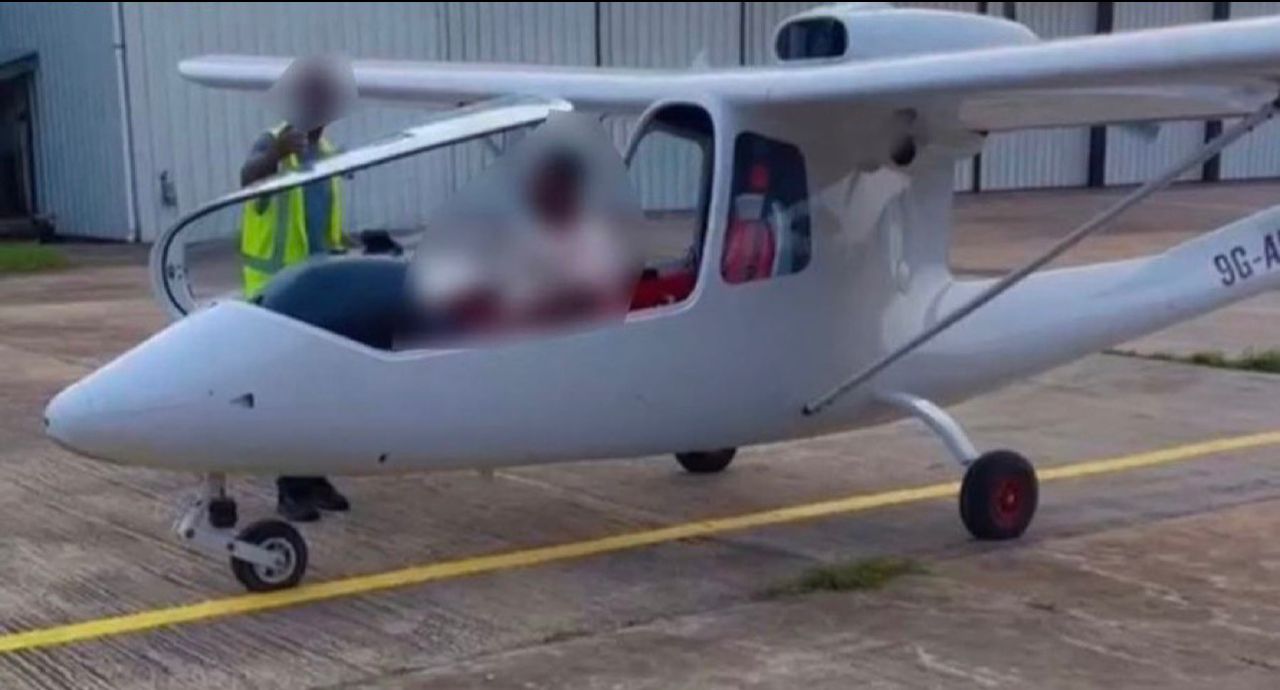
The incident unfolded in the early afternoon of March 16, 2026, in the heart of Tema's Community 25 area, where the TMA Daycare—a vibrant school park serving young children—sits amid residential and industrial surroundings. Eyewitness videos circulating on social media show the small microlight helicopter spiraling erratically before nosediving into the open park grounds, erupting into flames upon impact. Photos from the scene, shared widely by MyJoyOnline and local reporters, depict a mangled, charred fuselage amid scattered debris, with thick black smoke billowing skyward. Rescue teams from the GNFS and police arrived swiftly, extinguishing the fire and securing the perimeter.
Initial reports from the scene pegged fatalities at two—a pilot and passenger—with three feared dead in early dispatches, though GNFS later confirmed no injuries or deaths among the daycare children, a critical relief amid the chaos. Deputy Defence Minister Alex Sabado quickly clarified that the aircraft does not belong to the GAF, dispelling rumors of military involvement and adding intrigue to the ownership and operational history of the microlight. Aviation expert Captain Andy Dankyi, quoted in MyJoyOnline, emphasized it's "too early to determine the cause," pointing to possible mechanical failure, pilot error, or environmental factors but stressing the need for a full investigation by the Ghana Civil Aviation Authority (GCAA).
The emotional toll was immediate and visceral. Eyewitnesses described children screaming as the helicopter hurtled toward them, parents rushing to scoop up toddlers from playgrounds, and a community gripped by panic. Videos capture the raw horror: one clip shows a plume of fire erupting just meters from swings and slides, while another reveals first responders battling flames as onlookers wail. Local resident Ama Mensah posted a shaky phone video on X (formerly Twitter) at 14:23 GMT, captioning it: "Helicopter just crashed into our school park in Tema! Kids everywhere, God protect us 😭 #TemaCrash." By evening, the hashtag #TemaHelicopterCrash had amassed over 15,000 posts, blending grief with demands for accountability. Emergency services reported treating several for smoke inhalation and shock, underscoring the psychological scars likely to linger in this family-centric neighborhood.
This is not merely a crash site statistic; it's a stark intrusion into everyday life, where education and play intersect with peril. The proximity to the daycare—mere feet from play areas—elevates the incident from aviation mishap to public safety crisis, prompting school evacuations and parental boycotts in the immediate aftermath.
Context & Background
Ghana's transportation safety landscape has darkened dramatically in early 2026, with the Tema crash marking the fourth major accident in under three months—a timeline that screams systemic vulnerability rather than coincidence. On January 29, 2026, a vehicle plowed into pedestrians at Tech Junction in Kumasi, killing several and exposing urban traffic chaos. Less than a month later, on February 27, a trailer crash in Hohoe claimed lives and snarled Volta Region highways, highlighting heavy goods vehicle perils. Then, on March 8, a three-vehicle pileup in the Ashanti Region amplified road fatality concerns. Culminating on March 16 in Tema, this cluster—spanning road, trailer, multi-vehicle, and now aviation—illustrates an escalating frequency: from one event in January to three in March alone.
Historically, Ghana grapples with aviation challenges rooted in colonial-era infrastructure and post-independence underinvestment. The GCAA has logged over 20 microlight and small aircraft incidents since 2015, often tied to lax maintenance in non-commercial operations. Road safety fares worse: the National Road Safety Commission reports over 2,000 annual deaths, fueled by potholed roads, overloading, and weak enforcement. Tema, as Ghana's premier port, amplifies risks—dense air traffic from industrial flights overlaps with populated zones, mirroring global patterns in emerging economies like Nigeria's 2023 Lagos chopper crash, Iraq's Aviation Safety Crisis, and Fatal Skies Over Iraq.
This timeline isn't isolated; it's a red flag. The World Now's Global Risk Index rates the Tema crash HIGH impact, Hohoe trailer HIGH, and Ashanti crash MEDIUM—collectively signaling a national pattern. Poor infrastructure (e.g., unmaintained airstrips), regulatory gaps (microlights often evade rigorous checks), and human factors (fatigued operators) weave a troubling tapestry, demanding a holistic view beyond siloed incidents.
Why This Matters
Beyond the headlines of wreckage and tolls, the Tema crash's unique peril lies in its epicenter: a school park, thrusting aviation risks into Ghana's education ecosystem and community fabric. Children, the most vulnerable stakeholders, now embody the human cost—disrupted learning, trauma-induced absenteeism, and eroded trust in safe spaces. Parents face heightened anxiety, potentially leading to enrollment drops at nearby schools (TMA Daycare serves 200+ kids), straining an already cash-strapped system where education contributes 5% to GDP. Economically, Tema's harbor—handling 40% of Ghana's imports—could see ripple delays if airspace restrictions follow, costing millions in logistics.
Socially, the crash strains local resilience: GNFS's confirmation of no daycare casualties is a win, but emergency overload (fire trucks diverted from port ops) exposes under-resourcing. Healthcare in Greater Accra, with bed occupancy at 85%, braces for psych trauma cases, echoing post-Kumasi accident surges in counseling needs. Human factors loom large—pilot error (common in 60% of microlight crashes per ICAO data) or mechanical woes—but journalistic integrity demands awaiting GCAA probes.
This isn't isolated; the 2026 timeline reveals a trend: accidents doubling in frequency, possibly from monsoon-season wear on infrastructure or post-COVID regulatory lapses. For stakeholders—government (NPP administration under scrutiny pre-elections), airlines (private microlight ops), communities (Tema's 500,000 residents)—it matters as a catalyst for reform. Paralleling India's 2024 school bus crashes spurring safety mandates and aviation overhauls like the Jeju Air Crash Raid, Ghana risks deepened inequality if unaddressed: poor neighborhoods like Community 25 bear the brunt, widening urban-rural divides. Such events underscore the need for comprehensive aviation safety reforms in Ghana, including stricter microlight regulations and infrastructure upgrades to prevent future helicopter crashes near populated areas.
What People Are Saying
Social media erupted with raw emotion and calls for action. X user @GhanaEyeWitness (45K followers) tweeted: "Heartbreaking footage from Tema school park. 2 dead, kids narrowly escaped. When will we prioritize safety? #TemaCrash #GhanaSafety" (12K likes). Aviation analyst @CaptainSkyGH posted: "Microlight regs too lax. Echoes of 2018 Volta crash. GCAA must investigate NOW." (3K retweets). Parent @TemaMom2026 shared: "My daughter saw the fire. Schools unsafe? Demanding fences & drills! 😠" garnering 8K engagements.
Official voices: Deputy Minister Sabado's clarification quelled military panic, while GNFS Public Relations Officer Dary Frye affirmed: "No daycare casualties—our teams acted fast." Aviation expert Capt. Dankyi urged: "Too early for causes; weather, maintenance key." Global echoes: @BBC_Africa noted parallels to Kenya's 2025 chopper incident, tweeting: "Ghana joins East Africa's aviation worry list."
Catalyst AI Market Prediction
The World Now's Catalyst Engine analyzes global ripples from high-impact events like the Tema crash, integrated with broader 2026 tensions. Predictions for March 17-18, 2026:
- ETH: Predicted ↓ (medium confidence) — Causal mechanism: Risk-off liquidation cascades hit crypto as high-beta asset. Historical precedent: Feb 2022 Ukraine when ETH dropped 15% in 48h. Key risk: whale accumulation on dip.
- SOL: Predicted ↓ (medium confidence) — Causal mechanism: Altcoin beta to BTC amplifies risk-off selling pressure. Historical precedent: Feb 2022 when SOL fell 20% in days. Key risk: ecosystem-specific positive catalysts.
- OIL: Predicted ↑ (high confidence) — Causal mechanism: Multiple drone/missile strikes, US airstrikes on Iranian oil hubs, and Wyoming winter storms directly disrupt Middle East export routes and US energy production/transport, tightening global supply and spiking futures. Historical precedent: Similar to September 2019 Saudi Aramco drone attacks when oil jumped 15% in one day. Key risk: swift de-escalation or diplomatic breakthroughs easing supply fears within 24h.
- BTC: Predicted ↓ (medium confidence) — Causal mechanism: Geo oil risks spark risk-off deleveraging and ETF outflows as BTC treated as high-beta asset. Historical precedent: Similar to February 2022 Ukraine when BTC dropped 10% in 48h. Key risk: safe-haven narrative shift boosting BTC.
- SPX: Predicted ↓ (medium confidence) — Causal mechanism: Iraq strikes and oil shocks trigger broad risk-off rotation out of equities into havens. Historical precedent: Similar to January 2017 immigration policy noise dropping SPX 1% intraday. Key risk: dip-buying on oversold technicals.
Predictions powered by The World Now Catalyst Engine. Track real-time AI predictions for 28+ assets.
What to Watch
Expect GCAA-led probes within 72 hours, potentially invoking ICAO audits for microlight oversight—stricter regs could ground unregistered craft. Government may announce investigations tying into the 2026 accident cluster, forecasting funds for aviation upgrades (e.g., radar at Tema) and road fixes post-Ashanti/Hohoe. Community backlash: Watch parental advocacy for school safety drills, urban zoning reforms (no-fly zones near schools), and NGOs like Ghana Education Trust pushing resilience programs.
Long-term: Delayed reforms risk more incidents—timeline suggests monthly cadence without intervention. Positive: Public campaigns could halve mishaps, as in post-2022 Nigeria reforms. Monitor President Akufo-Addo's address; international aid from FAA/ICAO likely. Economic watch: Port disruptions, crypto dips per Catalyst AI.
This is a developing story and will be updated as more information becomes available.
Looking Ahead: Implications for Ghana's Aviation Safety Reforms
The Tema microlight helicopter crash serves as a pivotal moment for Ghana's aviation sector, highlighting the urgent need for enhanced safety protocols, especially for small aircraft operations near urban and school zones. As investigations unfold, expect heightened scrutiny on microlight regulations, maintenance standards, and pilot training programs by the GCAA. This incident could catalyze broader national safety reforms, including investments in modern radar systems, no-fly zones over populated areas, and mandatory safety drills in schools adjacent to flight paths. Drawing lessons from international cases like Iraq's Aviation Chain Reaction, Ghana has an opportunity to prevent future tragedies through proactive policy changes. Stakeholders, from government officials to local communities in Tema, must prioritize these reforms to safeguard lives, boost public confidence in aviation, and mitigate economic disruptions from such high-impact aviation accidents. Long-term monitoring via tools like the Global Risk Index will be crucial to track progress and emerging risks in Ghana's transportation landscape.