
Lithuania Declares Yellow Air Threat Alert Over Vilnius as Global Defense Ties Shift
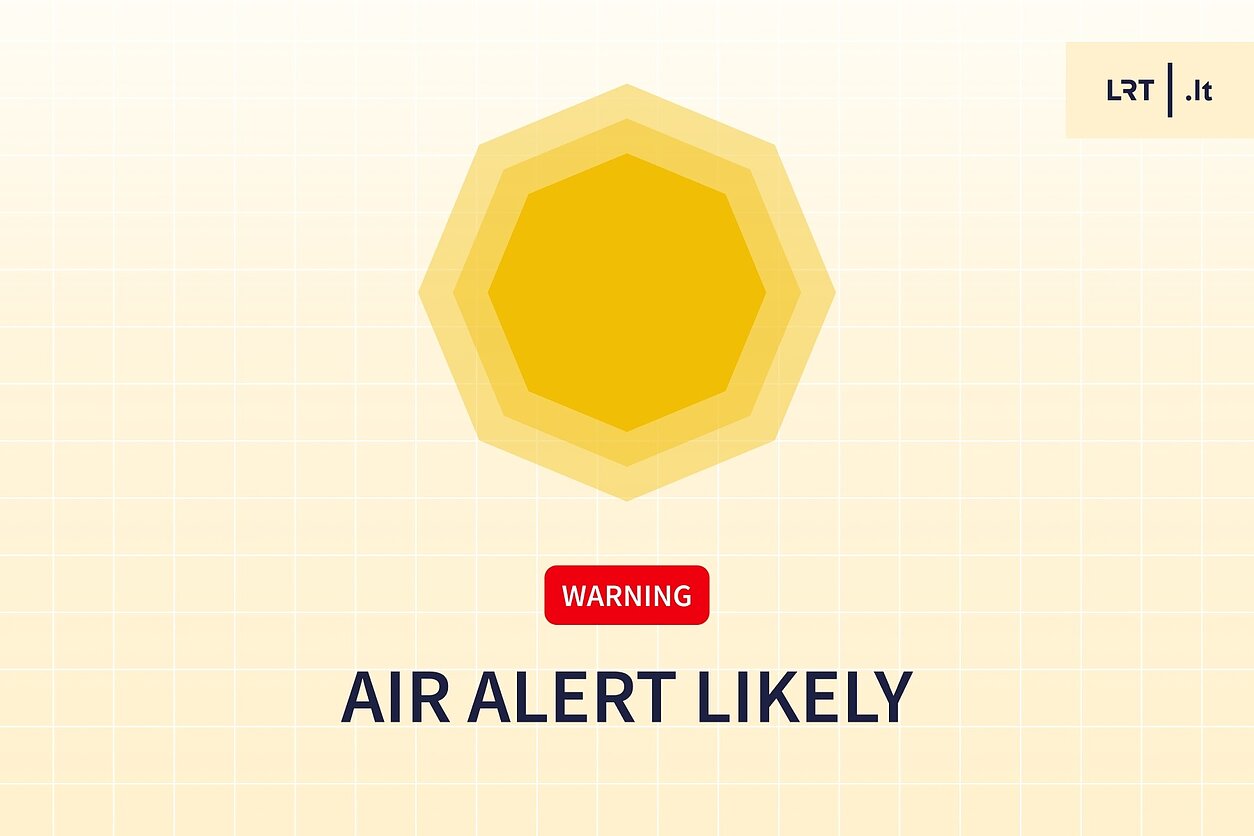
The Lithuanian military has declared a yellow-level air threat alert for Vilnius county, indicating a potential threat is being monitored with preventive measures in place. [1] Japan and Indonesia are pursuing closer ties that include intelligence sharing and the possible export of destroyers. [2] Iran’s Foreign Minister Abbas Araghchi stated that a peace agreement with the US is approaching, nuclear talks are postponed, and the unsigned text shows Iran won the war; the deal includes reopening the Strait of Hormuz under joint Iranian and Omani control. [3] India and France are strengthening their 1998 strategic partnership with expanded defense cooperation, including the renewal of a 10-year agreement, deployment of officers, delivery of Rafale aircraft, technology transfers, joint military exercises, and collaboration in space and the Indo-Pacific. [4] Nearly one-third of Pakistan is facing a water crisis in Sindh and Balochistan after India placed the Indus Waters Treaty in abeyance following a terror attack; severe shortages at key barrages are affecting agriculture, with upstream regions accused of excess withdrawals. [5]
Lithuania Issues Yellow Air Threat Alert
The Lithuanian military has declared a yellow-level air threat alert for Vilnius county, meaning a potential threat is being monitored and preventive measures are in place. [1] This alert represents an immediate development in the Baltic region, where authorities are actively tracking developments without specifying the exact nature of the monitored threat. The declaration underscores Lithuania’s ongoing vigilance in a strategically sensitive area near regional borders.
Japan and Indonesia Expand Defense Cooperation
Japan and Indonesia are advancing defense ties through intelligence sharing and discussions on the possible export of destroyers. [2] These steps reflect efforts to strengthen bilateral security arrangements in the Indo-Pacific amid broader regional dynamics. The cooperation focuses on practical measures such as information exchange and naval capabilities that could enhance interoperability between the two nations.
Iran Signals Approaching US Peace Agreement
Iran’s Foreign Minister Abbas Araghchi signaled that a peace agreement between the US and Iran is approaching. [3] Araghchi stated that the unsigned text shows Iran won the war, though nuclear negotiations will occur later. [3] The agreement includes reopening the Strait of Hormuz under joint Iranian and Omani control and will end the war. [3] These statements indicate a shift in diplomatic posture, with nuclear talks explicitly postponed while other elements of the potential deal move forward.
India and France Bolster Strategic Partnership
India and France have shared close ties since 1947, formalized through the landmark Strategic Partnership launched on 26 January 1998, a first-ever for India with a Western nation, and the first for France with a non-Western nation. [4] This partnership reflects their vision of enhancing strategic autonomy through deep bilateral cooperation. [4] Defence and security, civil nuclear collaboration and space are core pillars of this relationship. [4] This partnership has broadened significantly, encompassing artificial intelligence, science and technology, innovation, blue economy, environment, renewable energy, sustainable development, and trilateral cooperation, with a strong focus on the Indo-Pacific region. [4]
India and France share a robust defence partnership that has steadily expanded across military, industrial, and strategic domains, with a growing emphasis on Atmanirbhar Bharat. [4] The sixth Annual Defence Dialogue, co-chaired by Defence Minister Rajnath Singh and French Armed Forces Minister Catherine Vautrin in Bengaluru on 17 February 2026, renewed the 10-year defence cooperation agreement and announced reciprocal officer deployments at each other’s army establishments—signaling deeper institutional integration. [4] High-level military exchanges have been frequent, with visits by senior chiefs from both sides, including the French Navy Chief’s participation in the Indian Ocean Naval Symposium and the Indian Air Chief’s visit to France in June 2026. [4] Major milestones include the commissioning of the sixth Scorpene submarine in January 2025 and delivery of 36 Rafale jets in 2022. [4] Further, the 2025 agreement for 26 Rafale-M aircraft for the Indian Navy incorporates technology transfer, indigenous weapons integration, and establishment of fuselage production and MRO facilities in India. [4]
Industrial cooperation has accelerated, highlighted by Safran’s Hyderabad-based deep-level aircraft engine MRO centre inaugurated in November 2025, capable of servicing 300 LEAP engines annually. [4] Safran has also announced an M88 engine MRO shop and partnered with Bharat Electronics Limited to manufacture Hammer air-to-surface weapons. [4] The M88 engine is used on the Rafale fighter aircraft. [4] Additionally, the H125 helicopter assembly line was inaugurated in Karnataka in February 2026. [4]
Operational cooperation between the armed forces of the two nations is equally strong. [4] The three services of both the countries hold individual exercises with each other annually. [4] These wargames are Exercise Shakti for the army, the air forces of both the nations hold Exercise Garuda and both navies participate in Exercise Varuna. [4] Over the years, these wargames have grown in scale. [4] They are complemented by participation in multilateral drills like Milan and La Perouse. [4] Maritime cooperation is further reinforced through regular port calls. [4] India’s participation in France’s AsterX space exercises reflects expanding defence-space collaboration. [4]
Pakistan Grapples With Water Crisis After Treaty Suspension
With India keeping the Indus Waters Treaty in abeyance, a severe water shortage across Sindh and Balochistan is fuelling fears of an "economic massacre" in agricultural regions. [5] Months after New Delhi put the decades-old treaty in abeyance following the Pakistan-sponsored Pahalgam terror attack, Pakistan is grappling with a worsening water crisis that is now threatening agriculture, livelihoods and regional economies across parts of Sindh and Balochistan. [5] The shortages have particularly affected Sindh, home to Karachi, Pakistan's financial capital, where political leaders, farmers and water experts are increasingly raising alarm over dwindling supplies and uneven distribution. [5]
With Sindh and Balochistan facing severe water shortages, the crisis is affecting nearly one-third of Pakistan's population. [5] India's response to the Pahalgam terror attack extended beyond military action under Operation Sindoor. [5] One of New Delhi's most significant diplomatic measures was placing the Indus Waters Treaty in abeyance, signalling a "zero tolerance" approach towards Pakistan. [5] Reinforcing that position, defence minister Rajnath Singh recently made it clear that India has no intention of softening its stance. [5] "After the Pahalgam terror attack, by suspending the Indus Waters Treaty, we said that those whose tears have dried up should not expect water from us. We will not let the waters of the Sindhu reach the patrons of terrorists and enemies of humanity," he said. [5]
According to Dawn, the crisis is becoming increasingly visible around the Sukkur Barrage, one of the largest and most important irrigation structures on the Indus river. [5] The barrage supports millions of acres of farmland across Sindh and parts of Balochistan, making it critical to Pakistan's agricultural economy. [5] Water shortages across Sindh's canal network have reached alarming levels. [5] Sources cited by Dawn said the North West Canal is facing a deficit of 64.1 per cent, the Rice Canal 38 per cent and the Dadu Canal an alarming 82 per cent shortfall. [5] The situation is being compounded by allegations of illegal withdrawals and unequal water distribution in upstream regions. [5] Data from Sindh's irrigation department reportedly shows that Punjab is drawing 53,394 cusecs of water against its allocated share of 44,000 cusecs, more than 21 per cent above its entitlement. [5] Similarly, the Taunsa Barrage is said to be withdrawing 25,694 cusecs against its sanctioned allocation of 24,000 cusecs, amounting to an excess withdrawal of around 9.3 per cent. [5] At the same time, water levels at the Chashma Barrage have continued to rise, indicating accumulation in upstream areas even as downstream regions face mounting shortages. [5]
The worsening crisis has triggered sharp political exchanges within Pakistan. [5] Jamaat-e-Islami chief Hafiz Naeem ur Rehman has accused the Pakistan Peoples Party (PPP)-led Sindh government of failing to address Karachi's chronic water shortages despite years in power. [5] The PPP, however, has directed its criticism towards federal authorities and water managers. [5] PPP Sindh president Nisar Ahmed Khuhro has repeatedly warned that Sindh is being deprived of its rightful share of water despite being one of Pakistan's most productive agricultural regions. [5] He mentioned that Sindh produces around 5.5 million tonnes of rice annually and generates nearly $1.4 billion through rice exports. [5] Warning of the economic consequences, Khuhro referred to the cuts in Sindh's Kharif-season water allocation as an "economic massacre" of the province. [5] "Sindh produces 67 per cent of the country's agricultural output, yet it is being deprived of its rightful water share," Khuhro said. [5]
According to Dawn, severe shortages are affecting the Right Bank canals of the Sukkur Barrage system that irrigate Larkana, Qambar-Shahdadkot, Dadu, Shikarpur and parts of Balochistan. [5] Ishaq Mugheri, former president of the Sindh Abadgar Board's Qambar-Shahdadkot chapter, said the North Western Canal is facing a 64.1 per cent shortfall, the Rice Canal a 38 per cent deficit and the Dadu Canal an 82 per cent shortage. [5] The figures illustrate the scale of the problem. [5] The Dadu Canal, allocated 4,995 cusecs of water, is currently receiving only 860 cusecs. [5] The North Western Canal is getting 2,100 cusecs against an allocation of 6,260 cusecs, while the Rice Canal is receiving 5,300 cusecs against its sanctioned share of 8,700 cusecs. [5] Years of delayed infrastructure upgrades and incomplete remodelling of irrigation channels have further aggravated the situation, leaving farmers unable to begin seasonal cultivation. [5] "We are still waiting for water to reach the tail-end to start preparing paddy nurseries," Mugheri told Dawn. [5]
Global Context and Implications
These developments occur against a backdrop of shifting international alignments, with alerts in Europe, defense initiatives in Asia, diplomatic signals from the Middle East, renewed partnerships between major powers, and resource strains in South Asia. [1] [2] [3] [4] [5] Each set of events highlights distinct regional pressures that collectively shape the current global security and diplomatic environment.
What to watch next: Continued monitoring of the Vilnius air threat alert status, progress on Japan-Indonesia destroyer export discussions, any resumption of Iran-US nuclear talks, further India-France joint exercises or equipment deliveries, and updates on water flows at Pakistan’s Sukkur and other barrages amid the suspended treaty.