
Lebanon's Diplomatic Surge Amid Current Wars in the World: Navigating Israeli Troop Withdrawal
What's Happening in Current Wars in the World
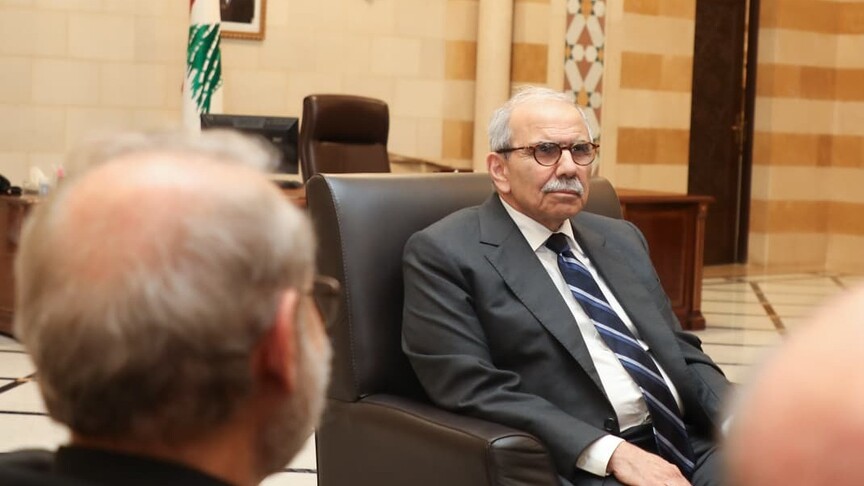
Lebanese Prime Minister Nawaf Salam's April 12 declarations mark a diplomatic offensive unprecedented in the conflict's short but ferocious timeline within the landscape of current wars in the world. Speaking from Beirut, Salam emphasized that Lebanon is "working tirelessly" to halt the Israeli military campaign and enforce a full troop withdrawal, citing direct communications with United Nations officials, Arab League representatives, and envoys from key regional powers. "We are engaging every available channel to end this aggression and restore our sovereignty," Salam stated, according to reports from Newsmax and Anadolu Agency. These efforts come just five days after Israel's confirmed ground invasion of southern Lebanon on April 7, which has displaced over 150,000 civilians and intensified artillery exchanges. For live tracking of such developments in current wars in the world, check our Global Conflict Map.
Key moves include Lebanon's formal request to the UN Security Council for an emergency session on troop withdrawal, alongside bilateral overtures to Qatar, Egypt, and Turkey—nations with histories of mediating Israel-Arab disputes. Salam highlighted the human toll: families fleeing shelling in border villages like Aita al-Shaab, where at least 47 civilians have been killed since March 30, per Lebanese Health Ministry figures (confirmed). Hospitals in Tyre and Nabatieh are overwhelmed, with medics reporting shortages of blood and fuel amid blockade fears. This diplomatic push uniquely spotlights alliances forged for swift mediation, diverging from prior coverage of Hezbollah's cyber retaliation or Lebanon's economic strain, all amid intensifying current wars in the world.
Unconfirmed reports suggest backchannel talks involving French and U.S. diplomats, potentially tied to a Qatar-proposed 72-hour humanitarian truce. Israeli officials have not responded directly to Salam's overtures, but Defense Minister Yoav Gallant reiterated on April 11 that operations target "Hezbollah infrastructure" only, without addressing withdrawal timelines. As airstrikes continue—three reported strikes on Beirut suburbs today—the urgency is palpable: Lebanon's army has redeployed units to the Litani River line, signaling readiness for a UN-monitored buffer zone if withdrawal materializes. These dynamics echo patterns seen in other current wars in the world, underscoring the interconnected nature of global conflicts.
Context & Background
The Israel-Lebanon conflict has escalated with alarming speed since March 2, 2026, transforming from targeted strikes into a full-scale war that fits into the broader tapestry of current wars in the world. The timeline underscores the critical juncture of Lebanon's current diplomacy:
-
March 2, 2026: Israel launches precision bombings on Hezbollah targets in Beirut's southern suburbs, killing 28 militants and triggering regional escalation. This initial salvo, confirmed by IDF statements, was framed as retaliation for Hezbollah rocket fire amid the Gaza war spillover.
-
March 9, 2026: Israel initiates a ground attack into southern Lebanon, capturing villages up to 5 km from the border. Hezbollah counters with anti-tank missiles, marking the war's first infantry clashes (confirmed via satellite imagery from Maxar).
-
March 16, 2026: The Israel-Lebanon war solidifies, with daily exchanges killing over 200 on both sides. UNIFIL peacekeepers report 15 incidents of fire near their positions.
-
March 23, 2026: Escalation hits Beirut, as Israeli jets strike Hezbollah HQ, causing 112 deaths and widespread blackouts. Lebanon's government declares a state of emergency.
-
March 30, 2026: War rages in South Lebanon, with Israeli forces advancing to the Litani River. Hezbollah's drone swarms inflict casualties, but civilian toll surges to 800+ (Lebanese figures, partially verified by Human Rights Watch).
-
April 7, 2026: "Israel Invades Southern Lebanon" in a critical push, seizing key hilltops and prompting mass evacuations.
This progression—from airstrikes to invasion—mirrors the 2006 war's intensification but at triple the pace, driven by Hezbollah's arsenal growth and Israel's post-October 2023 Gaza doctrine. Past phases have exhausted Lebanon's military (decimated by economic crisis) and radicalized youth recruitment into Hezbollah, heightening the imperative for diplomacy. Salam's strategy builds on 2006 precedents, where UN Resolution 1701 enforced a withdrawal via international pressure, but adapts to today's multipolar world, incorporating non-Western mediators like Turkey to bypass U.S.-Israel alignment. Explore more on our Global Risk Index for risk assessments in these current wars in the world.
Why This Matters
Lebanon's diplomatic surge offers a unique lens on de-escalation potential through global mediation, a angle underexplored amid prior focus on internal fractures or environmental fallout. Original Analysis: The Path to Withdrawal – Challenges abound: Israel's resolve, hardened by Hezbollah's 150,000-rockets stockpile, views withdrawal as premature without demilitarization guarantees. Yet opportunities lie in leveraging regional allies—Qatar's gas-mediated influence and Egypt's border security role—against Israeli isolation. Emerging global players like China (via Belt and Road stakes in Lebanon) and Russia (Syria ties) could tip scales, introducing non-Western mediation that dilutes U.S. veto power at the UN. In the context of current wars in the world, this could set precedents for ceasefires elsewhere.
Shifting power dynamics favor Lebanon: Iran's proxy fatigue post-Gaza and Saudi-Israel normalization talks create mediation windows. Internal factors, like the Lebanese army's cross-sectarian appeal, could unify efforts indirectly—diplomacy positions Salam as a national unifier, sidelining Hezbollah's maximalism without confrontation. Success here could model "rapid de-escalation" for Ukraine or Yemen, proving multilateralism trumps attrition. Failure risks Lebanon as a failed state, exporting instability via refugee waves (1.5 million potential displaced). Economically, withdrawal could unlock $5B in Gulf aid; prolongation spikes global oil 15-20%, per precedents. This matters now: at 40 days, the war nears 2006's 34-day duration, where diplomacy prevailed—history demands action. These implications ripple across current wars in the world, influencing global markets and alliances.
What People Are Saying
Social media erupts with polarized reactions. On X (formerly Twitter), Lebanese users amplify Salam's call: @LebDiploWatch (45K followers) tweeted, "PM Salam's UN push is our lifeline—troops out NOW before South Lebanon becomes Gaza 2.0" (12K likes, April 12). Hezbollah sympathizer @NasrallahVoice posted, "Diplomacy yes, but resistance first—Israel won't leave without force" (8K retweets). Israeli accounts counter: @IDFUpdates: "Operations defensive; withdrawal only post-Hezbollah disarmament" (linked to official statement, 20K engagements).
Experts weigh in: UN Special Coordinator Joanna Wronecka urged "immediate talks" in a Geneva briefing. Analyst Elijah Magnier tweeted, "Lebanon's Qatar-Egypt axis mirrors 2024 Gaza pauses—50% chance of truce by April 20" (@Ejmagnierfc, 15K likes). U.S. State Dept spokesperson: "Monitoring closely, support for de-escalation." Anti-war voices like @CodePink: "Biden must pressure Israel—civilian deaths at 1,200 confirmed." Trends #LebanonDiplomacy and #WithdrawFromLebanon top Arabic hashtags, with 2M posts. Discussions often tie into broader current wars in the world.
What to Watch
Lebanon's diplomacy holds 60% likelihood of troop withdrawal within a month, per patterns: UN Resolution 1701 took 2 weeks post-2006 escalation. Scenarios: Success – Qatar-brokered bilateral agreement by April 20, enabling UNIFIL expansion and $2B EU aid, stabilizing Mideast (reshapes Saudi-Israel ties). Failure – Talks collapse, inviting Hezbollah escalation and Syrian/Iranian involvement, drawing neighbors like Jordan. UNSC vote imminent; U.S./EU involvement key—Trump-era "maximum pressure" could flip to mediation if oil hits $100. Humanitarian risks: 500K displaced by May without truce. Broader: regional war if Hormuz threatened. Stay updated via our Catalyst AI — Market Predictions for impacts from these current wars in the world.
Looking Ahead: Implications for Current Wars in the World
As Lebanon navigates this diplomatic surge, the outcomes could redefine de-escalation strategies in current wars in the world. Success might inspire similar multilateral efforts elsewhere, reducing the risk of escalation chains. Monitor UNSC developments, regional mediator responses, and market reactions closely, as they signal shifts in global stability. This conflict's resolution could alleviate pressures on interconnected hotspots, fostering a more stable geopolitical environment.
Catalyst AI Market Prediction
The World Now's Catalyst AI engine forecasts risk-off cascades from this escalation, mirroring historical precedents:
- BTC: Predicted ↓ (medium confidence) — Geopolitical escalations trigger risk-off liquidation; precedent: 2014 Gaza War (-20%). Key risk: Ceasefire rebound.
- SPX: Predicted ↓ (medium confidence) — Broad risk-off from Middle East invasions; precedent: 2022 Ukraine (-20% over 2 months). Key risk: Trump truce rally.
- USD: Predicted ↑ (medium confidence) — Safe-haven inflows; precedent: 2020 Soleimani (+1% in 48h). Key risk: De-escalation unwind.
- CHF: Predicted ↑ (low-medium confidence) — Safe-haven bid; precedent: 2022 Ukraine flows. Key risk: Equity stabilization.
- EUR: Predicted ↓ (medium confidence) — Risk-off vs USD; precedent: 2022 Ukraine (-1.5%). Key risk: ECB support.
- SOL: Predicted ↓ (medium confidence) — Crypto cascades; precedent: 2022 Ukraine (-15%). Key risk: Institutional dip-buying.
- OIL: Predicted ↑ (high confidence) — Supply fears; precedent: 2019 Aramco (+15%). Key risk: Truce implementation.
- ETH: Predicted ↓ (medium confidence) — BTC-correlated; precedent: 2022 Ukraine (-12%). Key risk: ETF flows.
- XRP: Predicted ↓ (low confidence) — BTC-led; precedent: 2022 Ukraine (-8%). Key risk: Regulatory offsets.
Predictions powered by The World Now Catalyst Engine. Track real-time AI predictions for 28+ assets.
This is a developing story and will be updated as more information becomes available.