
Lebanon's Internal Fractures Amid Current Wars in the World: How US-Iran Rivalries Threaten Ceasefire Amid Rising Protests
The Story
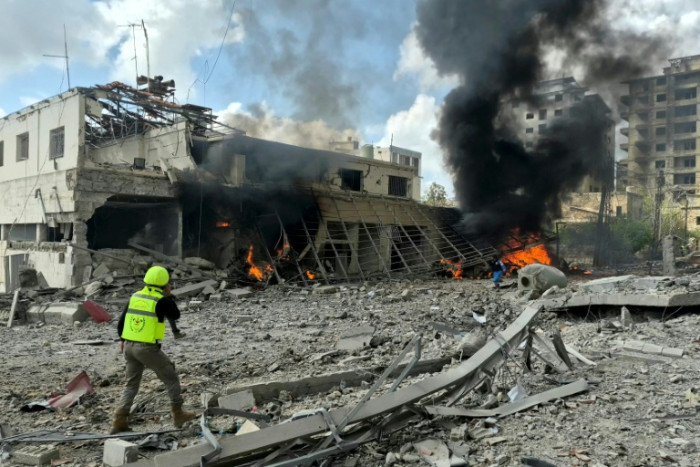
In the shadow of Beirut's scarred skyline, where economic collapse has left families scavenging for basics amid 24-hour blackouts and skyrocketing inflation, a new wave of protests erupted this week against Prime Minister Najib Mikati's overtures to secure an Israeli troop withdrawal. Demonstrators, waving Lebanese flags and chanting "No negotiations with the occupier," blocked key roads in Tripoli and southern villages, decrying any dialogue with Israel as a betrayal. This unrest, confirmed by France 24 reports of clashes with security forces, underscores a nation teetering on the edge, where ceasefire hopes from March 15, 2026, now feel like a distant mirage amid current wars in the world.
Mikati, speaking to reporters as per the Bangkok Post, affirmed his government's "intense efforts" to enforce the ceasefire, including demands for Israel to vacate positions north of the Litani River. Yet, these diplomatic maneuvers have ignited fury among hardliners, particularly those aligned with Hezbollah, who view concessions as weakness. Protests have swelled since the April 6, 2026, border closure amid fresh Israeli threats—described in local media as "critical" escalations in Middle East Strike Escalates: Lebanon's Latest Assaults and Global Repercussions—drawing thousands who fear a repeat of past incursions.
This is no isolated flare-up. Lebanon's fractures trace back to a timeline of escalating violations and recriminations. On January 16, 2026, a UN report documented Israeli violations in southern Lebanon, including drone overflights and artillery fire, setting a tone of distrust that persisted through January 28, when a prominent Lebanese MP publicly lambasted Hezbollah's "overreliance on Iran," exposing rare internal rifts within the Shia militant group. By February 26, Hezbollah's own statements amplified US-Iran tensions, warning of "severe repercussions" if American pressure mounted, a pattern that directly feeds into today's ceasefire talks as part of current wars in the world.
March brought fleeting hope: On March 8, Ghana urged UN condemnation of a Lebanon attack, highlighting African solidarity, while March 15 saw Israel-Lebanon ceasefire discussions gain traction. Yet, March 23's revelation that Mikati backs disarming Hezbollah marked a high-stakes pivot, confirmed in diplomatic cables, fueling protests as factions accuse the PM of capitulating to Western demands. Malaysia's role, awaiting UN approval for additional peacekeeping troops (Straits Times), emerges as a wildcard—framing Global South involvement as a counter to traditional powers, potentially catalyzing broader mediation but also stoking fears of foreign meddling in the context of current wars in the world.
These events reflect growing internal dissent, with unconfirmed reports on X (formerly Twitter) from Lebanese activists like @BeirutVoiceNow claiming protest organizers include disillusioned Hezbollah youth, tired of Tehran's shadow. Human stories abound: A Tripoli mother told France 24 reporters, "We've buried our sons in Iran's wars; now they want us to beg Israel?" This dissent, potentially fueled by external powers, mirrors Lebanon's confessional divides—Sunni, Christian, Druze, Shia—where US sanctions on Iran squeeze Hezbollah's funding, breeding resentment amid ongoing current wars in the world.
The Players
At the epicenter is Prime Minister Najib Mikati, a Sunni telecom billionaire navigating a caretaker government amid paralysis. His motivations are pragmatic: Stabilize the economy, enforce UN Resolution 1701, and avert full war. Opposing him are Hezbollah leaders like Naim Qassem, whose Iran-backed arsenal—estimated at 150,000 rockets—positions them as Iran's forward base, motivated by survival against Israeli superiority and ideological resistance to normalization.
Internal Hezbollah divisions, underreported until the January 28 MP's critique, pit hardliners loyal to Tehran against pragmatists eyeing disarmament for reconstruction aid. US Ambassador Lisa Johnson has pushed sanctions, aiming to weaken Iran's proxy network, while Iran's Supreme Leader Khamenei views Lebanon as a Shia crescent linchpin, funneling arms covertly despite US naval patrols.
Israel's Defense Minister Yoav Gallant demands demilitarization, citing 2024-2025 clashes that killed hundreds. Protesters, a mix of independents and Hezbollah sympathizers, seek sovereignty free from all external patrons. Enter Malaysia: As a Muslim-majority Global South voice, its peacekeeping bid—potentially 1,000 troops—motivated by non-aligned solidarity, could dilute Western (French, US) influence in UNIFIL, per Straits Times analysis.
The Stakes
Politically, failure risks governmental collapse, with Mikati's coalition fracturing along sectarian lines, potentially empowering extremists. Economically, Lebanon's GDP has shrunk 40% since 2019; renewed clashes could spike remittances' flight, worsening poverty for 80% of citizens. Humanitarily, 1.5 million displaced face famine risks, with UNICEF warning of child malnutrition surges if borders seal.
US-Iran rivalries amplify this: Washington's "maximum pressure" starves Hezbollah, breeding militancy; Tehran's proxies retaliate, per February 26 statements. Protests risk morphing into anti-foreign pogroms, echoing 1975 civil war triggers. Global South actors like Malaysia offer balance but unintendedly legitimize Hezbollah by expanding UNIFIL, delaying disarming. These dynamics are deeply intertwined with broader current wars in the world, heightening the volatility.
Catalyst AI Market Prediction
The World Now's Catalyst AI engine, analyzing historical precedents like the 2020 Soleimani strike, forecasts risk-off reactions to US-Iran fueled escalations threatening Lebanon's ceasefire US-Iran Deadlock Amid Current Wars in the World Fuels Unexpected Global Economic Realignments:
- OIL: Predicted + (high confidence). Failed US-Iran talks threaten ME ceasefire, raising Strait of Hormuz Showdown Amid Current Wars in the World: The Untapped Power of Diplomatic Rhetoric in US-Iran Escalation disruption fears. Precedent: Jan 2020 spike of 4-5%.
- USD: Predicted + (medium confidence). Safe-haven demand amid risk-off. Precedent: DXY +0.5% post-Soleimani.
- SPX: Predicted - (medium confidence). Algo selling on escalation fears. Precedent: -0.8% intraday Jan 2020.
- GOLD: Predicted + (medium confidence). Haven inflows. Precedent: +3% intraday 2020.
- BTC: Predicted - (medium confidence). Geo deleveraging. Precedent: -10% Feb 2022 Ukraine.
- ETH: Predicted - (medium confidence). Liquidation cascades. Precedent: -8% 2022.
- SOL: Predicted - (medium confidence). Altcoin beta to BTC. Precedent: -5-7% Jan 2020 proxies.
- CHF: Predicted + (low confidence). Safe-haven alongside USD. Precedent: +0.4% vs EUR 2020.
- EUR: Predicted - (medium/low confidence). USD strength weakens it. Precedent: -0.5-1.5% 2020/2022.
- TSM: Predicted - (medium/low confidence). Taiwan tensions spillover. Precedent: -3% 2018 US-China.
- XRP: Predicted - (low confidence). Crypto risk-off. Precedent: -8% 2022.
- GOOGL: Predicted - (low confidence). Tech rotation. Precedent: -3% 2022.
- CNY: Predicted - (low confidence). EM risk-off. Precedent: -2% 2022.
Key risks: Diplomatic de-escalation or ceasefire signals could reverse flows swiftly. Predictions powered by Catalyst AI — Market Predictions. Track real-time AI predictions for 28+ assets.
Looking Ahead
Escalating US-Iran tensions—unconfirmed whispers of new sanctions—could spur Hezbollah militancy or border clashes within 6-12 months, per historical cycles that echo current wars in the world. Protests intensifying might prompt UN interventions, expanding Malaysia's role and delaying agreements to mid-2026. Monitor our Global Risk Index for live updates on these threats.
Scenarios: Optimistic—PM secures withdrawal by May, disarms fringes; baseline—protests force realignments, Ghana/Malaysia mediate; pessimistic—internal divisions ignite proxy war, stalling peace. Watch UNIFIL vote (late April), border incidents, Hezbollah statements. Lebanese divisions might realign alliances, with youth pushing independence, impacting regional stability from Yemen to Syria amid current wars in the world.
This is a developing story and will be updated as more information becomes available.