Israel Strikes Syrian Airbase to Block Turkish Deployment Near Border
Israel conducted airstrikes on the Abu al-Duhur airbase in northwestern Syria on August 18, 2026, stating that the action prevented Turkish troops from deploying there in violation of a security status quo agreement. The Syria strikes drew immediate international attention as they targeted a site near Aleppo amid rising tensions over military movements in the region.
Israeli Airstrikes on Abu al-Duhur Base
Israel carried out airstrikes against the Abu al-Duhur base near Aleppo on Tuesday. [1] Prime Minister Benjamin Netanyahu's office said late on Tuesday that Syria was on the verge of violating a status quo agreed with Israel in security matters by allowing Turkish troops to deploy at the airbase. [1] Netanyahu's office added that such a deployment would threaten Israel's security and that Israel would not tolerate this. [3] The strikes caused damage but no casualties. [3] Israel repeatedly warned Syria that such a deployment would pose a threat to Israel's security. [3] Syria chose to ignore these warnings. [3]
Turkish Response and Accusations
Turkey firmly rejected what it called untenable allegations by Israel regarding its military position in Syria. [1] Turkey's presidency said the imputations from Netanyahu's office stemmed from his intention to pursue expansionist and destabilizing policies ahead of elections in Israel. [1] The Turkish statement added that lasting regional peace could only be achieved if Israel respected international law and abandoned its aggressive and coercive policies. [1] Turkey said the untenable allegations put forward by the Israeli Prime Minister’s Office are intended to legitimize Israel’s unlawful airstrikes targeting Syria’s sovereignty and territorial integrity. [1] Turkey said it will resolutely continue to cooperate with the Syrian Government on a legitimate basis for the establishment of peace, stability, and prosperity in Syria, and will never allow the destabilization of Syria. [1]

Israeli airstrikes damaged the Abu al-Duhur airbase in northwestern Syria near Aleppo. — Source: jerusalempost
US Position and Deconfliction Efforts
US special envoy Tom Barrack described the attack as an unnecessary escalation. [1] Barrack said Washington is working to establish a deconfliction mechanism among Israel, Turkey and Syria. [1] The US already facilitates an information-sharing and dialogue mechanism among the parties. [5] Last year, Turkey and Israel established a line of communication to avoid any incidents in Syria. [5] Barrack said the Israeli attack was serious and could have resulted in a military escalation. [2]
Expert Analysis on Syrian Military Buildup
Experts cited by the Jerusalem Post stated the strikes were necessary to prevent a direct clash with Turkish forces near Israel's border. [2] Dr. Hay Eytan Cohen Yanarocak explained that Jerusalem was not interested in clashing with Turkey and was therefore doing everything possible to keep Turkey away from its borders. [2] Jonathan Hessen said Turkish influence was far more deeply embedded in Syria and that the threat from Syria was not limited to Ankara’s presence alone. [2] Hessen noted that it was strange for such a newly established regime to be armed to the teeth and to have built up its military so rapidly. [2] The National reported in June 2025 that Syria had recruited around 100,000 personnel into its new army, half of its planned 200,000-strong force, including 30,000 members of the Turkish-backed Syrian National Army. [2] The new military also incorporated foreign fighters, including a 3,500-member brigade composed mostly of Uighurs, many of whom belong to the Al-Qaeda-linked Turkistan Islamic Party. [2]
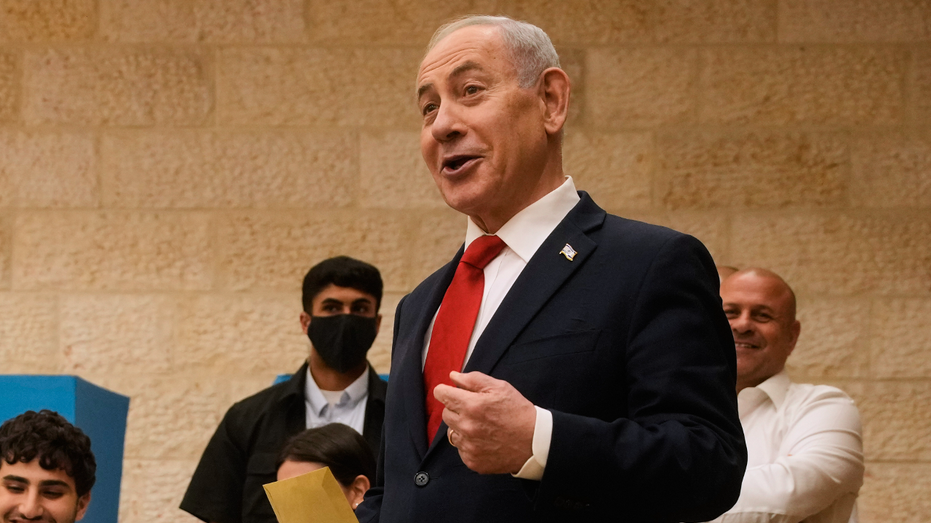
Benjamin Netanyahu casts his ballot in Israeli election. — Source: foxnews
Background of Israel-Turkey Tensions in Syria
The strikes on Tuesday follow worsening security tensions between Israel and Turkey and increasingly sharp rhetoric between the two countries over Syria, where both countries’ militaries are active. [1] Turkey has emerged as one of Syrian President Ahmed al-Sharaa’s main allies. [1] Ankara has been training Syria’s army, helping it rebuild its state institutions and infrastructure, and providing military and diplomatic support. [5] Israel has faced numerous attacks from Islamist forces in Syria under the Assad regime. [2] Turkey attempted to rehabilitate the T4 airbase to its own advantage, which Israel struck on March 21-22, 2025. [2] Israel’s March strike specifically targeted T4’s runways after Turkey sought to convert the base into a Turkish drone base. [2]
Regional Implications
Barrack said Syrian President Ahmed al-Sharaa has not adopted a predatory posture nor maintained proxy forces and has repeatedly indicated a preference for de-escalation with Israel. [3] Washington has been very coherent and very clear about the necessity for Damascus to prove itself on the ground and the need to de-escalate the situation. [2] There are clear interests in Europe in seeing stability in Syria consolidate into an environment that would once again give European nations the opportunity to repatriate all those Syrians who entered continental Europe illegally. [2]
What to watch next: Barrack is working to establish a deconfliction mechanism among Israel, Turkey and Syria while the US already facilitates an information-sharing and dialogue mechanism among the parties.