Iran Tensions Rise as AMIA Suspect Takes National Security Role and Keeps Hormuz Closed
Amid rising Iran tensions, the appointment of a figure wanted in connection with a major terrorist attack has drawn renewed international attention to Tehran’s security leadership.
Iran Appoints AMIA Bombing Suspect to Top Security Post
For the second time this year, Iran has named a wanted suspect in the 1994 bombing of the AMIA Jewish community center in Buenos Aires to a top security role. [1] A spokesman for the Islamic Republic’s president, Masoud Pezeshkian, said Monday that Mohsen Rezaei had resigned as an adviser to the supreme leader, Ayatollah Mojtaba Khamenei, and would assume the role of secretary of Iran’s powerful Supreme National Security Council. [1] Rezaei is a former commander of the Islamic Revolutionary Guards Corps. [1] Rezaei is wanted by Argentina and is subject to an Interpol Red Notice issued at Argentina’s request over his alleged role in the 1994 attack, which killed 85 people and remains the deadliest terrorist attack in Argentina’s history. [1] Earlier this year, Ahmad Vahidi, another suspect in the AMIA case and also the subject of an Interpol Red Notice, was appointed IRGC commander. [1] His comments came after he was appointed on Sunday as second in command of the body responsible for coordinating Iran’s security and foreign policy. [4]
Argentina's Legal Actions Against Iranian Suspects
In a landmark ruling in 2024, an Argentine court held Iran and its proxy in Lebanon, Hezbollah, responsible for the bombing, setting the stage for international legal action. [1] In June 2025, Argentina’s federal judiciary ordered that 10 Iranian and Lebanese suspects accused in connection with the deadly 1994 AMIA bombing be tried in absentia. [1] Rezaei and Vahidi are among them. [1] The eight other suspects accused by the late AMIA special prosecutor, Alberto Nisman, are: former Iranian Intelligence Minister Ali Fallahijan, former Iranian foreign minister Ali Akbar Velayati, former Iranian ambassador Hadi Soleimanpour, former Iranian cultural attaché in Buenos Aires Mohsen Rabbani, and former Iranian diplomat Ahmad Reza Asghari, as well as suspected Hezbollah operatives Salman Raouf Salman, Abdallah Salman, and Hussein Mounir Mouzannar. [1]
Rezaei's Conditions for Reopening Strait of Hormuz
The Strait of Hormuz will remain closed as long as the U.S. does not change its behavior and accept Iran's conditions to end the war, the newly appointed secretary of Iran's Supreme National Security Council said on Tuesday. [3] “As long as America does not change its behaviour and does not accept Iran’s conditions, the Strait of Hormuz will not be opened,” Rezaei was quoted as saying by the semi official Tasnim news agency. [4] He said Iran’s conditions included an end to the war, the release of its frozen assets and an end to fighting across the region, including in Lebanon and Gaza. [4] Rezaei said any agreement reached between Iran and Oman over a transit route through the strait would be separate from the decision to reopen the waterway. [4] Mohammad Mokhber, an adviser to Supreme Leader Ayatollah Mojtaba Khamenei, also said on Tuesday that Iran’s response to the conflict would continue and that the strait would remain closed until its conditions were met. [4] He said Iran’s conditions had been conveyed to the US through mediators. [4]
Trump's Stance on Iran Negotiations and Options
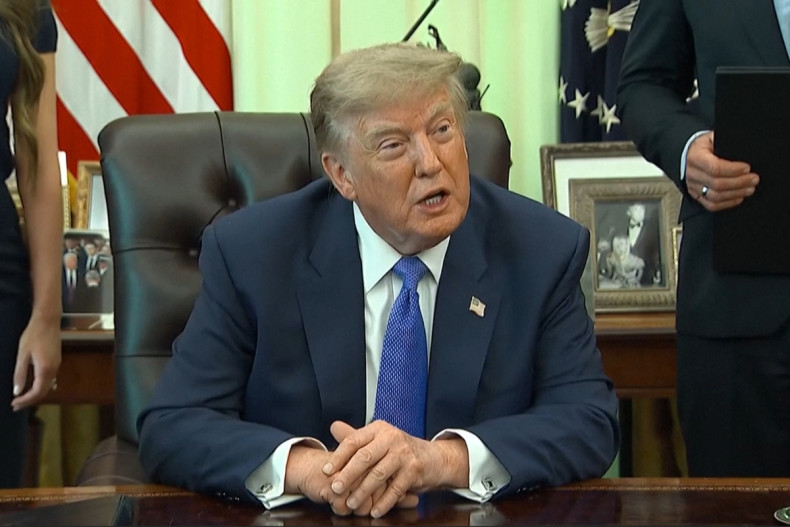
President Donald Trump accused Iran of being "devious negotiators" in an interview released late Monday and described some of his current options in the war - "just bop along" and let Tehran fail economically or hit them "really, really hard." [2] US President Donald Trump has demanded compensation from Iran for people killed in wars, attacks and protests and accused Tehran of being “devious negotiators”. [4] “We’re going to ask for money for the damage they’ve done over a 50 year period,” Trump said on Monday. [4]
Impact on Gulf States and Global Energy
Amid repeated attacks on shipping and growing risks to alternative energy routes, Gulf states may be forced to accept a deal they do not fully support. [5] Persian Gulf energy producers are reportedly becoming increasingly resigned to Iran retaining significant control over the Strait of Hormuz, as efforts to reopen the vital waterway face a standoff and regional governments weigh the risks of renewed war against disruption to oil and gas exports. [5] A proposed arrangement to reopen the strategic waterway has become the preferred option for several Gulf states despite their concerns over Iranian oversight, as per a report by Wall Street Journal. [5] The alternative, they fear, is a wider US-Iran confrontation that could put oil, gas, power and water facilities across the region at greater risk. [5] Oil shipments through Hormuz have fallen sharply since the conflict began, with Kpler estimating crude exports at around 2.2 million barrels per day last week, compared with about 8.5 million barrels a month earlier. [5] Before the war, the waterway carried roughly 20 million barrels of oil and petroleum products a day. [5] Oil futures extended their gains as uncertainty grew over the future of the waterway, through which around a fifth of global oil and liquefied natural gas supplies passed before the war. [4] The UAE managed to bring its oil exports back to prewar levels by mid-year by routing oil across the desert around the Hormuz blockade and moving some ships through the strait, according to ship tracker Vortexa. [5] Those gains have since been eroded by Iranian attacks. [5] Saudi Arabia has also used an alternative export route, pumping oil across the desert to a port on the Red Sea. [5] But that route has come under attack from the Iran-backed Houthi militia in Yemen. [5] Between February 28 and July 30, Iran and allied militias in Iraq carried out at least 172 attacks on non-military infrastructure across the six Arab Gulf states, according to the Armed Conflict Location and Event Data project. [5] Energy facilities, including oil infrastructure, gas plants, power stations and desalination facilities, accounted for about half of those. [5]
Ongoing Mediation and Regional Disruptions
Pakistan, one of the main mediators alongside Qatar, had earlier raised hopes of progress in negotiations. [4] Pakistani Defence Minister Khawaja Asif said the two sides appeared to be “close to some sort of an arrangement”. [4] There was no immediate response from Washington to the latest Iranian statements. [4] The conflict has also continued to disrupt shipping. [4] Four crew members were reported killed in a suspected attack by Yemen’s Iran backed Houthis on a cargo vessel in the Bab el Mandeb Strait on Tuesday, while a container ship was reportedly struck by a missile off Pakistan in a suspected US attack. [4] The developments have added to concerns over maritime security in the Gulf of Oman, the Red Sea and surrounding waterways. [4]
What to watch next: Pakistani mediation efforts may advance an arrangement while shipping attacks continue in the Bab el Mandeb Strait and Gulf of Oman, with no immediate US response yet to Iran’s latest conditions on the Strait of Hormuz.