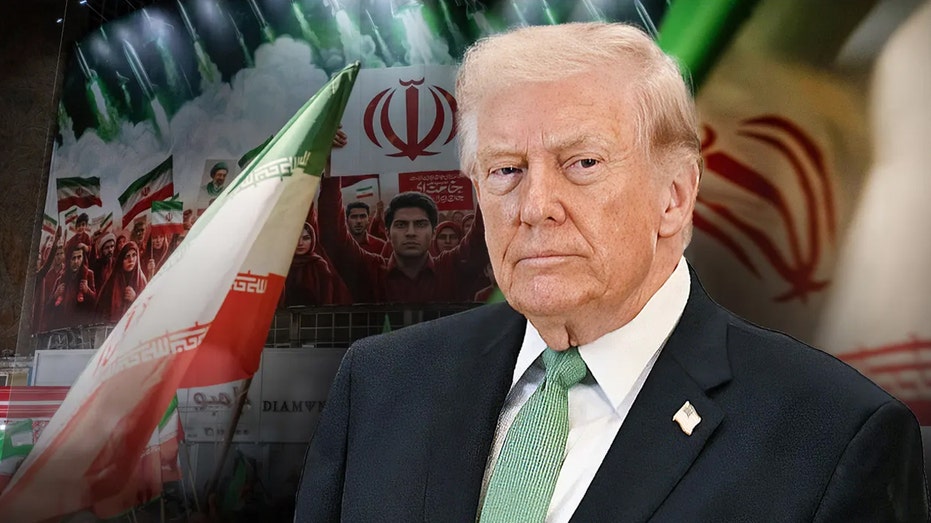
Iran Tensions Escalate as Trump Launches Economic Offensive Against Tehran
US President Donald Trump has announced an 'Economic D-Day' against Iran, threatening severe economic consequences for any country that provides aid to Tehran amid ongoing Iran tensions over the war on Iran and the blockade of the Strait of Hormuz. [2]
Trump Announces Economic Offensive
Trump posted on Truth Social that oil smuggling, swap lines, cash transfers, exchange houses, ship registries and front companies aiding Iran must stop immediately, warning of 'tremendous costs' for non-compliant nations. [2] He described the move as the most destructive economic operation ever directed at a country and stated that Iran had failed to seize the chance for an agreement. [5] Trump noted that Iran's navy is gone, its air force destroyed, its military factories in ruins, its currency worthless and the country hanging by a thread. [5] He called on all US allies to stand together to isolate and combat the Iran threat, declaring that this would be an economic D-day. [5] Trump also affirmed that Iran would never be allowed to acquire nuclear weapons. [5]
Impact on Strait of Hormuz Shipping
The announcement follows Iran's blockade of the Strait of Hormuz, with shipping data showing slowed traffic and most shipowners avoiding the waterway. [3] Trump claims it is open while Iran says it remains shut. [3] Data showed shipping through the Strait of Hormuz had slowed, with most shipowners avoiding the crucial waterway amid a lack of clear signalling over its reopening. [3] Oil prices remain above $90 per barrel for Brent crude amid uncertainty from the Hormuz disruption and the US-Iran conflict. [3] Brent crude stood at $92 a barrel in early trade, while WTI crude traded at $84.66. [3] Trump said on Tuesday that no talks were taking place with Iran and that the waterway was open, adding that a lot of boats were coming through and a lot of oil was getting out. [2]
UAE Cuts Economic Ties with Iran
The UAE has suspended all financial and economic transactions with Iran, its biggest trading partner, adding pressure on Tehran as the US ramps up economic measures. [4] The UAE has in recent years been Iran's biggest trading partner, with billions of dollars of goods imported. [4] The decision is likely to impose more pain on the Islamic Republic as it faces the loss of a vital trade link amid escalating tensions with the US. [4] The UAE acts as a major financial and business hub for Iranians. [4]
South Korea Faces Alliance Strain
South Korea scaled back joint military drills with the US after Trump criticized Seoul for declining to join the war on Iran, sparking anxiety and debate in Seoul over the reliability of the US alliance. [1] Trump wrote on Truth Social that he was directing the Pentagon to substantially reduce the drills, which he described as sending an inappropriate and hostile signal to North Korea, and pointedly noted that Seoul had declined to join the US and Israel's war on Iran. [1] The exercise was cut from 11 days to five, with the scope of several field training drills scaled back as well. [1] South Korean President Lee Jae Myung has called for strengthening the country's self-reliant defence capabilities while signalling willingness to help restore freedom of navigation in the Strait of Hormuz. [1] Minister of Foreign Affairs Cho Hyun told lawmakers there had been no advance notice of the move. [1]
Context of the US-Iran War
Israel and the US launched Operations Roaring Lion and Epic Fury on February 28, with the stated aim of creating conditions for regime change. [2] Ayatollah Ali Khamenei was killed by an Israeli strike on a Tehran bunker, and Iran's defense minister and several IRGC generals were also killed in the largest-ever aerial attack by the IAF. [2] Iran retaliated by firing across the Middle East at Gulf nations and US military bases. [2] Thirty-nine IDF soldiers and 23 civilians have been killed, and at least 7,693 more injured in ballistic missile attacks across Israel since February 28, while 18 US soldiers were killed. [2] A ceasefire deal was announced on April 7 and went into effect on April 8. [2] Iran has stated it remains open for dialogue with the US, but negotiations must not be confused with surrender. [5] The temporary intention agreement from June 17 between the US and Iran was meant to pave the way for a permanent solution, but both parties have breached several points over the summer. [5]
Reactions and Broader Implications
Polling in late March by Hankook Research showed some 38 percent of respondents saying the government should support the US, while 36 percent said it should remain neutral and 16 percent said it should oppose the US. [1] The opposition People Power Party leader Jang Dong-hyeok criticised Lee for turning down Trump's request for help with Iran, accusing him of causing a diplomatic disaster and dismantling the South Korea-US alliance. [1] The Hankook Ilbo called on the country to confront the stark reality of a faltering Korea-US alliance. [1] The JoongAng Ilbo argued that an alliance is not a one-sided favour but a reciprocal relationship and urged the government to demonstrate contributions from investment and trade commitments to support for navigation through the Strait of Hormuz. [1] The Korea Herald argued that an alliance can survive disagreement but is harder to sustain when one side learns about a major security decision from social media. [1] Cha Du Hyeogn of the Asan Institute for Policy Studies said that if South Korea is not willing to play the role that the United States expects of an ally, Washington can also reconsider elements of its security commitment. [1] Kim Jae Chun of Sogang University said that Trump unilaterally deciding to scale back the joint military exercises without consulting the South Korean government can be perceived by South Koreans as a weakening of the US commitment to their security. [1]
What to watch next: Iran has stated it remains open for dialogue with the US while South Korea continues talks on possible practical contribution measures to restore freedom of navigation in the Strait of Hormuz.