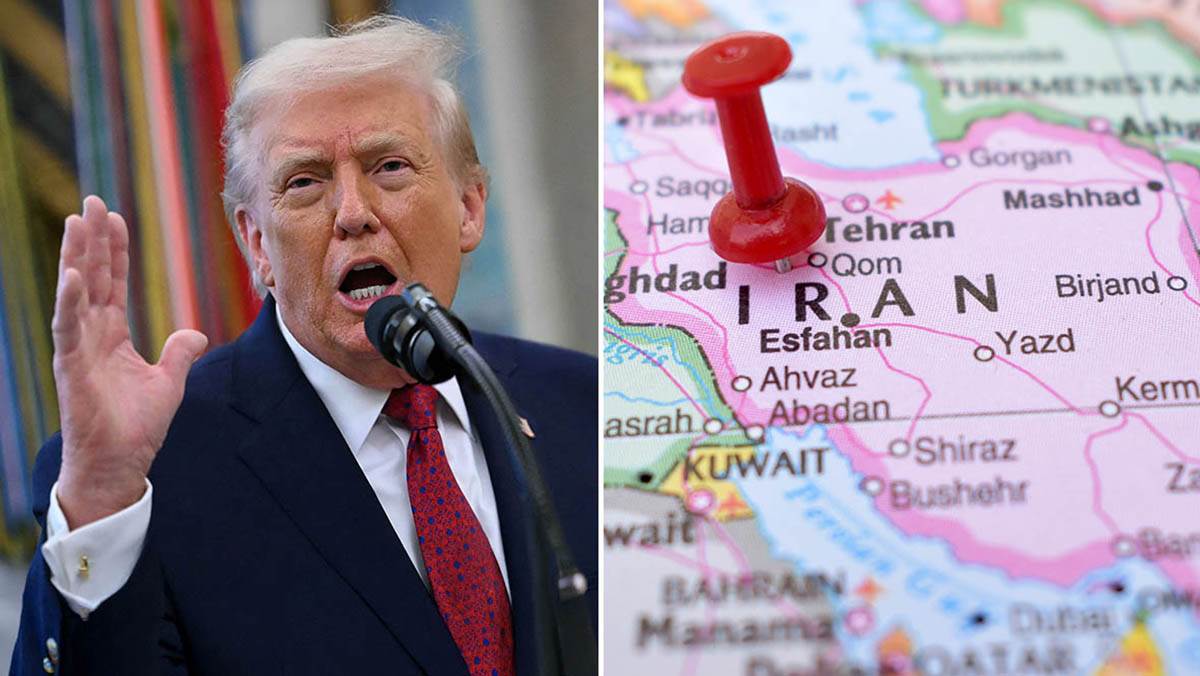
Iran Tensions Ease as Trump Delays Strike and Sets Monday Nuclear Talks
Amid easing Iran tensions, oil prices fell nearly 5% after U.S. President Donald Trump announced he delayed a planned military strike on Iran and that new U.S.-Iran nuclear talks would begin on Monday to reach a deal reopening the Strait of Hormuz. [1]
Oil Markets Tumble on De-escalation Announcement
Global oil prices fell sharply on Monday as traders reacted to U.S. President Donald Trump’s announcement that a planned military strike against Iran had been delayed and that new negotiations would begin, reducing immediate concerns over a broader Middle East conflict and potential disruptions to global energy supplies. [1] Brent crude, the international benchmark for oil prices, declined about 4.8 percent in early trading to $83.73 per barrel, while U.S. West Texas Intermediate (WTI) crude dropped more than 5 percent to around $80.34 per barrel. [1] Brent crude futures slid $4.49, or 5.11 per cent, to $83.44 by 0408 GMT while US West Texas Intermediate crude was at $79.77 a barrel, down $4.90, or 5.79pc. [4] The decline came after weeks of market volatility driven by rising tensions between Washington and Tehran. [1] Oil prices had repeatedly surged in recent months as investors worried that a military confrontation could threaten energy infrastructure and disrupt shipments through the Strait of Hormuz, one of the world’s most important oil transit routes. [1] Traders who had previously priced in the possibility of a wider regional conflict began removing part of the additional cost, known as the “war risk premium,” from oil prices. [1] Both contracts jumped more than 20pc last month after fighting between the US and Iran resumed and as attacks on several tankers around Oman heightened security concerns, deterring shippers from entering the Gulf to load oil. [4] Trump’s announcement that military action had been postponed and that diplomatic efforts would resume immediately affected market sentiment. [1] Experts warned that oil markets remain highly dependent on political developments, with any major progress in talks between the United States and Iran able to push prices lower while renewed confrontation or threats against regional energy routes could trigger another rapid increase. [1]
Trump Announces Delay of Strike and Start of Talks
U.S. President Donald Trump said negotiations with Iran are scheduled to begin on Monday afternoon after he agreed to delay a planned military strike, saying regional leaders urged Washington to give diplomacy another chance. [2] Speaking on Saturday, Trump said the operation, described by him as one of the largest considered since World War II, was put on hold. [2] Trump announced an agreement with Iran is close, with negotiations set to begin on Monday. [3] In a sign of de-escalation, Trump said late on Saturday on his Truth Social platform that Iran and other Middle Eastern countries had asked for time to complete a deal that would lead to “the Immediate, Complete and Total” reopening of the vital strait and “an end to Iran’s nuclear threat”. [4] Trump stated that regional leaders urged Washington to give diplomacy another chance and that an agreement with Iran is close. [4]
Strait of Hormuz at Center of Tensions
The Strait of Hormuz remained at the center of market concerns during the recent tensions. [1] The waterway, located between Iran and Oman, is a major route for global energy shipments, and any disruption there could have significant consequences for oil markets and the global economy. [1] Oil prices had climbed in previous weeks amid fears that an escalation between the United States and Iran could affect supply from the Middle East. [1] At various points, prices moved above $89 and $90 per barrel as investors responded to military threats and uncertainty over the future of regional stability. [1] Iranian Foreign Minister Abbas Araghchi said on Sunday talks between Tehran and Oman on the management of the Strait of Hormuz are in their "final stages". [3] Two tankers laden with Saudi oil crossed the Bab el-Mandeb Strait out of the Red Sea over the weekend while traffic in the Strait of Hormuz slowed following reports of vessel attacks, shipping data showed on Monday. [4] The United Kingdom Maritime Trade Operations has reported three more tanker attacks since Saturday. [4]
OPEC+ Moves and Broader Market Context
On Sunday, Opec+ approved an oil production quota increase of around 188,000 barrels per day from September, the producer group said, in a move that completes the unwinding of a layer of voluntary output cuts. [4] Due to export disruptions from the Gulf, Russia and Kazakhstan caused by the Iran and Ukraine wars, successive monthly Opec+ hikes over most of this year have remained largely on paper with little impact on the market. [4]
Regional Fallout Including Attacks on Jordan
During nearly a month, Iran launched missiles and drones day after day into Jordan. [5] Jordanian military reports indicate that Iran has launched at least 60 missiles and drones into their territory since July. [5] Most of the attacks targeted military facilities housing thousands of US troops, such as Muwaffaq Salti Air Base in eastern Jordan. [5] On 17 July, an Iranian missile strike hit a soldier housing unit at the base and killed three US military members. [5] Vital Jordanian installations such as Aqaba Port also came under fire. [5] Analysts assess that Tehran deliberately increased military pressure to trigger waves of public rejection inside Jordan against the US military presence. [5] The frequent sounding of air raid sirens in Amman and major cities has paralyzed economic activity and shattered residents’ sense of security. [5]
What to watch next is whether this week turns into a rinse and repeat of last week with hopes of a deal collapsing as Iran digs in its heels and continues to leverage its control over the Strait, potentially through an attack on a U.S. base or a tanker transiting the waterway. [4]