
Iran Strikes and Oil Price Forecast: The Overlooked Siege on Educational and Nuclear Foundations
Introduction
In the shadow of escalating US-Israeli strikes on Iran, a chilling new front has emerged: the deliberate targeting of the Islamic Republic's educational institutions and nuclear infrastructure. On April 4, 2026, reports surfaced of strikes near the Bushehr nuclear power plant, a facility painstakingly completed by Russia after Western firms abandoned it decades ago. Simultaneously, Al Jazeera documented attacks on Iranian universities, framing them as part of a broader ramp-up against the country's infrastructure. These are not mere collateral damages in a military campaign; they are precision hits on the brain centers of Iran's future—its universities, research labs, and nuclear sites. As oil price forecast models predict surges from related Strait of Hormuz disruptions, these strikes carry profound implications for global markets and energy security.
This article uniquely examines these underreported assaults, diverging from the dominant media focus on oil price spikes, environmental fallout from Hormuz disruptions, and the human casualties in urban centers. Instead, we probe how these strikes threaten Iran's scientific trajectory and global non-proliferation efforts. Universities like those in Tehran and Isfahan, hit amid the chaos, symbolize more than academic hubs; they are incubators for Iran's next generation of engineers, physicists, and nuclear scientists. The Bushehr facility, Iran's flagship nuclear endeavor, underscores vulnerabilities in civilian nuclear programs under geopolitical duress. For deeper insights into Iran's Hormuz Strategy and Oil Price Forecast: Fueling the Rise of Alternative Currencies in Global Geopolitics, see our related analysis.
The thesis is clear: these attacks on educational and nuclear foundations risk not only stalling Iran's domestic scientific progress but also unraveling decades of fragile international collaboration on non-proliferation. By eroding Iran's institutional knowledge base, they could accelerate covert nuclear ambitions, provoke a brain drain of talent to adversarial states, and inspire a new era of hybrid warfare where intellectual infrastructure becomes fair game. As tensions spiral from March 25 disruptions in the Strait of Hormuz to April 4 strikes near Bushehr, the world must confront the long-term fallout beyond immediate headlines, especially with oil price forecast indicating high-confidence upward pressures on global energy markets.
Historical Context and Escalation
The current crisis did not erupt in isolation; it echoes a painful historical pattern of foreign interventions that have repeatedly undermined Iran's sovereignty and internal stability. Flash back to November 1979, when Iranian revolutionaries seized the US Embassy in Tehran, holding 52 Americans hostage for 444 days. That event, born from resentment over perceived US meddling—including the 1953 CIA-orchestrated coup against Prime Minister Mohammad Mossadegh—ignited a cycle of animosity. Clarin's recent coverage draws direct parallels, noting how a missing US pilot in Iran has "reawakened the ghost of the 1979 hostage crisis," placing the United States on maximum alert. This historical precedent illustrates a recurring theme: external powers probing Iran's vulnerabilities, from diplomatic outposts to military assets, fostering generations of radicalized youth who view the West as an existential threat.
Fast-forward to 2026, and the timeline reveals a swift, methodical escalation. It began on March 25 with US-Israeli strikes disrupting the Strait of Hormuz, a chokepoint for 20% of global oil transit, setting the stage for economic warfare and influencing oil price forecast trajectories. By March 26, the conflict broadened dramatically: a US missile strike hit the Minab School in southern Iran, killing students and marking a shift toward civilian-adjacent targets. That same day, US-Israeli forces struck Bandar Anzali on the Caspian Sea, a naval hub. The progression accelerated on March 27 with widespread US-Israeli strikes across Iran, culminating in Israel's assassination of the Iranian navy chief—events corroborated by Newsmax and Anadolu Agency reports on Trump touting the "termination" of Iranian military leaders.
This 48-hour window from March 25 disruptions to March 27 fatalities mirrors the rapid radicalization cycles of past conflicts. Historical aggressions, from the Iran-Iraq War (1980-1988) where chemical weapons targeted civilians, to the Stuxnet cyberattack on Natanz in 2010, have consistently eroded Iran's institutional fabric. Today's strikes build on this legacy, potentially radicalizing Iran's youth and scientific community. Universities, once beacons of post-1979 reconstruction, now face bombardment, echoing how the hostage crisis diverted national focus from development to defiance. The evolution from infrastructural sabotage to direct hits on schools and nuclear sites signals a tactical escalation, designed to hobble Iran's long-term resilience and provoke internal unrest. Explore related coverage in Iran's Escalating Strikes and Oil Price Forecast: The Overlooked Impact on Regional Trade Alliances.
Current Strikes and Their Targets
The strikes have zeroed in on Iran's educational and nuclear pillars with surgical precision, broadening the conflict's scope far beyond military barracks or oil facilities. Al Jazeera's April 4 report, "Universities hit as US, Israel ramp up attacks on Iran’s infrastructure," details assaults on Tehran University and Sharif University of Technology—elite institutions training Iran's top minds in engineering, physics, and materials science. These attacks disrupted ongoing research in quantum computing and renewable energy, with labs reduced to rubble and faculty fleeing amid blackouts.
Further south, the Minab School strike on March 26 stands out as a grim harbinger. Located in Hormuzgan Province near the strait, this secondary school was hit by a US missile, killing at least a dozen students according to local reports. While official narratives frame it as collateral from targeting nearby naval assets, the precision-guided munition's impact raises questions of intentional messaging: strike the future to break the present.
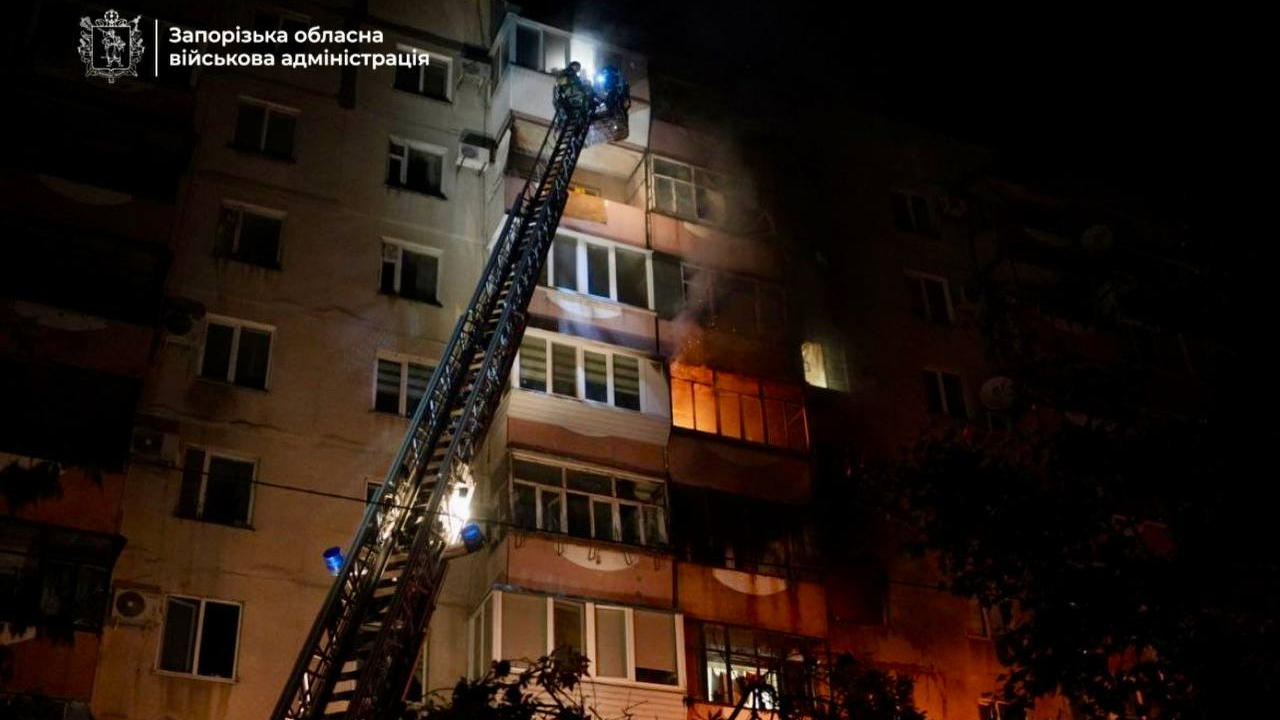
The crown jewel under threat is the Bushehr nuclear power plant. Clarin's in-depth piece recounts its tortuous history: Germany's Siemens pulled out in the 1970s amid the revolution; Russia stepped in, operationalizing it in 2011 after years of delays. On April 4, 2026, strikes "near" Bushehr—classified as medium severity in event timelines—sowed panic over radiation leaks, though no meltdown has been confirmed. Anadolu Agency and Newsmax contextualize this within Trump's April 4 declaration of "massive strikes on Tehran," where military leaders were "terminated," but the nuclear angle exposes civilian risks. Check the Global Risk Index for real-time escalation tracking.
Recent timelines amplify the pattern: April 3's critical strikes in Tehran likely encompassed university districts; April 4's Kermanshah hit targeted research facilities. YLE News quotes a downed pilot's harrowing escape, likening Iran to a "prey-filled jungle," underscoring the chaos engulfing non-combat zones. These targets—Minab School, Bandar Anzali ports with adjacent training academies, Bushehr—illustrate a strategic siege: disrupt education to decapitate knowledge production, jeopardize nuclear safety to deter proliferation without full invasion. Immediate effects include halted semesters, evacuated labs, and IAEA warnings of monitoring lapses, all without delving into oil spills or refugee flows dominating other coverage.
Original Analysis: Implications for Science and Non-Proliferation
These strikes herald a perilous new chapter in hybrid warfare, where educational and nuclear infrastructure becomes a weaponized domain. Iran's universities produce over 4.5 million students annually, with STEM fields comprising 40% of enrollment per UNESCO data. Attacks on Sharif and Tehran Unis could trigger a brain drain reminiscent of the 1979 exodus, where 10,000 academics fled. Talented Iranians—already contributing to global firms like IBM and MIT—may pivot to China or Russia, weakening Western-led scientific partnerships.
Non-proliferation faces existential risks. Bushehr, under IAEA safeguards, symbolizes Iran's JCPOA-era compliance (pre-2018 US withdrawal). Strikes heighten sabotage fears, potentially accelerating covert programs at Fordow or Natanz. The New Arab reports Iran's rejection of Trump's "stupid" 48-hour ultimatum, vowing defiance amid Israel bombing Lebanon. This erodes trust with nuclear watchdogs; IAEA chief Rafael Grossi has called for de-escalation to prevent "catastrophic" incidents.
Arguably, targeting schools and reactors is a paradigm shift: hybrid warfare's "soft kill" on human capital. Historical precedents like Israel's 1981 Osirak raid on Iraq spurred Saddam's clandestine bomb efforts. Here, radicalizing youth—Minab survivors now martyrs—could swell IRGC recruitment, while stunted research hampers Iran's hypersonic missile programs. Globally, this chills collaborations: EU-funded joint labs with Iran on seismology or climate modeling face suspension. Ripple effects? A fragmented scientific community, where Iranian diaspora silos knowledge, fostering adversarial alliances. In cross-market terms, this instability weaves into broader economics: oil surges from Hormuz fears (detailed below) compound R&D costs, hitting tech innovators reliant on stable supply chains. For more on Iran Strikes and Oil Price Forecast: How Neutral Nations Are Being Drawn into the Escalating Conflict.
Predictive Elements: Future Scenarios
Looking ahead, escalations loom large. Retaliatory Iranian cyber ops could target global universities—think DDoS on Harvard's Iran studies or hacks on European fusion projects—mirroring 2012 Shamoon attacks. A Bushehr incident, from escalated strikes, risks Chernobyl-lite fallout, drawing UN sanctions and quarantining Iran's 80,000 nuclear personnel.
International responses may include UN Security Council resolutions isolating Tehran diplomatically, curtailing science exchanges like SESAME synchrotron access. Long-term: a "lost generation" of Iranian scientists allies with Beijing's Belt and Road tech hubs, reshaping Middle East dynamics. Neutral powers like India, reliant on Iranian Chabahar port for trade, may tilt toward hedging, pulling back from BRICS scientific pacts.
Key triggers: Trump's 48-hour deadline expiry (per New Arab); Houthi-Lebanon flare-ups expanding fronts; IAEA emergency sessions by April 10. Worst case: nuclear incident cascades into OPEC+ disarray; best: Qatar-mediated ceasefires preserve academic corridors. Worldwide cooperation hangs in balance—strikes today could silo tomorrow's breakthroughs.
Oil Price Forecast and Catalyst AI Market Prediction
The World Now Catalyst AI forecasts significant market ripples from these strikes, emphasizing oil vulnerabilities over educational disruptions:
- OIL: Predicted + (high confidence) — Causal mechanism: Strait blockade and Iraqi/Iranian strikes curb ~20% global supply transit, spiking spot prices via futures premium. Historical precedent: May 2019 Saudi attacks +14% same day; June 2019 Oman tankers +5% week. Key risk: coalition naval escort reopens routes within 48h.
- OIL: Predicted + (high confidence) — Direct supply fears from Iran/Lebanon/Houthi strikes. Precedent: 2019 Houthi attacks +15% in one day. Risk: OPEC+ hike.
- OIL: Predicted + (high confidence) — Hormuz control slashes shipping. Precedent: 2019 Aramco +15%. Risk: US intervention.
- AMZN: Predicted - (low confidence) — Oil hikes logistics; risk-off hits consumers. Precedent: 2022 -2.5% in 48h. Risk: e-comm resilience.
Predictions powered by The World Now Catalyst Engine. Track real-time AI predictions for 28+ assets at Catalyst AI — Market Predictions.
Catalyst AI Market Prediction
Our AI prediction engine analyzed this event's potential market impact:
- OIL: Predicted + (high confidence) — Causal mechanism: Strait blockade and Iraqi/Iranian strikes directly curb ~20% global supply transit, spiking spot prices via immediate futures premium. Historical precedent: May 2019 Saudi attacks caused +14% surge same day; June 2019 Oman tankers +5% week. Key risk: rapid coalition naval escort reopens routes within 48h.
- AMZN: Predicted - (low confidence) — Causal mechanism: Oil raises logistics costs, risk-off hits consumer. Historical precedent: 2022 -2.5% 48h. Key risk: e-comm resilient.
Predictions powered by The World Now Catalyst Engine. Track real-time AI predictions for 28+ assets.