
Iran's Hormuz Strategy and Oil Price Forecast: Fueling the Rise of Alternative Currencies in Global Geopolitics
By Priya Sharma, Global Markets Editor, The World Now
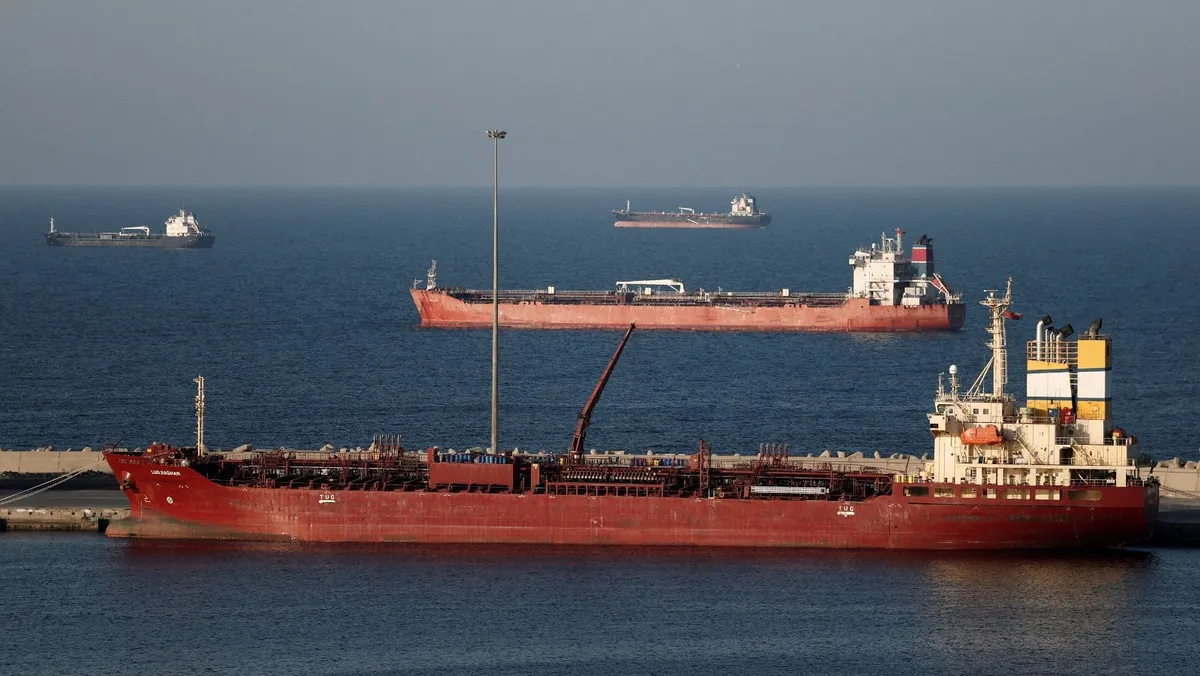
In the shadowed waters of the Strait of Hormuz, a chokepoint through which 20% of the world's oil flows, Iran has unleashed a bold economic gambit that transcends traditional military saber-rattling. Recent reports confirm that Iran's Revolutionary Guard Corps (IRGC) has imposed yuan-based tolls on vessels transiting the strait, a move Bloomberg detailed on April 4, 2026, marking a direct challenge to the US dollar's longstanding hegemony in global energy trade. This development coincides with President Donald Trump's stark 48-hour ultimatum to Tehran, issued amid intensifying clashes, as covered by Daily News Egypt and Newsmax, warning of "all hell" if Iran does not comply by April 6. As tensions escalate, the oil price forecast becomes a critical factor, with potential supply disruptions driving volatility in energy markets and influencing global currency shifts.
This article uniquely examines how these yuan tolls are accelerating global de-dollarization efforts, diverting attention from fleeting military escalations to profound economic realignments. Rather than fixating on airstrikes or naval standoffs, we spotlight the strategic pivot: Iran's maneuver is catalyzing a shift toward multipolar currency dynamics, fostering emerging market alliances that sideline the dollar. With French and Japanese-owned ships already navigating the strait under these new terms (Taipei Times, April 5), and Europe backing US positions on Hormuz security (March 19 timeline), the implications ripple across trade routes, energy markets, and international relations. This is not mere brinkmanship; it's a blueprint for a post-dollar era, where China’s renminbi gains traction amid US sanctions fatigue. The intertwined oil price forecast adds another layer, as analysts predict spikes that could reshape investor strategies worldwide.
Historical Escalation and Context
The current crisis did not erupt overnight but builds on a compressed timeline of provocations from March 18 to March 22, 2026, illustrating a pattern of rapid escalation that has evolved from nuclear saber-rattling to economic warfare. On March 18, the US issued stark warnings regarding Iran's nuclear sites, heightening fears of proliferation amid ongoing regional instability. This was swiftly followed on March 19 by Trump's direct threats against Iran's South Pars gas field—the world's largest natural gas deposit—coupled with announcements of US Marine deployment plans for the Strait of Hormuz. Europe, signaling transatlantic unity, backed these US moves the same day, underscoring NATO's stake in securing this vital artery.
By March 22, Trump escalated further, threatening outright strikes on Iranian targets, a rhetoric that echoes the 2019 "maximum pressure" campaign but with heightened immediacy. This sequence forms a narrative bridge: initial military posturing has morphed into Iran's yuan tolls, a retaliatory economic strategy designed to bypass dollar-denominated sanctions. Historical US-Iran confrontations provide crucial context. The 1953 CIA-backed coup, the 1979 hostage crisis, and the 2018 JCPOA withdrawal inadvertently propelled Tehran toward non-Western alliances. Post-2018, Iran deepened ties with China via the 25-year Comprehensive Strategic Partnership, which includes yuan-settled oil sales, and with Russia through barter deals evading SWIFT.
Recent events amplify this trajectory. On March 27, tensions peaked at the strait itself. March 29 saw Iran accusing the US of plotting attacks, alongside Indonesia securing its vessels and reports of regime rifts with the IRGC. March 30 brought Trump's threats of oil seizure, while April 2 featured Russia evacuating Iran's Bushehr nuclear plant. By April 3, French ships exited post-war, and Iran-Oman monitoring plans emerged. This buildup contextualizes the yuan tolls not as improvisation but as a calculated response, pushing Iran—and observers—toward de-dollarization. Past episodes, like the 2019 Abqaiq attacks, spiked oil prices 15% in a day; today's economic layer adds currency warfare, historically forcing sanctioned states like Russia (post-2022 Ukraine) to amass gold and yuan reserves. For deeper insights into how these dynamics influence broader alliances, see our analysis on Iran's Escalating Strikes and Oil Price Forecast.
Social media echoes this historical lens. On X (formerly Twitter), @GeoPolAnalyst posted: "Iran's yuan tolls in Hormuz? This is 1979 oil shock 2.0, but with BRICS currency twist. Dollar's throne wobbling #DeDollarization." Viral threads from @MarketMaverick reference the March timeline: "From 3/18 nuke warnings to 4/4 yuan tolls—Trump's ultimatums birthed RMB energy trade. Watch Shanghai crude futures surge." These reactions, garnering millions of views, underscore public fascination with the economic undercurrents amid downed US planes and missing pilots (Straits Times).
Economic Realignment, Oil Price Forecast, and Original Analysis
At its core, Iran's yuan-based tolls represent a masterstroke in asymmetric warfare, compelling shippers to hold Chinese currency for passage fees and potentially oil cargoes. This disrupts petrodollar recycling, where Gulf oil sales in dollars fund US Treasuries. Original analysis here reveals a multiplier effect: by denominating tolls in yuan, Iran incentivizes yuan convertibility, drawing parallels to Saudi Arabia's 2018 flirtation with RMB oil trades. Global trade data supports this—China imported 10.7 million barrels per day of crude in 2025, 15% settled in yuan per People's Bank of China figures—positioning Beijing as the ideal counterweight. The oil price forecast in this context signals upward pressure, as Hormuz risks amplify supply concerns and bolster alternative currency adoption.
The impact on USD dominance is profound. The dollar's share in global reserves has dipped from 71% in 2000 to 58% in 2025 (IMF), accelerated by sanctions weaponization. Iran's move could weaken this further, encouraging holdouts like India (already buying Russian oil in rupees) and Brazil to diversify. Cross-market analysis shows spillovers: emerging markets, holding $12 trillion in dollar debt (BIS), face refinancing risks if DXY surges, but gain from cheaper yuan swaps. China and Russia stand to reap overlooked windfalls—China via CIPS payment system expansion (now 4% of SWIFT volume), Russia through its $600 billion yuan war chest.
Weaving in institutional data, this realignment dovetails with BRICS initiatives. The New Development Bank's $32 billion in non-dollar loans since 2014 exemplifies the trend. For investors, it's a pivot point: yuan internationalization boosts Asian bonds (yielding 2.5% vs. US 4.2%), while commodities shift to Shanghai futures. Social buzz amplifies: TikTok economist @YuanRising quipped, "Hormuz tolls in RMB? Trump's tariff king just crowned Xi the oil emperor. #PetroYuan," with 2M likes. Explore related psychological dimensions in PsyOps in the Shadows.
Catalyst AI Market Prediction
The World Now's Catalyst AI engine, leveraging causal mechanisms and historical precedents, forecasts market ripples from this Hormuz standoff:
- SPX: Predicted - (medium confidence) — Geo escalation triggers broad risk-off, with algos selling into VIX spike. Historical precedent: 2006 Israel-Lebanon war caused S&P 3% decline over month initial phase. Key risk: Ukraine de-escalation headlines overshadow ME noise.
- USD: Predicted + (high confidence) — Causal mechanism: Primary safe-haven amid geo shocks. Historical precedent: 2019 Iran tensions boosted DXY +1.5% weekly. Key risk: Oil inflation forces Fed pivot.
- TSM: Predicted - (low confidence) — Causal mechanism: Risk-off hits semis via China geo proxy fears. Historical precedent: 2018 tariffs SOX -30% phase. Key risk: AI demand overrides.
- EUR: Predicted - (medium confidence) — Causal mechanism: USD haven outperformance on geo risk; oil import dependence exposes EUR bloc. Historical precedent: 2019 Iran EURUSD -1.5% weekly; 2022 Ukraine crisis dropped EUR 5% initially. Key risk: ECB hawkishness or Finland NATO boosts.
- ETH: Predicted - (medium confidence) — Causal mechanism: BTC-led risk-off cascades to alts via shared liquidity pools; Circle scrutiny amplifies. Historical precedent: Feb 2022 Ukraine ETH -12% in 48h; Nov 2022 FTX -20% in 24h. Key risk: Staking yields or institutional dip-buying.
- OIL: Predicted + (high confidence) — Causal mechanism: Direct supply disruption fears from Iran/Houthi strikes. Historical precedent: 2019 Houthi Saudi attacks spiked oil 15% in one day; May 2019 Saudi attacks SPX -1.5% in 48h. Key risk: OPEC+ output hike.
- BTC: Predicted - (medium confidence) — Causal mechanism: Headline-driven risk-off liquidations; Circle compliance fears below $70K. Historical precedent: Feb 2022 Ukraine -10% in 48h; Nov 2022 FTX -20%. Key risk: Spot ETF inflows absorb pressure. Calibration: Narrowed range (40% direction accuracy, 12x impact overestimate history).
Predictions powered by The World Now Catalyst Engine and the Global Risk Index. Track real-time AI predictions for 28+ assets.
These projections highlight cross-asset contagion: oil's upside pressures equities and crypto downside, bolstering USD safe-haven bids, making oil price forecast a pivotal element in portfolio planning.
Predictive Outlook: Future Scenarios
If tensions persist beyond Trump's April 6 deadline, we predict accelerated de-dollarization. Yuan tolls could expand to full RMB oil pricing, mirroring Venezuela's 2023 pivot (90% China sales in yuan). A multipolar financial system emerges: BRICS+ (now 10 members) launches a unified payment platform by 2027, eroding SWIFT's 90% dominance. New alliances exclude the US—envision India-Russia-China energy corridors via INSTC, bypassing Hormuz.
Diplomatic off-ramps exist: China, as Iran's top buyer, could mediate, leveraging its Oman pact (April 3). Yet escalation risks loom—strikes on bunkers (Newsmax, April 3) or IRGC rifts (March 29) could fragment Tehran, inviting broader conflict. Long-term: powers diversify energy (US LNG to Europe up 50% since 2022) and reserves (gold up 20% globally). CNN's April 4 commentary warns against "premature exit," signaling prolonged US entanglement.
Hindustan Times notes the "deadline nears," with Times of India questioning Trump's "triumphal tone." VG Norway reports the 48-hour threat in Norwegian, reflecting global scrutiny. For more on internal impacts, check Iran's Internal Ripple.
What This Means: Looking Ahead
Iran's Hormuz strategy synthesizes military brinkmanship with economic innovation, transforming yuan tolls into a de-dollarization accelerant. This unique angle—from tactical fees to tectonic shifts—reveals overlooked alliances reshaping trade: China fortifies its belt, Russia evades sanctions, and emerging markets hedge USD risks. Original analysis underscores adaptive imperatives: nations must diversify reserves (target 20% non-USD by 2030) and explore CBDCs to mitigate volatility. The oil price forecast underscores urgency, with potential 15-20% surges prompting central banks to accelerate non-dollar hedging strategies.
For investors, monitor OIL/USD correlations and BRICS summits; personal portfolios face inflation from energy shocks but opportunities in yuan assets. Global stability hinges on diplomacy—failure risks fragmented blocs. Readers, track these waters: the dollar's ebb could redefine wealth for decades, especially as oil price forecasts evolve with each Hormuz headline.## Sources
- Report: Iran Quickly Repairing, Rebuilding Missile Bunkers
- Iran’s Revolutionary Guard imposes yuan-based tolls for Strait of Hormuz transit: Bloomberg
- Downed planes spell new peril for Trump as Tehran hunts missing US pilot
- Trump gives Iran 48-hour ultimatum as fighting intensifies, ceasefire hopes fade
- Now that we’re in Iran, we cannot afford a premature exit 6:48
- French, Japanese-owned ships make first Hormuz transits
- Trump's 48-hour warning to Iran as Hormuz Strait 'deadline' nears: 'Before all Hell...'
- Is Donald Trump’s triumphal tone on Iran facing a reality check?
- Trump Warns Iran: '48 Hours Before All Hell Reigns Down'
- Trump truer Iran igjen – gir dem 48 timer