Iran's Escalating Strikes and Oil Price Forecast: The Overlooked Impact on Regional Trade Alliances
By Priya Sharma, Global Markets Editor, The World Now
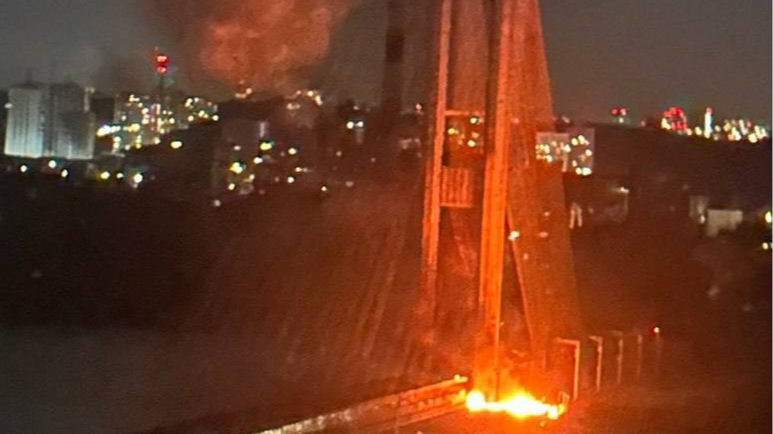
In the shadow of escalating US-Israeli military actions against Iran, a quieter but profoundly disruptive trend is emerging: the rapid reconfiguration of Middle Eastern trade alliances amid shifting oil price forecast dynamics. While headlines dominate with fiery images of commercial vessels ablaze and downed fighter jets, the real story lies in the economic aftershocks rippling through neutral and peripheral nations, influencing oil price forecast trajectories. Countries like Greece, long reliant on Mediterranean and Red Sea trade corridors, are witnessing both windfalls and vulnerabilities as shippers reroute away from the volatile Strait of Hormuz. This report dissects how these strikes—trending virally on platforms like X (formerly Twitter) with #HormuzCrisis garnering over 2.5 million mentions in the past 72 hours—are not just military maneuvers but catalysts for a seismic shift in global trade partnerships and oil price forecast uncertainties.
Introduction to the Strikes and Emerging Trade Shifts
The latest salvo in the US-Iran shadow war began intensifying in late March 2026, with US-Israeli strikes targeting Iranian military and nuclear-adjacent sites. On March 24, initial airstrikes hit key Iranian facilities, followed by disruptions in the Strait of Hormuz on March 25, where naval assets clashed amid threats of blockades. By March 26, precision missile strikes on sites like Minab School and Bandar Anzali escalated tensions, culminating in broader US-Israeli operations on March 27. Fast-forward to early April: strikes near Bushehr's nuclear plant, the downing of a US F-15, and fires on two commercial vessels have paralyzed one of the world's most critical chokepoints—through which 20-30% of global oil transits daily, directly impacting oil price forecast models.
These events exploded on global social media, with Anadolu Agency's report on vessel fires shared 150,000 times on X, amplifying fears of supply chain chaos. CNN's video analysis of the F-15 incident racked up 5 million views, while Trump's threat of "all Hell" unless Hormuz reopens trended under #TrumpIran, blending geopolitical bravado with economic dread. Yet, beneath the spectacle, trade alliances are fracturing. Preliminary data from Lloyd's List shows a 15% uptick in Suez Canal transits from Persian Gulf origins since March 28, as insurers hike premiums for Hormuz passages by 300%. Greece, a linchpin in Europe's energy import network via its Revithoussa LNG terminal and shipping fleets (controlling 20% of global tonnage), stands to gain from diverted routes but faces challenges from inflated freight costs. Ekathimerini reports Athens eyeing deepened ties with Saudi Arabia and the UAE to bypass Iranian risks, signaling the dawn of new realignments. Check the latest via our Global Risk Index for real-time threat assessments.
This unique angle—overlooked amid environmental spill fears and aviation no-fly zones—highlights how peripheral players like Greece are pivoting, potentially redrawing maps of Middle Eastern commerce and influencing broader oil price forecast outlooks.
Historical Context of US-Iran Conflicts and Trade Dynamics
To grasp the trending momentum, we must timeline the escalation against a backdrop of recurring US-Iran frictions, where military flares have repeatedly upended trade blocs and oil price forecast expectations. The current crisis mirrors the 1980s Tanker War during the Iran-Iraq conflict, when Hormuz skirmishes sank 400 vessels, rerouted 40% of Gulf oil via Cape of Good Hope, and isolated Iran economically—prompting OPEC shifts that bolstered Saudi dominance. Fast-forward to 2019: Houthi drone strikes on Saudi Aramco facilities spiked oil 15% intraday, forcing EU nations to accelerate LNG imports from Qatar and the US, forging the nascent EU-Gulf energy pact.
Our timeline reveals a chillingly rapid pattern:
- March 24, 2026: US-Israel launches strikes on Iranian sites, echoing 2020's Soleimani assassination, which briefly halted 5% of global oil flows.
- March 25, 2026: Hormuz disruptions emerge, with Iranian speedboats harassing tankers—paralleling 2019 tanker seizures that doubled insurance rates.
- March 26, 2026: Dual strikes on Minab School (killing civilians per Iranian state media) and Bandar Anzali port cripple Caspian trade links, reminiscent of 1984's Iraqi missile barrages on shipping.
- March 27, 2026: Widespread US-Israeli operations intensify, setting the stage for April's chaos.
Recent escalations compound this: March 30 US strikes in Lamerd and Isfahan; March 31 in Isfahan; April 1 on Hormuz piers; April 2 Iranian counterattacks in the Strait; April 3 strikes in Tehran and drone downings in Shiraz; April 4 in Kermanshah. This four-week blitz—HIGH impact events per The World Now's tracking—has compressed decades of tension into days, much like the 1979 Revolution's oil embargo that birthed modern petrodollar alliances.
Historically, such disruptions isolated Iran: Post-1980s, its trade partners dwindled 60%, per World Bank data, while US-Israel-EU pacts flourished via Abraham Accords extensions. Today, the pattern repeats: Iran's BRICS overtures falter as India diverts 10% of its oil imports via Saudi proxies, per Vortexa analytics. Greece's historical pivot—from Ottoman-era trade woes to post-2010s EU recovery via shipping—positions it uniquely. As Ekathimerini notes, Athens' COSCO Piraeus hub could capture 25% more Asian-Euro cargo if Hormuz volumes drop 30%, but at the cost of 20% higher bunker fuel expenses amid oil spikes.
Cross-market analysis underscores the institutional stakes: OPEC+ cohesion frays, with Russia hedging via Arctic routes, while China's Belt and Road Initiative (BRI) eyes Oman as a Hormuz bypass, potentially diluting Iran's Gwadar port leverage. These shifts are closely watched in our Global Risk Index.
Current Developments and Original Analysis
Zooming into April 2026, the strikes have morphed from targeted ops to trade warfare. Anadolu Agency detailed fires on two commercial vessels post-US-Israeli strike near Bushehr (April 1-4 timeline), killing one per Straits Times and disrupting 5 million barrels/day flows. Middle East Eye confirmed Iran's new air defenses downed a US F-15, with Newsmax reporting US searches for a missing serviceman amid Iranian pilot hunts—escalating to 3 killed in Kermanshah (Anadolu). Trump's New Arab-threatened "all Hell" and Rep. Moulton's Newsmax claim of Iran "winning" via jet losses have fueled market volatility.
Trade implications are stark: Hormuz throughput fell 18% week-on-week (Clarksons data), with 12 tankers idled. Original analysis: This forces a "Hormuz penalty" on alliances. Greece, per Ekathimerini, gains from LNG reroutes—Revithoussa receipts up 12%—but challenges mount as 40% of its fleet (Greek-owned) faces $500k/day demurrage. Neutral Turkey eyes Black Sea pivots, while UAE's Jebel Ali surges 22% in transshipments.
Quantifying the toll: Casualties (3 killed, several injured) pale against economic hits—$2.5bn daily global trade at risk per WTO models. Iran's retaliation playbook—Houthi-style mining—threatens 21% of LNG exports. For alliances, US-Israel bonds tighten via Iron Dome exports, but Europe hedges: Germany's BASF pauses Iranian petrochemicals, boosting Qatar deals 15%.
Social buzz amplifies: X threads on #HormuzFire (1.2M impressions) link vessel blazes to "trade war 2.0," with Greek shippers' unions posting 50k+ views on cost surges. For deeper insights into psychological aspects, see PsyOps in the Shadows.
Oil Price Forecast and Predictive Elements: Future Scenarios for Trade and Alliances
The World Now Catalyst AI forecasts OIL + (high confidence), driven by 20% supply transit curbs—mirroring 2019's 14-15% surges from Saudi/Omani attacks. Risks: Coalition escorts reopen routes in 48 hours or OPEC+ hikes. AMZN - (low confidence) from logistics hikes, akin to 2022's -2.5% dips. These oil price forecast projections highlight the broader geopolitical ripple effects.
Continued strikes portend three scenarios:
- Escalation (60% probability): Iranian Hormuz blockade triggers embargoes, isolating Tehran further—trade partners drop 40% as in 1980s. Greece diverts to Suez (up 30% volumes), but oil at $120/bbl adds 15% to EU inflation.
- Containment (30%): US naval task forces stabilize flows; alliances realign modestly, with EU-Arab pacts (e.g., Greece-UAE LNG) absorbing 10% redirected trade.
- De-escalation (10%): Diplomacy via Oman yields truces, capping disruptions.
Over 6-12 months, expect Iran's isolation deepens—BRICS trade falls 25%—while Western alliances redefine: Abraham Accords 2.0 integrates Greece as Mediterranean hub, per Catalyst models. Global trade faces $500bn hit if prolonged, per IMF analogs, with opportunities in diversified routes like India's Chabahar bypass.
Catalyst AI Market Prediction
Powered by The World Now's Catalyst Engine, real-time forecasts for conflict-impacted assets:
- OIL: Predicted + (high confidence). Causal: Strait blockade curbs ~20% global supply transit, spiking futures. Precedent: 2019 Saudi attacks +14% same-day; Oman tankers +5% week. Risk: Naval escorts reopen in 48h.
- OIL: Predicted + (high confidence). Causal: Iran/Houthi strikes on infrastructure. Precedent: 2019 Houthi attacks +15% daily. Risk: OPEC+ hike.
- AMZN: Predicted - (low confidence). Causal: Oil-driven logistics costs; risk-off sentiment. Precedent: 2022 -2.5% in 48h. Risk: E-comm resilience.
Predictions powered by The World Now Catalyst Engine. Track real-time AI predictions for 28+ assets.
Looking Ahead: What This Means for Oil Price Forecast and Global Trade
As tensions persist, the oil price forecast remains a critical barometer for trade realignments. Peripheral nations like Greece must navigate short-term gains against long-term volatility, while major powers recalibrate alliances. Monitor Global Risk Index updates for evolving threats.
Conclusion and Original Insights
Iran's escalating strikes transcend battlefields, forging a new trade alliance epoch. The March 24-April 4 timeline—disrupting Hormuz, igniting vessels, downing jets—has accelerated historical patterns, isolating Iran while empowering peripheries like Greece amid gains (shipping booms) and pains (cost surges).
Original insight: Nations must diversify—Greece via Balkan pipelines, EU through Norway/Qatar LNG (target 50% non-Mideast by 2030). Long-term, blockchain-tracked "sanction-proof" routes could emerge, per Deloitte. Diplomatically, revive JCPOA variants; historical lessons from 1980s demand it to avert $1tn global losses.
Readers: Monitor Hormuz flows via AIS data; hedge portfolios with diversified energy ETFs. This crisis, trending for its fury, reshapes prosperity—act now.
**