Indonesian Airports Reopen after Anak Krakatau Eruption Ash Clears Amid Natural Disasters
Mount Anak Krakatau in Indonesia erupted on Tuesday with a Strombolian explosion, prompting temporary airport closures due to volcanic ash but resulting in no detected tsunami threat and the subsequent reopening of eight airports after safety tests confirmed they were clear of ash, all within the wider context of natural disasters affecting the region.
Eruption Overview and Immediate Monitoring
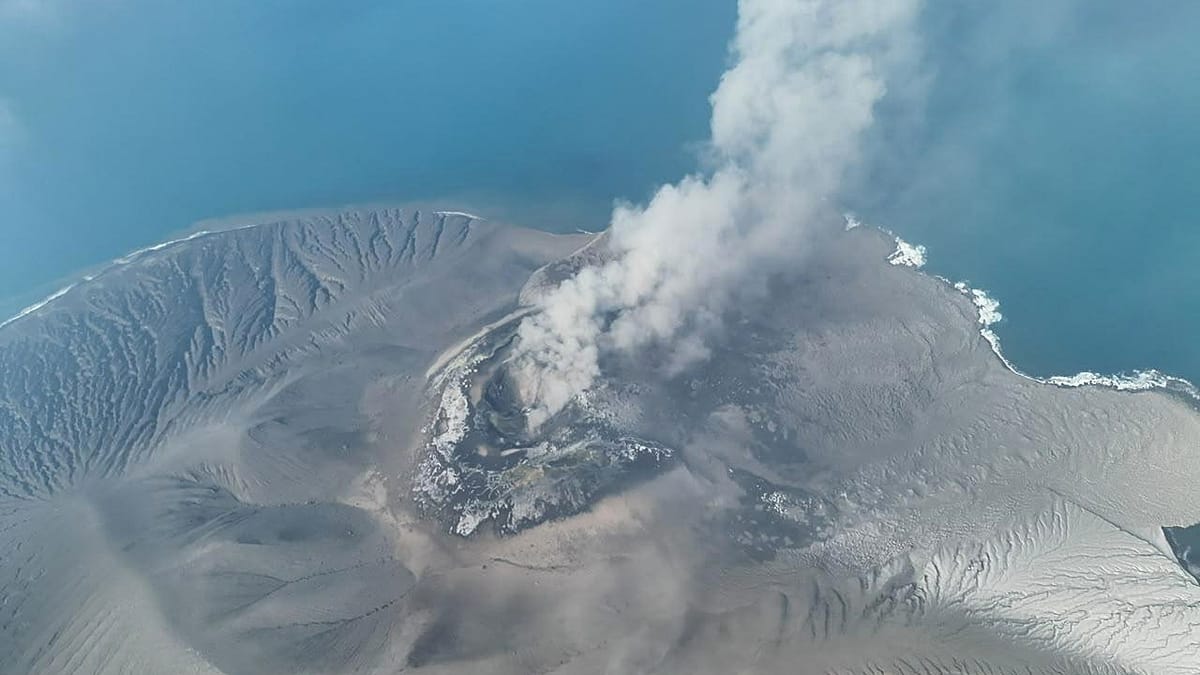
The Volcanology and Geological Hazard Mitigation Center recorded a Strombolian eruption at 7:49 a.m. Tuesday lasting 19 seconds with 48 mm amplitude. [1] Volcanic ash moved south-southwest at up to 7,000 feet and 5-10 knots, affecting parts of northwestern Banten. [2] The volcano remains at Indonesia’s second-highest alert level with a high probability of further eruptions that could include incandescent rocks, heavy ashfall, and lava flows. [4] Ash reached as high as 50,000 feet earlier in the event. [4] Authorities continue to monitor the site closely given the scale of activity observed during the multi-day sequence. [4] The second-highest alert status signals that additional eruptive phases cannot be ruled out in the near term. [4] PVMBG data showed the brief Strombolian phase produced a maximum amplitude of 48 millimeters over the 19-second duration. [1] This reading aligns with ongoing surveillance that tracks both seismic signals and ash column behavior. [1] The alert level underscores the potential for renewed episodes capable of generating incandescent rocks along with heavy ashfall and possible lava flows. [4]

Airplanes operate normally at Soekarno-Hatta Airport after volcanic ash clearance. — Source: antaranews
Tsunami Risk Assessment
BMKG reported no sea-level anomalies or tsunami indicators in the Sunda Strait after the eruption, with wave heights stable at 0.5 to three meters and tsunami probability below 50 percent. [1] Twenty tsunami gauges and HF radar arrays in Carita and Tanjung Lesung showed no abnormal sea-level rise or significant changes in surface-current patterns. [1] Monitoring confirmed the probability of a tsunami remained below 50 percent throughout the observation period. [1] Wave heights in the Sunda Strait stayed within the normal range of 0.5 to three meters. [1] Weather conditions were expected to remain sunny to partly cloudy through Sept. 13. [1] The absence of sea-level anomalies provided clear reassurance that the eruption did not generate any detectable tsunami indicators. [1] Radar arrays and gauge networks operated continuously to verify surface-current stability. [1] These combined instruments supplied the data that placed overall tsunami probability below the 50 percent threshold. [1]
Airport Closures and Reopenings
Eight airports were closed due to ash but reopened Tuesday after negative paper tests for volcanic ash, starting with Soekarno Hatta at 12:30 a.m. and ending with Salakanegara at 9:50 a.m. [2] Soekarno Hatta International Airport in Tangerang resumed operation at 12:30 a.m. local time. [2] Halim Perdanakusuma Airport in Jakarta reopened at 12:40 a.m. [2] Husein Sastranegara Airport in Bandung commenced service at 12:42 a.m. [2] Budiarto Airport in Tangerang reopened at 1:25 a.m. [2] Pondok Cabe Airport in South Tangerang resumed operation at 1:28 a.m. [2] Taufiq Kiemas Airport in Pesisir Barat District was reopened at 9:31 a.m. [2] Radin Inten II Airport in Lampung resumed operation at 9:45 a.m. [2] Salakanegara Airport in Banten's Tanjung Lesung region was declared safe and reopened at 9:50 a.m. [2] AirNav Indonesia issued a Notice to Airmen announcing the gradual reopening after paper tests returned negative results for volcanic ash exposure. [2] BMKG conducted regular paper tests at the airports and their runways to complement satellite imagery and aviation meteorology data. [2]
Ash Dispersion and Mitigation Efforts
BMKG conducted weather modification flights using sodium chloride, calcium chloride, and water mist to disperse volcanic ash, while advising residents to limit outdoor activities and wear masks and protective eyewear. [1] Five weather-modification flight sorties used two Cessna Caravan aircraft from Pondok Cabe and Halim Perdanakusuma. [1] One sortie dispersed sodium chloride powder and another used calcium chloride liquid as a cloud-condensation agent. [1] Three additional sorties sprayed water mist into the atmosphere. [1] Volcanic ash from Anak Krakatau moved at an altitude of up to 7,000 feet in a south-southwestern direction. [2] The agency coordinated with aviation authorities and airport operators to ensure airspace safety for commercial flights and disaster mitigation operations. [2] Weather observation around Anak Krakatau and the Sunda Strait remained relatively clear to partly cloudy from morning until evening. [2] BMKG advised people in affected areas to limit outdoor activities and wear masks and protective eyewear to reduce potential health risks. [1]

ASEAN weekly disaster update map for Philippines covering 31 August to 6 September 2026. — Source: reliefweb
Broader Regional Disaster Context
The volcanic activity occurred within the ASEAN weekly disaster summary for the period including this event. [3] During week 36 of 2026, a total of eight disaster events were reported across ASEAN, including droughts, storms, volcanic activity, and wind-related disasters. [3] In Indonesia, the impacts of disaster events reported in previous weeks continued into the current reporting period. [3] The summary placed the Anak Krakatau eruption among the documented volcanic activity across the region. [3] ASEAN Coordinating Centre for Humanitarian Assistance compiled the weekly update covering 31 August to 6 September 2026. [3] The report noted that eight disaster events in total affected multiple ASEAN member states during the week. [3]
Ongoing Preparedness and Impacts
The eruption of Anak Krakatau has tested the country’s disaster preparedness, disrupting nearly 3,000 flights carrying more than 340,000 passengers as volcanic ash spread across the region. [4] Authorities say they are monitoring the volcano, which remains under the country’s second-highest alert status. [4] The event’s exceptional scale makes its impact hard to anticipate according to scientists. [4] The eruption has renewed debate on whether Indonesia’s monitoring and disaster planning can be strengthened. [4] On Friday the volcano started its 25-hour continuous eruption according to the Geological Agency. [4] The probability of further eruptions from Anak Krakatau in the near future remains high. [4] Volcanic ash reached as high as 50,000 feet on Monday. [4] The main Jakarta airport and three others remained closed after the eruption until at least Monday evening local time. [5] The Anak Krakatau volcano broke out on Friday and has since ejected lava and ash clouds up to 15 kilometers high. [5] The traffic ministry stated that eight airports in the region had to suspend operations over the weekend because of ash clouds. [5] More than 1,500 flights and over 170,000 passengers were affected. [5] At least four airports including Jakarta’s Soekarno-Hatta International Airport extended the operational pause until Monday 18:00 local time. [5] The volcano has been repeatedly active since emerging from the sea at the beginning of the last century. [5] Since July the second-highest warning level has been in place. [5]
What to watch next: Authorities will continue regular paper tests and coordination with aviation bodies to maintain safe airspace while the second-highest alert level remains in effect.