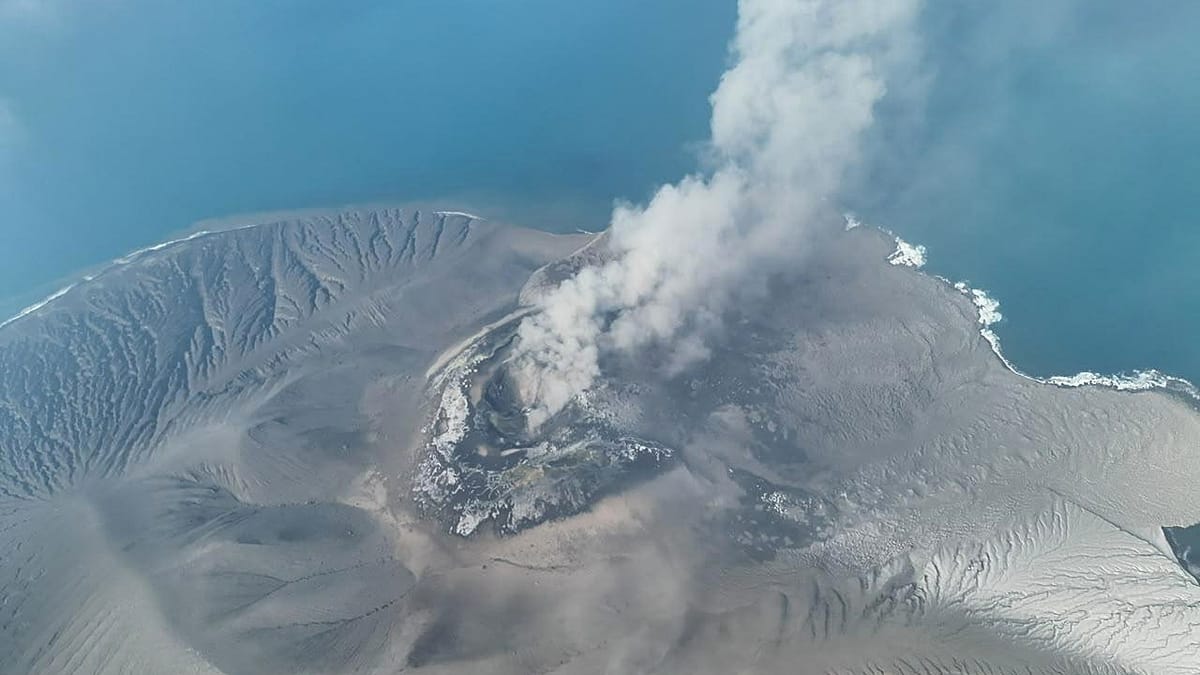

Jakarta Airport Reopens After Anak Krakatau Volcanic Ash Clears in Natural Disasters
Indonesian authorities reopened Soekarno-Hatta International Airport and four other airports on Tuesday after volcanic ash from Mount Anak Krakatau's eruption that began Friday forced their closure, while a separate eruption at Mount Ili Lewotolok prompted the temporary shutdown of Wunopito Airport in East Nusa Tenggara amid natural disasters.
Airports Reopen After Anak Krakatau Ash Disruption
Several airports affected by volcanic ash began reopening early Tuesday after a national aviation safety assessment determined that operations could safely resume. Soekarno-Hatta Airport and other affected airports were cleared to resume normal operations on Tuesday after the volcanic ash disruption ended. Terminal 1 at Soekarno-Hatta Airport in Tangerang, Banten, resumed operations at 12:01 a.m., followed by Halim Perdanakusuma Airport and Husein Sastranegara Airport. Budiarto Curug Airport and Pondok Cabe Airport in Banten also resumed operations at 2:25 a.m. [3] Indonesia reopened its main airport in Jakarta and four others that had been closed due to volcanic ash from Mount Anak Krakatau. Soekarno-Hatta Airport, Jakarta’s main airport, resumed operations on Tuesday after wind blew the ash away. [5]
Aircraft Inspections Ordered for Safety
Indonesia's Transportation Minister Dudy Purwagandhi has ordered airlines to inspect every aircraft before resuming flights after Mount Anak Krakatau's eruption disrupted operations at several airports. Dudy said airport authorities and airlines must inspect aircraft before reopening operations to ensure flight safety and compliance with applicable regulations. They must ensure aircraft are free of volcanic ash, including on their surfaces and inside their engines. Pilots and operational crews must also understand restricted polygons marking airspace that remains off-limits because of hazardous volcanic ash. Dudy said airlines generally have procedures requiring aircraft to be covered while parked, reducing their exposure to volcanic ash. Every aircraft, however, must undergo another inspection before departure because fine ash particles can penetrate engines despite protective measures. He urged the public to understand that volcanic ash particles are extremely fine, making thorough inspections essential before flights resume. [3]
Scale of Flight Disruptions from Weekend Closures
The main airport of Indonesia's capital Jakarta and three others remain closed after the eruption of the volcano Anak Krakatau until at least Monday evening local time. The Anak Krakatau, on a small island about 150 kilometers from the Indonesian capital, erupted on Friday and has since ejected lava and huge ash clouds kilometers high — according to official information up to 15 kilometers high. The transport ministry said that over the weekend eight airports in the region had to cease operations due to ash clouds in their airspace. More than 1,500 flights and over 170,000 passengers have been affected so far. The airport operator Angkasa Pura announced on social networks that at least four airports, including Jakarta's Soekarno-Hatta International Airport, have extended the operational pause until Monday, 6 p.m. (11:00 a.m. GMT). "In connection with the increasing activity of the Anak Krakatau volcano, flights have been suspended at several airports. Passengers should regularly check their flight status with the respective airlines," the company explained. [1] Ash from Anak Krakatau, which sits halfway between Java and Sumatra islands, has blanketed Jakarta and some surrounding areas since its initial eruption late on Friday. It led to the closure of eight airports for safety reasons, with more than 340,000 travelers impacted. [5]
Separate Eruption Closes Wunopito Airport
Wunopito Airport in Lewoleba, East Nusa Tenggara, was temporarily closed due to the spread of volcanic ash from Mount Ili Lewotolok. The airport closure applies from 7:01 a.m. local time on Tuesday (8/9/2026) until an estimated 6:00 a.m. local time on Wednesday (9/9/2026). Based on NOTAM C1134/26 NOTAMR C1106/26, Wunopito Airport (WATW) is closed during that period. The closure was carried out as a measure to maintain flight safety amid the volcanic activity of Mount Ili Lewotolok. [2] AirNav Indonesia has temporarily closed Wunopito Airport in Lewoleba, East Nusa Tenggara, after volcanic ash from Mount Ili Lewotolok drifted into local airspace. A Notice to Air Missions (NOTAM) placed Wunopito Airport under closed status starting at 7:01 a.m. local time on Sept. 8. The closure is expected to remain in effect until 6 a.m. on Sept. 9. The NOTAM states that the closure was caused by volcanic ash from Mount Ili Lewotolok. The shutdown follows ongoing activity at Mount Ili Lewotolok, where an eruption at 6:35 a.m. on Tuesday sent an ash column roughly 800 meters above the peak toward the west. Volcanic ash is a concern for flight operations because it can affect aviation safety when present along flight routes. [4]
Background on Anak Krakatau and Past Activity
The volcano is repeatedly active since it emerged from the sea at the beginning of the last century. Since July, the second-highest warning level has applied to it. Its name means "Child of Krakatau," because it arose a good century ago at the site where the Krakatau volcano collapsed after a devastating eruption in 1883. In 2018, the partial collapse of Anak Krakatau during an eruption triggered a tsunami. More than 400 people lost their lives according to official information, and thousands had to leave their homes. [1]
Ongoing Monitoring by Aviation Authorities Amid Natural Disasters
EVP of Corporate Secretary AirNav Indonesia Hermana Soegijantoro said the company continues to monitor developments in the spread of volcanic ash from Mount Ili Lewotolok and air space conditions in the surrounding area. "AirNav Indonesia continues to monitor the condition of the spread of volcanic ash from Mount Ili Lewotolok as well as developments in conditions around the flight area. Aeronautical information updates will be carried out in accordance with developments in conditions and the results of flight safety evaluations," said Hermana. Volcanic activity at Mount Ili Lewotolok is still ongoing. [2] AirNav said it is coordinating with aviation stakeholders to ensure safety remains the top priority before operations resume. [4]
What to watch next: Authorities will continue tracking ash dispersion from both volcanoes while updating aeronautical safety notices and coordinating with stakeholders to prioritize flight safety.