
Hungary Election 2026: Orban's Defeat Unlocks €90 Billion EU Aid for Ukraine and Revitalizes Eastern Alliances
What's Happening
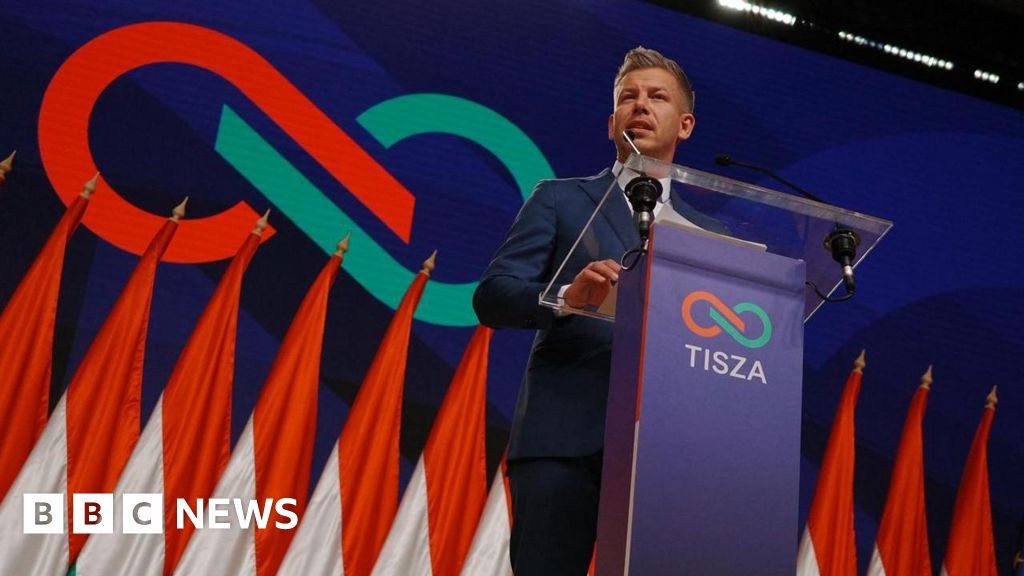
The Hungarian election outcome, confirmed by the National Election Office late on April 13, marks an "electoral earthquake," as described by France24. Orban's Fidesz, once dominant with supermajorities, suffered its worst result since 2006, garnering under 45% of the vote amid voter fatigue over economic woes, corruption scandals, and Orban's alignment with Moscow. Péter Magyar, a former Fidesz insider turned vocal critic, led the Tisza Party to victory with promises of EU reintegration and anti-corruption reforms. In his first post-election statement, Magyar affirmed he would "pick up the phone if Putin calls" but firmly tell him to end the Ukraine war, per BBC reporting—a stark contrast to Orban's vetoes on Ukraine aid.
Immediate implications are rippling across Europe. EU officials, citing Ukrainska Pravda, are pushing to unblock €90 billion in military and financial support for Kyiv "as quickly as possible," with Hungary's opposition to sanctions and aid packages now likely lifted. The Kremlin, in confirmed statements via Anadolu Agency and Straits Times, refused to congratulate Magyar and expressed hopes for "pragmatic ties," while privately viewing the loss as a setback for Putin, according to France24. Unconfirmed reports from VG.no suggest initial market reactions included a 2.0% weekly gain in the EUR (currently at $1.00, flat 24h), reflecting optimism on EU cohesion.
This change signals a break from Hungary's pro-Russian foreign policy, including delays on Sweden's NATO accession and blocking Ukraine's EU path. Magyar's team has pledged support for enhanced military mobility in the EU, aligning with YLE News reports on Finland's parliamentary backing for such measures. For further reading on interconnected geopolitical risks, check the Global Risk Index.
Context & Background
Orban's defeat connects directly to a cascade of 2026 geopolitical pressures echoing historical EU-Russia tensions. Hungary has long been the EU's "Trojan horse" for Russian influence, vetoing sanctions since 2022 and echoing Kremlin narratives on Ukraine. This mirrored broader transatlantic strains, such as on April 2, 2026, when Trump's Iran policy rattled Europe, prompting moves to cut reliance on US weapons (as reported in contemporaneous analyses like 'Oil Price Forecast Amid US-Iran Standoff: The Overlooked Role of Non-Gulf Nations in Hormuz Tensions'). NATO's spending boost on April 3 amid US troop withdrawal threats (April 9-10 events) underscored Eastern flank vulnerabilities, with Hungary's foot-dragging exacerbating them.
Fast-forward to early April 2026: EU ministers proposed energy taxes on April 4 to counter Russian gas leverage, alongside urging taxes on war profits—measures Orban repeatedly stalled. Recent timeline events amplify this: EU energy price coordination amid the Iran war (April 13, medium impact), Trump's NATO rhetoric (April 12), and backing prosecution of Putin (April 10). Orban's era paralleled past populist pivots, like Trump's 2016-2020 pressures, but his ousting preempts further fractures, building on EU's historical internal security drives post-Cold War and post-2014 Crimea.
This shift revives Eastern European partnerships strained by Orban's vetoes, akin to Poland's PiS era but now potentially unified under a pro-Brussels Hungary. Insights from related coverage, such as US Geopolitics Under Siege: How Russian Cyber Threats Are Hijacking America's Iran Strategy, highlight how Russian influence operations have intertwined with these dynamics.
Why This Matters
Confirmed: Orban's defeat and Tisza's majority enable Hungary's alignment with EU mainstream, potentially ending vetoes on Ukraine aid and sanctions. Unconfirmed: Exact composition of the new coalition and timeline for fund releases.
This uniquely positions the EU to fortify resistance against Russian hybrid warfare—disinformation, energy coercion, and agent-of-influence operations—while fostering new Eastern partnerships overlooked in prior coverage focused on economics or NATO flanks. Orban's pro-Russian stances, including Chinese infrastructure deals (noted by The Diplomat as a loss for Beijing), fragmented EU unity; his exit could accelerate military mobility pacts, as Finland advocates, enhancing rapid troop deployments along the Eastern border.
For Ukraine's EU accession, now facing a referendum under Magyar (per Ukrainska Pravda) rather than outright block, this opens pathways despite delays. Broader implications counter hybrid threats: Hungary's media empire, once a Kremlin echo chamber, may pivot, reducing disinformation vectors paralleling global alliances like the US-led Quad against China. Policy-wise, it accelerates EU autonomy—less US weapons reliance (April 2 event), energy independence via taxes (April 4), and NATO boosts—preempting 2027 fractures. Stakeholders: Ukraine gains €90bn; Russia loses a wedge; EU cohesion strengthens amid Iran war energy spikes; Eastern states like Poland and Baltics see fortified flanks.
Original insight: This isn't mere populist correction; it's a geopolitical realignment enabling "Eastern Arc" partnerships (Visegrad+ Baltics+Romania), mirroring post-1989 integrations but with hybrid warfare focus—e.g., joint cyber defenses against GRU ops. Track evolving risks via the Global Risk Index.
What People Are Saying
EU leaders hailed the result: Ursula von der Leyen tweeted, "A win for democracy and European unity—time to stand together for Ukraine." Polish PM Donald Tusk posted on X: "Hungary free at last. Eastern front solidifies." Kremlin spokesman Dmitry Peskov's non-congratulation drew mockery; a viral X post by @EUWatchers (50k likes) quipped, "Putin’s Budapest beachhead just sank."
Experts chimed in: France24 called it a "setback for Putin and Trump," linking to NATO rhetoric. On X, @GeopoliticsNow (20k followers) noted: "Orban out = €90bn to Ukraine unlocked. Markets loving it—EUR up 2% WoW." Ukrainian President Zelenskyy stated: "Hope for stronger partnership." Social media buzz includes #OrbanOut trending with 1.2M posts, memes of Putin "losing another friend," and analysts like @EasternEUAnalyst predicting "hybrid war countermeasures incoming."
Catalyst AI Market Prediction
The World Now Catalyst AI anticipates risk-off ripples from intertwined EU stability gains and Middle East tensions (e.g., failed US-Iran talks). Key predictions (medium-high confidence unless noted):
- EUR: Predicted - (low-medium confidence) — USD safe-haven strength from ME risks weakens EUR despite Hungary boost; historical: Jan 2020 EURUSD -0.5%. Key risk: ECB hawkishness. (Current: $1.00, +0.0% 24h, +2.0% 7d)
- OIL: Predicted + (high confidence) — ME supply fears via Hormuz overwhelm EU energy positives; precedent: 2020 Soleimani +4-5%. See detailed analysis in 'US Blockade on Iran: Oil Price Forecast Signals New Era of Middle East Alliances'.
- SPX: Predicted - (medium) — Algo selling on geo risks; 2020 US-Iran -0.8% intraday.
- USD: Predicted + (medium) — Safe-haven inflows; 2020 DXY +0.5% 24h.
- GOLD: Predicted + (medium) — Haven surge; 2020 +3% intraday.
- BTC/ETH/SOL: Predicted - (medium) — Risk-off deleveraging; 2022 Ukraine drops 8-10%.
- TSM: Predicted - (medium-low) — Taiwan echoes amid China Hungary loss.
Predictions powered by The World Now Catalyst Engine. Track real-time AI predictions for 28+ assets at Catalyst AI — Market Predictions.
What to Watch (Looking Ahead)
Expect accelerated EU consensus on Ukraine's €90bn aid within weeks, confirmed fund releases by May 2026. New sanctions on Russian allies, possibly extending to Israel per New Arab speculation, as Hungary's veto lifts. Enhanced NATO collaboration: military mobility pacts ratified, influencing April 2026 spending boosts.
By 2027, faster Ukraine integration, Eastern stability via "Arc" alliances, and assertive EU geopolitics—energy independence, hybrid defenses. Long-term: Preempts US troop pulls (April 9-10), counters Russian influence, bolsters transatlantic ties post-Trump rhetoric. Watch Magyar's first Brussels visit (unconfirmed: late April) and Kremlin retaliation signals.
This is a developing story and will be updated as more information becomes available.