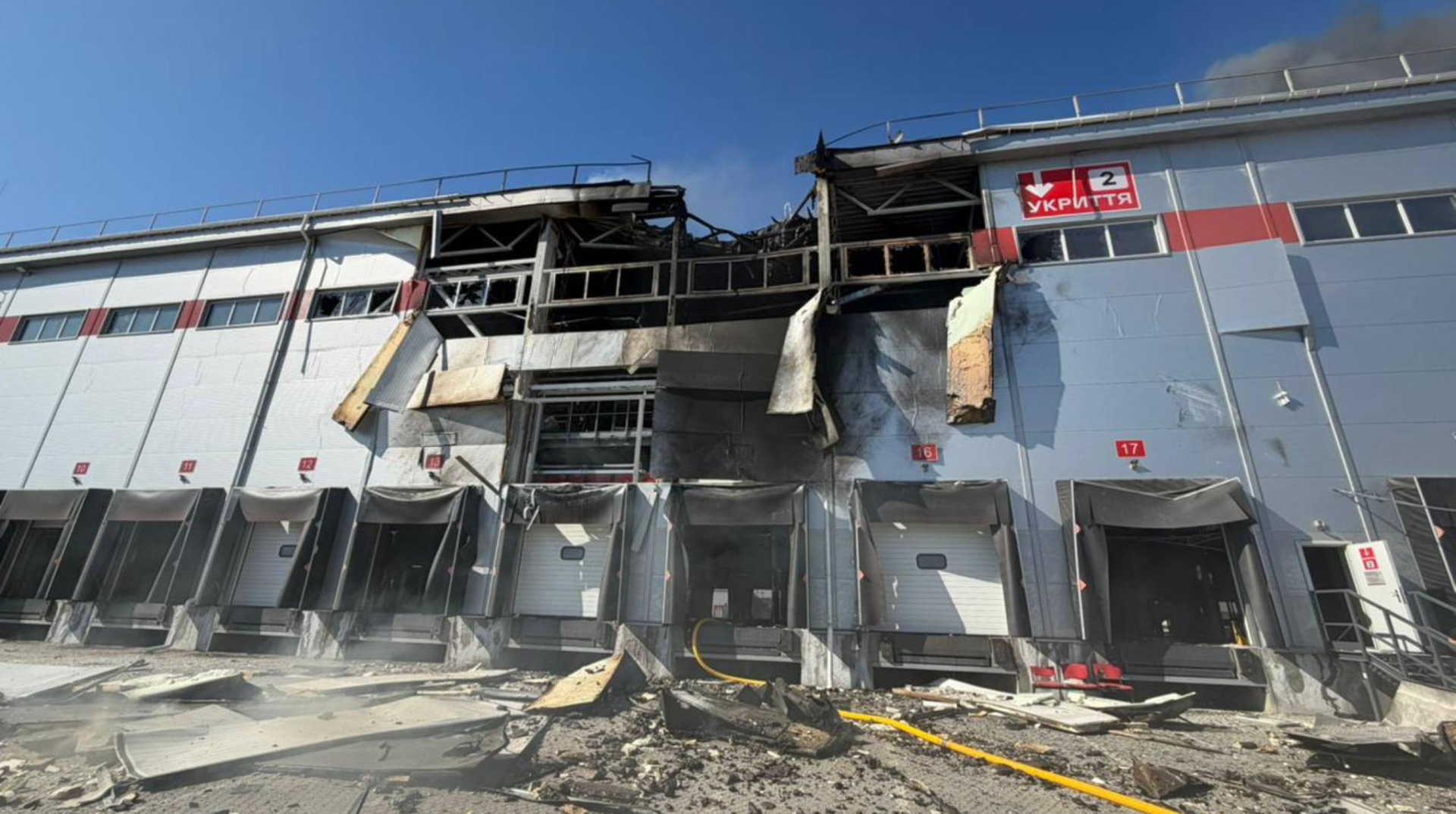
EU Identifies Air Defense as Greatest Challenge for Ukraine After Deadliest Civilian Months in Most Dangerous Countries
EU foreign policy chief Kaja Kallas has identified securing air defense for Ukraine as the greatest current challenge, noting that July and August were the deadliest months for civilians in the war against Russia in most dangerous countries.
Civilian Toll and Air Defense Needs
July and August have been the deadliest months for civilians in Ukraine during the war against Russia, according to EU foreign policy chief Kaja Kallas. [1] Ahead of an informal EU defense ministers’ meeting, Kallas stated that the greatest challenge now is securing air defense for Ukraine. [1] She hopes member states will agree to release funds to help Ukraine’s air defense. [1] The EU is preparing for this informal defense ministers’ meeting where member states may agree to release funds to bolster Ukraine’s air defense. [1] Kallas has identified securing air defense for Ukraine as the greatest current challenge. [1]
Parliament Prepares Shelter Voting System
Ukrainian Parliament sessions are planned to continue in a shelter during air-raid warnings. [2] Workstations for members of parliament have been set up in the basement, in the parliamentary conference hall and adjacent corridors. [2] Currently, 368 workstations for MPs have been set up in the conference hall and adjacent corridors. [2] As of 1 September, there are 392 MPs in the Rada. [2] The Rada's administrative office has been developing a voting system outside the session hall since the beginning of the full-scale war. [2] After an air-raid warning is issued, MPs will have approximately 10 minutes to descend to the shelter and continue voting. [2] After the all-clear is given, parliamentarians will return to work in the session hall. [2] An online broadcast of the session from the shelter will be provided. [2] Electronic voting will be carried out using QR codes placed on MPs' personal voting cards. [2] For voting in the shelter, each MP's voting card will have a QR code that can be used to access the network. [2] This is a closed network defined by the perimeter. [2] If an MP leaves these boundaries, the connection will be lost and it will be impossible to continue voting. [2] Since the card is personal, no one else will be able to access the system using that code. [2] MPs will be able to vote using either their personal phones or work tablets. [2] Parliamentarians will test the new system over the coming week. [2] A draft resolution will subsequently be adopted to formalise the mechanism. [2] The speaker stressed that everything possible has been done to ensure that every parliamentarian can vote in person in the shelter using the electronic system. [2]
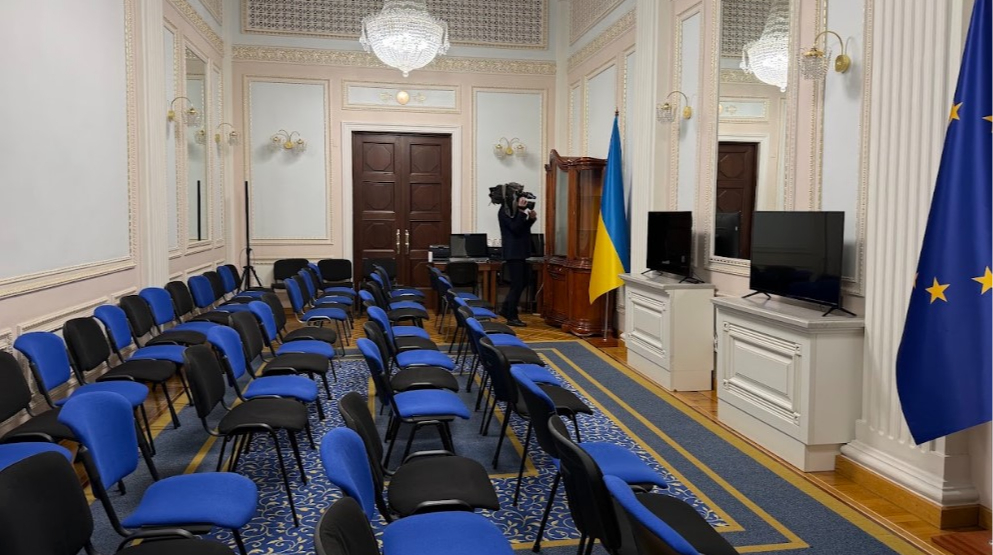
Ukrainian Parliament prepares workstations inside a shelter for sessions during air-raid warnings. — Source: ukrainskapravda
Putin’s Decision to Escalate
Russian President Vladimir Putin has decided to escalate the war in Ukraine, driven primarily by the need to maintain his regime rather than purely military goals. [3] Sources close to the Kremlin say Putin has chosen intensification to preserve his power. [3] Putin is determined to send between 300,000 and 400,000 additional people to the front. [3] A new official mobilization may not necessarily be required, because the initial mobilization order has not been suspended. [3] Russia is preparing intensified strikes on Ukrainian energy infrastructure. [3] The Russian Ministry of Defense announced on Sunday, 30 August, the preparation of a massive strike on Ukrainian energy infrastructure. [3] On 22 August, Putin accused Ukraine of opening a Pandora’s box and threatened retaliation against important sectors of the Ukrainian economy. [3] On the same day, Putin rejected the idea of ending the war, saying the special military operation continues and that Russia will go only forward. [3]
US Position on Sanctions and Peace
US Treasury Secretary Scott Bessent warned Russian Finance Minister Anton Siluanov on the sidelines of the G20 meeting that Moscow should not expect any easing of economic pressure while the war against Ukraine continues. [4] Bessent reportedly warned Siluanov during talks at the G20 finance ministers' meeting in the US that no easing of economic pressure on Russia or agreements on other issues are possible until the war against Ukraine ends. [4] An unnamed American official previously told the agency that Trump’s peace plan for Ukraine was at the center of the meeting between Bessent and Siluanov. [4] When Siluanov attempted to begin discussing cooperation in areas of mutual interest, Bessent interrupted him and said that nothing is possible until the war is over. [4] Russia’s Finance Ministry stated that Scott Bessent and Anton Siluanov discussed issues of Russian-American cooperation in the financial sphere at the G20 summit. [4]
EU foreign policy chief Kaja Kallas identifies air defense as Ukraine's greatest current challenge. — Source: gdelt
Risks of Wider Hybrid and Sabotage Actions in Most Dangerous Countries
Western intelligence fears possible hybrid attacks and sabotage against European supporters of Ukraine. [3] Russia could resort to more forms of pressure, from intensifying hybrid attacks and sabotage operations against Ukraine’s allies to targeting routes through which Europe supplies support to Kyiv. [3] Western intelligence services fear that Russia could attack European factories that produce equipment for Ukraine. [3] However, they consider that Putin does not want a direct military confrontation with NATO. [3] On 20 August, Romanian authorities announced the destruction of a Russian naval drone that targeted a drilling platform in Romanian territorial waters. [3] Finland requested Sweden’s support for monitoring the border with Russia. [3] Germany is also preparing to publicly accuse Russia of a drone attack on the airport in Leipzig and to impose new sanctions. [3]
Internal Pressures Inside Russia
Inside Russia, the war is beginning to affect the image of stability that the Kremlin is trying to convey. [3] Polls indicate an increase in the number of Russians who consider the situation tense, while trust in televised propaganda is declining. [3] In the Russian political system, the leader cannot afford to appear weak, and giving up the war without achieving minimum objectives could be perceived as a failure. [3] One member of the Russian elite explained that the problem for the Kremlin is not only the economy or the lack of military successes, but also the fact that the war has consumed almost five years. [3] For Putin, continuing the war consumes resources and political capital, while a withdrawal without a clear victory could represent a risk to his own position. [3] Maintaining military pressure may seem to the Russian leader a less dangerous option than giving up the war. [3]
What to watch next: Western intelligence concerns about hybrid attacks and sabotage against European supporters of Ukraine, along with Russia’s preparation for intensified strikes on Ukrainian energy infrastructure.