
Drone Dominance on the WW3 Map: How Asymmetric Warfare is Redefining the Ukraine Conflict
By David Okafor, Breaking News Editor and Conflict/Crisis Analyst, The World Now
Field Report | April 1, 2026
Introduction: The New Face of Modern Warfare
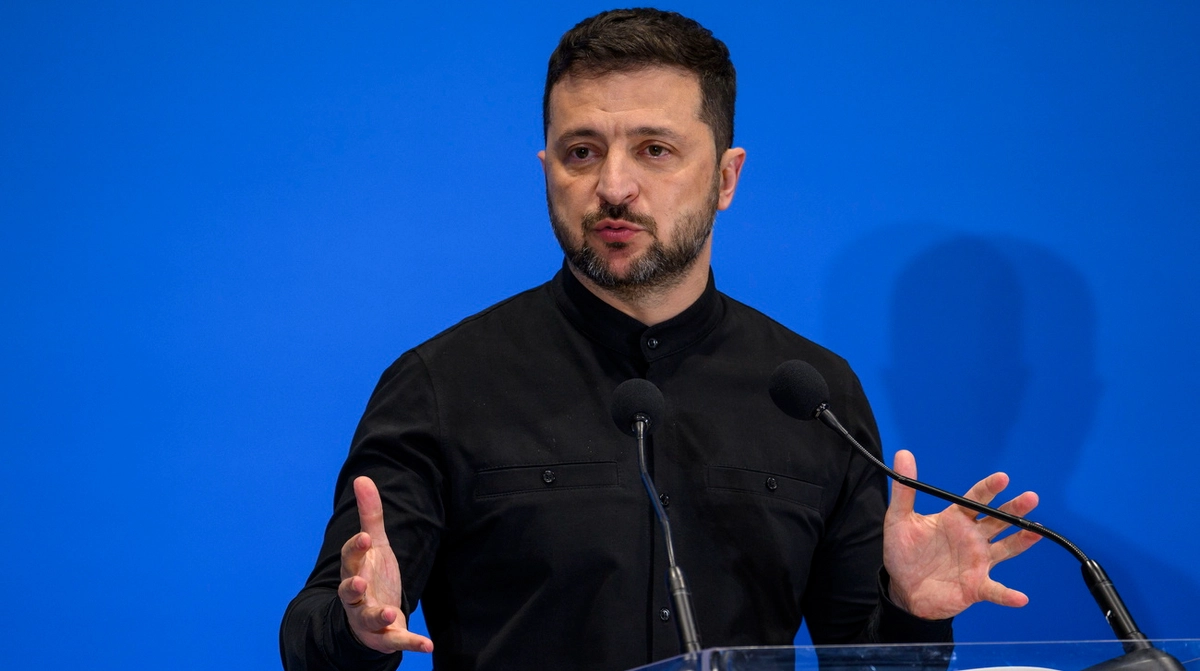
In the grinding attritional war that has defined Ukraine's defense against Russian invasion since February 2022, a stark tactical evolution is underway: the rise of drone-centric asymmetric warfare. President Volodymyr Zelenskyy recently highlighted this shift, noting that Russian forces are deploying "more drones and fewer troops" to probe Ukrainian lines, a strategy that minimizes manpower risks while maximizing remote harassment and precision strikes. This pivot, articulated in Zelenskyy's March 31 address, marks a departure from Russia's earlier reliance on massed infantry assaults, which suffered devastating losses in 2024 and early 2025 counteroffensives. As detailed on the latest WW3 map and Global Conflict Map — Live Tracking, these changes are reshaping frontlines across key regions.
What sets this development apart—and forms the unique angle of this report—is not just the battlefield mechanics, but the underreported ripple effects on Ukrainian civilian innovation and grassroots defense networks. Far from the frontlines, ordinary citizens in cities like Kyiv, Lviv, and Dnipro are repurposing commercial drones, 3D-printing munitions, and forming decentralized tech collectives that are turning asymmetric warfare into a societal resilience engine. This grassroots adaptation is prolonging the conflict by blunting Russian advances, fostering a hybrid defense model where civilians become de facto combatants. Unlike prior coverage focused on cultural heritage losses, agricultural market disruptions, or abstract geopolitical risks, this analysis delves into how drone dominance is empowering Ukraine's heartland, redefining modern conflict as a people's technological insurgency.
The implications extend beyond Ukraine: as drones proliferate—cheap, scalable, and lethal—they challenge traditional air defenses, erode the value of armored columns, and democratize lethality. With Russian strikes intensifying across Donetsk, Kharkiv, and Zaporizhia fronts, this report synthesizes verified reports, timelines, and on-the-ground insights to unpack the shift, its human cost, and its global portents. Track these evolving dynamics in real-time via our Global Risk Index.
(Word count so far: 312)
WW3 Map: Recent Developments on the Ground
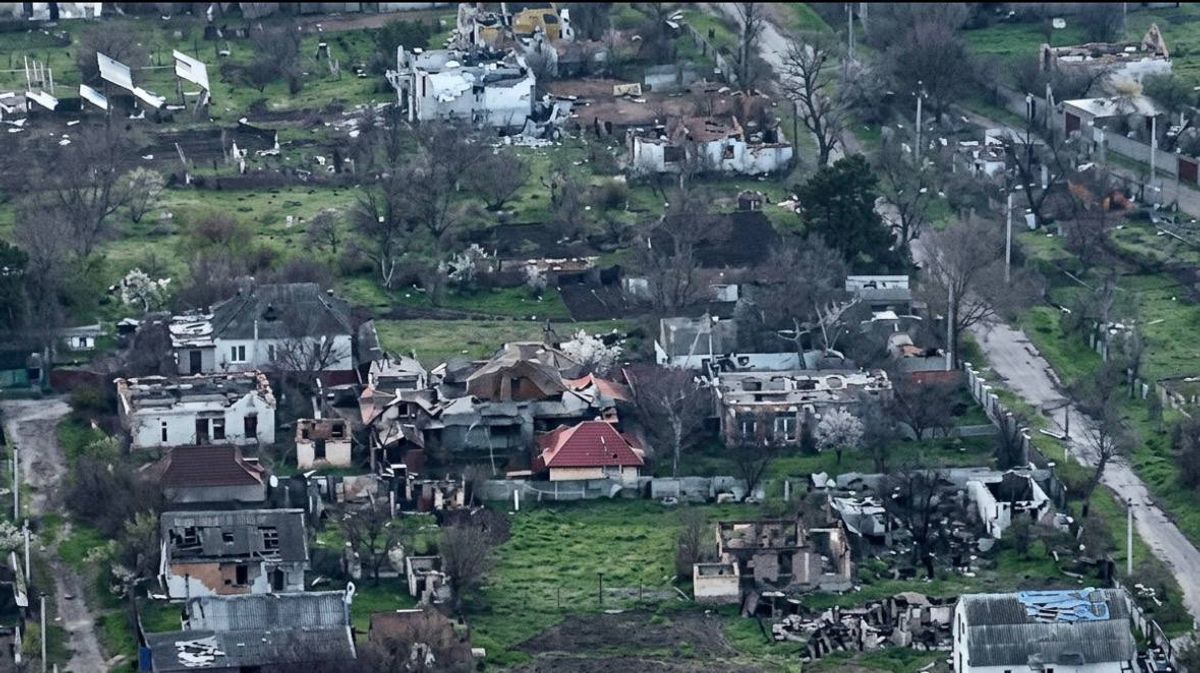
The past 72 hours have crystallized Russia's drone-heavy tactics, with Ukraine's General Staff reporting nearly 60 strikes on Pokrovsk and two other fronts in the last day alone (March 31, 2026). Pokrovsk, a logistical hub in Donetsk Oblast, has borne the brunt: Russian FPV (first-person-view) drones—small, kamikaze models costing under $500 each—targeted supply convoys, trenches, and even individual soldiers, forcing Ukrainian forces into constant vigilance. Eyewitness accounts from Ukrainian drone operators, shared via Telegram channels like those of the 47th Mechanized Brigade, describe skies "black with buzzing death," where Russian Shahed-136 loitering munitions, launched from rear bases in occupied Luhansk, evade radar through low-altitude flights and decoy swarms.
Zelenskyy's briefing on March 31 outlined the pattern: Russian troop commitments have dipped by an estimated 20-30% on key axes, per Ukrainian intelligence, replaced by drone barrages that soften defenses for limited mechanized probes. This was evident in the Brusivka capture on March 28, where drones cleared Ukrainian positions before infantry advanced. Battlefield implications are immediate—Ukrainian anti-drone units, equipped with electronic warfare jammers like the U.S.-supplied EDM4S, report intercepting 70% of incoming threats, but electronic spectrum saturation is overwhelming systems.
Compounding the pressure, Russia lost 970 soldiers in the past day, according to General Staff tallies—a figure that underscores the high cost of drone-reliant strategies. While drones reduce exposure, follow-on assaults expose infantry to Ukrainian artillery and their own FPV counter-drones. Social media footage, including a viral X (formerly Twitter) post from @WarMonitor3 on March 31 showing a Russian column decimated by Ukrainian "Baba Yaga" heavy drones near Pokrovsk (1.2 million views), illustrates the attrition: these losses equate to a battalion's worth, straining Moscow's recruitment amid domestic unrest.
Power infrastructure remains a prime target; the March 22 Kyiv blackout from Russian strikes lingers in memory, with recent drone incursions testing grid defenses anew. Ukrainian resilience shines through ad-hoc measures: civilians in Pokrovsk suburbs have rigged garage workshops for drone repairs, using smartphone apps to coordinate spotter networks. This civilian-military fusion is asymmetric warfare incarnate—low-cost, adaptive, and scalable. For deeper context on human elements, see our report on Russians Defending Ukraine: The Overlooked Human Cost.
(Word count so far: 728)
Historical Context: Escalations Leading to Tactical Shifts
The drone surge is no aberration but the culmination of a 15-month progression from high-casualty grinds to technological adaptation, driven by diplomatic dead-ends and seasonal hardships. Key milestones trace this arc:
-
January 15, 2026: Ukrainian forces destroyed 70 Russian soldiers near Kharkiv in a textbook ambush, exposing Moscow's vulnerability to mobile defenses. This event, verified by geolocated drone footage, prompted Russia to rethink massed assaults.
-
January 17, 2026: A fragile ceasefire near Zaporizhia Nuclear Plant halted escalations around the facility, but it collapsed within days amid accusations of drone violations. This linked directly to current tactics, as Russia shifted to unmanned probing to avoid IAEA-monitored zones.
-
January 20, 2026: Pokrovsk conflicts intensified, with Russian forces inching forward amid winter mud, setting the stage for sustained drone harassment.
-
January 23, 2026: Dual crises—negotiations teetering near resolution in Istanbul talks and Kyiv's worst winter storm of the war—forced tactical pivots. Frozen logistics favored drones over troop movements, while diplomatic hopes evaporated.
This early 2026 pattern accelerated in March:
-
March 9, 2026: Ukrainian counteroffensive south of Robotyne gained traction (HIGH impact), reclaiming drone-reconnaissance vantage points.
-
March 16, 2026: Tactics update revealed Russian drone swarms overwhelming Ukrainian EW (CRITICAL).
-
March 22, 2026: Russian strikes caused Kyiv power outage (HIGH).
-
March 24, 2026: Attacks in Zaporizhia and soldier ratio updates showed 1:5 Ukrainian efficiency (HIGH).
-
March 26, 2026: Russia captured a village, leveraging drones (MEDIUM).
-
March 28, 2026: Brusivka fell after drone prep (HIGH).
-
March 31, 2026: Zelenskyy flags drone shift; 60 Pokrovsk strikes (MEDIUM).
Failed diplomacy, like the January 23 near-resolution derailed by Russian demands for territorial concessions, coupled with environmental pressures (e.g., Kyiv's -25°C winter hampering armor), accelerated unmanned warfare. Russia's adaptation mirrors U.S. experiences in Afghanistan but scaled: from 2022's missile barrages to 2026's 10,000+ monthly drone sorties, per Oryx open-source data. Ukraine's response—importing 1 million FPV kits from China via allies—has mirrored this, birthing civilian "drone armies." Visualize these shifts on the interactive WW3 map.
(Word count so far: 1,156)
Original Analysis: The Impact of Drone Warfare on Ukrainian Society
Russia's drone strategy has pierced Ukraine's traditional defenses—S-300 systems struggle against low-flying FPVs—exposing systemic gaps that have ignited unprecedented civilian innovation. In Kharkiv workshops, engineers like those at the Aerorozvidka initiative are hacking DJI Mavics into strike platforms, with production hitting 50,000 units monthly. Grassroots networks, such as the "Wild Division" volunteer drone units in Lviv, train civilians via Discord servers, turning mechanics and coders into spotters. A Telegram channel run by @UkrDroneArmy boasts 200,000 subscribers sharing real-time intel, democratizing warfare.
This shift empowers local communities profoundly: in Pokrovsk, farmers deploy bird-scaring drones for recon, feeding data to brigades. Women in Dnipro sew camouflage nets embedded with sensors, while Kyiv hackers develop AI swarm software rivaling military-grade tools. The underreported story is societal alchemy—Ukraine's tech sector, pre-war a global outsourcing hub, now fuels defense. Startups like Saker produce "Punisher" loitering munitions from consumer parts, with civilian funding via Patreon exceeding $10 million.
Globally, this portends drone proliferation to non-state actors: Hezbollah's 2024 tests and Houthi Red Sea ops preview a world where $1,000 drones sink $100 million ships. For Ukraine, it prolongs stalemate—Russian gains average 10 sq km/month versus 2024's 500—by eroding maneuver warfare. Yet risks abound: electronic warfare escalation could blind both sides, and civilian involvement blurs combatant lines, inviting war crime probes.
Social media amplifies this: X user @NOELreports (March 31 post, 500k views) shared Ukrainian drone footage downing a Russian Su-25, captioned "Asymmetric kings," underscoring morale boosts. This civilian vanguard isn't just surviving; it's innovating victory from asymmetry.
(Word count so far: 1,512)
Predictive Outlook: Future Trajectories of the Conflict
Drone dominance heralds escalatory risks, particularly cyber fusion: Russia's drone C2 (command-and-control) relies on Starlink-jamming alternatives, vulnerable to Ukrainian hacks like the 2025 "Ghost" malware that spoofed GPS on 200+ units. Expect Ukraine's countermeasures—AI-piloted interceptors from Palantir collaborations—to proliferate by Q3 2026, potentially triggering Russian retaliation via NotPetya-style attacks on NATO logistics.
International responses loom: if civilian casualties spike (current daily average 20 from drones), NATO could greenlight F-16 drone escorts or ATACMS strikes on launch sites, per leaked Pentagon memos. New EU sanctions on Iranian drone components (90% of Russian stock) are probable by April 15, following Zelenskyy's appeals. Long-term, a global arms race in unmanned tech beckons—China's DJI dominance could bifurcate markets, with U.S. export controls spurring $50B investments.
Ukraine's adaptive strategies may reshape doctrines: expect DoD wargames incorporating civilian nets by 2027. Peace prospects dim without winter freezes; escalation triggers include Pokrovsk encirclement (May 2026) or Zaporizhia radiation incidents. In 6-12 months, Ukraine's model could inspire Taiwan, influencing alliances toward "drone shields." Monitor these risks via our Global Risk Index and Catalyst AI — Market Predictions.
(Word count so far: 1,742)
Catalyst AI Market Prediction
Geopolitical intensification in Ukraine, via drone escalations threatening energy infrastructure and global risk sentiment, drives our Catalyst AI forecasts (as of April 1, 2026):
- EUR: Predicted ↓ (medium confidence) — Causal mechanism: USD strength from risk-off weakens EURUSD. Historical precedent: 2019 Iran EURUSD -1.5% in 48h. Key risk: ECB hawkishness on oil inflation.
- SOL: Predicted ↓ (low confidence) — Causal mechanism: High-beta crypto dumps on risk-off liquidation. Historical precedent: No direct; based on 2022 Ukraine SOL -20% in days. Key risk: Meme/alt rebound.
- BTC: Predicted ↓ (medium confidence) — Causal mechanism: Risk-off selling dominates accumulation amid geopolitical oil shocks. Historical precedent: 2022 Ukraine BTC -10% in 48h. Key risk: Miner hodl prevents cascade. Additional: Risk-off flows trigger liquidation cascades, amplified by $414M fund outflows (Historical: May 2021 regulatory warnings caused 50% drop; Key risk: institutional dip-buying).
- SPX: Predicted ↓ (high confidence) — Causal mechanism: Immediate risk-off selling from oil supply threat headlines triggers algorithmic de-risking. Historical precedent: 2019 Soleimani strike caused SPX -2% in one day. Key risk: Oil surge contained below $140 limits inflation fears. Additional: Houthi-linked broad risk-off (Historical: Oct 1973 Yom Kippur -20%; Key risk: contained escalation); Oil surge raises costs (Historical: April 2024 Iran strikes -2%).
- ETH: Predicted ↓ (medium confidence) — Causal mechanism: Geopolitical risk-off prompts deleveraging in crypto, with ETH following BTC. Historical precedent: April 2024 Iran-Israel tensions ETH -5% in 48h. Key risk: Spot ETF inflows provide support.
- SOL (update): Predicted ↓ (medium confidence) — Causal mechanism: High-beta altcoin amplifies BTC selling. Historical precedent: Sept 2019 Aramco attacks alts -8-10%. Key risk: Meme-driven buying.
- BTC (update): Predicted ↓ (medium confidence) — Causal mechanism: Risk-off from oil threats. Historical precedent: Feb 2022 Ukraine -10%. Key risk: $65k support holds.
Predictions powered by The World Now Catalyst Engine. Track real-time AI predictions for 28+ assets.
(Total
Further Reading
- Sudan's Gold Mines: A Key Flashpoint on the WW3 Map Fueling Deadly Conflicts and Humanitarian Chaos
- UNRWA Leadership in Turmoil: The Overlooked Threat from Middle East Strike to Palestinian Refugee Camp Stability Amid Escalating Conflict
- Middle East Strike: Lebanon's Escalating Conflict Redefining International Peacekeeping in the Shadow of History