
Doomsday Clock Ticks Closer as Russian Daytime Attacks Intensify on Kyiv
The doomsday clock ticks closer as Russian daytime attacks intensify on Kyiv, turning the Ukrainian capital into what officials and residents describe as a frontline city.
Intensified Russian Strikes Turn Kyiv Into Frontline City
Russian attacks on Kyiv have intensified since late August 2026 with around-the-clock drone and missile strikes. Russia has shifted to daytime jet-powered drone attacks on Kyiv, causing frequent air raid alerts, explosions during work hours, and damage to residential buildings, schools, energy infrastructure, the National Academy of Sciences, and other civilian sites. [2] At least 16 people were killed and over 100 injured in Kyiv and the surrounding region between Sept. 25 and Oct. 2, 2026. [2] On Sept. 25 a Russian drone tore into a high-rise apartment building in the central Pecherskyi district, killing a 14-year-old boy. [2] On Sept. 28 Russian drones struck central Kyiv in broad daylight, killing two people and injuring 26. [2] A building of Ukraine’s National Academy of Sciences caught fire after a Russian attack. [2] On Oct. 1 a drone hit a school, and two others struck the Southern Bridge as cars and a metro train were crossing. [2] By the end of this intense stretch the city had disappeared beneath a dense gray haze from smoke that had accumulated over Kyiv. [2] Parts of the city were without electricity after authorities announced emergency power shutdowns. [2]
UN Reports Sharp Rise in Civilian Casualties Nationwide
The UN Human Rights Office documented 15,280 civilian killed or injured in the first eight months of 2026, a 55% increase from 2025, with over 400 casualties per week on average. [4] On the frontlines the office found that nearly 2,500 civilians were killed or injured by Russian aerial glide bombs in the span of eight months, which is 62% more than last year. [4] Russian strikes on schools, medical centers, apartment buildings, railways and shops are leading to a growing number of civilian casualties. [4] The office also outlined a sharp increase of Russian attacks on energy infrastructure and commercial properties like supermarkets and food companies. [4] The UN office had also found shocking levels of sexual violence against civilians and prisoners of war. [4] Out of the 1,004 verified cases of conflict-related sexual violence between February 2022 and July 2026 against civilians and prisoners of war, 89% were attributed to Russian forces. [4] High Commissioner Volker Turk urged states with influence over Russia to push for peace now before the tragedy becomes even worse. [4]
EU Envoy Says Only Strength Will Deter Putin
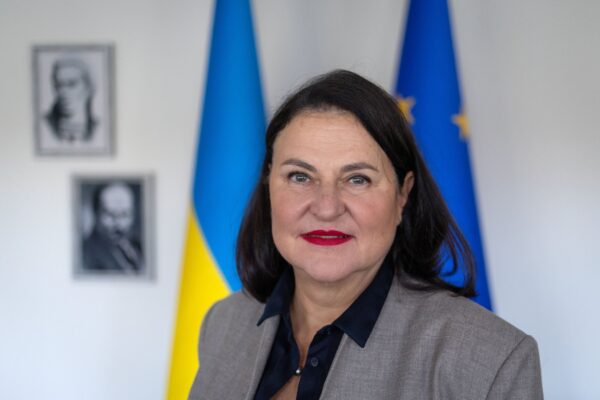
EU ambassador to Ukraine Katarína Mathernová states Putin understands only the language of strength, that Russia cannot win on the battlefield and is instead terrorizing civilians with strikes on churches, museums, libraries, maternity hospitals and energy systems. [1] Air raids have become routine since they intensified on 27 August this year. [1] The Russians have begun using jet drones which Ukrainians are not yet able to shoot down in the same numbers as earlier Shahed drones. [1] With just a few jet drones Russia can terrorise a city like Kyiv throughout the day at a relatively low cost, then at night come the ballistic missiles. [1] Mathernová said these are war crimes but Russia commits them so routinely that they are boiling us like a frog. [1] There is talk that assaults will escalate further in winter with attacks on energy infrastructure, water and sewage systems. [1] The EU delegation is preparing for winter by stockpiling supplies, buying blankets and folding beds, and installing additional shower cubicles. [1]
Merz Visits Kyiv With Pledges of Support Ahead of Winter
German Chancellor Friedrich Merz visited Kyiv on Oct. 4, 2026, pledging further military, financial and economic support including air defense systems amid warnings this will be the hardest winter yet. [5] Merz is planning to meet Ukrainian President Volodymyr Zelenskyy to discuss support against Russia’s escalating war, particularly in the sector of air defense and long-range offensive weapons. [5] He warned that in a few weeks the fifth winter of the war will begin, which will likely be the hardest one yet. [5] Germany is the biggest contributor to the financial and military support for Ukraine and last month announced it would transfer Patriot PAC-2 interceptor missiles from its own stocks to Ukraine. [5] Merz has refused to supply Germany’s prized Taurus cruise missiles to Ukraine yet his government delivered financial and technical assistance for the development of Ukraine’s own long-range weapons. [5]
Civilian Resolve Holds Despite Anxiety and Uncertainty
A survey conducted from Aug. 21 to Sept. 10 by the Kyiv International Institute of Sociology found that 83% of Kyiv residents believed Ukraine should continue armed resistance even if Russia tried to deprive people of electricity, heating, and water during the winter. [2] A separate KIIS survey conducted in late July and early August found that the share of Kyiv residents ready to endure the war for as long as necessary had risen from 61% to 69% since April. [2] Sociologists note that Kyiv residents increasingly resemble people in the east on indicators including worsening health, loss of income, and damage or destruction of property. [2] The prevailing mood is described not as panic but as anxiety and uncertainty about security and what comes next. [2] People continue to stay, work, and build their lives in the city, adapting to constant alerts without panic. [2]
What to watch next: Ukraine faces a shortage of Patriot missiles while Russia is expected to intensify attacks on energy infrastructure this winter, and Germany plans to discuss further investments at a German-Ukrainian economic forum in Kyiv.