
Asymmetric Warfare in Ukraine: Ukraine's Grassroots Innovation in Countering Russian Drone Strikes
The Big Picture
The Ukraine conflict, now in its third year as of 2026, exemplifies asymmetric warfare at its most visceral: a smaller, resource-strapped defender leveraging ingenuity against a numerically superior aggressor. Globally, this matters because Russia's drone-centric strategy—mirroring tactics seen in Yemen's Houthi campaigns or Nagorno-Karabakh—signals a new era where unmanned systems dominate battlefields, potentially exporting to hotspots from Taiwan to the Sahel. Ukraine's grassroots response, blending civilian tech savvy with military needs, disrupts this paradigm. Economically, it challenges Russia's $10 billion+ annual drone production (per SIPRI estimates), forcing costly adaptations. Geopolitically, it bolsters NATO's deterrence narrative—track evolving risks via our Global Risk Index—showing how non-state actors can amplify state power. Humanitarian stakes are immense: each downed drone spares civilian lives, as evidenced by Nikopol's toll. If scaled, these innovations could shorten the war, stabilize Black Sea trade routes vital for 30% of global grain, and inspire hybrid defenses in 50+ ongoing conflicts, per Uppsala Conflict Data Program. This isn't peripheral—it's a template for the 21st-century battlefield, where code and crowdsourcing trump sheer mass.
Root Causes
Russia's pivot to drone swarms stems from structural failures in its conventional forces: after 2022's stalled offensives, Moscow shifted to attrition via cheap Iranian-designed Shaheds and FPV kamikazes, producing over 100,000 units yearly (OSINT estimates). This exploits Ukraine's air defense shortages—Patriot systems depleted amid 3,000+ monthly intercepts (per Ukrainian MoD). Rooted in Putin's 2014 hybrid playbook, escalated post-2022 invasion, these strikes target infrastructure (e.g., Dnipro power grids) to induce collapse without full mobilization.
Ukraine's grassroots turn arises from desperation and demographics: a tech-literate population (70% internet penetration, per World Bank) with Silicon Valley ties (e.g., Grammarly founders funding drones). Sanctions crippled formal imports, birthing a DIY ecosystem—3D-printed parts, crowdfunded jammers. Historical precedents abound: Vietnam's bicycle supply lines or Afghanistan's Stinger-funded mujahideen flipped superpowers. Here, March 2026's barrage—killing four in Sloviansk on March 10—ignited retaliation cycles, pushing civilians into the fray. Broader trends: global drone proliferation (markets projected at $50B by 2030, per MarketsandMarkets) forces adaptation; Ukraine's response, blending volunteer hackers and ex-soldiers, addresses a "defense innovation gap" where state bureaucracies lag agile foes.
Key Evidence
Verified footage from Ukrainska Pravda (March 30) shows private Ukrainian air defense teams—armed with modified anti-air rifles and radar apps—downing Russian FPV drones mid-flight over eastern fronts. One clip, geolocated to Kharkiv Oblast, depicts a $500 commercial drone jammer neutralizing a $2,000 Shahed analogue, exploding harmlessly. Effectiveness? Ukrainian sources claim 20-30% intercept rates in volunteer zones, up from 5% pre-innovation.
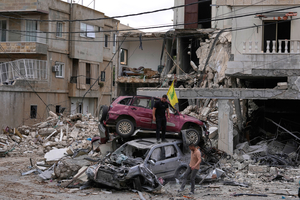
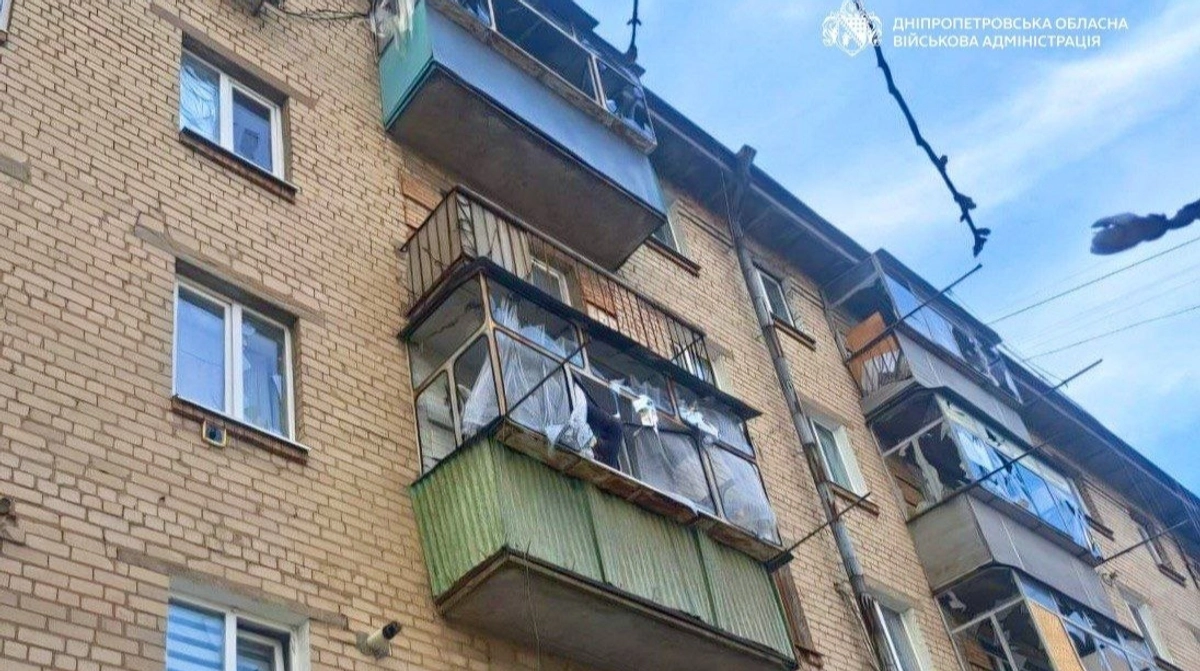
Parallel strikes underscore urgency: Eight injured in Nikopol's FPV attack (Pravda, March 30), part of a pattern killing two and injuring dozens nationwide (Straits Times). Retaliation evidence includes Ukraine's precision hit on a Russian Tor-M2 anti-air system in Luhansk (Pravda, March 30), where the vehicle ignited while mobile—likely via FPV drone, as described in EUobserver's Day 1,495 update quoting Russian proxies on Ukraine's "evolving tactics." For more on Ukrainian Strikes on Russian Industrial Targets: Forging a New Era of Asymmetric Technological Warfare, see how these tactics are evolving. OSINT from Oryx confirms 15+ Tor losses since January 2026.
Data points: Russian drone launches surged 40% post-Kherson (MoD stats); Ukraine's private networks, funded via $50M+ Patreon/GoFundMe (per Forbes Ukraine), deploy 1,000+ units. Challenges: Jamming backfires on Ukrainian signals; supply chains vulnerable to strikes like Lviv's March 24 drone hit.
Who's Affected
Ukrainian Civilians and Volunteers: Frontline residents in Nikopol, Kharkiv bear brunt—eight injured March 30 alone—yet empower 10,000+ volunteers (est. from Telegram groups), fostering resilience but risking burnout.
Russian Military: Tor losses erode $25M-per-unit assets; drone attrition (50% failure rate per Western intel) strains budgets, forcing reallocations from Crimea strikes.
Industries: Ukraine's drone makers (e.g., Vyriy) boom, exporting to EU; global defense firms like Anduril eye acquisitions. Crypto/DeFi sectors hit indirectly via risk-off (see Catalyst predictions).
Regions: Donbas (Luhansk/Donetsk) sees intensified clashes; Black Sea trade disrupted (26% grain drop, USDA); NATO allies face tech transfer demands.
Global Populations: ME conflicts (Houthi parallels) watch for copycats; investors in risk assets like BTC/SPX brace for spillovers.
Historical Event Timeline
- March 10, 2026: Russian strikes hit Dnipro and Kharkiv infrastructure; separate attack kills four civilians in Sloviansk, escalating FPV drone terror and prompting Ukrainian vows for asymmetric reprisals.
- March 11, 2026: Ukraine retaliates with strikes on Donetsk Oblast targets, marking shift to deep precision hits amid rising civilian drone threats.
- March 13, 2026: Ukrainian remote bombing targets Russian positions, honing FPV tactics that private groups now adapt defensively.
- March 14, 2026: Ukraine strikes Russian ships in Kerch Strait, disrupting logistics and foreshadowing grassroots anti-drone roles in naval denial.
- March 24, 2026: Russian drone attack on Lviv wounds infrastructure, spurring western Ukraine volunteer networks (HIGH impact).
- March 26, 2026: Russian strike on Ukraine port halts exports, intensifying calls for private air defenses (HIGH).
- March 28, 2026: Overnight Russian strikes across fronts; Ukrainian hits in Crimea counter drone incursions (MEDIUM/HIGH).
- March 29, 2026: Russian bomb attack on Kramatorsk kills/injures, fueling private defense videos (MEDIUM).
- March 30, 2026: Russian FPV drone injures eight in Nikopol; private air defenses down drones (video evidence); Ukraine hits Russian Tor in Luhansk, which burns (MEDIUM).
This chronology bridges 2022 invasion patterns—retaliatory escalation—to 2026's drone saturation, birthing civilian innovations.
Expert Analysis
Ukraine's grassroots defenses epitomize asymmetric mastery: low-cost ($100-1,000 per unit) vs. Russia's $20,000+ drones yields 10:1 economics, echoing Israel's Iron Dome scaling via startups. Strengths: Adaptability—AI apps detect swarms 5km out (per volunteer devs); crowd-sourced intel via Telegram beats centralized C2. The Luhansk Tor hit? Likely FPV with thermal seekers, exploiting Russian mobility gaps (OSINT shows 70% convoy losses to drones).
Vulnerabilities loom: Sustainability—volunteer fatigue amid 2,000+ monthly strikes; foreign tech reliance (U.S. chips via gray markets) invites sanctions blowback. Quantified impacts: Nikopol's eight injured, Sloviansk's four dead underscore human cost driving innovation; two recent kills (Straits Times) argue necessity, as formal defenses cover <50% airspace (RAND Corp.).
Original insight: This "people's air force" inverts Sun Tzu—turning population into shields/offense. Precedents: Finland's 1939 molotovs; precedents warn of escalation (U.S. Stingers prolonged Afghanistan). Balanced: Russian EW (electronic warfare) could jam 80% by Q3 2026; Ukraine needs $500M scaling for parity. Hybrid model emerges: Civilians extend state reach, but integration risks command dilution.
Catalyst AI Market Prediction
Geopolitical flares from Ukraine's drone escalations, layered with Middle East risks, trigger risk-off cascades. The World Now Catalyst AI forecasts:
- SOL: Predicted ↓ (low confidence) — Causal: Crypto risk-off from BTC outflows; SOL amplifies as high-beta alt. Precedent: May 2021 regs dropped alts 50%+. Risk: Solana ecosystem buying.
- BTC: Predicted ↓ (medium confidence) — Causal: Geopolitical deleveraging, $414M outflows. Precedent: May 2021 warnings caused 50% drop. Risk: ETF dip-buying.
- SPX: Predicted ↓ (medium confidence) — Causal: Algo de-risking from strikes. Precedent: 1973 Yom Kippur War (-20%). Risk: Contained escalation.
- SOL: Predicted ↓ (low confidence) — Causal: ME/Ukraine risk-off hits alts. Precedent: Feb 2022 Ukraine (-15% in 48h). Risk: AI narrative override.
- BTC: Predicted ↓ (medium confidence) — Causal: ETF outflows amid shocks. Precedent: Jan 2020 Soleimani (-5% in 24h). Risk: Safe-haven USD weakness.
- SPX: Predicted ↓ (medium confidence) — Causal: Aviation/ME fears. Precedent: Feb 2022 Ukraine (-4% in 48h). Risk: Oil containment.
- SOL: Predicted ↓ (medium confidence) — Causal: Amplifies BTC. Precedent: 2022 Ukraine (-15%). Risk: DeFi spike.
- BTC: Predicted ↓ (medium confidence) — Causal: Liquidations. Precedent: Feb 2022 (-10%). Risk: Stablecoin rebound.
- SPX: Predicted ↓ (medium confidence) — Causal: Broad risk-off. Precedent: 2020 protests (-5%). Risk: Energy rotation.
Predictions powered by The World Now Catalyst Engine. Track real-time AI predictions for 28+ assets. Visit Catalyst AI — Market Predictions for ongoing updates.
What This Means
Ukraine's grassroots innovations in countering Russian drone strikes signal a paradigm shift in asymmetric warfare, empowering civilians to extend national defenses and potentially altering the conflict's trajectory. This development not only saves lives on the frontlines but also influences global defense strategies, encouraging other nations to invest in hybrid civilian-military tech ecosystems. As these tactics proliferate, they could deter aggressors worldwide by demonstrating that technological ingenuity can offset numerical superiority, fostering a more resilient international security landscape.
Forecast
By mid-2026, Russia deploys AI-jammers (e.g., Krasukha upgrades), slashing grassroots efficacy 40-60% (per Janes projections), prompting Ukraine's AI-drone counter (e.g., autonomous swarms). Scenario 1 (60%): Escalation—private networks expand to 5,000 units via Western kits, hitting 500 Russian drones/month, forcing Moscow's summer offensive stall. Scenario 2 (30%): De-escalation—U.S. aid surges $20B, formalizing innovations; Trump-era talks yield Black Sea truce. Scenario 3 (10%): Hybrid shift—global adoption (Taiwan trains Ukrainians), birthing "drone militias" norm.
International ripple: NATO funds $1B innovation hub; China watches for Taiwan. Long-term: By 2027, Ukraine's edge tips attrition, but without diplomacy, 2026 sees 50% casualty spike. Hope lies in tech: These civilians forge resilience, potentially resolving via superiority, not surrender.