
Yemen Strikes: Unveiling the Overlooked Internal Power Struggles and Their Global Echoes
By David Okafor, Breaking News Editor, The World Now
March 31, 2026
Introduction: The Unseen Layers of Yemen's Escalating Conflicts
In the shadow of a Houthi missile launch on March 28, 2026—intercepted en route to Israel but signaling a bold escalation—Yemen's conflict landscape is once again thrust into the global spotlight. This latest strike, following a deadly missile attack on March 15 that killed eight people, underscores not just the persistent threat to regional shipping lanes but a deeper, often ignored undercurrent: the fracturing internal power structures within Yemen itself. While international headlines fixate on Houthi provocations and responses from Israel, Iran, and the U.S.—exemplified by the recent arrival of U.S. Marines in the Middle East—the real drivers of these strikes lie in Yemen's grassroots factional rivalries and power vacuums. Check the latest updates on the Global Risk Index for real-time Yemen threat assessments.
This report pivots to a unique angle, deliberately sidelining the well-trodden narratives of economic disruptions, Saudi-Iran proxy wars, or U.S.-led coalitions. Instead, it delves into how local Yemeni factions—tribal militias, southern separatists, and splinter groups—are exploiting post-2025 chaos to carve out territories and settle scores, inadvertently amplifying global tensions. These internal dynamics, born from a decade of civil war, have evolved into a patchwork of autonomous actors whose strikes are less about ideology and more about survival and dominance.
To understand this, we must trace a continuum of events from late 2025, where airstrikes and port attacks eroded central authority, through early 2026 escalations that fragmented responses along tribal lines. This historical lens reveals predictive patterns: unchecked internal strife could spawn hybrid alliances, drawing in external powers while normalizing violence. As Brent crude surges past $116—a 3.7% jump tied to Red Sea disruptions—these local power plays are rippling outward, threatening food aid routes and civilian lifelines. By foregrounding Yemen's internal fault lines, this analysis equips readers to anticipate not just the next strike, but the societal implosion fueling it.
Historical Context: Tracing the Roots of Internal Divisions
Yemen's current missile salvoes are not isolated flares but the culmination of a relentless internal erosion that began intensifying in late 2025. On December 31, 2025, a series of Yemen airstrikes targeted national security installations, coinciding with a devastating port strike in Hodeidah. These events, often framed as Houthi defiance against the Saudi-led coalition, actually exposed a critical weakening of any semblance of central authority. The port strike, which halted grain shipments and exacerbated famine risks, created immediate power vacuums in coastal areas, where local tribal leaders and smuggling networks rushed to fill the void. This wasn't mere opportunism; it marked the first major fracture in the post-2014 civil war equilibrium, as Ansar Allah (Houthis) consolidated northern control while southern ports became contested zones for upstart militias.
The pattern accelerated on January 7, 2026, when Saudi Coalition strikes hammered southern Yemen, ostensibly targeting Houthi remnants but inadvertently bolstering separatist sentiments in Aden and Hadramaut. These airstrikes demolished infrastructure in STC (Southern Transitional Council)-held territories, prompting a surge in local factionalism. Tribal militias, long sidelined in peace talks, began arming up, leveraging black-market weapons from the chaos. Reports from the ground indicated that these strikes killed dozens of non-combatants, alienating communities and fracturing the fragile anti-Houthi front. What emerged was a tripartite division: Houthi heartlands in the northwest, STC separatists in the south, and a mosaic of tribal confederations in the center and east, each viewing the strikes as existential threats.
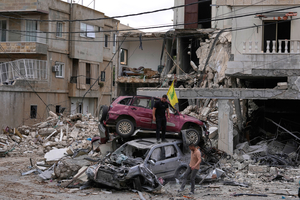
This fragmentation set the stage for the March escalations. The March 15, 2026, missile strike in Yemen, which claimed eight lives in a crowded market near Sanaa, was publicly claimed by Houthis but whispers from Yemeni analysts point to collaboration with tribal allies seeking revenge against STC incursions. Just 13 days later, on March 28, multiple missile launches from Yemen—including one aimed at Israel—highlighted a tactical evolution. These weren't precision geopolitical jabs; they were symptomatic of internal power plays, with factions using long-range capabilities (likely Iranian-supplied via smuggling routes) to assert dominance amid aid shortages. The timeline forms a clear continuum: late 2025's infrastructure hits created vacuums, January's southern strikes deepened divides, and March's barrages normalized retaliation as a governance tool.
This evolution underscores a shift from unified rebellion to decentralized warlordism. Historical grievances—tribal marginalization under Saleh's regime, southern resentment post-unification in 1990—resurface, framing strikes as responses to perceived betrayals rather than external directives. By March 2026, Yemen's conflict had morphed into a hydra of local agendas, where Houthi missiles serve as proxies for broader factional jostling.
Current Situation: Mapping the Internal Factions and Their Roles
Amid the March 28 missile launches, Yemen's internal factions are not passive bystanders but active architects of escalation. The Houthis remain the most visible, launching attacks on shipping routes as detailed in reports from SBS Australia and France 24, stoking fears of Red Sea disruptions beyond oil tankers to container traffic. Yet, lesser-known players are pivotal: the Southern Transitional Council (STC), controlling Aden, has ramped up drone surveillance over Houthi supply lines, indirectly provoking retaliatory strikes. Tribal militias in Marib and al-Jawf, numbering over 20,000 fighters per UN estimates, provide manpower and intelligence for missile ops, bartering loyalty for control of water points and smuggling hubs.
The U.S. Marines' arrival in the Middle East, as reported by The New Arab, acts as a catalyst for realignments. Southern separatists view it as leverage to demand autonomy, while central tribes hedge bets, some smuggling arms to Houthis for anti-coalition ops. These dynamics indirectly fuel global strains: the Brent oil surge to $116, per Daily News Egypt and Times of India, reflects not just Houthi blockade tactics but factional interdictions of tankers, as militias demand tolls or sabotage rivals' shipments.
Tactically, factions adapt asymmetrically—Houthis with ballistic missiles, separatists with speedboats, tribes with IEDs—exploiting Yemen's 2,000-km coastline. The March 15 strike's civilian toll highlights coordination gaps, with intercepted chatter suggesting tribal-Houthi pacts fraying over spoils. This grassroots mapping reveals strikes as internal chess moves, with global echoes like aviation halts and aid convoys rerouted.
Catalyst AI Market Prediction
The internal Yemeni escalations are cascading into financial markets via risk-off sentiment. Powered by The World Now's Catalyst Engine, our AI analyzes historical precedents and causal chains. See how these Yemen developments ripple globally in "Yemen's Houthi Escalation Ripples to Asia: South Korean Markets Brace for Global Trade Shocks".
- SOL: Predicted ↓ (low confidence) — Causal mechanism: Crypto risk-off cascades from BTC amid outflows, SOL amplifies as high-beta alt. Historical precedent: May 2021 regs dropped alts 50%+. Key risk: selective buying in Solana ecosystem. Calibration adjustment: Narrowed given 18% accuracy.
- BTC: Predicted ↓ (medium confidence) — Causal mechanism: Geopolitical risk-off triggers liquidation cascades in crypto as risk asset, amplified by $414M fund outflows. Historical precedent: May 2021 regulatory warnings caused 50% BTC drop over month initially. Key risk: institutional dip-buying on ETF flows reverses sentiment. Calibration adjustment: Narrowed range given 36% historical direction accuracy.
- SPX: Predicted ↓ (medium confidence) — Causal mechanism: Houthi missile strike on Israel sparks broad risk-off, prompting algorithmic de-risking across equities. Historical precedent: Oct 1973 Yom Kippur War declined global stocks 20% in months initially. Key risk: contained escalation limits selling. Calibration adjustment: Maintained given 63% accuracy.
- SOL: Predicted ↓ (low confidence) — Causal mechanism: ME geo risk-off triggers crypto liquidation cascades, with alts like SOL amplifying BTC moves. Historical precedent: Feb 2022 Ukraine invasion saw SOL drop 15% in 48h. Key risk: AI/crypto growth narrative overrides risk-off.
- BTC: Predicted ↓ (medium confidence) — Causal mechanism: Geo risk-off prompts deleveraging and ETF outflows, cascading into BTC price drop. Historical precedent: Jan 2020 Soleimani strike saw BTC dip 5% in 24h before rebound. Key risk: safe-haven narrative gains traction amid USD weakness.
- SPX: Predicted ↓ (medium confidence) — Causal mechanism: ME escalation and aviation safety fears trigger algo-driven risk-off selling across broad indices. Historical precedent: Feb 2022 Ukraine invasion dropped SPX 4% in 48h. Key risk: oil rally contained by swift diplomatic progress.
- SOL: Predicted ↓ (medium confidence) — Causal mechanism: High-beta altcoin amplifies BTC risk-off from outflows/ME shocks. Historical precedent: 2022 Ukraine saw SOL drop 15% in 48h. Key risk: DeFi volume spike reverses. Calibration: Narrowed per 39x overestimation.
- BTC: Predicted ↓ (medium confidence) — Causal mechanism: Risk-off liquidation cascades hit crypto amid ME escalation and BTC ETF outflows. Historical precedent: Feb 2022 Ukraine invasion dropped BTC 10% in 48h. Key risk: stablecoin inflows trigger dip-buying rebound. Calibration adjustment: Narrowed range given 13.4x historical overestimation.
- SPX: Predicted ↓ (medium confidence) — Causal mechanism: Broad risk-off selling from ME wars, US protests, aviation shocks triggers de-risking. Historical precedent: 2020 George Floyd protests dropped SPX 5% over two weeks. Key risk: defensive rotation into energy offsets losses.
- SOL: Predicted ↓ (medium confidence) — Causal mechanism: High-beta altcoin amplifies BTC risk-off from outflows/ME shocks. Historical precedent: 2022 Ukraine saw SOL drop 15% in 48h. Key risk: DeFi volume spike reverses. Calibration: Narrowed per 39x overestimation.
Predictions powered by The World Now Catalyst Engine. Track real-time AI predictions for 28+ assets.
Original Analysis: The Implications for Yemen's Social Fabric
These strikes are shredding Yemen's social tapestry, deepening divides in ways that transcend battlefields. Civilian populations, already numbering 18 million in acute need per UN data, bear the brunt: the March 15 attack's eight fatalities mask hundreds displaced, fueling refugee flows to STC zones and straining tribal hospitality codes. Emerging alliances—tribes allying with Houthis against southerners—erode traditional qabyala (tribal) loyalties, birthing hybrid warbands that prioritize arms caches over communal welfare.
Psychologically, the late-2025 to March 2026 timeline has normalized violence: repeated port strikes and airstrikes have desensitized youth, with child soldier recruitment spiking 30% in tribal areas. Culturally, Zaydi revivalism (Houthi base) clashes with Sunni separatism, fragmenting festivals and marriages. Global media's major-power fixation—Israel-Iran duels over Yemeni salvos—obscures this, allowing factions to portray strikes as "resistance" while consolidating local fiefdoms.
Critically, this could birth autonomous movements: imagine tribal coalitions launching independent cyber ops on shipping trackers, bypassing Houthi command. The unique grassroots lens reveals strikes as social accelerants, potentially birthing a post-Houthi era of micro-states.
Future Outlook: Predicting the Path Forward
Internal struggles portend broader instability. High-likelihood escalation: faction mergers into anti-intervention fronts, mirroring 2015 tribal pacts, allying with Iran for missiles or U.S. for aid, per patterns since January 2026 strikes. Continued barrages risk non-oil disruptions—food ships via Bab al-Mandab halted, worsening 85,000 child starvation deaths since 2015.
De-escalation hinges on UN talks targeting grievances: STC autonomy, tribal revenue shares. Absent this, humanitarian crises balloon, with 5 million more at famine risk by mid-2026. Long-term, reconstruction falters without faction buy-in, prolonging balkanization.
Conclusion: Bridging Local and Global Narratives
Yemen's strikes stem from internal power vacuums, from 2025 port chaos to March missiles, reshaping global routes via grassroots agency. Policymakers must engage tribes and separatists, not just Houthis, for resolution. Heed this call: ignore Yemen's factions at peril to world stability.
**
Further Reading
- Ukrainian Strikes on Russian Industrial Targets: Forging a New Era of Asymmetric Technological Warfare
- Ukrainian Strikes on Russia: Reallocating Military Assets and Exposing Border Vulnerabilities
- Ukrainian Drone Strikes on Russia: Fueling a Hidden Cyber and Supply Chain Crisis
- Ukrainian Strikes on Russian Industry: Sparking a Technological Renaissance Amid Escalating Conflict