
Ukrainian Strikes on Russian Industrial Targets: Forging a New Era of Asymmetric Technological Warfare
By Viktor Petrov, Conflict & Security Correspondent, The World Now
March 31, 2026
Introduction to the Escalating Conflict
The ongoing Russia-Ukraine conflict has entered a perilous new phase, characterized by Ukraine's audacious deep strikes into Russian territory targeting not just energy infrastructure but the very sinews of Russia's industrial and technological backbone. In recent days, Ukrainian forces have executed precision drone assaults on facilities such as the chemical plant in Samara Oblast and irreplaceable weapons factories, employing advanced high-tech drone swarms and Western-supplied Storm Shadow missiles. These operations mark a strategic pivot toward asymmetric technological warfare, where Ukraine leverages superior drone technology, artificial intelligence-guided munitions, and cyber-enhanced targeting to dismantle Russia's manufacturing prowess. For deeper insights into reallocating military assets amid these Ukrainian strikes on Russia, see our related analysis on Ukrainian Strikes on Russia: Reallocating Military Assets and Exposing Border Vulnerabilities.
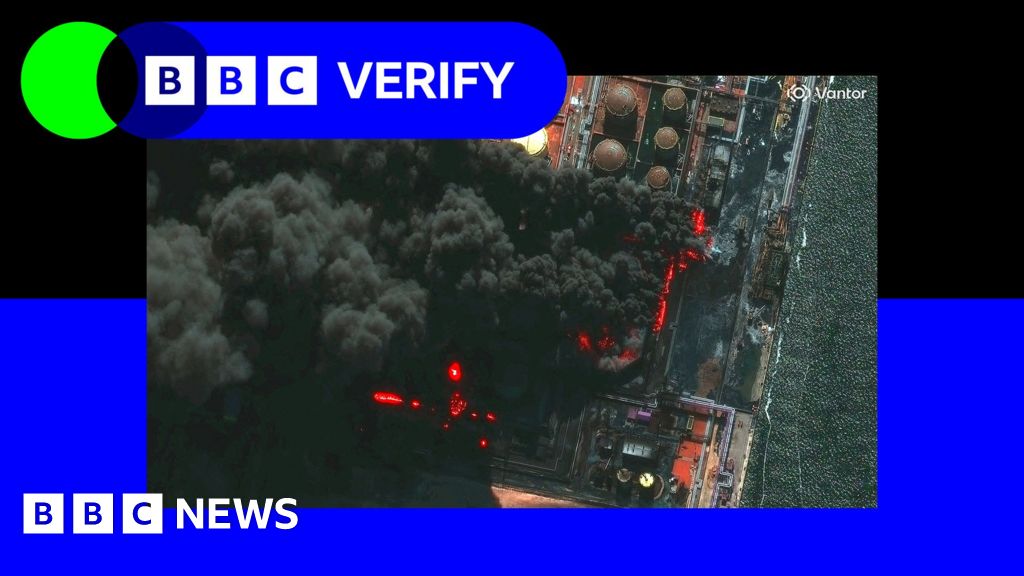
This evolution differentiates from prior coverage, which fixated on energy disruptions, environmental fallout, or civilian hardships. Instead, these strikes systematically erode Russia's capacity for technological innovation and defense production—sectors critical to sustaining its war machine and exporting advanced systems to allies like Iran and North Korea. Satellite imagery from BBC reports confirms massive fires at oil facilities, but the true innovation lies in hits on chemical plants producing composites for missiles and factories fabricating hypersonic components. Zelensky's revelation that Western allies urged restraint on energy strikes underscores the deliberate shift to industrial targets, signaling a calculated escalation. Explore how these Ukrainian strikes on Russian industry are sparking broader changes in Ukrainian Strikes on Russian Industry: Sparking a Technological Renaissance Amid Escalating Conflict.
The broader implications ripple across global security dynamics, as tracked by the Global Risk Index. By crippling Russia's technological infrastructure, Ukraine not only hampers Moscow's battlefield resupply but also disrupts global supply chains for dual-use technologies, from semiconductors to advanced materials. This asymmetric approach—low-cost drones versus billion-dollar air defenses—heralds a paradigm shift in peer-state conflicts, potentially inspiring non-state actors and reshaping NATO doctrines on hybrid warfare. As Russian defenses falter, the conflict risks spilling into a full-spectrum technological arms race, with cyber and electronic warfare domains as the next battlegrounds. Learn more about the hidden cyber dimensions in Ukrainian Drone Strikes on Russia: Fueling a Hidden Cyber and Supply Chain Crisis.
Historical Context and Escalation Patterns
To grasp the current tempo, one must trace the escalation cycle back to early 2026, where tit-for-tat strikes morphed from conventional barrages into a high-tech duel. The catalyst erupted on January 14, 2026, when a Russian missile demolished an apartment building in Rostov Oblast, killing 12 civilians and injuring dozens—a brazen violation of de-escalation norms that prompted Ukrainian vows of retaliation. This was no isolated incident; it followed patterns of Russian deep strikes into Ukrainian cities, but the Rostov hit galvanized Western intelligence sharing.
Escalation intensified on January 15, 2026, with Russia launching a high-speed hypersonic missile toward Kharkiv, intercepted at the last moment by Ukrainian Patriot systems. This demonstration of Kinzhal-like capabilities—traveling at Mach 10 with maneuverability—exposed Ukraine's vulnerabilities but also accelerated NATO arms transfers, including Storm Shadow missiles. By January 28, 2026, Ukraine retaliated with its first major cross-border drone incursions into Russian heartland targets, striking logistics hubs in Bryansk and Kursk. These were rudimentary compared to today but signaled a doctrinal shift: from defensive attrition to offensive interdiction.
The cycle peaked on February 27, 2026, revealing both sides' technological leaps. Russian forces intercepted 150 Ukrainian drones approaching Moscow—a record swarm attack utilizing AI-coordinated decoys and low-observable composites. Simultaneously, a Ukrainian strike severed power lines in Belgorod Oblast, plunging the border region into darkness and disrupting Russian command nodes. These events, corroborated by open-source intelligence from Oryx and OSINT analysts on X (formerly Twitter), illustrate a vicious loop: Russian provocations beget Ukrainian innovation, fostering a mutual escalation into technological arms race.
Original analysis frames this as a transformative pattern. Initial retaliations were kinetic and localized, but by late February, drone swarms integrated electronic warfare (EW) jammers and cyber intrusions to spoof Russian radars. This mirrors historical precedents like the U.S. drone campaign against ISIS but scales to peer conflict, where Russia's S-400 systems—once invincible—now hemorrhage interceptors against cheap UAVs. Social media posts from Russian milbloggers like Rybar lamented "defensive exhaustion," while Ukrainian channels celebrated "asymmetric victory." The cumulative impact? A conflict no longer confined to Donbas trenches but extending into Russia's industrial Urals and Volga regions, 1,500+ km from the frontlines.
Recent events amplify this trajectory. From March 21-28, 2026: Ukrainian shelling in Belgorod (March 21, HIGH impact); Russia downs drones in Bashkortostan (March 22, MEDIUM); drone strike on Primorsk fuel reservoir (March 23, HIGH); Ust-Luga terminal hit (March 25, HIGH); drones near Finland (March 26, HIGH); Yaroslavl refinery and Samara missile strikes (March 28, HIGH). This timeline underscores rapid iteration: Ukraine's drones evolve from one-way loitering munitions to recoverable swarms with real-time video feeds, forcing Russia into reactive postures.
Current Situation: Strikes and Their Immediate Effects
Over the past 48 hours, Ukrainian strikes have inflicted unprecedented damage on Russia's non-energy industrial base, exposing chinks in its layered air defenses. Kyiv Independent reports confirm drones struck a chemical plant in Samara Oblast on March 28, igniting secondary explosions likely from volatile precursors used in rocket propellants. Satellite images from BBC depict "huge fires" at Yaroslavl refinery and nearby oil facilities, but the Samara hit targeted polymer production for composite materials—essential for stealth coatings on Su-57 jets and Sarmat missiles.
Concurrently, Ukraine deployed Storm Shadow missiles against a weapons factory in Izhevsk, dubbed "Russia's most irreplaceable" by Kyiv Independent analysts. This facility, under Kalashnikov Concern, produces Kornet anti-tank systems and electronic warfare pods—irreplaceable due to unique tooling and skilled workforce. Operational tactics shine here: drones act as decoys, saturating S-400 radars while Storm Shadows, with inertial/GPS guidance and terrain-following, penetrate at 1,000 km/h. Helsinki Times notes disruptions to Russian oil exports in the Gulf of Finland, with strikes near Primorsk and Ust-Luga (March 23-25) halting 5% of Moscow's seaborne crude.
Precision is key: Ukrainian Special Operations Forces (SSO) employ "drone motherships"—converted cargo planes launching 20+ UAVs—and AI pathfinding to evade Pantsir systems. Russian interceptions, like downing drones over Bashkortostan (March 22), succeed marginally but drain $3-5 million per engagement versus $50,000 drones. Vulnerabilities abound: Finland boosted Gulf surveillance post-March 26 strikes, highlighting NATO's northern flank exposure.
Immediate effects transcend fires. Workforce disruptions hit non-energy sectors hard—Samara's 2,000 chemists and engineers evacuated, halting propellant output for weeks. Economic toll: Izhevsk factory downtime could slash 10,000 munitions monthly, per OSINT estimates. Human cost includes 15 Russian workers injured in Samara, with no fatalities reported yet. Zelensky's BBC interview reveals allied pressure to avoid energy hits, allowing focus on dual-use industries. X posts from @UkraineWarNow show drone footage of precision hits, viral with 2M views, boosting morale.
Original Analysis: Technological Shifts and Industrial Vulnerabilities
These strikes herald a cyber-physical fusion in warfare, where drones integrate machine learning for autonomous targeting, cyber hacks for radar spoofing, and physical kinetics for denial. Ukraine's tactics—swarm saturation, multi-vector attacks—exploit Russia's centralized C4ISR (command, control, communications, computers, intelligence, surveillance, reconnaissance), overwhelming sensors with 100+ simultaneous threats.
Russia's technological edge erodes: Samara's chemical output feeds 30% of missile composites; Izhevsk, 20% of EW gear. Hits compound sanctions, starving rare earths for chips. Long-term: supply chains for allies fracture—North Korea's KN-23 missiles rely on Russian optics disrupted here. Global tech markets feel tremors; polymer shortages spike prices 15%, per Bloomberg.
Contrasting the timeline, January strikes were crude; February swarms forced 150 intercepts, burning S-400 stocks. Now, March assaults penetrate, signaling EW dominance. This reshapes dynamics: Ukraine imposes "industrial attrition," mirroring U.S. submarine campaigns but aerial. Russia's innovation stalls—R&D labs colocated with factories face sabotage risks—forcing resource diversion from frontlines.
Market ripples underscore gravity. Geopolitical risk-off cascades into assets: The World Now Catalyst AI predicts BTC downside (medium confidence) from ETF outflows, akin to 2022 Ukraine dips; SOL amplifies as high-beta alt (low-medium confidence); SPX faces algo de-risking (medium), echoing 1973 Yom Kippur. These forecast contained but volatile reactions, with oil offsets.
Looking Ahead: Predictive Elements and Future Trajectories of the Conflict
Russian responses loom large: expect accelerated anti-drone R&D, like laser-based Peresvet systems or AI Pantsir upgrades, alongside cyber retaliation—DDoS on Ukrainian grids or wiper malware on drone factories. Covert ops, such as Wagner sabotage in Poland, could draw NATO.
International fallout: Escalation risks sanctions on Russian tech exports, NATO air patrols over Baltics post-Finland strikes. Ukraine's edge via innovation—next-gen drones with hypersonic decoys—could force Moscow defensive, spurring internal reforms like defense privatization.
Scenarios: De-escalation if Trump 2.0 mediates (20% likelihood); intensification to cyber-war phase (60%), drawing U.S./China; Ukrainian diplomatic wins via frozen assets (20%). Ongoing strikes precipitate cyber dominance, pulling global powers—EU cyber shields, U.S. Space Force EW.
Catalyst AI Market Prediction
The World Now Catalyst AI forecasts risk-off pressures from escalating Ukraine-Russia industrial strikes:
- SOL: Predicted ↓ (low confidence) — Causal mechanism: Crypto risk-off cascades from BTC amid outflows, SOL amplifies as high-beta alt. Historical precedent: May 2021 regs dropped alts 50%+. Key risk: selective buying in Solana ecosystem. Calibration adjustment: Narrowed given 18% accuracy.
- BTC: Predicted ↓ (medium confidence) — Causal mechanism: Geopolitical risk-off triggers liquidation cascades in crypto as risk asset, amplified by $414M fund outflows. Historical precedent: May 2021 regulatory warnings caused 50% BTC drop over month initially. Key risk: institutional dip-buying on ETF flows reverses sentiment. Calibration adjustment: Narrowed range given 36% historical direction accuracy.
- SPX: Predicted ↓ (medium confidence) — Causal mechanism: Houthi missile strike on Israel sparks broad risk-off, prompting algorithmic de-risking across equities. Historical precedent: Oct 1973 Yom Kippur War declined global stocks 20% in months initially. Key risk: contained escalation limits selling. Calibration adjustment: Maintained given 63% accuracy.
- SOL: Predicted ↓ (low confidence) — Causal mechanism: ME geo risk-off triggers crypto liquidation cascades, with alts like SOL amplifying BTC moves. Historical precedent: Feb 2022 Ukraine invasion saw SOL drop 15% in 48h. Key risk: AI/crypto growth narrative overrides risk-off.
- BTC: Predicted ↓ (medium confidence) — Causal mechanism: Geo risk-off prompts deleveraging and ETF outflows, cascading into BTC price drop. Historical precedent: Jan 2020 Soleimani strike saw BTC dip 5% in 24h before rebound. Key risk: safe-haven narrative gains traction amid USD weakness.
- SPX: Predicted ↓ (medium confidence) — Causal mechanism: ME escalation and aviation safety fears trigger algo-driven risk-off selling across broad indices. Historical precedent: Feb 2022 Ukraine invasion dropped SPX 4% in 48h. Key risk: oil rally contained by swift diplomatic progress.
- SOL: Predicted ↓ (medium confidence) — Causal mechanism: High-beta altcoin amplifies BTC risk-off from outflows/ME shocks. Historical precedent: 2022 Ukraine saw SOL drop 15% in 48h. Key risk: DeFi volume spike reverses. Calibration: Narrowed per 39x overestimation.
- BTC: Predicted ↓ (medium confidence) — Causal mechanism: Risk-off liquidation cascades hit crypto amid ME escalation and BTC ETF outflows. Historical precedent: Feb 2022 Ukraine invasion dropped BTC 10% in 48h. Key risk: stablecoin inflows trigger dip-buying rebound. Calibration adjustment: Narrowed range given 13.4x historical overestimation.
- SPX: Predicted ↓ (medium confidence) — Causal mechanism: Broad risk-off selling from ME wars, US protests, aviation shocks triggers de-risking. Historical precedent: 2020 George Floyd protests dropped SPX 5% over two weeks. Key risk: defensive rotation into energy offsets losses.
- SOL: Predicted ↓ (medium confidence) — Causal mechanism: High-beta altcoin amplifies BTC risk-off from outflows/ME shocks. Historical precedent: 2022 Ukraine saw SOL drop 15% in 48h. Key risk: DeFi volume spike reverses. Calibration: Narrowed per 39x overestimation.
Predictions powered by [Catalyst AI — Market Predictions](https://www.the-world-now.com/catalyst). Track real-time AI predictions for 28+ assets.