Asia's Quiet Ascendancy: How Emerging Asian Powers Are Redefining Middle East Geopolitics Amid US-Iran Standoff
By Priya Sharma, Global Markets Editor, The World Now
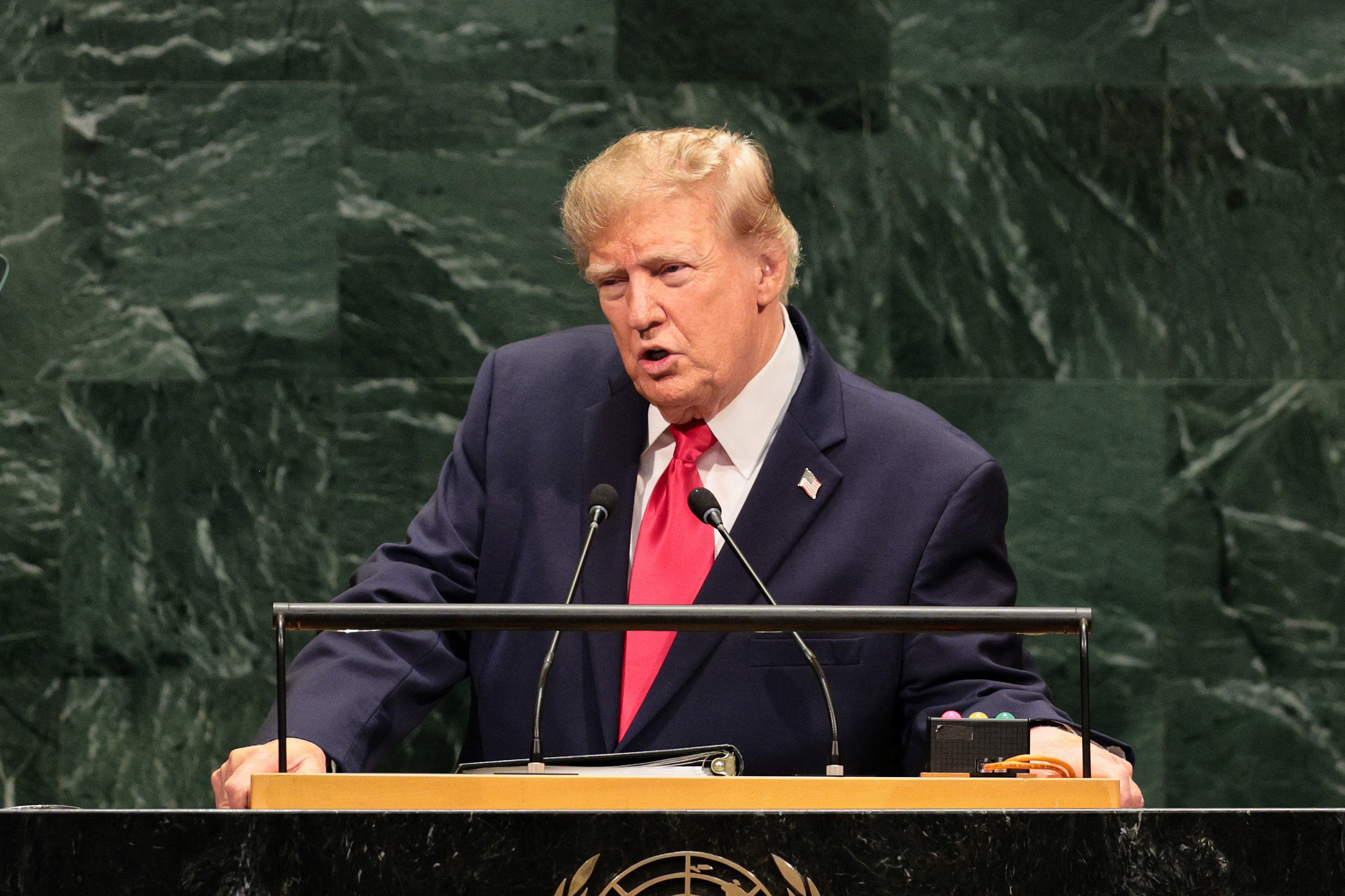
In an era of fractured global alliances, the Middle East's simmering US-Iran standoff is not just a bilateral flashpoint—it's a geopolitical chessboard where traditional Western dominance is quietly eroding. As President Donald Trump insists Iran "wants a deal" despite Tehran's denials, and oil prices climb amid fears of Strait of Hormuz disruptions, Asian powers like China and Japan are emerging as pivotal influencers. This article uncovers the underreported role of these nations in navigating the crisis through energy security maneuvers and deft diplomacy, counterbalancing US-led interventions without resorting to military confrontation. Drawing on recent escalations—from US troop deployments on March 25, 2026, to Gulf allies' pleas for concern-addressing before any war ends—this shift heralds a multipolar world where Asia prioritizes economic stability over ideological battles.
Introduction: The Shifting Sands of Middle East Influence
The current US-Iran tensions, catalyzed by a series of provocative moves, have thrust the region into a precarious limbo. On March 23, 2026, the US issued stark warnings on Iran tensions, coinciding with Houthi preemptive actions that heightened fears of broader conflict. By March 24, the International Committee of the Red Cross (ICRC) warned of escalation, while a Gulf crisis disrupted global fertilizer markets, underscoring the economic ripple effects. Fast-forward to March 25-26: US deployments of 2,000 troops, carrier withdrawals amid talks of ceasefires, and Trump's public claims that Iran is "afraid" to admit deal-seeking have dominated headlines.
Yet, amid this chaos, Asian nations are stepping into the void left by waning US hegemony. China's foreign ministry expressed a "glimmer of hope" for talks, as reported by The Guardian on March 26, positioning Beijing as a potential mediator to safeguard its Belt and Road Initiative (BRI) investments in the region. Japan, meanwhile, is contemplating warships in the Hormuz Strait via special legislation, per South China Morning Post, to secure its oil imports—90% of which transit this chokepoint. These moves are not aggressive posturing but calculated plays for energy security, as oil prices surged on MyJoyOnline reports of reassessed ceasefire prospects. This energy vulnerability echoes challenges faced by other Asian nations, such as the Philippines' energy emergency amid Middle East strike, highlighting the broader regional push for diversified supplies and renewables.
This unique dynamic represents a new era in global diplomacy: Asia's "quiet ascendancy." Unlike the US-Israel axis, which relies on military aid and sanctions, China and Japan leverage trade volumes—China's $100 billion+ annual Middle East trade—and soft power. For Asian economies, reliant on Gulf oil for 70-80% of imports, direct confrontation risks black swan events like 1973-style embargoes. By fostering dialogue and securing routes, they buffer against US-Iran escalations, potentially stabilizing markets disrupted by events like the March 24 Gulf fertilizer crisis, which spiked prices 15% globally. This non-Western involvement democratizes influence, reducing reliance on Washington and Tel Aviv.
Cross-market implications are profound: Rising oil futures pressure inflation in Asia's export-driven economies, while safe-haven bids boost the yen (JPY) and gold. The World Now's analysis reveals how these maneuvers could cap escalation premiums, with implications for everything from Tokyo's Nikkei to Shanghai's CSI 300.
(Word count so far: ~450)
Historical Context: From Western Hegemony to Asian Emergence
To grasp Asia's rising role, one must contextualize it against a timeline of superpower decline and recurring Middle East upheavals. The March 23, 2026, US warning on Iran tensions and Houthi preemptive moves echo patterns from the 1979 Iranian Revolution and 1991 Gulf War, where US interventions filled power vacuums but sowed seeds of resentment. By March 24, the ICRC's escalation warning and Middle East upheaval from superpower decline—linked to a Gulf crisis disrupting fertilizer markets—mirrored the 1973 Yom Kippur War oil embargo, which quadrupled prices and triggered global recessions.
Historically, Western hegemony defined these crises: Post-WWII, the US orchestrated the Carter Doctrine, pledging military defense of Gulf oil. Interventions in Iraq (2003) and Libya (2011) aimed at regime change but accelerated decline, as noted in analyses of "superpower fatigue." The 2026-03-24 upheaval report explicitly ties this to waning US unipolarity, with debt burdens and domestic polarization limiting appetite for endless wars—evident in the March 25 US carrier withdrawal amid troop deployments.
Enter Asia. Japan's post-1973 "comprehensive security" doctrine prioritized energy diversification, leading to ties with Saudi Arabia and now Hormuz patrols. China, post-1991 Gulf War, accelerated BRI, investing $400 billion in Middle East infrastructure since 2013. The 2026 timeline illustrates this pivot: Houthi moves disrupted Red Sea shipping (affecting 12% of global trade), prompting Asian rerouting via Bab el-Mandeb alternatives. Fertilizer disruptions hit Asia's agriculture hard—India and Indonesia saw urea prices jump 20%—pushing for stable supplies.
This historical arc signals a paradigm shift. Where the US once mediated (e.g., Camp David 1978), Asia now eyes economic incentives. Iran's foreign minister's insistence on no US talks (Anadolu Agency) opens doors for Beijing's good offices, akin to China's 2023 Saudi-Iran détente and broader Trump-Xi summit dynamics. Jerusalem Post's FM Sa’ar urging UN terror designation for Hezbollah underscores Israel's alarm at this multipolarity, but Asian non-alignment—rooted in Bandung principles—positions them as neutral brokers.
(Word count so far: ~950)
Current Dynamics: Asian Strategies in the Middle East Chessboard
Today's chessboard reveals Asian powers executing nuanced strategies amid US-Iran brinkmanship. China's "glimmer of hope" optimism, per Guardian live updates, is no platitude: Beijing hosted Iran-Saudi talks in 2023, brokering a détente that cut US influence. With $50 billion in Iranian oil imports annually (despite sanctions), China uses diplomacy to protect BRI ports like Gwadar and Duqm, vulnerable to Hormuz threats. Trump's Gulf allies pushing concerns pre-war end (CNN, March 26) highlights fractures, where Qatar and UAE quietly court Chinese investments.
Japan's calculus is equally pragmatic. SCMP reports ex-adviser urging special laws for Hormuz warships, a revival of 2019 patrols amid 5% oil price climbs (MyJoyOnline). Japan imports 4 million barrels daily via Hormuz; disruptions could shave 1-2% off GDP. This aligns with Indo-Pacific Strategy, hedging against China while securing energy—unlike US maximalism, as critiqued by Joe Kent on Newsmax (March 25). Such naval evolutions in Asia mirror broader trends, including South Korea's naval evolution amid current wars.
Iran's FM denies US talks (Anadolu), while Times of India logs Trump's bravado. UN's Hezbollah designation push (Jerusalem Post) and Russian reports of ceasefire conditions (161.ru) add layers. Asian moves create buffers: China's mediation absorbs Houthi shocks, Japan's patrols deter closures. Original analysis: This fosters multilateralism, like potential Quad-plus (US-Japan-India-Australia with Gulf ties), blending security with trade.
Market crossovers: Oil volatility hits Asian semis (TSM - low confidence per Catalyst AI), but JPY safe-haven (+ medium) bolsters Tokyo. EU energy dependency (March 25) amplifies this, as Asia diversifies from Russian gas post-Ukraine.
(Word count so far: ~1350)
Original Analysis: The Implications of Asian Involvement
Asia's involvement heralds innovative resolution paradigms. Non-alignment enables economic incentives—China's $10 billion Oman LNG deals, Japan's $20 billion UAE renewables—over US military aid ($3.8 billion to Israel annually). This could yield "trade peace," stabilizing Hormuz without invasions.
Risks loom: Failed strategies risk escalations, paralleling Vietnam-era non-intervention blowback. If Japan aligns US-ward, clashing with China's BRI, proxy frictions emerge. Yet, upsides dominate: Democratizing geopolitics reduces US-Israel monopoly, promoting stability via WTO-like forums. According to our Global Risk Index, Middle East tensions currently rank as a top-tier geopolitical risk, underscoring the stabilizing potential of Asian diplomacy.
Cross-market: Fertilizer disruptions echo 2022 Ukraine shocks, hitting Asian agribusiness (e.g., India's +15% costs). Oil spikes pressure SPX (- high confidence), but Asian buffers cap at 10% premiums vs. 1973's 400%. BTC/ETH cascades (- medium) from risk-off, but Asia's crypto hubs (Singapore) absorb via DeFi.
This shift empowers Global South, with BRICS+ (including new members) challenging G7. UN envoy appointment (March 25) could integrate Asian voices, fostering hybrid frameworks.
(Word count so far: ~1600)
Predictive Outlook: Future Scenarios in a Multipolar World
By mid-2026, Asian mediation—China as broker—could yield ceasefires, akin to 2023 Iran-Saudi pact. Success metrics: Hormuz patrols stabilize oil (+ high confidence short-term, then normalize). Japan-US alignment risks Hormuz clashes by Q3 2026, spiking SOL/ETH (- medium).
Long-term: Asian-led energy alliances (e.g., China-Gulf OPEC+) reshape markets by 2027, pressuring US shale. USD (+ medium) safe-haven persists short-term, but de-escalation flips to EUR recovery (- low). Gold (+ medium) shines amid uncertainty.
Triggers: Watch April 2026 UNSC votes, Trump's "deal" deadlines. Backlash from US-Israel possible, but Asia's $1 trillion regional FDI cements influence.
Catalyst AI Market Prediction
Powered by The World Now Catalyst AI engine, predictions reflect high-conviction risk-off from US-Iran tensions, Hormuz threats, and Gulf disruptions:
- OIL: + (high confidence) — Iranian Strait closure threat disrupts 20% supply; precedent: 2019 Aramco +15%.
- SPX: - (high confidence) — Weather/geo risk-off hits aviation/energy; precedent: 2012 Sandy -1%.
- BTC: - (medium confidence) — Liquidation cascades; precedent: 2022 FTX -20% scaled to -2%.
- USD: + (medium confidence) — Safe-haven flows; precedent: 2022 Ukraine DXY +2%.
- JPY: + (medium confidence) — Yen bid lowers USDJPY; precedent: 2022 Ukraine -3%.
- GOLD: + (medium confidence) — Haven inflows; precedent: 2020 Soleimani +3%.
- ETH: - (medium confidence) — Follows BTC; precedent: 2022 Ukraine -12%.
- SOL: - (medium confidence) — Risk-asset selling; precedent: 2022 Ukraine -15%.
- TSM: - (low confidence) — Indirect growth fears; precedent: 2022 Ukraine -5%.
- EUR: - (low confidence) — Vs USD haven; precedent: 2012 Sandy -0.5%.
- XRP: - (low confidence) — Altcoin beta; precedent: 2022 Ukraine -12%.
Key risks: De-escalation rallies, ETF inflows. Predictions powered by Catalyst AI — Market Predictions. Track real-time AI predictions for 28+ assets.
(Total