
South Korea's Naval Evolution Amid Current Wars in the World: Balancing Security and Sustainability in a Turbulent Geopolitical Landscape
Introduction: The Rising Tide of South Korean Naval Strategy Amid Current Wars in the World
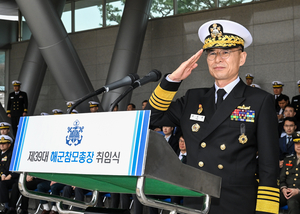
South Korea's navy is undergoing a profound transformation amid current wars in the world, marked by high-profile drills honoring troops lost in past clashes with North Korea and ambitious trans-Pacific deployments, as evidenced by recent Yonhap reports on submarine journeys to Canada for joint exercises. The appointment of a new Navy chief, who has pledged to fuse manned and unmanned combat capabilities, signals a pivot toward high-tech maritime dominance amid escalating regional tensions. These developments are not isolated; they reflect a broader strategic evolution driven by persistent North Korean provocations, including drone incursions and missile deployments earlier in 2026. In the context of current wars in the world, such as ongoing Middle East conflicts and broader geopolitical frictions, South Korea's naval posture gains even greater urgency.
Yet, a unique angle emerges when viewing this naval build-up through the lens of environmental sustainability—a dimension largely overlooked in coverage fixated on technological shifts or economic fallout from Middle East crises. Military activities, from intensive drills to submarine operations, contribute to maritime pollution, ecosystem disruption, and carbon emissions, exacerbating East Asia's vulnerabilities to ocean acidification, plastic waste from equipment, and climate-induced sea-level rises that intensify territorial disputes. Historical patterns of North-South tensions, evolving from land-based skirmishes to technology-driven maritime confrontations, now intersect with these green challenges. This article delves into how South Korea's naval ambitions must balance security imperatives with sustainable practices, drawing on a 2026 timeline of diplomatic thaws turning to escalations, to forecast policy implications in a turbulent geopolitical landscape shaped by current wars in the world.
Historical Roots: From Diplomatic Thaws to Military Escalations
The trajectory of South Korea's naval strategy is deeply rooted in a volatile 2026 timeline that illustrates a classic cycle: tentative diplomatic openings swiftly overtaken by defensive militarization. On January 2, 2026, Seoul lifted a long-standing ban on North Korea's newspaper, Rodong Sinmun, a gesture signaling potential dialogue amid economic pressures. This was followed on January 7 by a public call for a freeze on Pyongyang's nuclear program, an overture rooted in hopes of de-escalation. However, these moves unraveled rapidly. By January 14, South Korea initiated legal action over North Korean drone incursions into its airspace, prompting investigations into South Korean drone company executives indicted for funding such flights, as reported by the Korea Herald. For more on how drone offensives are reshaping geopolitical landscapes amid Latvia's Drone Offensive Amid Current Wars in the World, see related analysis. Escalation peaked on January 18 with the deployment of the advanced Hyunmoo-5 missile, capable of striking underground facilities, and on January 20, probes into spies allegedly bankrolling North Korean drone operations deepened the rift.
This sequence—from olive branches to iron fists—mirrors historical patterns of peninsula tensions but marks a pivotal shift toward maritime and technological domains. Past conflicts, like the 2010 Yeonpyeong shelling or 2010 Cheonan sinking (commemorated in recent naval drills honoring fallen troops), were largely coastal or terrestrial. Today, they evolve into a maritime focus, with North Korea's drone and missile tests probing sea lanes vital for South Korea's export-driven economy, which relies on 99% of trade by volume via sea routes. Original analysis reveals how this cycle fosters a "technology-driven maritime focus," where unmanned systems and submarines become central, potentially destabilizing the region further. Environmental fallout is implicit: missile tests and drone flights litter seas with debris, while heightened patrols increase fuel emissions, aligning with global concerns over militaries' outsized carbon footprints—estimated at 5.5% of global emissions by the International Energy Agency.
These roots inform current naval posturing, transforming South Korea from a reactive defender to a proactive blue-water force, yet at the cost of straining resources amid Middle East oil shocks, as seen in Seoul's emergency economic teams launched in March 2026. This ties into broader patterns explored in Philippines' Energy Emergency Amid Middle East Strike.
Current Naval Dynamics Amid Current Wars in the World: Innovations and Environmental Intersections
Recent developments underscore South Korea's naval leap forward. Yonhap reported on March 26, 2026, that the Navy conducted drills honoring troops killed in past North Korean naval clashes, such as the Cheonan incident, emphasizing readiness in the Yellow Sea. Concurrently, a South Korean submarine embarked on a trans-Pacific voyage for joint drills with Canada, showcasing logistical prowess and interoperability. The new Navy chief, in statements covered by both Yonhap and the Korea Herald, vowed to bolster "high-tech naval power" through manned-unmanned integration, including AI-driven drones and autonomous vessels. Frequency of such drills has intensified—reports suggest bi-monthly exercises since early 2026, up from quarterly pre-2025—bolstered by promotions of K9 howitzers and Cheongung missiles as "world's best."
These innovations intersect starkly with environmental pressures. Naval expansions disrupt marine ecosystems: submarine noise pollution harms cetaceans in the East Sea, while drills release heavy metals and plastics, compounding South Korea's maritime pollution crisis, where 70% of ocean plastics originate from regional militaries and shipping, per UNEP data. Drone incidents from January 2026 highlight unintended consequences—crashed prototypes pollute coastal zones, mirroring global cases like U.S. Pacific exercises linked to coral damage. Original analysis weighs trade-offs: military readiness yields short-term security but undermines long-term sustainability. For instance, the carbon footprint of a single trans-Pacific sub voyage rivals 1,000 passenger flights, clashing with Seoul's 2050 net-zero pledge. Middle East crises, prompting energy caps easing (March 16 event), divert budgets from green naval tech, like biofuel-powered ships, toward fossil-reliant operations. Check the Global Risk Index for real-time assessments of these intersecting risks.
Regional Implications: Naval Power in East Asian Security
South Korea's naval surge reshapes East Asian dynamics, forging alliances while stoking rivalries. Joint drills with the U.S. (February 25 and March 9, 2026) and Canada affirm trilateral ties, underscored by a U.S.-South Korea defense battery partnership on March 23. Yet, it irks China, whose Dokdo/Takeshima claims prompted Seoul's March 13 warning, and Japan, amid shared EEZ disputes. North Korea's provocations, from drones to missiles, position South Korea's navy as a bulwark for sea lanes, including Hormuz commitments agreed with the U.S. on March 16. Insights into related U.S. maneuvers can be found in US Geopolitics Amid Current Wars in the World.
Environmental factors amplify this: climate change erodes islands, fueling fishing zone disputes, while ocean acidification threatens fisheries worth $10 billion annually to South Korea. Naval assets could pivot to resource guardians—patrolling against illegal fishing or monitoring pollution—rather than pure defense. Contrasting January drone incursions (air-focused) with current submarine responses shows a proactive maritime shift. Original analysis posits that sustainability could catalyze alliances: shared eco-monitoring with Japan on sea-level rises might ease historical animosities, while U.S. pacts include green clauses, as in recent Kospi-rebounding US-Iran pauses (March 24).
Catalyst AI Market Prediction
Geopolitical turbulence from Middle East crises and Korean tensions amid current wars in the world ripples through markets, as analyzed by The World Now Catalyst AI:
- BTC: Predicted - (medium confidence) — Geopolitical escalations trigger crypto liquidation cascades.
- SPX: Predicted - (high confidence) — US weather and Israel/Lebanon risks hit aviation/manufacturing.
- USD: Predicted + (medium confidence) — Safe-haven flows amid oil volatility.
- OIL: Predicted + (high confidence) — Strait of Hormuz threats spike futures.
- GOLD: Predicted + (medium confidence) — Safe-haven inflows.
- JPY: Predicted + (medium confidence) — Yen strengthens on risk-off.
- ETH, SOL, XRP: Predicted - (medium/low confidence) — Follow BTC in deleveraging.
- TSM: Predicted - (low confidence) — Indirect growth fears.
- EUR: Predicted - (low confidence) — Weakens vs. USD.
Recent events like Kospi rebound on US-Iran pause (March 24) offer counterbalance, but oil surges exacerbate South Korea's energy import costs (90% dependency), pressuring defense budgets.
Predictions powered by The World Now Catalyst Engine. Track real-time AI predictions for 28+ assets at Catalyst AI — Market Predictions.
Original Analysis: The Sustainability Quandary in Geopolitical Maneuvers
South Korea's naval policies face an overlooked sustainability quandary, where security trumps ecology, risking long-term geopolitical blowback. Military operations emit 1.2 million tons of CO2 annually for the ROK Navy alone (extrapolated from SIPRI data), clashing with Paris Agreement commitments. The 2026 timeline exemplifies reactive strategies: diplomatic lifts yielded to missile deployments, sidelining preventive green investments like ocean cleanup drones.
Critically, tech focus—unmanned fleets—overlooks threats like ocean acidification (pH drop 0.1 since 2000, per NOAA), eroding naval bases and fisheries. Internal debates rage: defense hawks prioritize Hyunmoo-5 budgets ($500 million+), while greens advocate reallocating 10-15% to sustainable tech, as floated in National Assembly hearings post-Mideast crisis. Original insight: this mirrors a "green security paradox"—fortifying navies against North Korea amplifies climate vulnerabilities, potentially sparking "resource wars" over polluted EEZs. Policy fix: hybrid doctrines integrating environmental monitoring, aligning with UNCLOS reforms.
Future Horizons: Predicting the Next Wave of Geopolitical Shifts
By 2027-2028, scenarios diverge. Scenario 1: Eco-Alliances (40% likelihood)—South Korea leads a regional pact for sustainable naval protocols, leveraging AI for shared pollution tracking, de-escalating North Korea via mutual green goals (e.g., Yellow Sea cleanup). Recent U.S. drills presage this. Scenario 2: Escalatory Confrontations (35% likelihood)—Sino-Korean tensions rise if North exploits climate vulnerabilities (e.g., bolder incursions amid sea rises), with Middle East distractions enabling proxy conflicts. Scenario 3: Tech-Driven Stasis (25% likelihood)—Unmanned focus sustains deterrence but ignores sustainability, leading to ecosystem collapses fueling disputes.
Forward risks include Hormuz disruptions hiking oil to $100/barrel, straining budgets. Optimistically, 2028 could see South Korea pioneering AI-environmental naval ops, turning liabilities into assets.## What This Means: Looking Ahead
South Korea's naval evolution promises security but demands sustainability integration to avert environmental pitfalls amplifying tensions amid current wars in the world. Watch for green policy shifts in 2027 budgets and joint eco-drills—these will signal if Seoul masters this balance amid East Asia's rising tides.
Marcus Chen, Senior Political Analyst, The World Now