Armed Drones Caused 80 Percent of Recorded Civilian Deaths in Sudan This Year in Most Dangerous Countries
Armed drone use in global conflicts has surged dramatically, becoming a leading cause of civilian deaths in places such as Sudan and Ukraine while contributing to heightened risks in Yemen, the Democratic Republic of the Congo and other nations now counted among the most dangerous countries. [5]
Drone Warfare's Rising Toll on Civilians in Most Dangerous Countries
In the first four months of 2026, drone strikes accounted for 80 percent of recorded civilian deaths in Sudan, with at least 880 lives lost. [5] Last year in Ukraine, armed drones caused 577 civilian deaths and were a leading cause of injury. [5] July 2026 was the deadliest month for civilians in over four years with at least 437 killed. [5] A resident of El Obeid in Sudan’s North Kordofan recalled that once a drone fell near their home and hit several neighbors, leaving the situation horrible and preventing sleep for days out of fear another drone would fall while people kept looking at the sky to check. [5] The El Obeid resident, who works as both a medical and social worker, noted that gas stations were struck so there was no public transport and people started to walk everywhere, while a water station strike impacted water supply and power stations were hit so power supply was impacted with only up to three hours of power. [5] In Kherson, a front-line city in southern Ukraine, basements and underground shelters have become places to sleep, gather and find safety. [5] A section of Al Jabalayn Teaching Hospital in Sudan’s White Nile State was destroyed by a drone attack, resulting in the death of ten health workers, one of them the medical director on 2 April 2026. [5]
Expansion Across Multiple Conflict Zones
Drone-related attacks globally increased by at least 4,000 percent between 2020 and 2024 and have expanded in the Democratic Republic of the Congo, Haiti, Lebanon, Mali, Myanmar, Occupied Palestinian Territory, Somalia, Syria and Yemen. [5] The use of armed drones and the human toll they exact has expanded in those countries. [5] Families in eastern DRC have fled two and three times already and now lie awake listening for drones because explosive weapons are landing near the sites, clinics and markets where they sheltered and there is nowhere left that counts as having escaped, according to OCHA’s acting head of office in DRC, Alain Ouattara. [5] Civilians and aid workers continue to face an evolving conflict with severe humanitarian consequences in Myanmar, where the growing use of drones, paramotors and emerging technologies is adding to the loss of life and affecting communities and the routes people use to access safety and assistance, according to Humanitarian Coordinator for Myanmar Gwyn Lewis. [5] The constant presence of drones overhead, the distinctive sound and proximity create a pervasive sense of fear and uncertainty, causing significant psychological distress, according to UN experts. [5] In 2025 at least 35 aid workers were killed by drones, more than double from the previous year. [5] Drone-delivered explosives have also damaged buildings essential to humanitarian operations and medical care, including hospitals, internally displaced and refugee camps, food distribution points, and aid offices or warehouses. [5] Armed drones may look like the ones being used for humanitarian purposes such as to capture data or gain situational awareness, creating a risk these devices may be confused and possibly compromising the safety of humanitarian personnel and the people they serve. [5]
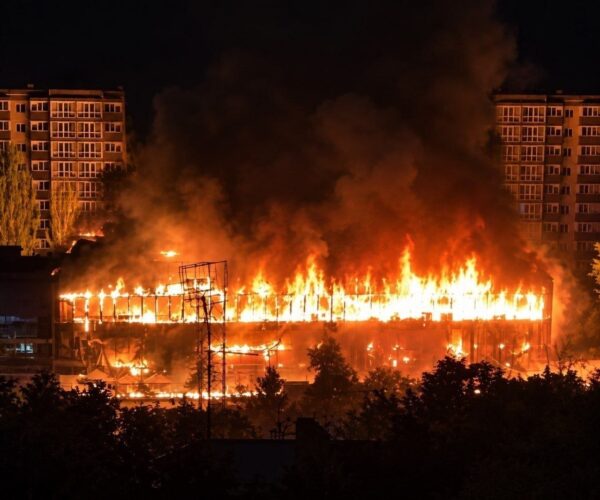
Ukrainian forces demonstrate shooting down Russian jet-powered drones amid expanding Moscow production. — Source: euobserver
Yemen's Rapid Houthi Advance on the Red Sea Coast
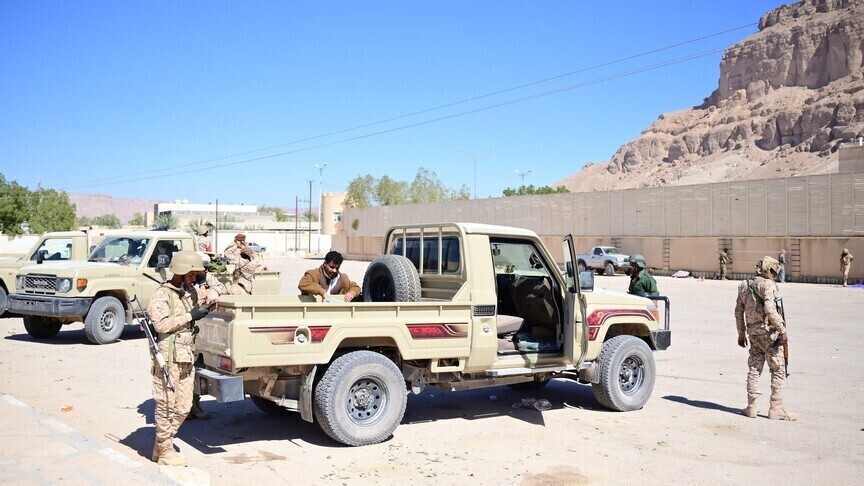
In Yemen, Houthi forces seized the entire Red Sea coast in an 18-hour offensive, gaining control of a strategic mountain overlooking Bab el-Mandeb and placing government positions within firing range. [4] Yemeni government forces took control of Jabal Zalat after clashes with Houthis, putting Al-Omari camp within firing range. [3] Houthi forces seized the full Yemeni Red Sea coastline in 18 hours and reached the key waterway of Bab el-Mandeb, raising their conflict with Saudi Arabia and Israel to a new level. [4] The success dealt a heavy blow to the Yemeni government backed by Saudi Arabia, and analysts assess the shift as the most significant regional development since the United States and Israel declared war on Iran in February. [4] Bab el-Mandeb, through which about 12 percent of total world trade passes daily, gained additional importance after Iran closed the Strait of Hormuz, through which about one-fifth of world energy supplies passed annually before the war. [4] Saudi Arabia then increased the capacity of the oil pipeline that transports crude oil from the Abqaiq fields to the port of Yanbu on the Red Sea to the maximum, from five to seven million barrels per day, so that now 21 percent more Saudi oil goes toward Bab el-Mandeb than before the war. [4] Maritime traffic through Bab el-Mandeb is seriously threatened by the Houthi advance, with the number of sailings falling 60 to 70 percent as shipowners avoid the route and the latest escalation bringing an additional 46 percent drop. [4]
Ukraine Counters Russian Jet-Powered Drones
Ukraine has developed and deployed new interceptor drones that have successfully shot down Russian jet-powered Geran-4 and Geran-5 drones, which Russia produces at around 3,000 per month and plans to increase output. [2] Over the course of a few days, Ukrainians released several videos showing Russian jet-powered drones being shot down by interceptor drones, with successful strikes by three different interceptor drones in total. [2] Ukrainians also struck a drone base from which Russia launches jet-powered Gerans. [2] Documents show that Russia plans to expand a factory, potentially allowing it to produce 28,000 more Gerans. [2] Russia produces around 3,000 of the jet-powered drones each month, and they currently make up roughly half of the drones Russia deploys to bombard Ukrainian cities every day. [2] Ukraine shoots down 60 percent of jet-powered Gerans, compared with more than 90 percent of conventional drones. [2] When speaking of jet-powered Gerans, there are essentially two types: the Geran-4 and Geran-5. [2] The Geran-4 still retains the delta-wing design of the Geran-2, while the Geran-5 is essentially a six-metre cruise missile. [2] Jet-powered drones fly at around 500 km/h, so to shoot them down they must first be caught up with. [2] Ukraine released five videos showing Russian jet-powered drones being shot down using new types of interceptor drones. [2] One video shows interceptor drones of an unknown make taking off with a delta-wing design that appear to have jet engines and one such drone catches up with and strikes a Russian Geran-5. [2] A second video showed another strike on a Russian Geran-5 jet-powered drone. [2] The Ukrainian company Wild Hornets published two similar videos and added another showing STING S taking down a Geran-5 jet-powered drone-missile, with the drone faster and carrying a larger explosive payload than other Geran variants. [2] The warhead of this type weighs as much as 90 kg and has a range of 950 km. [2] The company has already managed to shoot down more than a dozen Russian jet-powered drones. [2] Another video shows a Geran-5 attempting to shoot down a SPYS interceptor drone manufactured by the Ukrainian company WIY Drones. [2] The SPYS drone can fly at 600 km/h, which is sufficient to match the current speeds of Russian jet-powered drones. [2] Ukraine manufactures the engine itself. [2] Ukraine struck the Russian drone base at Tsymbulovo in the Oryol region using its own jet-powered drones and Neptune missiles. [2] The attack struck bunkers and damaged hangars and launch sites at what is Russia’s largest and most secure launch site for jet-powered drones. [2]
Humanitarian Appeals and International Law
All parties must respect international law, including international humanitarian and human rights law, in the use of armed drones. [5] States must withhold arms transfers where there is a clear risk that the arms will be used to commit serious violations of international humanitarian law or human rights. [5] The technology is new but the obligations are not, and they do not change depending on which weapon is used or which conflict is in the headlines, so governments with influence over the parties must now use it and assurances of safe access that hold are needed or teams cannot reach the people who need them most, according to OCHA’s DRC head Ouattara. [5] Aid workers should be able to reach people in need safely, rapidly, and effectively, underlined Lewis. [5] To ensure the protection of civilians, including aid workers, the UN and partners have been highlighting the humanitarian consequences of armed drones and the action required. [5] Conflict must stop inside cities, arms must be banned inside cities and attacks against civilians and civilian areas must stop, appealed the El Obeid resident. [5]
Broader Regional and Economic Repercussions
Maritime traffic through Bab el-Mandeb is seriously threatened by the Houthi advance. [4] Traffic of Saudi crude oil through it fell in August to about 400,000 barrels per day. [4] Markets reacted immediately, with Helima Croft, analyst at RBC Capital Markets, warning that full war could push Brent to almost 122 dollars by the end of the year. [4] Similar projections are shared by other investment banks, with Goldman Sachs seeing the possibility of growth toward 120 dollars if the conflict drags into 2027, while Bank of America expects a range of 95 to 125 dollars by the end of the year. [4] The International Energy Agency stated that global oil supply this year will fall more than previously forecast, while OPEC has for the fifth time in a row reduced its forecast for growth in global demand for 2026. [4] According to IEA data, Saudi Arabia and Russia, the second and third largest oil producers in the world, together pumped about 5.5 million barrels per day less in August than in January. [4] For Tehran the outcome on the ground has almost symbolic value, meaning that Iran now controls the Strait of Hormuz plus something more and has played the card of global oil prices and energy security, assessed Alam Saleh, professor of international relations at the Australian National University. [4]
What to watch next: Ukraine must focus on stopping jet-powered drones on the ground while also scaling up interceptor production, and systematic strikes on Russian drone bases may bring results even if infrastructure is fortified.