
Yemeni Forces Seize Mountain Overlooking Bab el-Mandeb as Houthis Take Red Sea Coast Amid Current Wars in the World
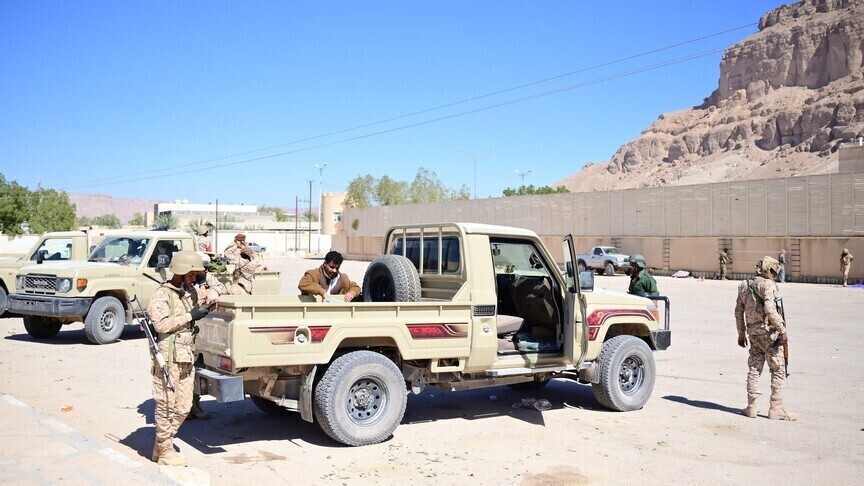
Yemeni government forces have seized the strategic Jabal Zalat mountain overlooking the Bab el-Mandeb strait after clashes with Houthi fighters, placing the Al-Omari camp within firing range while Houthi forces have seized the entire Yemeni Red Sea coast in an 18-hour offensive amid current wars in the world. [1] [2]
Recent Military Developments
Yemeni government forces took control of Jabal Zalat after clashes with Houthis, putting Al-Omari camp within firing range. [1] Houthis seized the entire Yemeni Red Sea coast and reached the Bab el-Mandeb strait in an 18-hour offensive, dealing a heavy blow to the Saudi-backed Yemeni government. [2] The Houthi advance expanded control around the strait through which 12 percent of global trade passes. [2] Analysts assessed the move as the most significant regional development since the United States and Israel declared war on Iran in February. [2] The Houthi offensive relied on advanced ballistic missiles and drones acquired with Iranian assistance, allowing the group to surpass the fragmented forces of the Yemeni government in speed and capability. [2]
Displacement and Humanitarian Impact

Yemeni government forces seize Jabal Zalat mountain overlooking Bab el-Mandeb strait after clashes with Houthis. — Source: gdelt
Escalating hostilities have displaced close to 130,000 people internally in Yemen and driven over 3,000 across the Gulf of Aden to Djibouti, with arrivals in Somalia gradually increasing. [3] UN agencies report 112,000 people already displaced in the last two weeks mainly along Yemen’s western coast and in Taiz governorate, with a warning that up to 230,000 could be displaced if fighting continues. [4] Most of the recent displacement occurred along the western coast and in Taiz governorate. [4] The renewed fighting prompted thousands of Yemenis to cross the Bab al-Mandeb Strait toward Djibouti. [4]
Strategic Importance of Bab el-Mandeb
Bab el-Mandeb, through which 12 percent of global trade passes daily, gained further importance after Iran closed the Strait of Hormuz, a route that previously carried about one-fifth of the world’s energy supplies each year. [2] Saudi Arabia responded by maximizing capacity on its pipeline from Abqaiq fields to Yanbu port on the Red Sea, raising daily volume from 5 million to 7 million barrels and increasing the share of Saudi crude routed through Bab el-Mandeb by 21 percent compared with pre-war levels. [2] Houthi expansion around the strait reduced Saudi crude shipments through it to roughly 400,000 barrels per day in August, with overall vessel traffic falling 60 to 70 percent as shippers avoided the route and an additional 46 percent drop following the latest escalation. [2]
Background of the Conflicts
The Houthi-Saudi conflict traces its roots to 2004, when the Shia Ansar Allah movement, known as the Houthis, first took up arms against then-President Ali Abdullah Saleh and accused Saudi Arabia of funding and directing operations against their community in northern Saada province. [2] After the Houthis seized Sanaa in 2014 amid public anger over corruption, Saudi Arabia led a coalition of Arab states into Yemen in 2015 to restore the recognized government and counter perceived Iranian influence near its southern border while securing control of Bab el-Mandeb. [2] The war remained largely stalemated for a decade despite a 2022 truce, until the present escalation. [2] The separate Houthi campaign against Israel stems from the group’s long-standing slogan “al-Sarkha,” which calls for death to America and Israel; the slogan remained largely symbolic until the October 7, 2023 Hamas attack on Israel, after which the Houthis began launching missiles and drones at Eilat and attacking Red Sea shipping in stated solidarity with Gaza. [2] A Gaza ceasefire in October 2025 temporarily eased those attacks, but renewed Israel-Iran fighting this year prompted the Houthis to resume the blockade of Israel-linked vessels in June. [2]
Regional and International Reactions

Yemeni government forces seize Jabal Zalat mountain overlooking Bab el-Mandeb strait during clashes with Houthis. — Source: reliefweb
Analyst Mohamad Elmasry of the Doha Institute described the Houthis as “a fighting force more advanced than the one the Saudis confronted a decade ago,” noting that Iranian-supplied weapons enabled an impressive arsenal. [2] Saudi Arabia has requested direct US strikes on Houthis but President Trump has declined, offering only intelligence support. [2] Trump stated that the Houthis contacted the United States, do not want to fight America, and prefer the United States stay out of the conflict. [5] Analysts warned that a lack of direct US intervention could leave Saudi Arabia and its allies exposed as the Houthis consolidate strategic positions. [5] Javed Ali, a former counterterrorism official, observed that the Houthis and Iran appear to follow a coordinated strategy aimed at raising economic costs through pressure on shipping routes. [5]
Market and Energy Implications
Helima Croft of RBC Capital Markets warned that maritime traffic through Bab el-Mandeb is seriously threatened by Houthi advances and estimated that full-scale war could push Brent crude toward 122 dollars by year-end. [2] Goldman Sachs projected possible rises toward 120 dollars if the conflict extends into 2027, while Bank of America foresaw a range of 95 to 125 dollars by year-end. [2] The International Energy Agency reported that global oil supply this year will fall more than previously forecast. [2] OPEC has lowered its 2026 global demand growth forecast for the fifth consecutive time. [2] According to IEA data, Saudi Arabia and Russia together produced about 5.5 million barrels per day less in August than in January, reflecting the combined effects of the war with Iran and the war in Ukraine. [2]
What to watch next: Saudi Arabia continues to fire dozens of missiles at Houthi-controlled areas without visible effect, while Trump has acknowledged that the war is unlikely to end before the US midterm elections in November and advisers have referenced 2029 as a possible conclusion in internal discussions.