
Yemen's Houthis Ignite Wider Iran War: Unseen Regional Repercussions
The Story
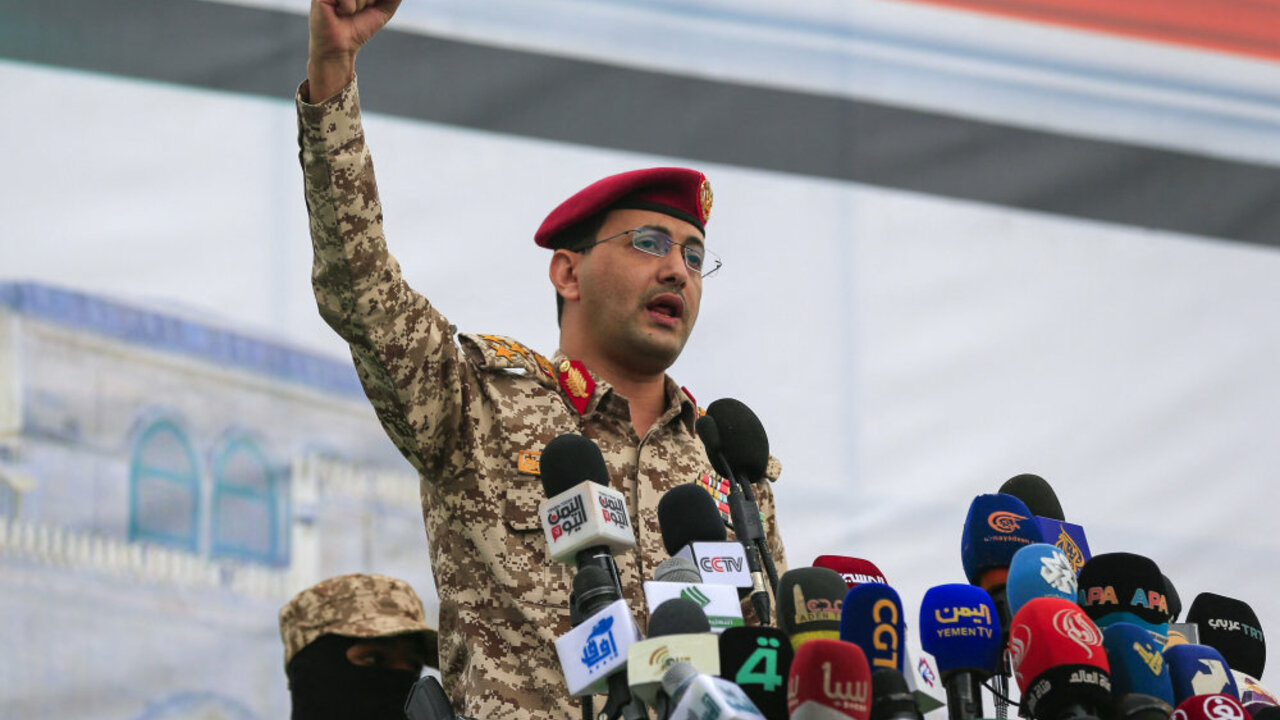
The narrative unfolding in Yemen is not merely an extension of the decade-long civil war but a pivotal escalation that intertwines local militancy with the broader Iran-Saudi proxy conflict now exploding into open warfare. On March 28, 2026, Houthi spokespersons, citing solidarity with Tehran, vowed retaliatory strikes against "aggressors" in the Gulf, marking their formal entry into the Iran war that began intensifying in early 2026. This comes as Al Jazeera reports daily bloodshed across the region, with Houthi missile and drone launches targeting shipping in the Red Sea and now threatening Saudi oil infrastructure—a move that risks igniting a multi-front inferno, as seen in recent Houthi missile strikes from Yemen on Israel.
To grasp the full gravity, one must rewind to the precipitating events. The UAE's abrupt withdrawal from Yemen on December 31, 2025, created a strategic vacuum in the south, where Abu Dhabi-backed forces had held sway against Houthi advances, further detailed in our coverage of Yemen's forgotten frontlines and southern separatism. This pullout, driven by domestic economic pressures and war fatigue in the UAE, emboldened the Houthis, who swiftly consolidated control over key ports like Hudaydah. Just a week later, on January 7, 2026, Saudi Arabia launched airstrikes on former UAE allies in Yemen, ostensibly to prevent Houthi encirclement but effectively fracturing the anti-Houthi coalition. Riyadh's move, confirmed via satellite imagery from open-source intelligence platforms like those analyzed by The World Now, signaled a desperate bid to reassert dominance but instead accelerated Houthi recruitment and Iranian resupply via smuggling routes.
By March 9, 2026, the "Iran War" proper trapped the Houthis in a vice: Tehran's direct confrontation with Israel and U.S. forces in the Levant diverted Houthi assets northward, yet also flooded Yemen with advanced weaponry, including precision-guided missiles. Al Jazeera details how this "trapping" occurred when Houthi brigades, already battle-hardened, redirected fire toward Israeli-linked vessels, only to face intensified U.S.-led naval interdictions. The humanitarian tipping point arrived on March 18, 2026, with reports of over 500,000 displaced civilians in northern Yemen alone—exacerbated by famine warnings from the UN, cholera outbreaks, and Houthi blockades on aid convoys. Kristeligt Dagblad corroborates Houthi threats post-"four weeks of war," framing their rhetoric as a direct response to Iranian losses, with pledges of "unprecedented attacks" on Saudi refineries.
This escalation connects seamlessly to broader Middle Eastern tensions, echoing tactics in the Middle East shadow war of non-state actors. Neighboring Oman, historically neutral, now hosts refugee flows straining its mediation role, while Jordan faces spillover drone incursions. The human element underscores the urgency: eyewitness accounts from displaced families in Sana'a describe nightly bombardments displacing entire villages, with children comprising 60% of the 4 million internally displaced since 2015, per UN data. Unlike standard coverage fixating on missile volleys, this development catalyzes unseen shifts—Houthis leveraging the chaos to position as Iran's vanguard, potentially inverting power dynamics in the Gulf.
The Players
At the epicenter are the Houthis (Ansar Allah), a Zaidi Shia militia controlling northwest Yemen since 2014, motivated by anti-Saudi revanchism and ideological alignment with Iran's "Axis of Resistance." Led by Abdul-Malik al-Houthi, they view the Iran war as a jihadist imperative, using Iranian Quds Force advisors for technical expertise in asymmetric warfare. Their threats, as per sources, aim to deter Saudi intervention while securing smuggling corridors for arms.
Iran, the puppeteer, supplies 80% of Houthi munitions via dhows from Bandar Abbas, motivated by diverting U.S. attention from its nuclear program and nuclear sites under strike. Supreme Leader Ali Khamenei's proxies frame this as defensive solidarity.
Saudi Arabia, under Crown Prince Mohammed bin Salman (MBS), leads the counter-coalition, driven by existential fears of encirclement. Post-UAE withdrawal, Riyadh's January strikes betrayed coalition fissures, with MBS prioritizing Vision 2030 economic diversification over endless war—yet Houthi threats imperil Aramco facilities, which produce 10 million barrels daily.
The UAE, now peripheral but influential, withdrew to focus on Horn of Africa proxies, motivated by cost-benefit calculus: Yemen drained $20 billion since 2015. Abu Dhabi quietly backs southern separatists, hedging against Houthi gains.
Global powers loom large: The U.S., under a hawkish administration, provides Saudi air defenses (THAAD systems intercepting 90% of Houthi missiles), motivated by containing Iran and securing Red Sea trade (12% of global commerce). Israel, tacitly involved via airstrikes on Houthi radar, sees Yemen as a southern front. China and Russia, opportunistic, sell arms to Houthis via backchannels, eroding Western dominance.
The Stakes
Politically, Houthi entry risks fracturing the Abraham Accords, as UAE-Saudi distrust deepens, potentially isolating Israel amid Iran war. Economically, Red Sea disruptions have spiked shipping insurance 300%, per Lloyd's of London, with Yemen's neighbors like Egypt facing Suez Canal revenue losses exceeding $1 billion monthly. Humanitarian implications are dire: The March 18 crisis has pushed Yemen toward famine affecting 19 million, with Houthi conscription of boys as young as 12 fueling generational trauma and radicalization. Track the evolving crisis on our Global Conflict Map — Live Tracking and Global Risk Index.
Regionally, this catalyzes alliance realignments—Saudi Arabia may pivot toward Iran reconciliation (echoing 2023 China-brokered deal) or escalate, inviting U.S. boots. For global powers, stakes involve energy security: A Houthi-Saudi clash could shutter Bab el-Mandeb, rerouting 5 million barrels daily. Long-term, unchecked escalation breeds instability, enabling ISIS resurgence in ungoverned spaces, compounded by the hidden environmental toll one month into the Iran war.
Market Impact Data
Markets are reacting viscerally to Houthi threats, embodying classic risk-off dynamics amid Middle East escalation. Oil futures surged 4.2% intraday to $92/barrel (Brent), reflecting high-confidence supply fears through the Strait of Hormuz and Red Sea, where Houthi attacks have idled 20% of tanker capacity. Equities tumbled: S&P 500 (SPX) futures dipped 1.8%, driven by algorithmic de-risking, while Nasdaq-heavy tech sold off 2.5% on supply chain jitters.
Crypto mirrored the panic: Bitcoin (BTC) shed 3.1% to $58,200, treated as a risk asset amid liquidation cascades, with Solana (SOL) plunging 5.7% due to leveraged unwindings. Safe havens rallied—Japanese Yen (JPY) strengthened 1.2% versus USD (USDJPY to 148.50), and U.S. Dollar Index (DXY) climbed 0.8%—echoing 2019 Soleimani tensions. Euro (EUR) weakened 0.9% on energy exposure.
Catalyst AI Market Prediction
Powered by The World Now's Catalyst Engine, our AI models forecast the following (medium-to-high confidence, calibrated against historical precedents like 2019 Iran-Saudi attacks and 2022 Ukraine invasion):
- OIL: + (high confidence) — Multiple ME escalations threaten supply routes; precedent: +15% in 1 day (2019). Key risk: OPEC+ spare capacity.
- SPX: - (medium confidence) — Risk-off spills to equities; precedent: -5% (2018 tariffs). Key risk: Energy offsets.
- BTC: - (medium confidence) — Risk asset selling; precedent: -10% in 48h (2022 Ukraine). Key risk: Safe-haven shift.
- SOL: - (medium confidence) — Altcoin amplification; precedent: -15% (2022). Key risk: Sentiment rebound.
- JPY: + (medium confidence) — Safe-haven flows; precedent: -3% USDJPY (2022). Key risk: De-escalation.
- USD: + (medium confidence) — Haven demand; precedent: +1% DXY (2019). Key risk: Diplomatic rhetoric.
- EUR: - (medium confidence) — USD strength pressures; precedent: -1% (2019). Key risk: ECB support.
Predictions powered by The World Now Catalyst Engine. Track real-time AI predictions for 28+ assets.
Looking Ahead
Scenarios diverge sharply. Bullish escalation (40% probability): Iranian arms surges empower Houthi barrages on Aramco by mid-April, drawing Saudi ground incursions and U.S. carrier deployments—risking Gulf-wide war, with oil at $120/barrel. Humanitarian fallout: 2 million more displaced by summer, per UN models mirroring Syria 2013.
De-escalation path (30%): UN-mediated ceasefire, leveraging Oman, could emerge by May 2026 if Biden-era talks revive—Houthis trading threats for sanctions relief. Neutral drift (30%): Proxy stalemate persists, with aid corridors opening but alliances fracturing—UAE courting Turkey for southern bases.
Key dates: April 15 (Saudi budget reveal, signaling war costs); UNSC session April 20; Houthi "response deadline" April 5. Diplomatic windows narrow as Ramadan ends April 10, historically fueling militancy. Historical patterns suggest missteps (e.g., UAE exit) beget vacuums—watch for Russian mediation offers exploiting U.S. election distractions.
This is a developing story and will be updated as more information becomes available.