Yemen Conflict Escalates as Houthis Kill 30 Government Soldiers in Drone and Rocket Attacks
Clashes between Iran-backed Houthi rebels and Yemeni government forces have intensified in recent weeks with deadly attacks on military sites, the port of al-Makha, and a commercial vessel, raising fears that the 2022 truce could collapse and lead to all-out war in the Yemen conflict.
Recent Houthi Attacks and Casualties
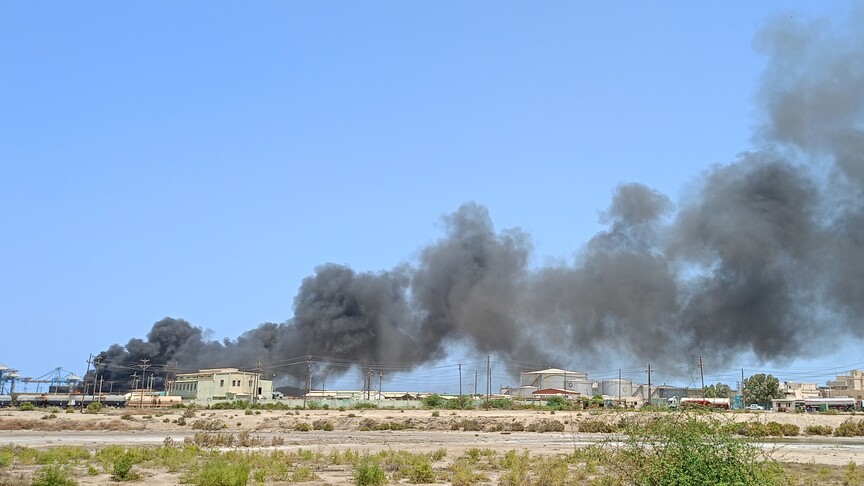
The Houthis have killed a number of civilians in a series of attacks on the government-controlled west coast port of al-Makha, also known as Mocha. [1] There was also an attack on a commercial vessel in the Bab al-Mandeb Strait on Tuesday, which Yemen’s coastguard said killed six people and injured 10 others. [1] The Houthis said the vessel was carrying weapons. [1] It followed the Houthis targeting Yemeni government military sites in eastern Yemen with drones and rockets, killing at least 30 government soldiers and causing further clashes. [1] The Houthis have also attacked Saudi Aramco’s Jazan oil refinery. [1] Yemeni forces repelled a Houthi attack along the southwest border. [4] Houthis say 7 fighters killed in northwestern provinces of Amran and Hajjah. [4] Clashes between Iran-backed Houthi rebels and government forces in Yemen raged overnight Thursday as renewed violence continues to spread. [3] At least one government soldier was killed and another critically wounded in clashes between Houthi rebels and the military in the mountainous province of Taiz. [3] Dozens of government troops have been killed in attacks since last week. [3] The Houthis have been hitting government-held areas with drones and missiles, saying they have been targeting military forces and warehouses. [3] They have also been attacking oil facilities in neighboring Saudi Arabia. [3]
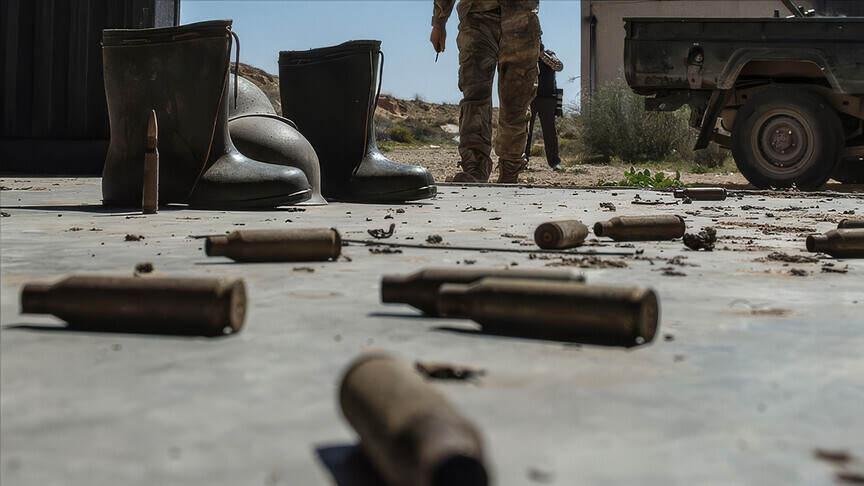
Houthi rebels escalate attacks on Yemeni government forces and Saudi targets in renewed conflict. — Source: gdelt
Yemeni Government and Presidential Leadership Council Response
In response, Rashad al-Alimi, chairman of the Presidential Leadership Council, said the internationally recognised government would not accept “a new truce that reproduces previous experiences”. [1] “No action by the Houthi militias will go unanswered or unchecked,” al-Alimi said, according to Yemen’s Saba news agency. [1] But he also appeared to leave space for a political way back, saying the Houthis could still “lay down their arms, engage in political life and compete through the ballot box on an equal footing with all other Yemenis”. [1] Yemeni government forces have thwarted an attack by the Houthis on positions along the al-Mafalis front, south of Haifan, in the southeastern part of Taiz province. [5] An official of the Tor al-Bahah military axis said the army’s 4th Infantry Hashd Brigade repelled a Houthi attack on positions on the al-Mafalis front, adding that “the terrorist Houthi militias suffered heavy losses.” [5] A spokesman for the government forces said their air defences had engaged reconnaissance drones belonging to the Houthis in the skies over al-Makha. [5] The head of Yemen’s Presidential Leadership Council, Rashad al-Alimi, said, “From now on, there will be no action undertaken by the Houthi militias without a comprehensive response or deterrence.” [5] Al-Alimi added that the government is “not in favour of a new truce that reproduces past experiences”, noting that it supports a permanent and sustainable peace based on the existence of a state that alone monopolises weapons and sovereignty. [5] “The opportunity remains available to lay down arms and engage in building a homeland that can accommodate everyone,” he said. [5]
Background to the Current Tensions
The Houthis seized the capital Sanaa in 2014 and have since fought a war with the government for control of the country. [1] Although the intensity of the war declined significantly after the 2022 truce, no comprehensive peace settlement followed. [1] The fragile status quo came under increasing pressure after the United States and Israel launched their war against Iran on February 28. [1] On July 13, Yemeni government forces attacked Sanaa airport, reportedly to prevent an Iranian aircraft carrying a Houthi delegation from landing. [1] The rebel movement responded by launching missiles towards Saudi Arabia. [1] Then, on July 20, the Houthis announced a maritime blockade against Saudi Arabia, threatening oil shipments diverted towards the Red Sea and attacking Saudi Aramco facilities in Jizan and Yanbu. [1] Since April 2022, Yemen has witnessed a relative de-escalation in the war between government forces and the Houthi group, but intermittent clashes between the two sides resumed in early July, resulting in dozens of dead and wounded. [5] Military escalation continues for days after the Yemeni government announced it is attacking Houthi positions. [5] On Wednesday, the Yemeni government announced it had attacked Houthi positions and gatherings with artillery shelling and drones in several governorates. [5]
Saudi Arabia's Strategic Shift
As the attacks have intensified, Saudi Arabia has begun to take a more proactive approach to its security. [1] Last month, Riyadh announced a new international alliance intended to protect shipping in the Red Sea from Houthi attacks. [1] Dozens of countries were invited, with the kingdom saying 13 had agreed to participate. [1] It is also deepening its security relationships with Pakistan and Turkiye through a new joint defence agreement. [1] The Saudi Defence Minister, Khalid bin Salman, recently met US Vice President JD Vance amid reports that Crown Prince Mohammed bin Salman had secured US support for potential military action against the Houthis. [1] In Yemen, the shift in the Saudi position may have been more visible when the Saudis intervened against the United Arab Emirates-backed Southern Transitional Council at the end of last year. [1] That allowed Yemen’s fractious anti-Houthi coalition to coalesce around the Yemeni government and present a more united front against the rebels. [1] Simon Mabon, professor of international relations at Lancaster University in the UK, said Saudi policy on the issue has changed significantly. [1] “After years of attempting to de-escalate and work towards an accommodation with the Houthis, Riyadh appears to have concluded that approach is no longer viable,” Mabon told Al Jazeera. [1] “Saudi Arabia’s concern has become particularly acute because conflict around the Strait of Hormuz has increased the importance of alternative oil and shipping routes through the Red Sea.” [1] But rather than trying to totally defeat the Houthis and retake the capital Sanaa, Mabon said Saudi Arabia and the Yemeni government now appear to be focused on pushing Houthi forces away from the coast. [1] “That’s a marked shift from what we had been seeing previously,” he said. [1]
Houthi rebels clash with Yemeni government forces in escalating conflict. — Source: apnews
Iran's Role and Regional Links
Iran has long cultivated a so-called “axis of resistance” of governments and groups opposed to Israel and the United States, including Hezbollah in Lebanon, Hamas in Gaza, armed groups in Iraq and Syria and the Houthis in Yemen. [1] The Houthis supported Iran towards the end of March by launching attacks towards northern Israel and have since threatened to expand their operations in the Red Sea. [1] Last month, Iran reportedly asked the Houthis to prepare to close the Red Sea oil route if the US attacked Iranian power infrastructure. [1] A source close to the Houthis told Reuters that missiles and drones had been positioned near the Bab al-Mandeb Strait in Yemen’s highlands overlooking Hodeidah and the Gulf of Aden. [1] Mohammed Albasha, a Yemeni American analyst and former spokesperson for Yemen’s embassy in Washington, said the Houthis’ attacks on Saudi Arabia should therefore also be understood within the broader US-Iran confrontation. [1] “By threatening Saudi shipping there, the Houthis can increase pressure on both Riyadh and Washington, while supporting Iran in its wider confrontation with the United States,” Albasha said. [1] The government accuses Iran of arming the Houthis. [1]
Humanitarian Risks and UN Warnings
Hans Grundberg, the U.N. special envoy for Yemen, told the U.N. Security Council in a video briefing Thursday that Yemen is at greater risk of returning to large-scale conflict than at any time since a 2022 truce ended nearly a decade of war. [3] Yemen faces “catastrophe” from rising hunger and from health services crumbling amid the fighting, said U.N. humanitarian chief Tom Fletcher. [3] He said 6 million people in Yemen face emergency levels of food insecurity bordering on famine, “the highest number globally.” [3]
What to watch next: Analysts say the crucial question is whether the latest attacks are intended to pressure the Saudi and Yemeni governments, or whether the Houthis believe they are simply taking the initiative in a new potential ground war.