WW3 Map Updates Show Russian Tank Endures 40 Drone Strikes Near Pokrovsk
Recent ww3 map updates indicate a Russian T-90 tank survived strikes from 40 Ukrainian drones while traveling 15 km near the front line in Donetsk Oblast, highlighting improvements in Russian tank protection and tactics amid ongoing heavy fighting around Kramatorsk, Sloviansk, Pokrovsk and Dobropillia. [1]
Russian Tank Survives 40 Drone Strikes
Ukrainian general Denys Prokopenko stated that destroying enemy equipment prepared for mechanised breakthroughs is not as easy as it appears. [1] Russia is upgrading tanks using active protection, electronic warfare, mine-clearing equipment, cages, explosive reactive armour and the Arena-M system. [1] A Russian T-90 tank commanded by Denis Dmitriev travelled 15 km under fire despite being hit by 40 drones. [1] The tank featured a cage around its turret reinforced with steel wires. [1] Drones damaged its gun barrel and reduced the crew’s ability to observe surroundings, yet the tank remained operational until struck by munitions from a Baba Yaga bomber drone. [1] The crew hid for three days before returning to Russian positions. [1] Video geolocation north of Pokrovsk confirms the 15 km distance. [1]
Mechanised Warfare and Tactical Adaptations
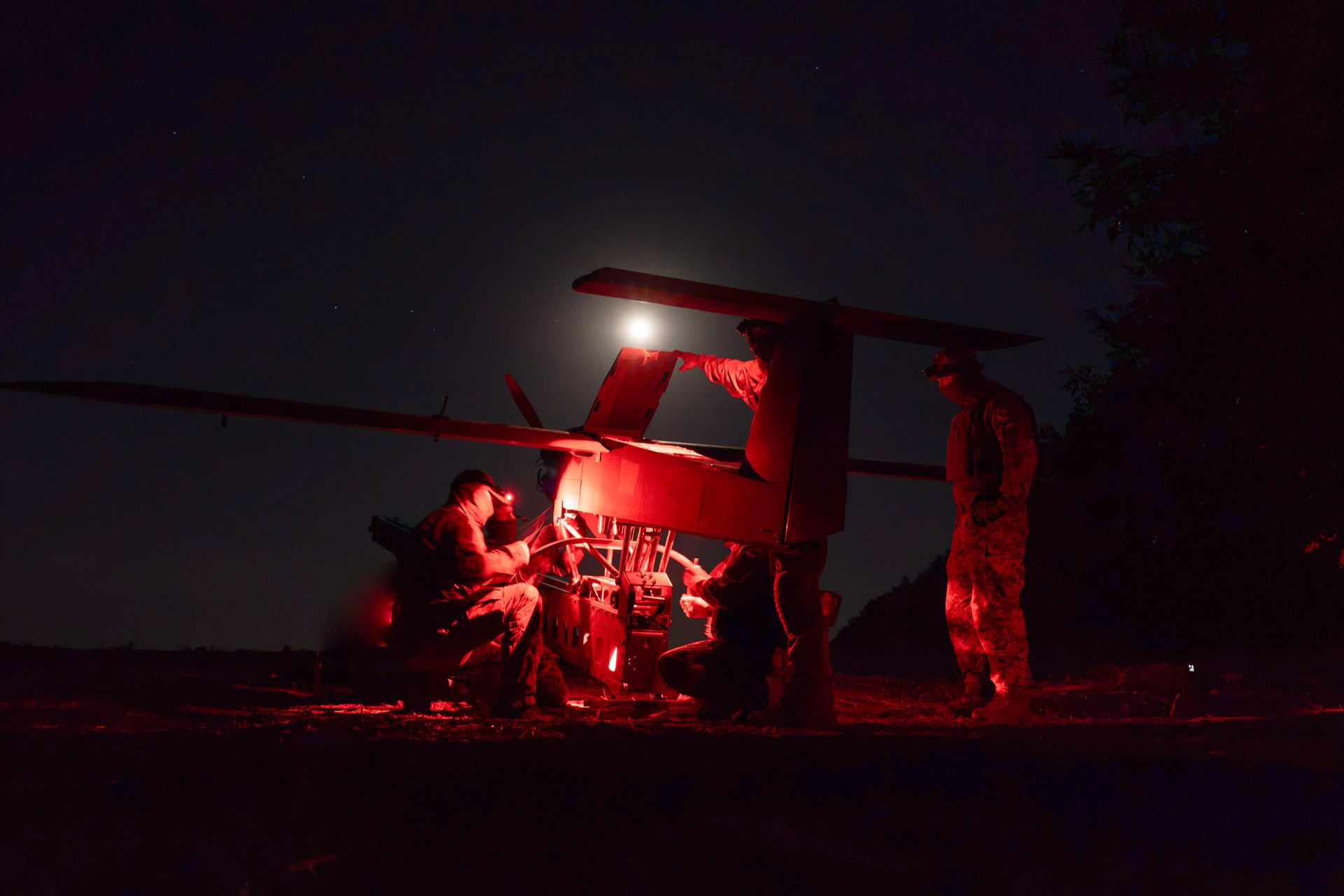
Ukrainian drone unit operators monitor Russian-occupied Crimea highways from a control room. — Source: kyivindependent Russia sent new T-90M and T-72B3M tanks fitted at the factory with “tsar tent” structures of steel bars and rubber strips, comprehensive Kontakt and Relikt explosive reactive armour, and the Arena-M system. [1] Some tanks also received mechanical and electromagnetic mine-clearing systems. [1] Russian tactics involve infantry penetrating to drone operator positions while artillery targets launch zones, allowing armoured vehicles to advance in waves that exhaust defenders. [1] Analysts remain sceptical that these protection improvements will outpace Ukrainian drone advances, noting that drones now carry larger payloads and appear in greater numbers. [1]
Developments Around Kramatorsk and Sloviansk
The Kramatorsk-Sloviansk urban cluster serves as a defensive stronghold with interconnected logistics and terrain favourable to defenders. [2] Russian forces have increased strikes using glide bombs, FPV drones and Molniya-2 drones against transport routes, bridges and industrial sites around the cluster. [2] One airstrike on 13 August caused civilian casualties near Kramatorsk. [2] The terrain and Ukrainian drone defences make direct assaults costly, with analysts estimating expenses could exceed those of prior battles such as Bakhmut or Pokrovsk. [2]
Ukrainian Counteractions on Key Fronts
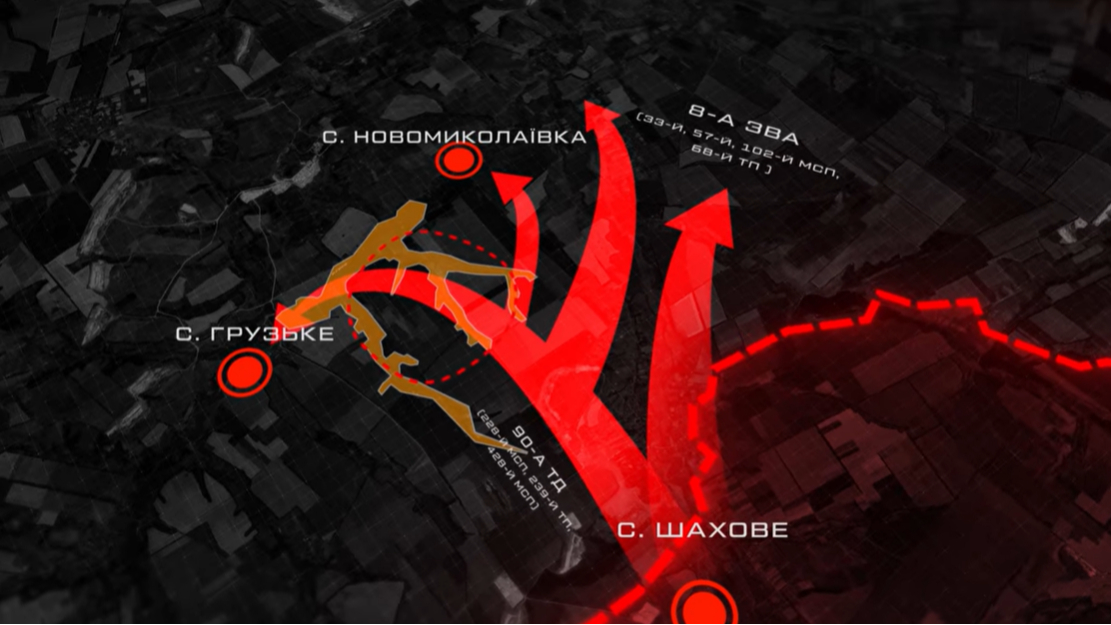
Russian T-90 tank fitted with cage armour survives multiple Ukrainian drone strikes near Pokrovsk. — Source: ukrainskapravda Ukrainian forces repelled a Russian attempt to bypass Dobropillia and approach Druzhkivka, inflicting 237 Russian personnel killed or permanently out of action, 44 wounded and capturing three soldiers. [4] On 22 September, 247 combat clashes occurred across the front, with the heaviest fighting on the Kostiantynivka and Pokrovsk fronts. [5] Russian forces conducted 87 airstrikes, dropped 309 guided bombs and used over 9,000 kamikaze drones that day. [5] Ukraine liberated more territory last week than Russia captured, including a village near Kupiansk. [1]
Middle-Strike Drone Operations in the South
Ukrainian middle-strike drone units such as the 422nd Unmanned Systems Regiment continue to exert fire control up to 50 km behind Russian lines in southern Ukraine. [3] The unit targets logistics routes to occupied Crimea using Hornets, Ram-2X, Bulava and Zozulia drones. [3] The Hornet has proved effective at controlling the E58 highway, while the Zozulia carries a 50-kilogram warhead up to 300 km. [3] Russian forces have responded with mobile fire groups and interceptor teams that have downed some Hornets. [3]
Overall Battlefield Context
Fighting has converged in a narrower geographic space, with Russian pressure continuing without confirmed major advances on many sectors. [2] Ukrainian units have raised the cost of Russian attacks through middle-strike operations and defensive actions. [1] [3] Last week Ukrainians liberated more territory than Russia captured. [1] Russian mechanised assaults remain limited despite some tactical adaptations. [1]
What to watch next: Continued middle-strike drone pressure on southern supply routes and any further Russian attempts at mechanised breakthroughs near Pokrovsk or Dobropillia.