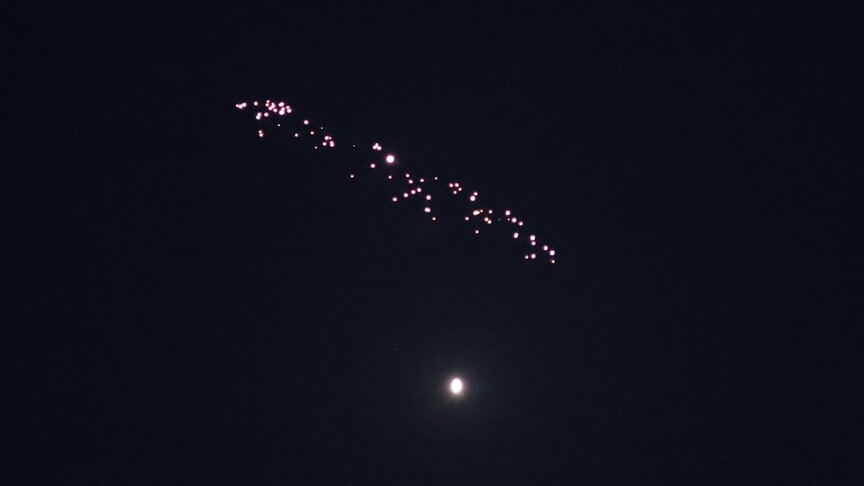
US Strikes Hit Iranian Command Centers in 10th Night of Attacks
The US military completed its 10th consecutive night of strikes on Iran amid ongoing Iran strikes, targeting command centers, air defense systems, missile and drone launch sites, and maritime capabilities to degrade Iran's ability to attack commercial vessels in the Strait of Hormuz. [1] The operation lasted about five hours and marked the latest in a series of American actions aimed at protecting shipping routes. [2]
US Completes 10th Night of Strikes on Iran
The U.S. Central Command announced on social media that American forces struck Iranian military command centers, missile and drone launch sites, maritime capabilities, and air defense systems. [2] CENTCOM stated the strikes were designed to further degrade Iranian military capabilities used to attack commercial shipping in the Strait of Hormuz. [5] The latest round of U.S. strikes on Iran lasted about five hours, according to the U.S. military, marking 10 consecutive nights of American strikes on Iran. [2] Washington said it is attempting to degrade Iran’s ability to continue attacking commercial vessels flowing through the Strait of Hormuz. [2] Commercial vessel transits through the vital international maritime corridor continue, the command added. [5] American forces remain postured and prepared to hold Iran accountable for unwarranted aggression toward civilian mariners seeking to freely and openly transit the strait. [5]
Iranian Retaliatory Attacks on US Bases in Kuwait and Bahrain
Iran’s Revolutionary Guards said they targeted U.S. military facilities in Kuwait, including the Ahmad al-Jaber Air Base, Ali Salem Air Base, and Arifjan base, as well as radar and communications equipment. [1] The Guards also reported strikes on Patriot air defense systems at Riffa Air Base and similar systems at Muharraq Airport in Bahrain. [1] Iran’s armed forces claimed to have launched fresh attacks on Kuwait using kamikaze drones against three major U.S. military installations. [4] The Iranian military said the strikes were aimed at U.S. bases as part of its ongoing campaign against American forces in the region. [4] With this radar sweep, the enemy should prepare for even more decisive and powerful waves of drone and missile attacks, the Guards stated. [5] Iran’s Revolutionary Guards said they had attacked and stopped two non-compliant oil tankers attempting to transit the Strait of Hormuz. [5]
Attacks on Commercial Tankers in the Strait of Hormuz
A commercial tanker was struck by an unidentified projectile in the Strait of Hormuz off Oman, according to the UK Maritime Trade Operations agency. [3] The incident occurred early Tuesday 14 kilometers northeast of Limah on the Musandam Peninsula. [1] Iran’s IRGC claimed attacks that caused fires on two oil tankers attempting an unauthorized southern route in the Strait of Hormuz. [1] The Guards said the tankers were hit by explosions, resulting in massive fires that brought them to a standstill. [5] UKMTO reported that the vessel’s crew abandoned the tanker and boarded a lifeboat after the projectile strike. [4] The incident followed two similar attacks in the previous 24 hours claimed by Iran’s Revolutionary Guard. [3] Another tanker off the coast of Oman was struck by a projectile, UKMTO reported. [5]
Explosions Reported Across Iran
Explosions were reported in Iranian cities including Bandar Abbas, Chabahar, Konarak, Bushehr near its nuclear plant, Isfahan, and Abdanan. [1] Iranian media reported blasts in multiple locations including near the Bushehr nuclear plant. [1] Explosions were heard in central Iran’s Isfahan, according to Iran’s semi-official Mehr news agency. [4] Several explosions were reported on Tuesday morning in Abdanan, a city in Iran’s western Ilam province. [4] A facility in the Dinar Kuh area was targeted, according to Abdanan Governor Behzad Nourmohammadi. [4] Fortunately, this incident did not result in any casualties, and the responsible agencies are investigating the dimensions of the issue, Nourmohammadi said. [4]
Context of the US-Iran Conflict and Casualties
The conflict, which began with US-Israeli strikes on Iran on February 28, escalated this month after a ceasefire and memorandum of understanding, centering on control of the Strait of Hormuz. [1] The Iran war began when the U.S. and Israel attacked Iran on February 28 and Iran responded with its own strikes on Israel and Gulf states that host U.S. bases. [2] U.S.-Israeli strikes on Iran and Israeli attacks on Lebanon during the war have killed thousands and displaced millions. [2] The war has raised oil prices and shaken global markets. [2] U.S. President Donald Trump vowed Iran would pay for the deaths of American soldiers. [3] The Pentagon identified two US troops killed in Jordan from Iranian attacks: First Lieutenant Tyler James Feehan, 25, of Hawaii, and Private Isabella Gonzales, 19, of Texas. [3] Feehan will be posthumously promoted to captain and awarded the Bronze Star, Purple Heart and Combat Action Badge. [3] Nearly 100 US servicemembers have been wounded since early July. [5] U.S. troop deaths in the war rose to 17 over the weekend. [2] On Monday, Trump vowed revenge against Iran after the deadly weekend for U.S. troops. [2]
Ongoing Diplomatic Efforts Amid Escalation
Iranian President Masoud Pezeshkian declared that the country was fighting a full-scale war with the United States. [3] Despite the latest fighting, Iranian foreign ministry spokesman Esmaeil Baqaei said diplomatic exchanges with Washington via mediators were ongoing. [5] Iran’s Interior Minister Eskandar Momeni is in Islamabad for a two-day visit during which he will meet with Prime Minister Shehbaz Sharif and Chief of Defence Forces and Chief of Army Staff Field Marshal Asim Munir. [5] Yemen’s Houthi rebels announced a maritime embargo against Saudi Arabia on Monday. [4] The Houthis, who are backed by Iran, said they would block shipping between the Red Sea and the Gulf of Aden by targeting the Bab el-Mandeb. [4]
What to watch next: Continued mediation efforts via Pakistan and other channels, Iranian declarations of full-scale war, and Houthi threats to impose a naval blockade on Saudi Arabia remain key developments to monitor.