
US Strikes Hit 90 Targets in Iran After Tanker Attacks in Strait of Hormuz
The United States struck 90 military targets in Iran over two days in early July 2026, killing at least 14 people according to Iranian officials, in response to Iranian attacks on three commercial tankers in the Strait of Hormuz that Washington said ended a June ceasefire agreement. These Iran strikes followed attacks on three tankers that Washington described as unjustified aggression against commercial shipping.
Overview of the Latest US Strikes on Iran
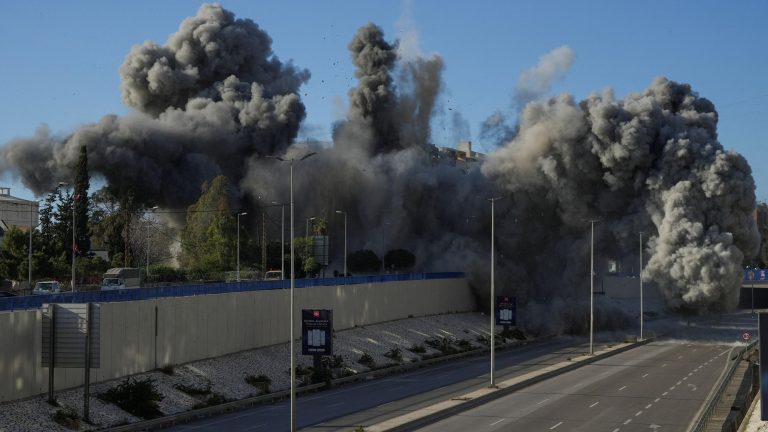
The United States launched the strikes beginning on 8 July as a response to prior attacks on three commercial tankers in the Strait of Hormuz. [1] US Central Command stated that the strikes aimed to degrade Iran's ability to threaten commercial shipping and civilian mariners in the Strait of Hormuz. [1] The command reported hitting 90 Iranian military targets, including air defense systems and military logistics infrastructure along Iran's coastline. [4] Centcom added that the latest strikes followed successful execution of offensive strikes in Iran the night before. [4] Iranian officials reported that at least 14 people were killed and 78 injured across five provinces in the two days of American air strikes. [4] Iran's health ministry said most of those killed were members of the armed forces. [4] US Central Command released black-and-white footage of what appeared to be strikes on an airport runway and missile launchers. [5]
Iranian Retaliatory Attacks Across the Region

US strikes targeted 90 Iranian military sites along the coastline in response to tanker attacks in the Strait of Hormuz. — Source: jerusalempost Iran responded by firing missiles and drones at US bases and assets in Kuwait, Bahrain, Qatar, Jordan and Iraq. [1] Iranian state-linked media reported that Tehran launched strikes on sites in Kuwait, Jordan and Iraq on 9 July. [4] Kuwait's military said it shot down three ballistic missiles, a cruise missile and 10 drones, with falling debris wounding one person. [5] Bahrain reported that it shot down incoming fire, with sirens sounding at least three times in the capital Manama. [5] Jordanian government spokesman Mohammad al-Momani said all incoming fire from Iran had been intercepted, and sirens sounded in Jordan. [5] Iran's parliamentary speaker Mohammad Bagher Ghalibaf said on X that America still has not learned that bullying and breaking promises are no longer cost-free. [4] Ghalibaf added that if you strike, you will get hit. [4]
Damage Reported Inside Iran
Iranian state media reported strikes near the Bushehr nuclear power plant. [1] A local official in Bushehr accused the US of striking near the plant around noon. [5] Iranian media reported power outages in Chabahar and a fire at an IRGC barracks in Bushehr. [1] Two verified videos showed damage to the control tower at a major port in the south-eastern Iranian city of Chabahar following US strikes. [4] State media reported a strike on a railway bridge in Iran’s northeastern Golestan province. [5] The Revolutionary Guard said two bridges were attacked on the route to Mashhad. [5] Iran's foreign ministry said bridges and a railway route connecting Tehran to the city of Mashhad were also damaged. [4] Iranian state TV reported eight explosions in Bandar Abbas and said two missiles had hit the ports of both Sirik and Jask. [4] It added that two projectiles had hit the island of Abu Musa. [4] Explosions were heard in Iran's southern port of Konarak, with a local official telling Iran's official news agency a navy site was attacked by an enemy. [4]
Disruption to Shipping in the Strait of Hormuz
/data/photo/2026/04/03/69cf04ddcca2f.jpeg)
US strikes targeted Iranian military infrastructure along the coastline in July 2026. — Source: gdelt The escalation follows Iranian attacks on three commercial tankers in the Strait of Hormuz. [1] US Central Command said the strikes were carried out to further degrade Iran's ability to attack commercial shipping and innocent civilian mariners in the vital waterway. [4] Phil Belcher, marine director at Intertanko, said the number of ships travelling through the Strait via the southern route closer to Oman was now in single figures following the step up in hostilities. [4] Belcher added that the overall daily figure of about 30 ships was down from about 70 a week ago and well below the normal number of 130 ships that was seen before the Iran war began earlier this year. [4] Maritime data company Lloyd’s List Intelligence said preliminary data showed at least 576 ships passed through the strait in June, compared to 233 in May. [5] More than 3,100 transited the strait in June 2025. [5] UKMTO reported that a tanker passing through the strait on 6 July reported a fire after an impact from a projectile of unknown origin. [1] On 7 July two tankers reported problems, with one hit on exiting the strait and another reporting minor damage. [1] Qatar and Saudi Arabia claimed their tankers were hit while near or passing through the Strait of Hormuz and blamed Iran. [1]
Status of the June Ceasefire Agreement
The escalation follows a 17 June memorandum of understanding between the US and Iran that included a ceasefire and provisions for managing the Strait of Hormuz. [1] President Trump declared the ceasefire agreement signed last month with Iran was now over. [4] Trump told reporters he did not want to deal with them anymore and called the current Iranian leaders scum. [1] Iran's foreign ministry denounced the latest US strikes as a grave war crime and described the US administration as evil and psychopathic. [4] Iran's deputy foreign minister said the attacks violated the memorandum of understanding and warned that Tehran would take decisive measures. [1] A senior US official said diplomacy is continuing despite intermittent strikes in Iran. [2] Iran's foreign minister Abbas Araghchi said he spoke by phone with his Saudi, Turkish and Omani counterparts and with Pakistan’s army chief, Field Marshal Asim Munir. [5] Trump said he would allow negotiations to continue but thought negotiators were wasting their time. [5]
Burial of Ayatollah Ali Khamenei
Iran's late Supreme Leader Ayatollah Ali Khamenei, killed in February strikes, was buried in Mashhad on 10 July amid large crowds. [4] Huge crowds gathered as Khamenei was buried after six days of funeral events. [4] Crowds massed on the streets of Mashhad waving Iranian flags while some held signs carrying death threats directed at US President Donald Trump. [4] People pressed forward to touch a vehicle carrying Khamenei's body. [5] Many carried Iranian flags and images of the late leader or banners evoking Shiite Islam’s long history of martyrs. [5] Some signs called for the death of Trump and Israeli Prime Minister Benjamin Netanyahu. [5] Khamenei ruled Iran for nearly 37 years before being killed in the US and Israeli airstrikes that started the war. [5] The funeral processions began last Saturday, with authorities shutting down streets, airspace and daily life in Tehran and other cities. [5]
What to watch next: A senior US official said diplomacy is continuing even as strikes intensify, and Iran's foreign minister reached out to counterparts in Saudi Arabia, Turkey, Oman and Pakistan’s army chief.