
US Strike on Iran: Navy Seizes Cargo Ship in Gulf of Oman Amid Blockade
In a bold US strike Iran confrontation in the Gulf of Oman, the US Navy intercepted and seized an Iranian-flagged cargo ship that attempted to evade a naval blockade, leading Iran to condemn the action and launch drones toward American warships in retaliation.[1][5] This incident, unfolding amid heightened tensions, has intensified regional instability, with Iran's joint military command vowing a swift response and questioning a fragile ceasefire.[4] The event marks the first such interception since the US initiated its blockade of Iranian ports last week, coinciding with the shutdown of the Strait of Hormuz and the stranding of hundreds of oil tankers.[3][4]
Overview of the Incident
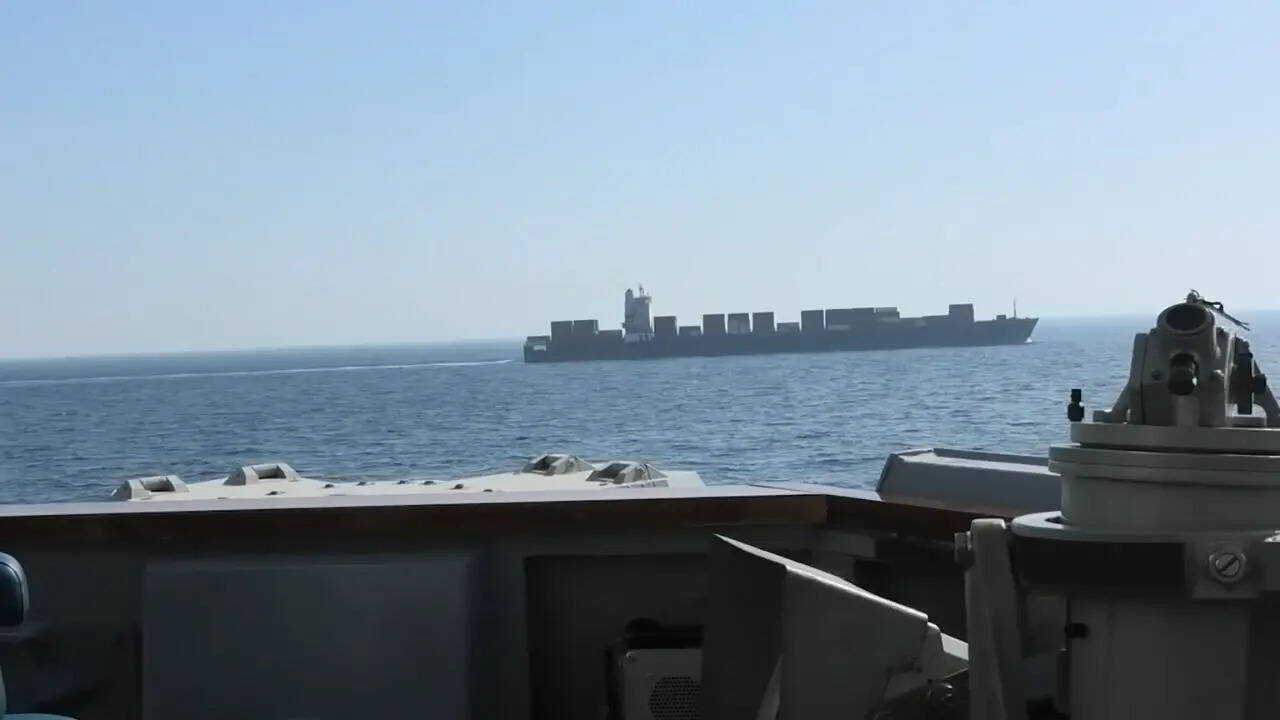
The confrontation began when the US Navy targeted an Iranian-flagged cargo vessel attempting to bypass a US-enforced naval blockade in the Gulf of Oman.[1][5] According to reports, the ship, identified as the TOUSKA, ignored repeated warnings from US forces, prompting a decisive interception.[1] A US destroyer fired on the vessel, disabling its propulsion system and allowing US Marines to board and take custody.[1][5] This action immediately drew sharp rebukes from Tehran, which labeled it "armed piracy" and vowed retaliation.[5]
The sequence of events escalated rapidly, with Iran launching drones toward US warships in direct response to the seizure.[1][2] Iranian officials framed the US move as a provocative attack, underscoring the volatile dynamics in the Gulf region where naval blockades have disrupted maritime traffic.[5] The incident occurred on Sunday near the Strait of Hormuz, a critical chokepoint for global oil shipments, amplifying its strategic significance.[4] Eyewitness accounts and video footage captured the tense moments, including US warnings such as "Prepared to disable you," highlighting the high-stakes nature of the operation.[1]
This overview encapsulates not only the tactical execution but also the immediate ripple effects, as Iran's retaliatory drone launches targeted American military vessels, signaling a potential broadening of the conflict.[2] The US action fits into a pattern of enforcement amid ongoing hostilities, with both sides issuing stark warnings that have put international shipping routes at risk.[1][5]
Details of the US Action
The US Navy's operation against the Iranian cargo ship involved precise and forceful measures to enforce the blockade.[1][4] Operating in the Gulf of Oman near the Strait of Hormuz, the USS Spruance played a central role, issuing ultimatums to the vessel before disabling its propulsion.[1] US Marines then boarded the TOUSKA, securing full control and custody of the ship after it failed to heed warnings and attempted to evade the naval cordon.[1]
Reports describe the boarding as an armed operation, with the US characterizing the vessel's maneuvers as a deliberate attempt to breach the blockade imposed on Iranian ports.[4] This marked the inaugural interception since the blockade's inception last week, underscoring the US commitment to maintaining the restriction despite regional pushback.[4] The location—strategic waters proximate to the Strait of Hormuz—added layers of complexity, as any disruption here threatens one of the world's busiest oil transit lanes.[4]
Video evidence from the scene reveals the intensity of the encounter, with US personnel communicating directly with the Iranian crew before resorting to disabling actions.[1] The methodical approach, from warnings to propulsion disablement and boarding, reflects established naval protocols for such interceptions, yet it provoked immediate accusations of aggression from Iran.[1][4] The seizure effectively neutralized the ship's ability to continue its journey, redirecting focus to the broader enforcement strategy amid escalating US-Iran frictions.[4]
Iran's Response and Statements
Iran's reaction to the US seizure was swift and multifaceted, beginning with drone launches targeting American warships in the Gulf of Oman.[1][2] Iranian forces responded almost immediately to what they described as an "attack" on their container ship, deploying drones against US military vessels.[2] Tehran's joint military command issued a stern warning of a "swift response," framing the incident as both an act of piracy and a violation of an existing ceasefire.[4]
Official statements from Iranian authorities condemned the US destroyer’s firing on the vessel as "armed piracy," with vows of retaliation echoing across state media.[5] The France24 liveblog captured Tehran's position clearly: forces would "respond soon" to the provocation.[5] This rhetoric aligns with broader condemnations, positioning the event as a breach of fragile diplomatic understandings on the verge of expiration.[4]
The drone attacks represent a tactical escalation, directly linking the seizure to Iran's counteroffensive posture.[2] Iranian state broadcasters amplified the narrative of US aggression, rallying domestic support while signaling readiness for further action.[4] These statements and launches have heightened alarms, as they challenge US naval dominance in the region and test the limits of the ceasefire framework.[5]
Regional Impact
The fallout from the interception has reverberated across the Gulf, most notably through Iran's shutdown of the Strait of Hormuz, stranding hundreds of oil tankers and their crews.[3][4] Distress calls from vessels under fire paint a picture of chaos, with reports of gunfire and traumatic ordeals for thousands of sailors trapped in the chokepoint.[3] This closure, tied to the broader US blockade, has paralyzed shipping, preventing oil cargoes from transiting one of the planet's most vital maritime arteries.[3]
The first interception under the week-old blockade has compounded these effects, as Iran's retaliatory measures exacerbate the standoff.[4] Tankers now idle, unable to proceed due to the enforced restrictions and reported hostilities, face prolonged delays that could ripple through global energy markets.[3] Crew accounts highlight the human cost, with crews enduring uncertainty amid sounds of conflict.[3]
Regionally, the incident disrupts not just Iranian ports but the entire Hormuz corridor, where the US enforcement intersects with Iran's countermeasures.[4] The stranding of vessels underscores the blockade's tangible consequences, transforming a military maneuver into a widespread logistical crisis.[3][4]
Broader Context
This US strike Iran episode unfolds against the backdrop of a US naval blockade on Iranian ports that commenced last week, enforcing restrictions amid simmering hostilities.[4] The timing is particularly precarious, occurring days before a fragile ceasefire is set to expire, thereby casting doubt on its viability.[4] Iran's joint military command explicitly cited the armed boarding as a ceasefire violation, amplifying calls for reprisal.[4]
The blockade represents a strategic escalation by the US, aimed at curbing Iranian maritime activities near the Strait of Hormuz.[4] As the first enforcement action of its kind, the seizure of the vessel tests the resolve of both parties, with Iran decrying it as piracy in state media.[4] This context reveals a cycle of provocation and response, where naval interceptions challenge diplomatic efforts and regional stability.[4]
What to watch next: Iran's vowed swift response and the fragile ceasefire's impending expiration could dictate whether drone launches escalate into broader confrontation, while the ongoing Strait of Hormuz shutdown continues to strand tankers amid heightened naval tensions.[2][4][5]