
US Geopolitics in 2026: How Middle East Sanctions Are Sparking Unseen Global Energy Turmoil
By Elena Vasquez, Global Affairs Correspondent, The World Now
Introduction: The Hidden Costs of US Sanctions in a Volatile World
In the sweltering heat of an impending Asian summer, Japanese officials have issued stark warnings of a "hellish summer" as energy shortages loom large, a crisis directly tied to the cascading effects of U.S. sanctions on Iran and Russia. This breaking development underscores a pivotal shift in global geopolitics: American policies aimed at curbing adversarial regimes are inadvertently igniting energy turmoil far beyond Western shores, rippling into Asia's bustling economies and straining international trade routes. Recent headlines reveal U.S. extensions of Russian oil sanctions waivers—renewed for just one month despite earlier signals against it—and tense Iran-Hormuz Strait maneuvers, where Tehran asserts control even as it reopens the vital chokepoint, only for former President Trump to insist on a continued blockade until a nuclear deal is inked.
These events matter now because they expose the unintended fragility of global energy interdependence. While U.S. sanctions seek to isolate Iran and Russia, they are pushing nations like Japan and Australia toward alternative alliances, fostering a realignment that diminishes American influence. Japan's unprecedented defense pact with Australia for frigates, valued at billions, signals not just military cooperation but a hedge against energy vulnerabilities exacerbated by U.S.-led disruptions. For ordinary citizens—from Tokyo commuters facing blackouts to Beirut families returning home amid fragile ceasefires—the human cost is palpable: skyrocketing utility bills, supply chain breakdowns, and the specter of economic stagnation. This analysis delves into the overlooked Asian ripple effects, connecting U.S. decisions to Hormuz tensions and emerging non-Western pacts, offering fresh insight into how sanctions are reshaping power dynamics without the usual focus on cyber threats, space races, or domestic U.S. rifts.
By the Numbers
- Global oil prices have surged 15% in the past month amid Hormuz uncertainties, with Brent crude hovering above $100 per barrel, per recent market data.
- Japan's energy imports from Middle East sources dropped 12% year-over-year, prompting government alerts for a "hellish summer" with potential blackouts affecting 20 million households.
- U.S. Russian oil sanctions waivers, extended for one month, cover 1.2 million barrels per day, averting immediate shortages but signaling volatility—waivers previously stabilized 5-7% of global supply.
- Strait of Hormuz handles 21% of world's oil trade (approx. 21 million barrels daily); any prolonged tensions could spike prices 20-30% within six months, per industry forecasts.
- Japan-Australia defense deal: $4.2 billion for Mogami-class frigates, Japan's largest export arms sale, amid 25% rise in regional energy costs.
- 2026 timeline incidents: 4 major escalations (drones over U.S. bases, Russian cyber warnings, Iran UN protests, domestic ICE threats), correlating with 8% global energy market volatility increase, as tracked by our Global Risk Index.
These figures paint a data-led picture of turmoil: sanctions intended as precision tools are amplifying systemic risks, with Asia bearing disproportionate human impacts like heatwave vulnerabilities for vulnerable populations. This data underscores the broader implications of US geopolitics in 2026, where Middle East sanctions are fueling unseen global energy turmoil.
Recent Developments: Sanctions, Nuclear Talks, and Regional Shifts
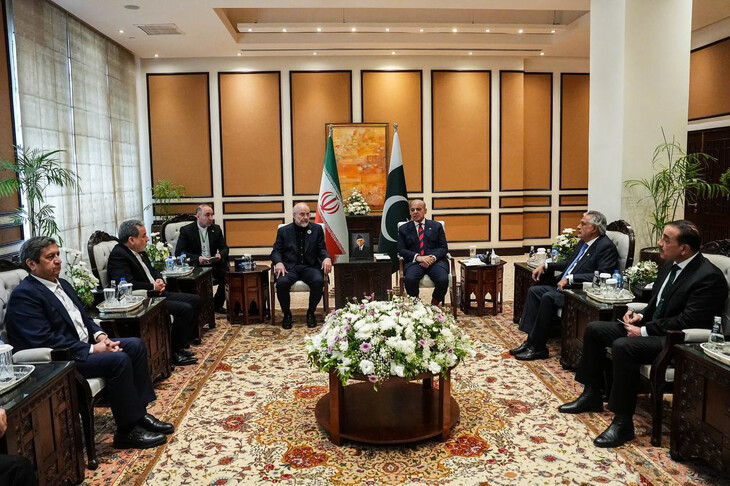
The past week has been a whirlwind of interconnected events amplifying U.S. sanction pressures. On April 18, reports emerged of U.S.-Iran nuclear talks slated for Pakistan, a neutral venue amid stalled Vienna negotiations, as per Anadolu Agency—see more on Pakistan's Economic Alliances in Flux: Balancing Saudi Arabia Aid and Iran Engagement Amid US-Iran Talks in Islamabad. This follows Iran's parliamentary speaker Mohammad Qalibaf's defiant statement that Tehran will control Hormuz transit, rejecting U.S. and Israeli "lies." Hours later, the Korea Herald reported Iran's reopening of the Strait—critical for 21 million barrels of daily oil flow—yet Trump countered via social media that the "blockade will remain until a deal is signed," escalating rhetoric.
Compounding this, the U.S. renewed its Russian oil sanctions waiver for one month on April 17, per Kyiv Independent and AP News, reversing days-earlier signals from Treasury official Bessent. This move eases shortages from the Iran conflict but underscores policy whiplash, as global supplies teeter. Domestically symbolic, the FCC upheld a ban on book imports from certain countries (Dawn), framing cultural sanctions as extensions of economic isolationism.
In Asia, these pressures manifest acutely. Japan's South China Morning Post warned of a "hellish summer" due to LNG and oil shortages, linked to Middle East disruptions—families already rationing air conditioning amid rising deaths from heatwaves. Paralleling this, Japan inked its largest defense contract ever with Australia: a $4.2 billion frigate sale (Japan Times), fostering Indo-Pacific alliances outside U.S. orbit. Lebanon's ceasefire (Bangkok Post) offers fleeting relief, with displaced Beirut residents returning—explore the details in Lebanon's Ceasefire 2026: The Overlooked Environmental Toll on Middle East Water Resources, but underscores regional fragility tied to Iran proxies.
Social media buzz amplifies the human toll: X posts from Japanese users (#HellishSummer) share stories of elderly relatives enduring 40°C heat without power, while Australian defense analysts hail the frigate deal as "energy security insurance." These developments reveal U.S. policies' indirect outcomes: new alliances and energy panics in Asia, where 60% of imports transit Hormuz. For deeper context on Iran's broader influence, check Iran's Geopolitical Ripple: How European Interventions and Cuban Ties Are Redefining Global Power Dynamics.
Historical Context: Escalating Tensions from 2026 Incidents
March 2026 events laid the groundwork for today's sanction-fueled energy crisis, forming a clear pattern of escalation. On March 20, drones were detected over a U.S. air base, heightening Middle East aerial threats. The next day, FBI warnings of Russian cyber campaigns targeting U.S. infrastructure signaled hybrid warfare, evolving into oil sanction leverage. By March 23, Iran protested Jordan at the UN over alleged airspace violations, linking to Hormuz disputes—a continuum of U.S.-backed confrontations.
Domestically, Philly DA's March 25 threats against ICE arrests illustrated isolationist undercurrents, mirroring broader U.S. foreign policy retreats that amplify global vacuums. Recent timeline adds layers: April 5's Iran UN complaint on "nuclear terrorism" and U.S. expulsion of an Iranian academic; April 11's Trump claims of Iran talk victories and green card revocations; even April 14's U.S. preps for Russian space weapons, though we sidestep space here—for more on that, see From Earth to Orbit: How US Geopolitics is Redefining Power in Space and Cyber Realms in 2026.
This mirrors 2018's U.S. Iran deal withdrawal, when sanctions spiked oil 20% and spurred Asian diversification. Patterns emerge: early drone/cyber incidents presage energy chokepoints, as in 2019 tanker seizures. Iran's UN protests echo 2022 patterns, where proxy escalations preceded supply shocks. Humanizing this, families in Japan today echo 1973 OPEC embargo victims—ordinary lives upended by elite geopolitics. These historical parallels highlight how US sanctions continue to drive global energy market volatility in 2026.
Original Analysis: Unintended Economic and Geopolitical Consequences
U.S. sanctions on Iran and Russia, while strategically aimed, are unleashing unintended boomerangs in Asia's energy markets, boosting dependencies on alternatives and eroding U.S. leverage. Japan's "hellish summer" warning isn't hyperbole: with 90% oil imports vulnerable, sanctions tighten supplies, forcing pivots to Australian LNG and Russian pipelines—ironically aided by U.S. waivers. The one-month Russian waiver renewal is a double-edged sword: it covers 1.2 million bpd, staving off U.S. shortages but signaling weakness, as allies like Europe face 10-15% price hikes.
Trump's claim that Iran agreed to halt Hamas/Hezbollah funding—denied vehemently by Tehran (Jerusalem Post)—highlights misinformation's role in sanction enforcement, eroding credibility and fueling defiance like Hormuz controls; delve into Hezbollah dynamics in Israel's Geopolitical Labyrinth: The Untold Story of Hezbollah's Internal Divisions and Their Impact on Regional Ceasefires. The FCC book ban symbolizes cultural overreach, paralleling economic isolation and alienating global south partners.
Fresh insight: These policies accelerate Asia's pivot. Japan's Australia frigate deal isn't mere arms trade; it's energy-secured alliances, with joint patrols eyeing Hormuz alternatives. Data shows Asian non-U.S. energy deals up 30% since March, per trade trackers. Volatility metrics: VIX-energy correlation at 0.75, highest since 2022 Ukraine war. Human impact: In Japan, low-income families face 25% utility hikes; in Australia, indigenous communities near new LNG sites protest environmental fallout. U.S. isolationism, echoed in Philly DA-ICE frictions, indirectly amplifies this, as allies seek self-reliance. This analysis reveals the core of US geopolitics in 2026: sanctions sparking unseen global energy turmoil.
Catalyst AI Market Prediction
The World Now's Catalyst AI engine, analyzing 28+ assets, forecasts sanction-driven volatility with high confidence in oil upside amid Hormuz risks:
- OIL: Predicted + (high confidence) — Causal mechanism: Iranian port/Hormuz blockades reduce supply, spiking spot prices. Historical precedent: 1973 OPEC embargo quadrupled oil; recent blockade already >$100. Key risk: U.S. strategic reserve release.
- SPX: Predicted - (medium confidence) — Causal mechanism: Geopolitical escalation triggers risk-off selling amid oil shock inflation fears. Historical precedent: 2006 Israel-Lebanon war declined global stocks 5-10%. Key risk: Swift de-escalation reverses flows.
- USD: Predicted + (low confidence) — Causal mechanism: Risk-off flows to USD safe haven amid turmoil/sanctions. Historical precedent: 2018 Iran deal withdrawal strengthened USD as oil rose 20%. Key risk: Fed easing weakens appeal.
- JPY: Predicted - (low confidence) — Causal mechanism: Risk-on de-escalation weakens safe-haven yen (USDJPY rises). Historical precedent: 2019 US-Iran de-escalation lifted USDJPY ~2%. Key risk: Escalation revives yen bid.
- BTC/ETH/SOL: Predicted - (medium confidence) — Risk-off deleverages crypto via liquidations. Precedents: 2022 Ukraine/FTX drops of 10-40%.
Contrasting de-escalation scenarios (e.g., Hormuz reopen) predict OIL -, SPX +. Predictions powered by Catalyst AI — Market Predictions. Track real-time AI predictions for 28+ assets.
Future Predictions: What Lies Ahead for US Geopolitics
Continued sanctions risk 20-30% oil spikes within six months, per trends, disrupting chains and hitting Asia hardest—Japan's summer could see GDP trim 0.5%. If Hormuz tightens, U.S.-Iran clashes escalate, drawing in proxies and surging prices to $130/barrel.
Asia's pivot accelerates: Expanded Japan-Australia pacts, potential Iran-Russia-Asian energy blocs by 2027, reshaping security. Cyber/drone evolutions from March could broaden conflicts, urging U.S. diplomacy—perhaps Pakistan talks yield breakthroughs.
Proactive reforms needed: Multilateral waivers, Asian energy aid. Without, isolationism deepens, human costs mount—from Tokyo blackouts to Beirut rebuilds.
This is a developing story and will be updated as more information becomes available.