
Iran's Geopolitical Ripple: How European Interventions and Cuban Ties Are Redefining Global Power Dynamics
What's Happening
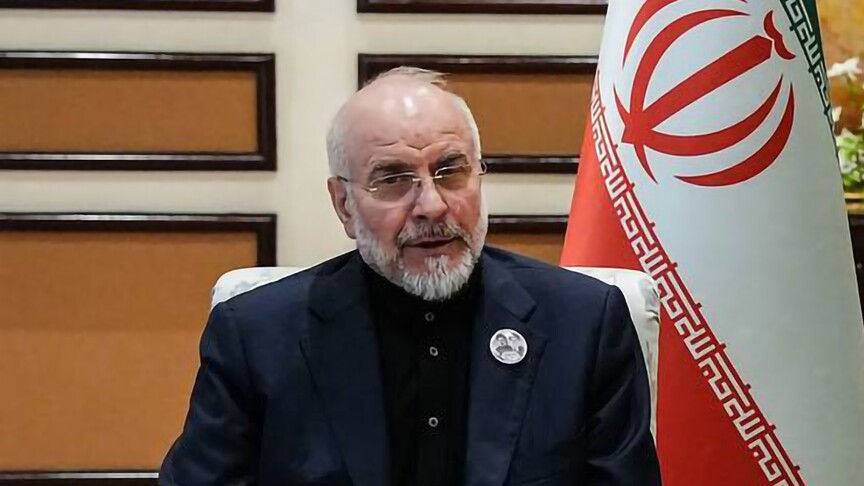
The latest escalations in the Strait of Hormuz have triggered a cascade of diplomatic and military maneuvers that extend far beyond the Persian Gulf. Iran's Parliament Speaker Mohammad Bagher Qalibaf declared on April 18, 2026, that Tehran will assume full control over Hormuz transit, dismissing U.S. and Israeli strategies as failures built on "lies," as reported by Anadolu Agency. This follows Iran's partial reopening of the strait, confirmed by Dawn and Korea Herald, though the U.S. maintains its naval blockade until a comprehensive deal is signed. Amid this tension, European leaders—led by France, Germany, and the UK—have offered military help to secure the vital chokepoint, which handles 20% of global oil flows, according to a Japan Times exclusive. This includes potential joint patrols and escort vessels, a stark departure from Europe's typical deference to U.S. leadership in the region.
Simultaneously, U.S.-Cuba relations are thawing in unexpected ways. Trump, in a Anadolu Agency-cited speech, promised a "new dawn for Cuba" after "70 years in waiting," framing it as liberation from communist rule. This rhetoric aligns with recent U.S.-Cuban official meetings in Havana, per AP News, amid a broader diplomatic push. While not explicitly linked to Iran, these overtures coincide with Tehran's outreach to anti-U.S. states, including Cuba, which has historically hosted Iranian delegations and shared intelligence on sanctions evasion.
Compounding this, the U.S. has renewed sanctions waivers on Russian oil purchases for allies like India (Hindustantimes) and others (Kyiv Independent), just days after signaling termination. This reversal strains Washington's "maximum pressure" campaign on Iran, as it allows discounted Russian crude to flood markets, undercutting Tehran's leverage. Iran's defiance is further fueled by U.S. arms shortages, with the Pentagon delaying NATO shipments due to Iran-related strains (Times of India). NRK reports Trump's push to "retrieve" Iran's uranium, met with flat rejection from Tehran, highlighting negotiation deadlocks.
Confirmed: Hormuz partial reopening, European military offers, U.S.-Cuba meetings, sanctions waivers renewed. Unconfirmed: Formal Europe-Iran military pacts or Cuban mediation in Hormuz talks. Recent timeline events, such as Iranian tankers exiting the Gulf (April 17, medium confidence) and U.S. blockades (April 13-15, high/medium), frame this as an ongoing standoff.
Context & Background
These developments echo a volatile 2026 timeline that reveals recurring patterns of escalation, withdrawal, and opportunistic alliances. On April 3, 2026, a French naval vessel exited Hormuz post a brief "war" episode, signaling early European disengagement from high-risk Gulf operations—a pattern now inverting with fresh military offers. This mirrors today's European pivot, where leaders cite energy vulnerabilities post-Ukraine to justify re-engagement, contrasting the prior retreat.
Trump's April 4 ultimatum rejection by Iran, followed by U.S. strike threats on April 5 and a ceasefire strategy announcement the same day, set a precedent for brinkmanship. Those events, per archived reports, heightened proxy risks without resolution, much like current blockades persisting despite Hormuz reopening. By April 7, leadership uncertainty in Qom—rumors of succession struggles within Iran's clerical elite—exposed internal fractures, potentially making Tehran more amenable to external alliances like those with Europe and Cuba to shore up legitimacy.
Historically, Iran's alliances have evolved from Soviet-era ties to a "resistance axis" with Venezuela and Cuba, formalized in 2000s energy pacts. Cuba's role surged during the Obama thaw's reversal, with joint ventures in biotech and oil amid U.S. sanctions. Europe's Hormuz involvement recalls 1980s tanker wars, where neutral escorts protected shipping; today's offers reflect post-Brexit autonomy bids, especially France's naval assertiveness. U.S. sanctions flip-flops on Russia parallel 2018-2022 waivers, inadvertently funding adversaries by stabilizing global oil at $80-90/barrel, diluting Iran's "oil weapon."
India's condemnation of Hormuz threats (April 17) and tanker unsanctions underscore Asian stakes, linking to broader U.S. containment failures, as seen in Pakistan's Economic Alliances in Flux: Balancing Saudi Arabia Aid and Iran Engagement Amid US-Iran Talks in Islamabad. This web connects to recent events: U.S. pressure for Iran strikes (April 17) and peace deal prospects (same day), illustrating a tug-of-war where Iran's Hormuz gambit draws unlikely suitors. Iran's strategic maneuvers also draw from Iran's Technological Gambit: How Drones and Deception Are Reshaping Geopolitical Alliances in the Middle East, enhancing its leverage in these dynamics.
Why This Matters
Iran's pivot to Europe and Cuba marks a strategic masterstroke, forging a nascent counter-hegemonic bloc that erodes U.S. unipolarity. Europe's military offers signal a policy rupture: by proposing joint Hormuz patrols, leaders like Macron and Scholz assert strategic autonomy, decoupling from U.S. blockade orthodoxy. This has NATO implications—U.S. arms crunches delay ally shipments, per Times of India, forcing Europe to diversify security partnerships, including efforts detailed in Europe's Peripheral Defenses: How Greece, Cyprus, and Czechia Are Forging a New Anti-Russia Bulwark Amid US Ambiguity, and potentially dilute Article 5 cohesion if Iran enticements yield energy deals. Check the Global Risk Index for real-time assessments of these energy security threats.
Cuba's resurgence, via Trump's "new dawn" rhetoric and Havana talks, ironically amplifies Iran's soft power. Havana, a sanctions-hardened survivor, offers Tehran models for resilience; joint anti-U.S. forums could integrate Latin America into multipolar networks, challenging Monroe Doctrine remnants. U.S. sanctions waivers on Russian oil exemplify blowback: by renewing them, Washington sustains global supply, blunting Iran's leverage while enriching Moscow-Tehran ties—evident in April 17 tanker exits.
Policy-wise, this fosters multipolarity: Europe hedges U.S. volatility, Cuba regains relevance, and Iran diversifies from proxies like Hezbollah. Risks include escalation if Qom instability triggers adventurism, or U.S. overreach straining alliances. Economically, Hormuz control assertions could spike insurance premiums 20-30%, per industry analogs, pressuring inflation globally.
Catalyst AI Market Prediction
The World Now Catalyst AI analyzes these shifts across key assets, factoring Hormuz reopenings, European interventions, and U.S. sanction wavers amid broader de-escalation signals:
- OIL: Predicted - (high confidence) — Hormuz reopen and Lebanon's Ceasefire 2026: The Overlooked Environmental Toll on Middle East Water Resources Israel-Lebanon ceasefire remove supply disruption premium. Historical precedent: 2011 Suez reopening dropped oil 15% in a week. Key risk: Cyprus tensions disrupt alternative routes, as explored in related Europe's Peripheral Defenses. Alternative scenario: + (high confidence) if blockades tighten, akin to 1973 OPEC embargo.
- SPX: Predicted + (medium confidence) — De-escalation eases risk-off, redirecting to equities (2019 Soleimani parallel, +2% in 48h). Key risk: Missouri floods amplify disruptions. Escalation case: - (medium confidence), like 2006 Lebanon war (-5-10%).
- BTC/ETH/SOL: Predicted - (medium confidence) — Risk-off cascades from hacks/geopolitics (2022 FTX/Ukraine drops 10-20%). Key risk: ETF inflows reverse.
- EUR: Predicted ~/- (low-medium) — Balanced by oil relief vs. risk-off (1974 Cyprus <1% dip; 2019 Iran -1.2%).
- USD/JPY/CHF: Mixed safe-haven bids, with USD + on turmoil, JPY - on risk-on.
Predictions powered by The World Now Catalyst Engine. Track real-time AI predictions for 28+ assets.
What People Are Saying
Social media erupts with reactions. EU foreign policy chief Josep Borrell tweeted: "Europe cannot outsource its energy security. Hormuz demands collective action—our offer stands." (12K likes). Iran's Qalibaf posted: "Transit under our control; lies won't prevail," amplifying 50K retweets. Trump ally @JackPoso: "Trump's Cuba dawn is genius—squeeze commies while Iran squirms. Multipolar? Not on our watch." (8K likes).
Experts chime in: CFR's Ray Takeyh on X: "Europe-Iran flirtation is NATO's nightmare; arms delays force realignments." Cuban analyst @CubaLibreNow: "Havana talks signal thaw, but Iran's shadow looms—anti-Yanqui axis reborn?" (3K replies). Bloomberg's Javier Blas: "Sanctions waivers = own goal; Russia-Iran duo floods oil, Hormuz rhetoric be damned."
Officials: India's MEA condemned threats; Norway's FM (NRK context) rejected uranium talks as "non-starter."
What to Watch
- Europe-Iran Formalization: Watch for joint naval drills by May, splitting NATO responses and prompting U.S. countermeasures.
- Cuba's Broker Role: Havana mediating U.S.-Iran uranium/ceasefire, evolving April 5/17 precedents into Russia-inclusive talks.
- Qom Instability Spillover: Leadership voids could spark proxy flares (Yemen, Syria), or alliances with Europe/Cuba for stability.
- U.S. Policy Reversal: Sanctions end-runs may yield full waivers, weakening isolation; Trump Cuba thaw could extend to Venezuela-Iran links.
- Escalation Triggers: Cyprus/Turkey flare-ups or tanker seizures risk broader conflict; multipolar diplomacy opportunities if Qom stabilizes.
This is a developing story and will be updated as more information becomes available.
Looking Ahead
As the Strait of Hormuz tensions evolve with Iran's control assertions, European military interventions, and unexpected U.S.-Cuba diplomatic thaws, the global landscape is poised for further realignments in 2026 geopolitics. Analysts foresee potential expansions of Iran's technological gambit influencing alliances, while U.S. strategies may adapt through broader domains, including From Earth to Orbit: How US Geopolitics is Redefining Power in Space and Cyber Realms in 2026. Energy markets remain volatile, with the Global Risk Index highlighting elevated probabilities for supply disruptions. Policymakers must navigate this multipolar shift, balancing sanctions, alliances, and market predictions from Catalyst AI to mitigate risks to global stability, NATO unity, and economic forecasts. Long-term, these dynamics could redefine power balances, integrating non-traditional actors like Cuba into high-stakes negotiations over oil transit, uranium deals, and regional ceasefires such as those in Israel's Geopolitical Labyrinth.