
US and Iran Sign 14-Point Ceasefire Memorandum That Reopens Strait of Hormuz
US President Donald Trump and Iranian President Masoud Pezeshkian have digitally signed a 14-point memorandum of understanding that establishes an immediate ceasefire, reopens the Strait of Hormuz, lifts US sanctions and unfreezes Iranian assets, while extending negotiations for a permanent truce. [1] The agreement extends a ceasefire announced in April by another 60 days across all fronts including Lebanon to allow talks on a final truce. [1] It includes unfreezing billions in Iranian assets, waiving US sanctions, reopening the Strait of Hormuz with no charges, lifting the US naval blockade of Iranian ports, and establishing a $300 billion investment fund for post-war reconstruction. [1]
US and Iran Sign Immediate Ceasefire Memorandum
Both Trump and Iranian President Masoud Pezeshkian have digitally signed the memorandum in English and Farsi, with Iran’s foreign ministry saying the agreement was already in effect as of Wednesday. [1] Pakistani Prime Minister Shehbaz Sharif said the memorandum was signed by the presidents of the United States and Iran and endorsed by him in his role as mediator. [3] The Islamabad MoU stipulates that Iran will immediately reopen the Strait of Hormuz, while the United States will lift its naval blockade as an initial step following the agreement's implementation. [3] The 14-point agreement extends a ceasefire announced in April by another 60 days, including in Lebanon, to allow the two sides to negotiate a final truce. [1] The memorandum includes an immediate end to the war on all fronts, including Lebanon, the full resumption of maritime traffic “with no charge” in the Strait of Hormuz, the lifting of a U.S. blockade of Iranian ports, the waiving of U.S. sanctions on Iran, the unfreezing of its assets, and a $300 billion investment fund for the Islamic Republic’s post-war reconstruction. [1]
Trump's Mixed Rhetoric and Shift on Iranian Missiles
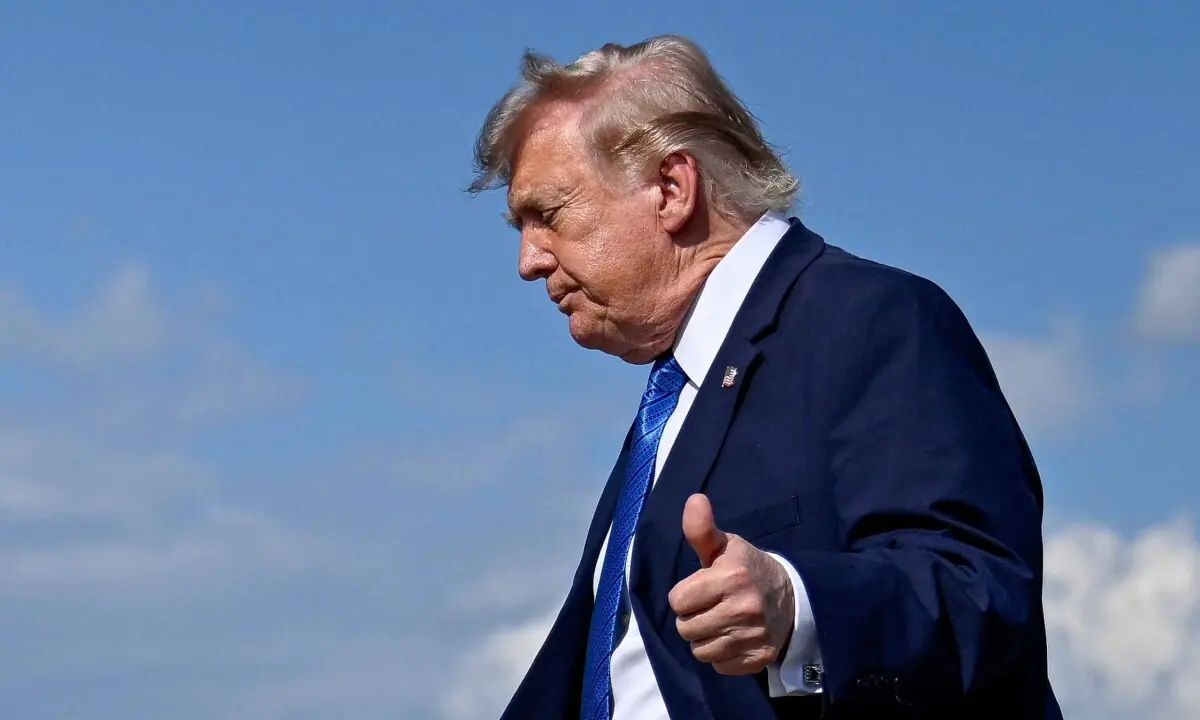
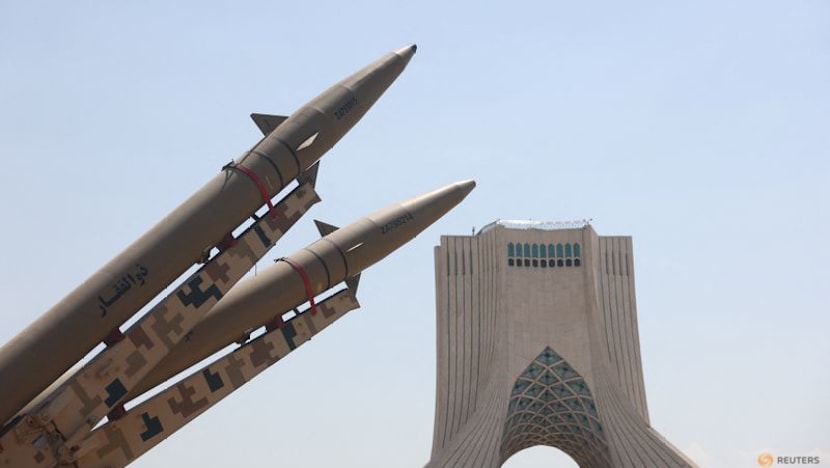
Trump, attending the G7 with other leaders in France, also withdrew at least one of his stated rationales for attacking Iran in the first place, saying it would be “unfair” for Tehran not to have ballistic missiles, having previously vowed to obliterate them. [1] “We’re going to bomb the hell out of them if they violate the agreement,” Trump said of Iran at a press conference. [1] “I don’t want them to. I want them to honor the agreement.” [1] He also called Iranians “smart people” as U.S. and Iranian negotiators work on a permanent truce over the coming 60 days, which Trump said he hoped would usher in peace in the Middle East and lower oil prices. [1] Earlier, he had said: “If I don’t like it, if they don’t behave, we’ll go right back to dropping bombs right smack in the middle of their head, OK?” [1] Trump recanted his February promise to destroy all of Iran’s missiles and “raze their missile industry to the ground.” [1] “I’m saying that if other countries have them, it’s a little bit unfair for them not to have some,” Trump told reporters in Paris after leaving the summit. [1]
Iran's Gains and Limited Concessions
Iran’s leaders did not address the new threats while celebrating the moment, releasing photographs of what is believed to be the first agreement signed by both a U.S. and Iranian president since the Islamic Republic’s founding in 1979. [1] “Everything we sought to achieve through military action, we obtained several times over through negotiation; it was not even comparable,” Iran’s lead negotiator Mohammad Baqer Qalibaf told state television about the agreement, which includes the unfreezing of billions of dollars in Iranian assets. [1] Iran also undertakes not to build nuclear weapons, reaffirming a vow it had made for decades. [1] It also agreed to the on-site “down-blending” of its stockpile of enriched uranium under the supervision of the International Atomic Energy Agency, although Trump had wanted to take it out of the country, which Iran has rejected. [1] Despite his combative rhetoric, Trump appears to have achieved little of what he said he wanted in going to war, while Iran appears much closer to sanctions relief worth billions of dollars than before it was attacked. [1] Iran’s theocratic government remains in place, its stockpile of highly enriched uranium has not been surrendered, its ballistic missile capabilities have not been destroyed and it has not ended its support for anti-Israel militias like Hezbollah in Lebanon. [1]
G7 Leaders Welcome Deal Amid Lebanon Concerns
G7 leaders hailed the agreement at their summit, held in the French town of Evian-les-Bains, an hour’s drive along the shore of Lake Geneva from where the U.S. has said a formal signing ceremony for the U.S.-Iran agreement was due to be held across the Swiss border on Friday. [1] The leaders of France, Germany, Britain, Japan, Italy, Canada and the U.S. demanded in a joint statement an immediate ceasefire in Lebanon, where the memorandum calls for a halt to hostilities between Israel and the Iran-backed Hezbollah group that have killed thousands of people and displaced more than a million more. [1] Fighting there has abated but not ceased since the agreement was reached on Sunday, and Israel, which was not part of the negotiations and whose military is occupying southern Lebanon, says it retains the right to use force. [1] Trump on Wednesday gently rebuked Israeli Prime Minister Benjamin Netanyahu, who has distanced Israel from the U.S.-Iran agreement, over his tactics in Lebanon against Hezbollah. [1] “Netanyahu happens to be a good man, gets a little excited sometimes,” Trump told reporters. [1] “We have a little dispute over Lebanon. I say you can do a little softer touch, Bibi,” he said, using Netanyahu’s nickname. [1] “You don’t have to knock down a building every time somebody walks into it that’s from Hezbollah.” [1] Lebanese state media reported fresh Israeli air strikes and artillery fire in several southern towns throughout Wednesday. [1] Lebanese security sources said Hezbollah had also launched two drone attacks on Israeli forces in the south. [1] Israel later said five of its soldiers had been injured in two Hezbollah drone attacks in southern Lebanon. [1]
Republican Backlash Over Terms and Funding
Republican Senator Bill Cassidy, a rare critic of Trump within his party who recently lost a primary bid for a third term in office, blasted the MoU as “the worst foreign policy blunder in decades”. [4] “Reagan is rolling over in his grave,” Cassidy said on X, referring to former US President Ronald Reagan, who is widely considered an iconic figure within the conservative movement. [4] “Iran’s nuclear ambitions were not curbed, and they have learned that threatening the Strait of Hormuz works and will undoubtedly leverage it in the future,” he said. [4] “Now, Iran gets to build brand-new infrastructure under this deal.” [4] Thomas Massie, a Republican Senator from Kentucky who recently lost a primary challenge by a Trump-backed candidate, Ed Gallrein, criticised the inclusion of the $300bn assistance plan, claiming the figure is five times as much as the US Congress spends on roads and bridges annually. [4] Nikki Haley, the former US ambassador to the UN during Trump’s first administration, also questioned Washington’s commitment to help Iran rebuild from the destruction of the nearly four-month-long war. [4] “This regime chants death to America, murders our troops, and attempts to assassinate Americans on US soil,” Haley said on X. [4] “They believe they have an obligation to destroy us. Now, we plan to unlock billions of dollars and lift sanctions, with the promise of even more money.” [4] Mike Pence, who served as Trump’s first vice president, said on Wednesday that the US-Iran MoU “does smack of the kind of appeasement that our administration rejected in the Obama-Iran nuclear deal”. [4] Pence said the US should pursue an agreement that “commits Iran to dismantling their nuclear programme, dismantling this missile programme, ends support for terrorist proxies and opens the strait”. [4] “Failing that, we should let our Armed Forces finish the job on our terms,” Pence said on X. [4]
Mediation, Next Steps and Market Reaction
Pakistani Prime Minister Shehbaz Sharif said on Thursday that a Memorandum of Understanding (MoU) between the United States and Iran has been electronically signed by the leaders of both countries and has entered into force with immediate effect. [3] Pakistan, with the support of co-mediator Qatar, will host an official ceremony in Switzerland on Friday to commemorate the agreement and launch technical-level talks between the two sides, Sharif added. [3] Sharif also acknowledged the constructive engagement of the leadership of Qatar and commended the contributions of Saudi Arabia, Türkiye and Egypt in facilitating the agreement. [3] He expressed hope that the memorandum would serve as "an enduring foundation for greater understanding, mutual respect and shared prosperity for the complete region." [3] Oil prices fell again on Wednesday on prospects for the reopening of the Hormuz, the slender, vital waterway between Iran and Oman, with Brent crude futures below $80, at their lowest level since the war’s start. [1] They later regained more than 1% after Trump threatened renewed violence. [1]
What to watch next: Pakistan, with the support of co-mediator Qatar, will host an official ceremony in Switzerland on Friday to commemorate the agreement and launch technical-level talks between the two sides.