
Iran Tensions Ease Temporarily After Trump Agrees to Cancel Attack for Quick Deal
Iran tensions have shown signs of temporary relief after US President Donald Trump announced on Saturday that he has cancelled a planned fresh attack on Iran, subject to rapidly reaching a deal that includes the immediate reopening of the Strait of Hormuz and an end to Iran's nuclear threat. [1] [3] Trump stated the US is "locked and loaded" but agreed to hold off after requests from Iran and other Middle Eastern countries, with Israel joining the commitment. [1] [4] [5]
Trump Cancels Planned Attack on Iran
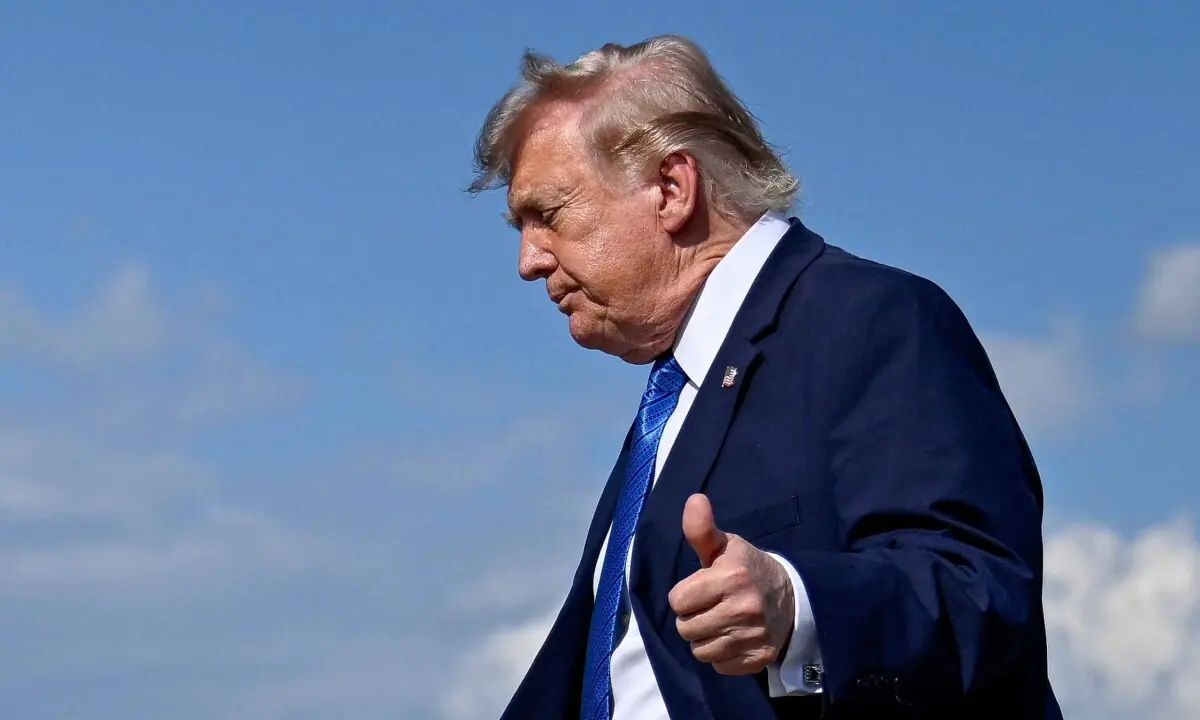
US President Donald Trump said late on Saturday he would hold off on a fresh attack on Iran as long as a deal could be reached quickly to halt Iran’s nuclear ambitions and reopen the Strait of Hormuz. [1] [5] Iran and “other Middle Eastern Countries” asked for a time to complete a deal that would lead to “the Immediate, Complete and Total” reopening of the Strait and “an end to Iran’s nuclear threat,” Trump wrote on his Truth Social platform. [1] [3] [5] “Based on this request, I have agreed, for the future benefit of the WORLD and, likewise, the survival of a successful and prosperous Iran, to cancel the attack, subject to being able to rapidly make a DEAL,” Trump wrote. [1] [4] [5] Israel “joins me in this commitment,” Trump wrote. [1] [4] [5] Trump said the US was “locked and loaded and ready to go against the Islamic Republic of Iran, at levels of Military Terror, Strength, and Power not seen since World War II.” [3] [4] He appeared to suggest progress towards an agreement had been made, saying that the “perimeters of a deal has been agreed to.” [3] The announcement came amid US media reports that Washington might have been planning new, intense strikes on Iran over the weekend. [3]
Iran's Warnings of Retaliation
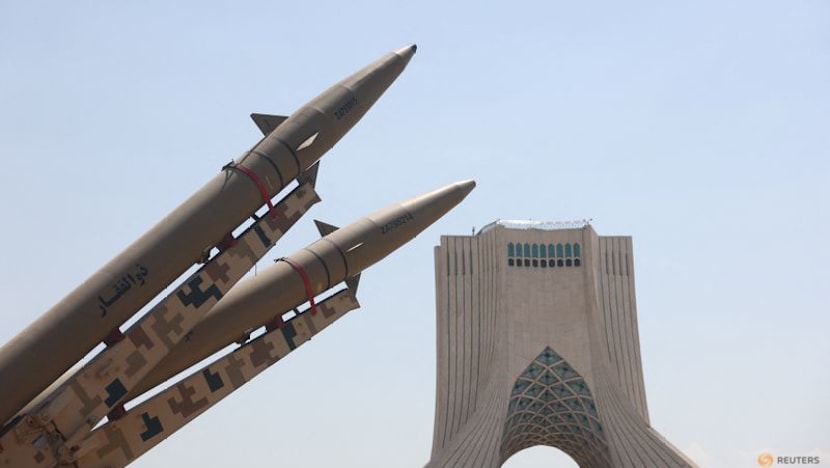
Iran warned the US this weekend against any adventurous action and said it would retaliate decisively if American forces followed through on Trump’s threats of fresh attacks on Iranian targets. [1] Iranian Foreign Minister Abbas Araqchi’s comments in separate phone calls on Saturday with senior Turkish, Pakistani and Saudi officials came just hours after Kuwait’s army said it destroyed hostile drones launched by Iran against several vital facilities. [1] Speaking to Chief of Defence Forces Field Marshal Asim Munir and Turkish Foreign Minister Hakan Fidan, Araqchi said Iran would respond decisively to any “aggression” and discussed the consequences of destabilising actions” by the US, as well as prospects for heightened regional insecurity, according to Araqchi’s Telegram account. [1] Araqchi later told Saudi Foreign Minister Prince Faisal bin Farhan that any attacks by the US and Israel or participation by regional countries in such actions would be met with a proportionate response. [1] Nournews, a media outlet affiliated with Iran’s top security body, said on Saturday that US attacks on Iranian energy infrastructure would prompt Iranian strikes on oil fields in Saudi Arabia and the United Arab Emirates, as well as the gas fields of Qatar and Israel, saying, “all will be burned to ashes”. [1] Tehran earlier accused the US of escalating tensions, saying any regional state co-operating with Washington would be “engulfed by the flames of war”. [3]
Regional Leaders' Concerns
Saudi Crown Prince Mohammed bin Salman spoke to Trump on Saturday and “expressed concern and asked for clarity” about US plans for Iran, a US official told Axios. [1] [3] [4] The Saudi crown prince spoke to Trump, a White House official told Reuters, but did not provide details. [1] Nournews reported Iranian communications with Turkish, Pakistani and Saudi officials regarding the situation. [1] Earlier on Saturday, two Israeli sources told The Jerusalem Post that Israel had raised the alert and readiness amid assessments that Trump was close to deciding to resume military strikes against Iran, potentially on an even larger scale. [4] Israeli officials told the Post that “we are on high alert and awaiting the president’s final decision.” [4]
US Military Strain in the Conflict
A warning from one of America’s top military commanders has exposed a growing dilemma for Washington: The United States may no longer have enough naval forces to simultaneously defend Israel against Iranian missile attacks and protect its own interests across the Middle East. [2] General Alexus Grynkewich, commander of US European Command, has privately informed Pentagon officials that American naval assets are becoming stretched too thin as the conflict with Iran continues, according to reports by The Washington Post and other news outlets. [2] The general reportedly warned that without another US Navy destroyer assigned to the region, commanders could eventually face a difficult choice between protecting American forces and continuing missile-defence operations for Israel. [2] Pentagon assessments cited by The Washington Post indicate US forces fired more than 200 THAAD interceptors during the Iran conflict — roughly half the Pentagon’s reported inventory — along with over 100 interceptors launched from Navy ships. [2] According to an analysis by the Center for Strategic and International Studies cited by CNN, the military has used a significant portion of its advanced missile inventory in recent weeks of fighting. [2] The assessment estimates that American forces have consumed about 45pc of their Precision Strike Missiles, at least half of their THAAD interceptors, and around 50pc of their Patriot interceptors. [2] The analysis also indicates the US has used roughly 30pc of its Tomahawk cruise missiles, over 20pc of its Joint Air-to-Surface Standoff Missiles, and around 20pc of its SM-3 and SM-6 interceptors. [2]
Impact on Oil Prices and Shipping
Oil prices have stayed high since US and Israeli forces started the war with strikes on Iran on February 28. [1] [3] Benchmark Brent crude futures rose 24 per cent in July, and analysts polled by Reuters expect prices to rise further this year. [1] The risk of Iranian attacks has deterred most shipping through the Strait of Hormuz, an important conduit for global energy supplies, since the start of the conflict, sending shockwaves through the world economy. [1] A government facility in northern Kuwait and civilian property belonging to a company on Bubiyan Island were hit on Saturday, with falling shrapnel causing material damage but no casualties, the Kuwaiti army said. [1] Adding to the energy industry’s concerns, the Houthis in Yemen recently began threatening the Bab el-Mandeb, the strait at the other end of the Red Sea from the Suez Canal, another export route for Saudi crude. [1] The United Kingdom Maritime Trade Operations said on Saturday it had received reports of two maritime incidents off Oman, including one in which a tanker was struck by an unknown projectile that damaged the engine room. [1] In the other incident, the master of a tanker reported seeing a large splash and an explosion close to the vessel, though no damage was reported. [1]
Background of the Escalation
Washington and Tehran have engaged in escalating strikes and counter-strikes since a ceasefire in April aimed at pausing the war fell apart in June. [3] Earlier this week, the US said it completed a “heavy wave” of strikes against Iran in retaliation for an attempted ballistic missile attack on American forces in the region. [3] The US has blockaded Iranian ports and bombed Iranian sites, while Iran has fired missiles and drones at US assets in countries across the Middle East and targeted shipping in the Strait of Hormuz, a vital waterway for global oil shipping. [3] The US and Israel began launching their strikes against Iran on 28 February, with the outbreak of war leading to significant fluctuations in oil prices. [3] At a cabinet meeting on Friday at the Camp David retreat, Trump said he believed US negotiators, including his son-in-law Jared Kushner, special envoy Steve Witkoff and Secretary of State Marco Rubio, could still reach a deal with Iran. [1] But Trump also said he was losing faith in the Iranians, saying, “They break their word so often” a claim Tehran has frequently levelled at Washington and said he would be “hitting them”. [1]
What to watch next: Iran has not yet responded to Trump's announcement, while the US government had earlier urged Americans across the Middle East to be alert and ready to leave “should there be escalation” in the region. [3]