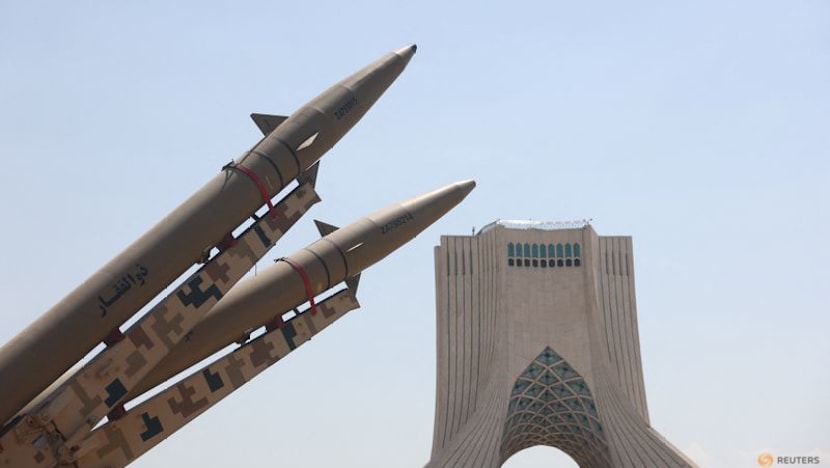

Iranian Drones Hit Kuwait Facilities Amid Rising Tensions With US
Iran has threatened to strike energy infrastructure in Saudi Arabia, the UAE, Qatar and Israel if the US launches fresh attacks on Iranian targets, as Iran tensions escalate with reports of imminent US-Israeli strikes. [1]
Iran Issues Direct Threats of Retaliation
Iran's Foreign Minister Abbas Araghchi warned in calls with Turkish, Pakistani and Saudi officials that any US or Israeli aggression would prompt a proportionate response and heighten regional insecurity. [1] Nournews reported that US strikes on Iranian energy sites would lead to Iranian attacks on oil fields in Saudi Arabia and the UAE as well as gas fields in Qatar and Israel. [1] Araghchi stated in separate phone calls on Saturday with senior Turkish, Pakistani and Saudi officials that Iran would respond decisively to any aggression. [1] Araghchi told Saudi Foreign Minister Prince Faisal bin Farhan that any attacks by the US and Israel or participation by regional countries in such actions would be met with a proportionate response. [1] Iran's military central command head Ali Abdollahi said the United States is rapidly moving down the path of escalating tensions in the region. [2] Nournews, a media outlet affiliated with Iran's top security body, said on Saturday that US attacks on Iranian energy infrastructure would prompt Iranian strikes on oil fields in Saudi Arabia and the United Arab Emirates, as well as the gas fields of Qatar and Israel, saying all will be burned to ashes. [1]
Trump Signals Renewed Strikes
US President Donald Trump stated he is losing faith in Iran and threatened to hit them hard, with US media reporting possible renewed strikes on energy infrastructure as soon as this weekend, potentially involving Israel. [1] At a Cabinet meeting on Friday at the Camp David retreat, Trump said he believed US negotiators could still reach a deal with Iran but also said he was losing faith in the Iranians. [1] Trump said he would be hitting them. [1] US media reported he was considering renewed heavy attacks as soon as this weekend, including against energy infrastructure targets. [2] The Wall Street Journal later reported that Trump had ordered a fresh attack aimed at convincing Tehran to surrender, which could begin as soon as this weekend. [2] CBS News meanwhile reported that the United States and Israel were planning joint strikes on energy-related targets, possibly throughout the weekend. [2]
Recent Attacks and Incidents
Kuwait's army destroyed hostile drones launched by Iran that hit a government facility and civilian property on Bubiyan Island, causing material damage but no casualties. [1] A government facility in northern Kuwait and civilian property belonging to a company on Bubiyan Island were hit on Saturday, with falling shrapnel causing material damage but no casualties, the Kuwaiti army said. [1] The United Kingdom Maritime Trade Operations said on Saturday it had received reports of two maritime incidents off Oman, including one in which a tanker was struck by an unknown projectile that damaged the engine room. [1] In the other incident, the master of a tanker reported seeing a large splash and an explosion close to the vessel, though no damage was reported. [1] Iran's Houthi allies in Yemen recently began threatening the Bab el-Mandeb, the strait at the other end of the Red Sea from the Suez Canal. [1]
Impact on Oil Markets and Shipping
Oil prices have risen sharply since the February 28 start of the conflict, with risks to shipping through the Strait of Hormuz and new maritime incidents reported off Oman. [1] Benchmark Brent crude futures rose 24 per cent in July, and analysts polled by Reuters expect prices to rise further this year. [1] The risk of Iranian attacks has deterred most shipping through the Strait of Hormuz, an important conduit for global energy supplies, since the start of the conflict. [1] Iran's military has already demonstrated that it has the capability and the determination for counterattacks. [3] If the Iran succeeds with new strikes on the energy infrastructure of the Gulf states, world market prices for oil and gas would rise further. [3]
US Security Alerts to Citizens
US embassies in several Middle Eastern capitals warned American citizens to beware an unforeseen escalation in the regional conflict and urged them to be ready to leave. [2] Americans in the region should consider departing, or be prepared to depart should there be escalation, said a security alert posted by the US missions in Amman, Jerusalem, Muscat, Baghdad and Beirut. [2] The messages urged citizens to check flight details and to follow safety advice from local authorities. [2] Americans currently in the Middle East should exercise caution and heightened vigilance and should be prepared for flight cancellations, periodic airspace closures, and potential travel disruptions. [2] Americans in Jordan were told not to visit US military bases there, and in Israel they were urged to seek the location of the nearest bomb shelter. [2] The US embassy in Beirut said that the mission remained on ordered departure status. [2]
Context of the Ongoing Conflict
The Middle East war broke out on February 28 when the United States and Israel launched strikes on Iran, which has retaliated with missile and drone strikes across the region. [2] After more than five months of war, which began on February 28 when the United States and Israel launched strikes on Iran, there is seemingly no end to the conflict, with resumed tit-for-tat attacks. [2] This week, Iran and the US resumed overnight exchanges of fire after a days-long lull in fighting although there were no reported strikes overnight on Friday to Saturday. [2] Trump had to begin with said the conflict would only last a few weeks. [3] In the meantime the conflict is going into the sixth month and a solution seems as little in sight as falling oil and gas prices. [3]
What to watch next: US media reports indicate possible renewed heavy attacks as soon as this weekend, including against energy infrastructure targets, with the United States and Israel coordinating on joint strikes. [2]