Unrest Spreads in Most Dangerous Countries as Azerbaijan School Hijab Ban Sparks Protests and Turkey Row
Protests have erupted in Azerbaijan over a new school uniform policy that bars girls wearing hijabs from classes, leading to detentions, social media restrictions and diplomatic friction with ally Turkey, while separate outbreaks of political violence and student unrest continue in South Africa, Albania and India amid broader patterns seen in most dangerous countries. Azerbaijan's education ministry began enforcing rules on 21 September that ban clothing contradicting secularism in state schools, resulting in hijab-wearing pupils being turned away and sparking protests in Baku and southern districts near Iran. [1] Azerbaijani authorities detained 37 people for obstructing the rules, with at least two activists reportedly detained or losing contact; protesters have faced warnings of prison and difficulties accessing Instagram and TikTok without VPNs. [1]
Azerbaijan Hijab Ban Triggers School Protests and Detentions
Last Monday the education ministry in Azerbaijan began enforcing new uniform rules, turning away female pupils wearing hijabs. [1] Protests began outside state schools in the capital, Baku, and in several southern districts including Masally and Jalilabad. [1] Protests are rare in this oil- and gas-producing country of 10.5 million people. [1] Azerbaijan is constitutionally secular and the government strongly enforces that. [1] President Ilham Aliyev has been in power since 2003 and has little tolerance for dissent. [1] Opposition politicians and many independent journalists are in jail. [1] The rules, approved on 21 September, ban clothing which contradict "the principle of secularism in education" in state schools. [1] They do not mention the hijab. [1] Similar guidelines were extended to teachers on 6 October. [1] In one video, pupils outside School No. 69 in Balakhany, outside Baku, hold a banner reading: "The hijab does not prevent anyone from getting an education." [1] Shahiza Huseynova, a mother who was protesting outside a school in the Mashtaga district of the capital, was detained on Tuesday. [1] In an interview with Meydan TV, an independent Azerbaijani-language channel based in Germany, Huseynova's husband Agha said she had been given a warning: "Either you take off your child's hijab and send them to school, or you go to prison." [1] Friends have also lost contact with Ilkin Huseynov, an activist who on Tuesday launched an online platform called "Let Leyli Go to School". [1] According to a friend, Huseynov left his home in Baku with unidentified men at about 16:00 on Wednesday, and his phone has been switched off ever since. [1] On Thursday, the platform's Instagram page could not be accessed. [1] Since the protests began, users have reported problems accessing Instagram and TikTok without a virtual private network (VPN). [1] Most of the protests have been in religiously conservative neighbourhoods in Baku's outlying settlements and in southern districts near the 765km (475-mile) border with Iran. [1] The authorities have long been wary of religious influence from Iran, where more ethnic Azerbaijanis live than in Azerbaijan itself. [1] On the night of 13 October, Azerbaijan's State Service for Special Communications and Information Security said a "foreign hacker group" had attacked more than 100 state websites. [1] A pro-Iranian group calling itself the 313 Team (Cyber Islamic Resistance) claimed responsibility. [1] Azerbaijani officials have defended the rules. [1] One MP, Nigar Arpadarai, told the 1news.az website that children did not choose to wear the hijab themselves but were influenced by their families. [1] "A child has no freedom to choose a religion. This is a conscious prerogative of adults," she said. [1]
Tensions Escalate Between Azerbaijan and Turkey Over Religious Freedom
The row has now spilled over into Turkey, Baku's closest ally, which provided vital support during Azerbaijan's 2020 war with Armenia over Nagorno-Karabakh. [1] The two countries call themselves "one nation, two states". [1] President Recep Tayyip Erdoğan, a devout Muslim, has spoken of creating a "pious generation". [1] His chief adviser, Oktay Saral, has called the Azerbaijani restrictions "unacceptable" and urged Baku to "reverse this mistake". [1] "A headscarf is not an obstacle; it is a requirement of one's faith!" Saral wrote on X. [1] Several MPs from Turkey's governing AK Party joined in. [1] Small demonstrations were held outside Azerbaijan's embassy in Ankara, organised by Köklü Değişim, an Islamist movement linked to Hizb ut-Tahrir, and outside its consulate in Istanbul, organised by conservative Islamist group Özgür-Der. [1] President Aliyev's New Azerbaijan Party accused Turkish officials of an "openly defamatory" information campaign and of "baseless accusations", warning that Oktay Saral's comments risked harming ties, and cautioned against interference in Azerbaijan's internal affairs. [1] Earlier this month, Ilham Aliyev himself said no one should "stick their noses into our way of life". [1] Behind the dispute there may lie another source of friction. [1] Turkish protesters have linked the headscarf rules to Azerbaijan's close ties with Israel, which sells weapons to Baku and buys Azerbaijani oil. [1] Turkey's relations with Israel have collapsed over Gaza, but Azerbaijan has tried to maintain relationships with both countries. [1] On Thursday, when Israel's President Isaac Herzog addressed a regional security summit hosted by Azerbaijan in Baku, delegations from Turkey, Iran and other countries walked out of the hall. [1]
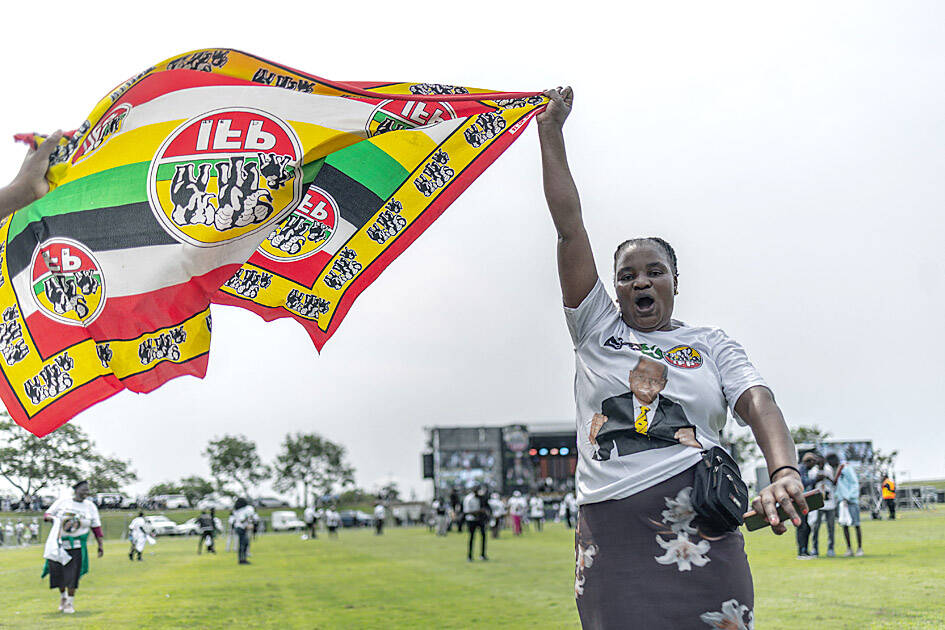
South African protesters clash with police amid rising political unrest before elections. — Source: taipei-times
Political Killings Surge in South Africa Ahead of Local Elections in Most Dangerous Countries
Gunmen in August opened fire on local government candidate Khethelo Mdluli outside his rural home as he was with his young children, one incident amid a surge of suspected political assassinations ahead of South Africa’s polls next month. [2] The 40-year-old died in hospital at the end of August, with his family telling reporters they did not know why he was targeted. [2] “My brother was not a violent man,” said Sifiso Mdluli, a representative of the family. [2] Mdluli was running as a ward councilor for the veteran Inkatha Freedom Party (IFP) in the Nov. 4 local elections, seen as a test of support for the African National Congress (ANC) after it lost its national parliamentary majority in 2024. [2] “One of his IFP colleagues, who was speaking at the funeral, said he had alerted them that there were people threatening him in the days leading to his murder,” his brother said. [2] The day after Mdluli died, another IFP ward council candidate was gunned down after arriving home in the same province, the politically volatile KwaZulu-Natal. [2] “He was a good man. We are scared,” said a relative of 34-year-old Lucky Sokhela who declined to be identified for fear of reprisals. [2] The party called a special Political Killings Task Team (PKTT), established in 2018, to investigate. [2] “The killing of political candidates cannot be treated as ordinary criminality,” it said. [2] “Let the ballot, not the bullet, decide.” [2] In a new killing this week also referred to the PKTT, four members of the ANC youth division died after a gunman opened fire on them on Tuesday outside Johannesburg. [2] The motive was unknown and the attacker had turned himself in, police said. [2] At least 43 people were killed in 45 suspected political attacks in the first nine months of this year, according to the Geneva, Switzerland-based Global Initiative Against Transnational Organized Crime (GI-TOC). [2] The tally topped the full-year total of 30 for 2021, the year of the previous municipal elections, and 33 in 2024, when the most recent national election was held, the independent civil society group said in a report. [2] The targets included ward councilors, party officials or traditional leaders — figures with influence over local issues such as the allocation of houses and contracts. [2] “The focus shifted from ideological divides to contestation over access to resources,” said researcher Crispin Hemson, who documented KwaZulu-Natal’s bloody political wars in the final years of apartheid. [2] “The market for killing, the networks, the guns, they were already there. Now the ideology is gone and the motive is a tender, a ward, a job,” Hemson told reporters. [2] The trial of two men sentenced to life imprisonment last month for the 2023 murder of KwaZulu-Natal Democratic Alliance councilor Nhlalayenza Ndlovu heard that the hit was ordered by a traditional chief over disputed land sales and electricity connections. [2] A ward councilor’s job comes with a salary of more than 25,000 rand (US$1,500) a month before allowances, according to government figures. [2] The official national unemployment rate is 33 percent and the minimum wage is nearly 6,000 rand. [2] “The struggle for employment is such that many people see being a councilor as escaping poverty,” said Zakhele Ndlovu, a political analyst and lecturer at the University of KwaZulu-Natal. [2] “Hence there is such competition for councilor posts, with others prepared to kill or be killed in pursuance of this position.” [2] Most of the attacks (16) recorded by GI-TOC to the end of last month were in KwaZulu-Natal, but there were also 10 in Gauteng, where Johannesburg is. [2] Of several political movements affected, most of those killed (13) were from the ANC, followed by eight from former South African president Jacob Zuma’s uMkhonto weSizwe Party (MKP), based in KwaZulu-Natal. [2] “Quite a few of these killings speak to the criminalization of politics, particularly at a local government level, where it’s about contestation for access to power and the money that comes with it,” said Julian Rademeyerthe, author of the GI-TOC report Ballots and bullets. [2] There is an “intersection between politics and organized crime” that “damages the constitutional democracy that South Africa is,” GI-TOC executive director Mark Shaw told a public hearing last month. [2]
Student Unrest in Albania and India Highlights New Protest Tactics
On October 10, New Delhi faced a near-lockdown situation following a call for protests by Gen Z-led Cockroach Janta Party. [3] Authorities imposed a 24-hour internet blackout, but protesters found ways around it. [3] Albania’s capital burns as protests escalate. [4] Police have been criticized for alleged use of excessive force against protestors and journalists. [4] Albanian student protests in Tirana led to the College of Europe being looted and torched. [4]
International Solidarity Actions and Broader Context
The student organisation ASAP in Britain and its partners are preparing to hold a protest outside the Azerbaijani Embassy in London on Friday 16 October, in opposition to restrictions on the wearing of hijab in Azerbaijani schools and in solidarity with Muslim pupils and teachers who face measures preventing them from attending school or continuing their work because they wear the hijab. [5] The demonstration is scheduled to take place from 4pm to 6pm outside the Azerbaijani Embassy at 66 Holland Park, London, W11 3SJ, near Holland Park station. [5] It will be held under the slogan “Hands Off My Hijab”. [5] The controversy surrounding the hijab in Azerbaijani schools dates back to December 2010, when the then education minister, Misir Mardanov, announced on 9 December that the wearing of hijab would be prohibited in primary and secondary schools, citing school uniform requirements and the country’s secular education system. [5] On 10 December 2010, hundreds of people reportedly demonstrated outside the Ministry of Education in the capital, Baku, while further gatherings took place in other parts of the country. [5] In May 2011, police dispersed another protest in Baku and arrested several participants, according to media and human rights reports. [5] The issue resurfaced in September 2026, following reports that Azerbaijan’s Cabinet of Ministers approved amendments to school uniform regulations on 21 September. [5]
Regional Patterns of Civil Unrest
These disparate events in Azerbaijan, South Africa, Albania and India reflect ongoing global civil unrest without introducing unsupported connections. [1] [2] [3] [4] [5]
What to watch next: The demonstration outside the Azerbaijani Embassy in London is scheduled for Friday 16 October from 4pm to 6pm, while South Africa’s local elections are set for 4 November.