United States Tensions With China Supply Chains Grow as 2027 Mineral Ban Looms
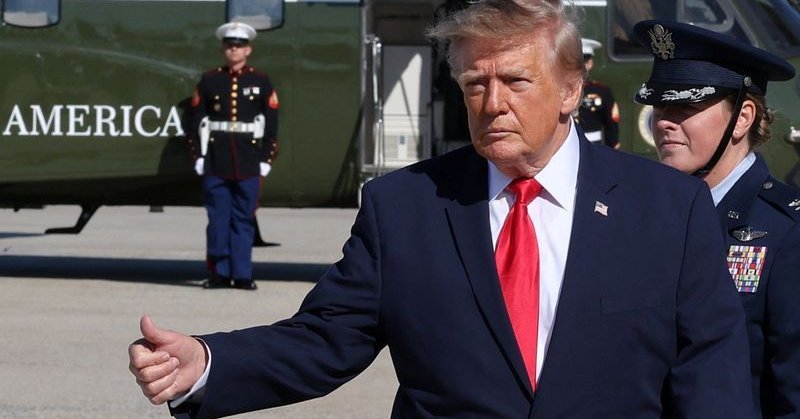
President Donald Trump’s push to end U.S. reliance on Chinese critical minerals by January 2027 is colliding with the reality that American miners and processors are not ready to meet the federal deadline, a situation that is intensifying United States tensions with China supply chains over access to strategic materials.
Trump’s Critical Minerals Deadline Faces Industry Shortfalls
President Donald Trump’s push to end U.S. reliance on Chinese critical minerals by January 2027 is colliding with the reality that American miners and processors are not ready to meet the federal deadline. [1] American miners and processors aren’t ready for the shift away from Chinese supplies. [1] The defense industry and other manufacturers face the January 1, 2027, cutoff under federal regulations. [1]
Billions Invested Yet Supply Chain Gaps Remain
Trump has made U.S. mining and processing of critical minerals a national security priority since returning to office, pouring tens of billions of dollars into nearly 150 minerals companies to loosen China’s grip on supply chains for weapons and other strategic products. [1] The defense industry and other manufacturers are now just over five months away from a January 1, 2027, deadline under federal regulations to stop purchasing rare earths, magnets, tungsten, molybdenum and tantalum from China, Russia, Iran or North Korea. [1] American miners and processors aren’t ready for the shift away from Chinese supplies. [1]
United States Tensions With China Supply Chains Grow as Pentagon Drone Program Lags Ukraine’s Wartime Production
Ukraine will produce between six and seven million small first-person-view attack drones this year, or roughly 500,000 a month. [2] By comparison, the Pentagon’s $1.1 billion program will have ordered just under 200,000 drones cumulatively by February. [2] The Pentagon just made a big surge in drone building much tougher when it instituted rules that military drones must be made with U.S. parts. [2] A revised supply chain framework released July 23 adds language stating the government’s ultimate goal is “a wholly domestic” small unmanned aircraft system supply chain. [2] None of the drones from the 19 companies competing an August test event may contain banned parts like Chinese-made brushless motors or battery packs. [2] A stricter standard than the program’s first phase now applies. [2] The vast majority of drones purchased in an earlier phase likely contained Chinese motors. [2]
Shift Toward Domestic and Joint-Venture Manufacturing
All six Ukrainian companies invited to next month’s “Gauntlet II” test at Fort Carson, Colorado, have entered or are moving toward joint ventures with U.S. manufacturers as a condition of future orders. [2] Ukrainian company F-Drones has partnered with Ohio-based Ukrainian Defense Drones, which opened a facility near Toledo, while Ukrainian drone maker General Cherry has agreed to a joint venture with New Hampshire’s Wilcox Industries. [2] The Ukrainian companies competing in Gauntlet II are being required to localize production in the U.S. as a condition of winning future orders. [2] This structure is designed to convert Ukraine’s battlefield expertise into American manufacturing capacity rather than reliance on imports. [2]
Broader Implications for Defense Supply Chains
It’s much harder to get from zero to 200,000 than it will be to scale up further once a domestic capacity to build many more drones exists. [2] Harder-to-source components, including semiconductors, remains a far bigger problem for the U.S. outside the drone effort. [2] Metz expects the U.S. to eventually rival Ukraine’s drone industry. [2] He sees no reason why the United States shouldn’t be the world champions of this as well. [2]
What to watch next: Ukrainian firms will continue entering joint ventures with U.S. manufacturers and localizing production inside the United States as a condition of future Pentagon orders, while the $1.1 billion drone program moves toward a wholly domestic supply chain ahead of the January 1, 2027, deadline on adversarial minerals. [2]